
When you are choosing between an angle grinder and a bench grinder, the best tool depends on where you work and what you need to shape. An angle grinder offers speed and mobility, so it is well suited for cutting, grinding, and finishing in tight spaces or on the move. A bench grinder stays in place and provides steadier control for sharpening and fine shaping. The difference becomes clearer when you compare how each one handles power, precision, and attachments.
What Is an Angle Grinder?
An angle grinder is a handheld power tool that helps you cut, grind, sand, and polish with speed and control. You can use one whenever you need portable power tools that move where you do, from a garage to a jobsite.
Because it’s light and compact, you can guide it into tight spots that larger tools may miss. For handheld metal cutting, it uses a fast-spinning disc that cuts into steel, tile, or stone with steady force.
You’ll also find it useful for smoothing welds, shaping edges, and removing rust. When you want a tool that feels useful right away, this one fits your hands and your pace. It gives you more flexibility, which can make tough jobs feel more manageable.
What Is a Bench Grinder?
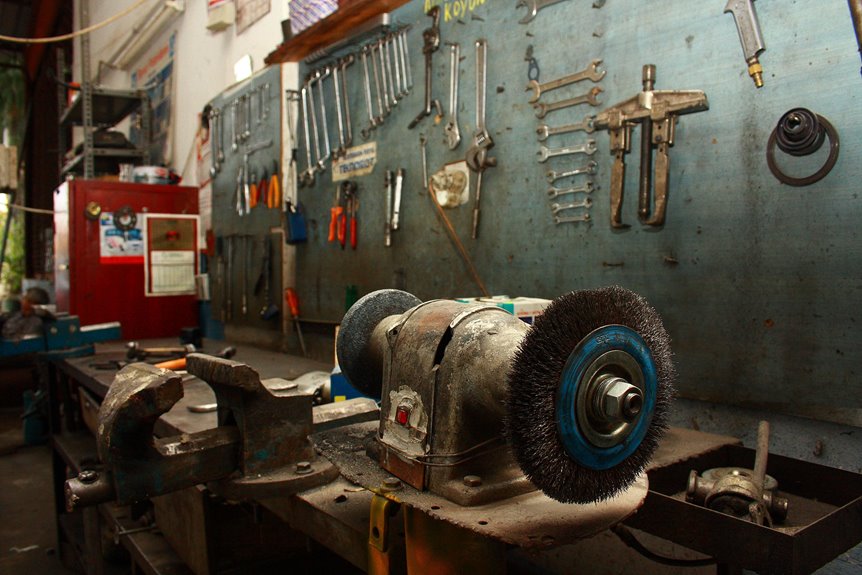
A bench grinder is a fixed workshop tool that sits on a bench or pedestal, so you can keep both hands steady while you work.
It usually has two abrasive wheels, plus a motor, guards, tool rests, and eye shields that help you shape, sharpen, and smooth metal safely.
If you’re comparing it with an angle grinder, you’ll notice that it’s built more for control and repeatable results than for moving around the job site.
Basic Bench Grinder Parts
Whenever you look at a bench grinder for the first time, it may seem simple, but each part has a clear job that helps it work safely and effectively.
You’ll notice the motor housing first. It holds the motor, protects the drive, and gives the grinder its sturdy shape. On each side, the wheels do the work, but they need support from the guards, which help shield you from sparks and debris. Right in front, the tool rest gives your workpiece a steady place to sit, so you can guide it with better control. The eye shields add another layer of protection, while the power switch lets you start and stop the tool with confidence. Every part contributes to safe, reliable operation.
Common Bench Grinder Uses
Now that you know the main parts of a bench grinder, it helps to see what those parts actually do in real life.
You’ll often use one for sharpening tools, because the wheel can bring dull chisels, drills, and blades back to a crisp edge.
It’s also useful for polishing blades, where a finer wheel helps smooth scratches and create a cleaner finish.
You can clean rust from metal parts, shape small tools, and touch up damaged edges before a job becomes harder.
Because the grinder stays fixed on your bench, you can keep both hands steady and work with more control.
That makes everyday repair tasks feel less stressful and more manageable.
Angle Grinder vs Bench Grinder: Core Differences
You’ll notice the biggest difference right away: an angle grinder moves with you, while a bench grinder stays fixed on a workbench.
That means you can carry the angle grinder to tight spots and remote jobs, while you bring your work to the bench grinder instead.
This simple difference shapes how each tool fits into your day and the kind of work it handles best.
Portability And Use
Because portability often determines how and where you work, angle grinders and bench grinders serve very different needs. An angle grinder is easy to carry, so it suits remote work and lets you move from one task to another while fixing metal on site.
It fits naturally in your hands, and that mobility helps you work in tight spaces, around edges, or on projects that don’t stay still.
A bench grinder stays in one place, so you use it when you can bring the part to the tool and want a steady setup for sharpening or cleanup.
If you prefer a shared shop routine, the bench model gives you a reliable station, while the angle grinder gives you freedom without feeling confined.
Fixed Vs Handheld
The biggest difference between these two tools is how you hold and control them. With an angle grinder, you get handheld maneuverability, so you move with the task and reach corners with ease. With a bench grinder, you work from a fixed workstation, so the tool stays put and your hands guide the piece.
- You carry the angle grinder to the job.
- You bring the workpiece to the bench grinder.
- You gain freedom with the handheld tool.
- You gain steadier control with the fixed tool.
That difference changes your workflow quickly.
If you want fast movement and flexibility, the angle grinder is the better fit. If you want steady, repeatable control, the bench grinder is the better choice.
How to Use an Angle Grinder
Before you start, clamp the workpiece down where possible. Fit the right disc for the job and check that the guard is in place.
Work safer by keeping both hands on the grinder and standing to the side of the wheel. Choose a wheel that matches the metal, then let the tool reach full speed before you touch the surface.
Use light pressure, because the disc should cut, not force its way through. Keep your cutting technique smooth and steady, and move in short passes so the tool stays controlled.
If sparks flare back at you, adjust your angle. Stay focused, pause often, and let the grinder do the work.
How to Use a Bench Grinder
Once your bench grinder is bolted down and the area is clear, you can start working with much more control. First, check the wheel selection so the grit matches your task. Then set the tool rest close to the wheel, leaving a small gap for steady support. With that done, stand slightly to one side and let the wheel reach full speed before you touch the metal.
- Hold the workpiece firmly with both hands.
- Use light pressure and move it evenly.
- Cool the part often to avoid overheating.
- Stop and inspect your progress before you continue.
You will feel more confident when you work this way because the grinder does the heavy lifting while you guide the piece. Keep your focus, stay patient, and you’ll fit right in with careful grinders everywhere.
Best Materials for an Angle Grinder
An angle grinder works best when you match the disc to the material, because that choice affects both the cut and the control you have in your hands.
For metal cutting, use abrasive cutoff wheels or flap discs, and let the tool do the work so you stay in control. For steel, iron, and aluminum, you’ll get cleaner edges and less chatter.
For masonry work on brick, block, and concrete, choose diamond blades, since they handle grit better and last longer.
When you’re removing rust, paint, or welds, wire wheels help you strip surfaces without digging in too hard.
Picking the right disc makes each job smoother, safer, and less stressful.
Best Materials for a Bench Grinder
What materials work best on a bench grinder? You’ll usually get the best results with steel, iron, carbide, and aluminum tools when you match them to the right wheel. Your wheel material choices matter because each job needs a different feel and cut.
- Aluminum oxide works well for steel and general shop use.
- Silicon carbide suits hard metals and nonferrous parts.
- Ceramic gives you fast cutting on tough tool steel.
- Wire wheels help you clean rust and scale without heavy shaping.
The abrasive wheel composition shapes how smooth, cool, and steady your work feels. So when you want reliable results, pick the wheel that fits the metal. That way, you’ll grind with confidence and keep your tools ready for the next job.
Angle Grinder Safety Tips
When you use an angle grinder, keep the wheel guard in place so it can block sparks, debris, and a broken disc.
Hold the tool with both hands and keep a firm grip, because kickback can surprise you quickly.
A steady stance and a secure grip help you stay in control and work more safely.
Proper Wheel Guards
At the heart of safe angle grinder use, a proper wheel guard does more than sit in place. It provides guard coverage and wheel shielding, so sparks, chips, and broken pieces stay away from you. When the guard fits correctly, you work in a safer, more stable way.
- Keep the guard on every time you use the grinder.
- Match the guard to the wheel size and task.
- Adjust it so it blocks the exposed side.
- Replace a bent or cracked guard right away.
That small part helps protect your face, hands, and chest. It also keeps the wheel where it belongs, which matters whenever the tool spins fast. When you work with others, you help everyone stay safer too.
Secure Grip Position
A secure grip is one of the simplest ways to keep an angle grinder under control, and it can make a big difference in how safe you feel while using it. Hold the main handle with one hand and the side handle with the other so you maintain stable hand positioning from start to finish. Keep your thumbs wrapped, your fingers firm, and your shoulders relaxed.
This helps you maintain controlled wrist alignment and reduces the chance of a sudden jerk. Stand with your feet apart, because balance supports your grip while the tool pushes back. If your hands start to slip, stop and reset before you continue.
You aren’t fighting the grinder alone. You’re guiding it with steady pressure, and that teamwork keeps the job smoother and safer.
Bench Grinder Safety Tips
Because a bench grinder stays fixed in place and spins at lower speeds than an angle grinder, it may seem safer at first glance, but it still requires careful handling every time you use it. You’ll protect yourself better when you build smart habits and keep your work area calm and clear.
- Keep your work area organized so cords, scraps, and tools don’t crowd the bench.
- Wear eye protection and a face shield, because sparks and grit can still fly.
- Stand to one side while starting the wheel, then wait for it to reach full speed.
- Learn emergency stop procedures before you begin so you can react quickly if the wheel chatters or a part slips.
You will use the grinder more safely when you stay focused, patient, and in control.
Which Grinder Fits Your Project?
To match the right grinder to your project, start by considering the job size and where the work will be done.
If you need to move around a worksite or reach tight spots, an angle grinder is usually the better choice. A bench grinder works best for smaller, fixed tasks at a bench.
Next, consider the material and the task itself, because cutting, rough shaping, and sharpening each require a different tool.
Project Size And Scope
If your project is small, detailed, or needs to fit into tight spaces, an angle grinder usually makes the most sense. You can move fast, stay flexible, and work confidently when the job shifts from one corner to another. For larger jobs, a bench grinder is often a better fit because it stays in place and maintains a steady rhythm.
- Pick an angle grinder for quick fixes and maintenance at remote jobsites.
- Choose a bench grinder when you need control at a fixed station.
- Use an angle grinder for large scale demolition when you need to move around.
- Use a bench grinder when your project stays in one place and needs repeatable care.
Material And Task Type
The kind of material you’re working on can point you to the right grinder quickly. When you’re shaping steel, cutting rebar, or cleaning welds, an angle grinder usually fits because it handles tough material hardness and rough surface compatibility well. Its fast-spinning disc bites into metal and gets you moving.
If you need to sharpen blades, touch up tools, or polish edges, a bench grinder gives you steadier control and a cleaner finish. It suits smaller pieces and repeated tasks, so you aren’t wrestling the work.
For wood, soft metal, or delicate parts, choose the tool that matches the surface first. That choice saves time, lowers stress, and helps you feel like you have the right crew behind you.
How to Choose the Right Grinding Wheel
Choosing the right grinding wheel matters just as much as choosing the grinder itself, because the wrong wheel can slow you down, wear out fast, or make the job feel harder than it should. You want the wheel to fit your task so you feel confident from the start.
- Pick the wheel material for the metal you’re shaping.
- Use wheel hardness selection to match soft or hard stock.
- Choose abrasive grit matching for either fast removal or a finer finish.
- Check the wheel’s speed rating so it suits your grinder.
When you’re using a bench grinder, you’ll usually want a stable wheel for sharpening. When you’re using an angle grinder, choose a wheel that can handle tougher grinding and keep control in your hands. That way, you work smarter and stay in the crew.
Angle Grinder Attachments and Accessories
Once you start using an angle grinder for more than a quick cut, the right attachments can change the whole job. You can swap in cutoff wheels, flap discs, wire cups, and grinding wheels to match the surface and the finish you want. That means you don’t have to fight the tool or settle for sloppy results.
Since your grinder offers multi tool compatibility, you can also add sanding pads or polishing heads, which helps when you’re working on metal, tile, or even rust cleanup. Just check the arbor size and speed rating before you clip anything on. Then keep your favorite pieces together with smart accessory storage options, so you aren’t digging through a drawer whenever the job has already started.
Bench Grinder Features to Compare
Whenever you compare bench grinder features, start with the parts that affect how safely and accurately you can work. You’re part of a shop community whenever your grinder feels steady, smooth, and easy to control.
- Check the motor speed options, because lower speeds help with careful sharpening.
- Look at workspace stability factors, such as a heavy base and firm mounting.
- Compare wheel guards and tool rests, since they guide your hands and protect you.
- Notice wheel size and spacing, because they shape comfort and access.
Next, listen for vibration and watch how the tool sits on the bench. A solid grinder won’t dance around while you work, and that makes each pass feel calmer. Tiny details matter here, and they can turn a frustrating chore into a job you can trust.
How to Choose the Right Grinder
To pick the right grinder, start with the job you want to do because the tool should fit your work instead of making it harder. If you need to cut, shape, or reach tight spots, an angle grinder gives you mobility and speed. If you sharpen blades or want steadier control, a bench grinder fits better.
Next, check tool compatibility with your discs, wheels, and power source so you don’t end up with a mismatch that slows you down. Also, consider workspace constraints. A bench grinder needs a fixed spot, while an angle grinder moves with you in a crowded garage or on a remote job.
Finally, match safety, comfort, and your skill level. When the grinder fits your space and task, you’ll work with more confidence.
Frequently Asked Questions
How Do Angle Grinders Compare With Bench Grinders for Portability?
Angle grinders are the better choice when portability matters. They are easy to carry, cordless models add convenience, and they handle portable tasks well. Bench grinders, by contrast, stay in one place and are designed for workshop use, not mobility.
Which Grinder Uses More Electrical Power During Operation?
You’ll usually use more electrical power with an angle grinder because its motor wattage is higher, so energy consumption rises. Your bench grinder draws less, which lets you work confidently while staying in control.
What Speed Differences Affect Cutting Performance Between These Grinders?
Angle grinders spin fast, typically 8,000 to 12,000 RPM, which gives you quicker cutting but increases abrasive wear. Bench grinders run slower, around 1,800 to 3,600 RPM, which provides steadier, cleaner control for precision work.
Why Is a Bench Grinder Better for Precision Sharpening Tasks?
You get better precision because the stationary setup and tool rest let you maintain repeatable tool geometry and controlled edge honing, so you can sharpen blades consistently. The result is greater confidence and control.
Which Grinder Is Generally Safer for Beginners to Use?
A bench grinder is generally safer for beginners because it stays fixed and is more stable, which helps build confidence and control. Use beginner safety tips such as wearing eye protection, keeping the guards on, and practicing slow, controlled movements.