
The right air compressor can make your tools feel strong and smooth instead of weak and frustrating. Match PSI and CFM to the most demanding tool, then check tank size, duty cycle, and recovery time so performance stays steady. After that, weigh oil-free vs. oiled models, portability, hose length, noise, and cost, because the wrong choice can waste time and money fast.
What PSI and CFM Do You Need?
So, what PSI and CFM do you actually need? Start with the tool sheet and trust the tool’s airflow requirements, not guesses.
CFM tells you how much air the tool needs, so match the compressor to the highest demand you plan to use. If you run two tools at once, add their CFM together, then give yourself a little cushion for pressure matching and real world wear.
PSI matters too, because your compressor must reach the tool’s required pressure, usually around 90 PSI, with some extra room for steady performance. When you choose both numbers well, you keep the job moving and avoid that weak, sputtery feeling nobody wants.
You aren’t just buying air, you’re building a setup that fits your crew, your pace, and your project.
Match Your Air Compressor to Your Tools
Once you know the pressure and airflow your tools need, the next step is to match the compressor to the job it has to do. Start by checking each tool’s CFM rating, because that tells you its tool specific air demand. Then consider how you work, not just what you own. If you run more than one tool, add their needs together to see the simultaneous tool load.
- Pick a compressor that meets the highest demand tool.
- Make sure its PSI can keep up with every tool in your set.
- Leave room for brief peaks, leaks, and steady use.
That way, you won’t end up with weak airflow when the task gets busy. You’ll have a setup that fits your crew, your pace, and your projects without the usual air starved problem.
Pick the Right Tank Size
Tank size matters because it changes how your compressor feels in real use, even when the CFM and PSI are right.
With tank sizing basics, you learn that gallons determine how much air is ready before the motor kicks on.
A bigger tank gives you longer bursts and fewer start stops, which can feel better when you work with friends or handle a project all day.
Still, watch the storage capacity tradeoffs.
A large tank weighs more, takes up more room, and can be harder to move.
A smaller tank fits tight spaces and travels well, but it refills sooner.
Match tank size to your job length, your workspace, and how much carrying hassle you’ll accept.
That way, your setup fits your needs.
Choose an Oil-Free or Oiled Compressor
If you want less upkeep, an oil-free compressor can save you time because you won’t need to check or change oil.
If you need a machine that can handle tougher, longer jobs, an oiled compressor often provides the durability and steady performance you want.
You should balance easy care against heavy-duty strength before you choose.
Oil-Free Maintenance Benefits
Often, the easiest way to make compressor ownership feel less like a chore is to choose an oil-free model, because it can reduce the regular upkeep that older oiled units require. That low-maintenance fit can help you feel right at home with your gear, especially when you want easy upkeep and fewer service tasks.
- You skip oil checks and top-offs.
- You spend less time on cleanup.
- You can grab the compressor and get to work faster.
Oiled Durability Advantages
While oil-free compressors win on easy upkeep, oiled compressors earn their place when you need steady strength and long service life. You’ll notice the difference as your tools keep pulling hard through long jobs.
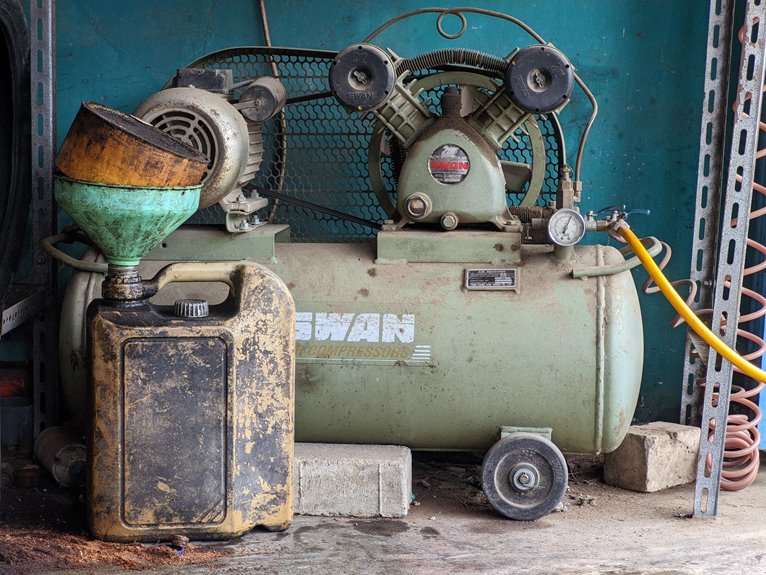
The oil bath wear protection helps reduce friction, so parts stay cooler and last longer. That means oil lubricated longevity you can trust as your workday runs past the easy stretch.
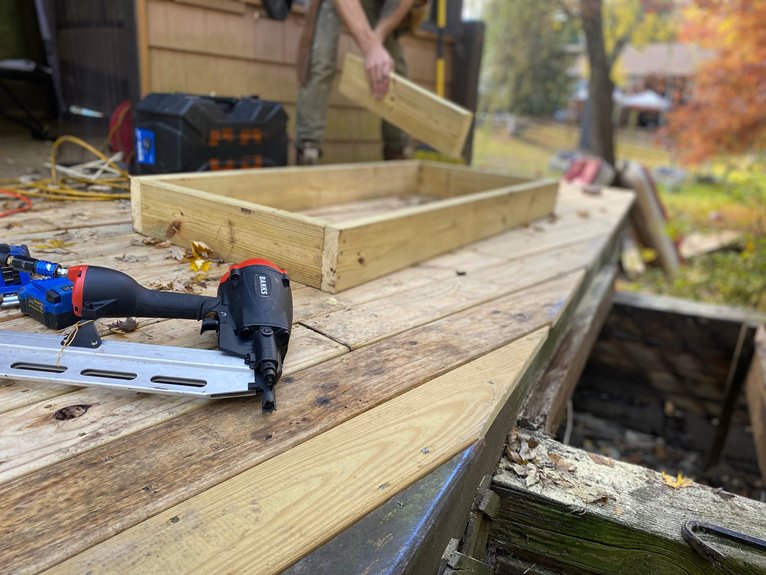
If you use sanders, nailers, or other demanding tools, you may feel more confident with a compressor that handles stress without fading fast.
Yes, you’ll check oil levels, but that small task often pays back in smoother operation, less wear, and fewer surprises. For many crews, that reliability feels like having a solid teammate.
Portable or Stationary: Which Fits You Best?
Should your compressor move with you, or stay in place and power the whole shop? The answer depends on how you work and how much space you have. If you switch jobs often, a portable unit offers flexibility and fits tight storage needs without crowding your garage. If you use bigger tools at one setup, a stationary model keeps air ready and steady.
- Choose portable when you move from room to room.
- Choose stationary when one bench does the heavy lifting.
- Match the size to how you actually work, not how you wish you worked.
Then consider noise, hose reach, and how often you’ll lift, roll, or leave it alone.
When your compressor fits your routine, you’ll work with less hassle and feel more at home in your shop.
Choose the Right Air Compressor Power Source
Once you know whether your compressor will stay put or move with you, the next big choice is where its power will come from.
Match the power source to your space and tools by checking whether a 120V outlet, a 240V line, gas, or battery setup fits your plan. If you work in a garage or small shop, your voltage and outlet needs may point you to a standard plug in model. If you work far from outlets, gas or battery units can keep you running without extra cords.
Also, confirm the breaker size and plug style before you buy. That simple step can save headaches later and help you feel ready on day one. Choose the source that fits your work rhythm, and you’ll build a setup that works for you.
Check Duty Cycle and Recovery Time
A compressor that looks strong on paper can still let you down when its duty cycle is too low for your work. You want a model that keeps up without forcing you to stop and wait. Whenever you sand, spray, or fasten for long stretches, check how long the unit can run before it needs rest.
- Look for a high duty cycle, especially when you work in shared spaces where tools stay busy.
- Ask how long recovery downtime takes after the tank drops.
- Make sure compressor cooling helps the motor recover safely and keeps air moving.
When recovery is quick, you spend less time stalled and more time working with your crew.
That steady flow keeps your project moving and your momentum strong.
Single-Stage vs. Two-Stage Compressors
When your compressor keeps up without long pauses, the next question is how hard it has to work to maintain that pace.
A single-stage compressor compresses air once, giving you a simple setup that works well for lighter tool use and smaller jobs. It’s a good choice when you want easier maintenance and a lower starting cost.
But when your tools require more pressure and longer run times, a two-stage compressor can be a better fit. It compresses air twice, so the motor works more efficiently and the air stays ready for tougher tasks.
When you’re building a shop that needs to be dependable, match the design to your tool load, your work pace, and the amount of margin you want on busy days.
How Noise and Placement Affect Use
Even when a compressor has the right CFM and PSI, noise and placement can determine whether it feels like a tool you can live with or one you want to hide in the garage. You deserve a setup that fits your space and your tolerance for noise, so consider both before you buy.
- Choose a quieter model if you work near family, neighbors, or clients.
- Use noise control measures such as rubber feet, a solid mat, or a separate room.
- Make placement planning part of your setup so the unit has airflow, easy access, and less vibration.
When you place it well, you reduce stress and keep your workspace comfortable. That makes you more likely to use it often, and that’s what really matters.
How Hose Length Affects Air Loss
Long hose runs can slow the air before it reaches your tool, so you may notice a pressure drop over distance.
You can reduce that loss by using a wider hose, since it moves air with less resistance.
Whenever possible, keep the hose shorter so your compressor works more efficiently and your tools stay stronger.
Pressure Drop Over Distance
As air travels through a hose, it loses pressure, so a compressor that looks big enough on paper can feel smaller in real use. You can stay ahead of that with smart planning.
- Keep the hose as short as your job allows.
- Check line pressure losses before you buy.
- Use distance compensation charts to estimate what reaches the tool.
When you work farther from the compressor, the pressure drop adds up, and your nailer, stapler, or sprayer may slow down.
That’s why you should match the setup to the farthest point you’ll use, not just the spot beside the machine.
Whenever you move around a lot, build in extra margin so your crew can work with confidence.
A little foresight keeps the whole system steady and helps you avoid weak bursts of air.
Wider Hose, Less Loss
A wider hose can help reduce weak, frustrating airflow because it gives air more room to move with less resistance. When you choose a larger hose, you get hose diameter benefits that help your tool stay stronger at the trigger. That means less pressure loss as air travels, so your compressor doesn’t have to work as hard to keep up.
You can also protect performance with airflow preservation tips, such as keeping fittings tight, avoiding crushed bends, and checking for worn couplers. If you have ever felt a tool fade in the middle of a job, you know how that can slow your whole crew down. With the right hose size, you stay in the flow, and your tools feel ready when you are.
Shorter Hoses For Efficiency
Keeping your hose shorter gives air a faster path to your tool, and that can make a real difference on the job. You stay in control, and your compressor works with less strain. That means better hose efficiency and fewer pressure drops.
- Pick the shortest hose that still lets you move safely.
- Check fittings often, because leak prevention starts with tight connections.
- Store your hose neatly so kinks don’t slow airflow.
A long hose can feel handy, but it can also waste power and make tools lag. When you work with your crew, you’ll notice that a well sized hose helps everyone get smoother starts, steadier output, and less frustration.
Small changes like this keep your setup strong and your workday moving.
Size Up Your Budget and Running Costs
Before you bring a compressor home, it helps to look past the sticker price and consider the money it will require over time.
Your budget planning should include the compressor, hoses, filters, and any adapters your tools need. Then add operating costs such as electricity, oil, replacement parts, and filter changes.
A cheap unit can cost more if it runs longer or breaks down often. Compare noise, maintenance, and power needs before you buy.
If you work often, choose a model that fits your routine without straining your budget. That way, you can join the shop crowd with gear that feels reliable, not risky, and your investment won’t turn into a constant surprise.
Common Air Compressor Mistakes to Avoid
A small tank can look like a bargain, but it can leave you waiting for air at the moment your tool needs it most.
You can also run into trouble if you disregard duty cycle, because a compressor that needs too many breaks won’t keep up with long jobs.
When you match both tank size and run time to your work, you avoid a lot of frustration later.
Undersized Tank Issues
An undersized tank can make even a good compressor feel unreliable because it runs out of stored air too quickly and forces the motor to cycle far more often than it should. As soon as your air reserve drops, your tools feel inconsistent, and you lose the steady rhythm that helps you work with confidence.
- You notice frequent refill cycles during simple tasks.
- Your nailer hesitates as soon as the pressure falls.
- Your sander feels weak before the job is done.
Ignoring Duty Cycle
When your compressor keeps running because the tank feels too small, the next thing to check is often the duty cycle. If you ignore it, you can push the machine past its compressor runtime limits and end up with hot air, weak pressure, and stalled work.
You may think bigger tank capacity basics solve everything, but they only store air for a bit longer. They don’t make the motor rest less.
So, match your task to the rating. For light trim work, intermittent use may be fine. For sanding or painting, you’ll want a higher duty cycle, maybe even 100%.
That way, you stay in the groove with your crew, not waiting on a tired compressor to catch its breath.
Best Air Compressor for Your Project
The best air compressor for your project starts with the work you actually plan to do, not with the biggest tank on the shelf. Build a project-specific tool list, then check each tool’s CFM and PSI needs so you don’t end up underpowered or overbuying. When you compare compressor brands, look past the sticker and ask how the unit fits your actual job.
- Match CFM to your toughest tool.
- Confirm PSI and duty cycle for steady use.
- Pick tank size, power source, and noise level that fit your space.
If you’re framing, painting, or fixing bikes with friends, the right match keeps the whole crew moving. Choose a compressor that fits your workflow, because that’s where good jobs start.
Frequently Asked Questions
How Often Will I Use the Compressor Each Week?
You’ll use it daily, weekly, or occasionally, so assess your usage frequency and weekly demand honestly. Frequent use calls for a tougher compressor, while light weekend tasks let you choose a smaller, simpler one.
Do I Need Special Outlets or Wiring for This Compressor?
Yes, check your compressor’s outlet requirements first. Many portable units run on 120V, but larger compressors may require 240V or dedicated wiring. This helps ensure electrical compatibility, prevent overloads, and keep your shop running safely and efficiently.
How Much Maintenance Does This Compressor Require?
You will need routine upkeep. Follow the maintenance schedule, drain moisture, inspect filters, and, if the unit is oil lubricated, change the oil on time. Oil free models need less care, so they require less effort and offer added convenience.
Will I Need to Move the Compressor Between Job Sites?
If you move between job sites often, you will need jobsite mobility. Check portability factors first: weight, wheels, handles, and power source. Choose a compressor that fits your crew’s workflow so it can go where the work takes you.
Is This Compressor Compatible With Future Tool Upgrades?
Yes, provided you leave room for future tool expansion and pressure reserve capacity. You’ll want extra CFM, enough PSI, and a buffer so new tools still feel supported, not rushed, later.