
Nearly 70% of DIY sanding mistakes come from using the wrong tool, so choosing between a belt sander and an orbital sander can save you time and wood. Use a belt sander when you need raw power for rough boards and large flat surfaces, while an orbital sander gives you better control for smoother work and tighter details. The real difference becomes clear once you see how each one behaves on the wood.
Belt Sander vs Orbital Sander
When you compare a belt sander vs an orbital sander, the biggest difference is power and control. A belt sander delivers strong sanding action, so it can level rough boards, remove old finish, and handle large jobs quickly.
An orbital sander offers better control, so it’s a better fit when you need to protect edges, smooth small parts, or prepare a surface for paint. If you’re choosing between power source options, both corded and cordless models can work, depending on your space and pace.
Dust collection systems also matter, because clean air helps you stay focused and comfortable. If you want fast stock removal, choose a belt sander. If you want a smoother touch, an orbital sander is the better choice.
What Is a Belt Sander?
A belt sander is a power tool that uses a moving loop of sandpaper to remove wood quickly, and that speed can be a real advantage when you’re working on a rough, uneven surface. You guide it across boards, and it levels high spots, strips old finishes, and shapes edges with confidence. Inside, motor components drive the rollers, while belt tensioning keeps the sandpaper tight and steady.
That setup gives you strong cutting power, but it also means you need a firm hand and respect for the tool. You’ll notice the tool feels heavier than smaller sanders, yet that weight helps you stay in control on large, flat jobs. When you need fast progress and a cleaner workday, this is the tool that can help.
What Is an Orbital Sander?
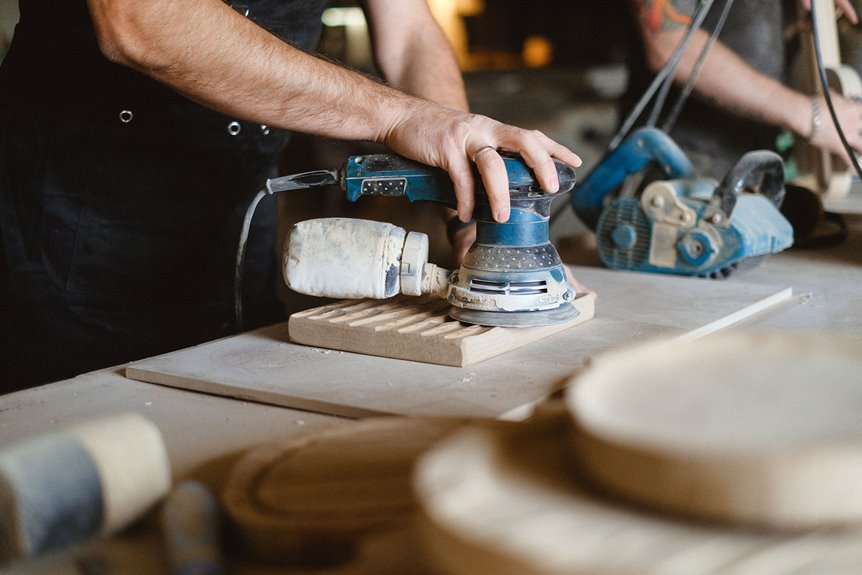
When you need smooth control instead of raw speed, an orbital sander is often the tool that feels easiest to trust. You hold it steady, and its pad moves in small circles or random paths, helping you shape wood without digging in too hard. That gentler action makes it a good fit whenever you want a cleaner finish and less stress on the surface.
- Its motor design supports lighter sanding tasks.
- Dust collection helps keep your work area clearer.
- You can use it for sanding between coats or on smaller pieces.
Because it removes material slowly, you get more control and less risk of marks. So whenever you want a careful finish, this tool fits right in.
How Belt and Orbital Sanders Work
Now that you know an orbital sander works with a light, controlled motion, it helps to see why a belt sander feels so much stronger in your hands.
Inside both tools, the motor mechanism turns spinning energy into sanding motion.
In a belt sander, power transmission drives a looped belt around two drums, so the abrasive keeps moving fast across the wood. That steady pull lets you remove material quickly.
In an orbital sander, the motor spins a pad that moves in small circles or random loops, which gives you gentler control.
So, as you guide the tool, you’re really steering the sanding pattern.
That’s why one tool feels bold and the other feels easy to tame, even on a busy workbench.
When to Use a Belt Sander
Provided you need to strip away a lot of wood fast, a belt sander is the tool you reach for first. You’ll feel at home with it when you’re leveling rough lumber, fixing uneven edges, or tackling large surface flattening jobs that would take forever by hand. Its strong belt gives you real paint stripping speed, so you can clear old finish before moving on to finer sanding.
- Use it on flat boards and tabletops
- Reach for it when glue lines sit proud
- Keep it moving to avoid gouges
Because it removes material so quickly, you gain momentum without extra strain. That makes you feel capable, especially when the project looks messy at first and needs fast, steady progress.
When to Use an Orbital Sander
An orbital sander is the tool you want for lighter sanding jobs that need a smooth, clean finish.
Use it for light sanding on trim, cabinets, or small furniture pieces.
It gives you control, so you can work with confidence instead of rushing and hoping for the best.
When you’re handling delicate refinishing, it helps you remove just a little material at a time, which protects thin surfaces and keeps edges from getting worn down.
It also fits well in tighter spots and on rounded shapes, so you can move with the grain of the project, not against it.
If you want to prep between coats or freshen up a piece without drama, this is the right tool.
Which Sander Gives a Smoother Finish?
If you want the smoother finish, an orbital sander usually wins because it leaves fewer sanding marks on the wood.
Its random motion gives you better control, so you’re less likely to create scratches or swirl marks that show up after staining.
A belt sander can still help at the start, but you’ll usually want the orbital sander for the final pass.
Surface Finish Quality
Whenever you want a smoother finish, an orbital sander is usually the better choice because it leaves the surface finer and more even.
When you compare surface sheen, you’ll notice that it helps wood look calm and ready for stain or paint. Its finish refinement level suits final passes, so you can work with confidence instead of fighting the tool.
- It glides with gentle motion, so you get a cleaner touch.
- It’s easier to control on small or rounded spots.
- It supports that neat, finished look your project deserves.
A belt sander still has value when you need fast shaping, but it often leaves you needing extra cleanup.
Sanding Pattern Marks
A smoother finish starts with how the sander leaves marks behind, and that’s where the difference really shows. When you compare belt and orbital tools, the sanding pattern comparison is easy to spot.
A belt sander cuts fast, but it can leave straight lines that you may feel under your hand. That can make the surface look busy, almost as if it rushed through your project.
An orbital sander moves in tiny circles, so it spreads marks out more evenly. That helps prevent swirl marks and gives a calmer, cleaner look.
If you want your work to be pleasing to the eye and the touch, the orbital sander usually wins here. You still get control, and the finish looks more natural on wood.
Fine Finish Control
Which tool gives you the cleanest final surface? You’ll usually trust the orbital sander when you want a smoother finish. Its random motion helps you avoid swirl marks, so your work looks calm and even, not tired. A belt sander can level wood fast, but it often needs a follow-up pass because it can leave rough lines and edge burnishing.
- Use the belt sander for rough shaping.
- Switch to the orbital sander for final touchups.
- Keep dust collection working well so you can see the surface clearly.
When you slow down and guide the tool with care, you get better control on trim, panels, and curved spots. That’s why many woodworkers feel at home with an orbital sander at the end.
Best Sander for Woodworking
For woodworking, the best sander depends on the task and the finish you want next.
When you need fast flattening, choose a belt sander. It strips rough boards, levels glued joints, and saves time on large surfaces.
If you want a smoother result, choose an orbital sander. It gives you better control, so you can finish edges, curves, and smaller parts with confidence.
Dust collection and ergonomic comfort also matter, especially during longer sessions.
Many woodworkers use both tools because each one serves a different stage of the job. That approach helps you work efficiently and achieve better results.
Best Sandpaper Grits for Each Sander
Once you know when to use a belt sander or an orbital sander, the next step is picking the right sandpaper grit so the tool works with you, not against you.
For grit selection, start coarse with a belt sander, then move finer as the surface levels out. You’ll usually reach for 40 to 80 grit on rough wood, then 100 to 120 grit for cleanup. With an orbital sander, begin around 80 to 120 grit, then finish with 150 to 220 grit for a smoother touch.
- Use coarse belts for fast removal.
- Use medium grits to smooth the marks.
- Use fine discs for final passes.
That abrasive progression helps you stay in control and feel confident with every step.
Common Belt Sander Mistakes
You can get into trouble with a belt sander quickly if you press too hard, choose the wrong grit, or move too slowly.
These mistakes can leave deep marks, remove too much wood, or make the surface uneven before you know it.
Once you understand how the tool behaves, you can guide it with a lighter touch and keep your work under control.
Applying Too Much Pressure
Pressing a belt sander too hard can turn a useful tool into a fast track to a ruined surface, and that’s where many DIY jobs go sideways.
You don’t need to muscle it. Let the belt do the work, and keep your hands steady. Too much force can overheat surfaces and create uneven pressure, which leaves dips, ridges, and worn spots.
- Hold the tool with a light, firm grip.
- Move at a steady pace across the board.
- Check your progress often, then ease up whenever the sander starts to dig in.
When you stay relaxed, you’ll feel more in control and get cleaner results. That’s the kind of smooth teamwork every woodworker wants.
Using Wrong Grit
Choosing the wrong grit can make belt sanding feel harder than it should, and that’s frustrating when you just want the board to look right.
If you start too coarse, you can gouge the wood and create extra cleanup work. If you start too fine, the belt just skates over rough spots and wastes your time. That sandpaper grit mismatch usually shows up when you rush the job or grab whatever belt is nearby.
Instead, match the grit to the surface, then move through the grit progression in order. Start rough only when you need heavy removal, then shift to medium and finer belts for a smoother result.
When you follow that path, you stay in control and feel more confident with every pass.
Moving Too Slowly
If a belt sander crawls across the wood, it often means you’re moving too slowly for the tool to do its job cleanly.
You start to dig trenches, burn spots, and wear one area down before the belt can travel on. Keep your sanding speed steady so the tool cuts evenly and stays gentle on the surface. Good workflow pacing helps you feel in control, not rushed.
- Glide forward with light, even pressure.
- Keep the sander moving before the belt settles.
- Match your pace to the wood, not your nerves.
If you pause too long, the belt cuts deeper than you planned, and that can turn a solid board into a repair project.
You don’t need speed for speed’s sake. You need a smooth rhythm that lets the sander work with you.
Common Orbital Sander Mistakes
Even a handy orbital sander can become a problem if you use it the wrong way, so it helps to know the most common mistakes before you start.
You can push too hard and leave dips, or tilt the pad and create rounded edges on corners. You may also overlook dust collection problems, which clog the pad and cause the tool to scratch instead of smooth. Another mistake is using worn paper, since dull grit slows you down and leaves a rough finish.
If you rush between grits, you can trap marks under the next layer. Keep light pressure, let the pad do the work, and check your surface often. That way, you’ll feel more confident and finish with the clean look your project deserves.
How to Choose Between Them
You can choose by matching the tool to your project. A belt sander handles big, rough surfaces, while an orbital sander fits smaller or more detailed work.
When you need fast material removal, use the belt sander. When you want better control and a cleaner finish, the orbital sander is the safer pick.
Many jobs call for both, so you can rough shape first and then smooth things out afterward.
Project Type
Project type is often the easiest way to choose between a belt sander and an orbital sander, because the job itself usually points you in the right direction.
When you’re handling large projects, a belt sander fits the pace and helps you move quickly. For curved surfaces, an orbital sander feels easier to guide and control.
You’ll notice the difference fast:
- Flat tabletops and doors give you room for a belt sander.
- Corners, trim, and rounded edges suit an orbital sander.
- If the task feels delicate, choose the tool that gives you more control.
That simple match helps you work with less stress and more confidence. If your project changes shape, your choice can change too, and that’s perfectly normal.
Material Removal
When material removal is the main task, the choice is much easier because each tool cuts at a very different speed.
If you need fast stock removal, choose a belt sander. It powers through rough lumber, old finish, and uneven spots quickly, which makes it a strong option for aggressive sanding on wide, flat surfaces.
If you only need to remove a small amount of material, an orbital sander is the better fit. It removes wood more slowly, which gives you better control while you work. In a shop setting, that can help reduce mistakes and improve precision.
Control And Finish
Although both tools sand wood, they serve very different needs when control and finish quality matter. You’ll feel the difference quickly. An orbital sander moves with gentler control, while a belt sander can run away if you press too hard. When you want a smooth surface, the orbital sander is the better choice because it leaves fewer marks and requires less cleanup.
- Use a belt sander when you need speed on rough, flat boards.
- Use an orbital sander when you want a cleaner finish on visible surfaces.
- Keep safety precautions close, since both tools can catch edges.
- Good dust collection helps you see the grain and stay comfortable.
If you’re aiming for a finish that feels professional and calm, choose the tool that matches your pace.
Frequently Asked Questions
Can Either Sander Be Used on Metal Surfaces?
Yes, you can use either sander on metal, but you will want the right abrasive. They are useful for rust removal and metal polishing, though you should work carefully because they can scratch or overheat surfaces.
Do Belt Sanders Require More Maintenance Than Orbital Sanders?
Yes, you will usually maintain a belt sander more often. It needs regular checks for belt alignment, dust buildup, and roller wear. Orbital sanders typically require less maintenance and have simpler service schedules.
Which Sander Is Louder During Operation?
You’ll usually hear a belt sander louder than an orbital sander because it runs with more power and a faster belt. For a noise comparison, the orbital sander generally has the advantage because it operates more quietly.
Are Replacement Sandpaper Pads More Expensive for Orbital Sanders?
Usually, you will pay more for orbital replacement pad pricing, but it depends on the brand and size. You will also find a wider variety of sandpaper grits, so you can choose what fits your project and budget best.
Can Beginners Learn One Sander Faster Than the Other?
Yes, beginners usually get the hang of an orbital sander faster. Its learning curve is gentler, and its ease of control feels almost natural. You will adapt quickly, while a belt sander requires more respect, patience, and steady hands.