Combination squares earn their keep in a workshop fast, because a small measuring error can ripple through a cut list, a shelf build, or a trim job. You want a tool that feels steady in the hand, reads clearly, and fits the kind of layout work you actually do, from framing to fine joinery.
Some of the picks here lean toward sturdy metal bodies and longer blades, while others focus on compact size or bundled accessories. That mix matters, because a home project box, a jobsite pouch, and a student bench all ask for something a little different.
Quick Look At The Shortlist
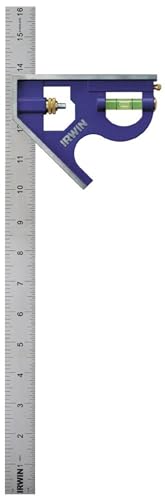
IRWIN Tools Combination Square 16-Inch

IRWIN Combination Square 12-Inch

IRWIN Tools Combination Square 6-Inch

Mr. Pen Rafter and Combination Square Set

SHALL Rafter and Combination Square Set

Lurui Stainless Steel Sliding Combination Square Set

Starrett Student Combination Square 150mm

Starrett Steel Combination Square 12-Inch
More Details On Our Top Picks
The 16-inch blade gives you more reach for cabinet work, framing checks, and marking longer stock without constantly shifting the tool. The cast zinc body adds a bit of heft, which helps the square feel planted rather than flimsy, though that same weight is less welcome in a small pouch.
Compared with the 12-inch IRWIN, this one is the more comfortable choice for broader boards and general shop use. The honest read is that it suits steady bench work better than tight site carry, and that’s fine for many home workshops.
Strong Points
- Longer blade helps with wider panels and trim stock.
- Cast zinc body adds reassuring weight in hand.
- Blue finish makes it easy to spot on a bench.
- Good fit for carpentry layout and marking tasks.
Things To Consider
- The larger size takes more space in storage.
- Heavier metal construction can feel bulky for pocket carry.
- No bundled extras, so you’re buying the square itself.
Feature Snapshot
Who It Suits Best
You get the most from this one in a garage shop, on framing work, or around larger woodworking projects where extra reach matters.
A Better Fit Elsewhere
The IRWIN Combination Square 12-Inch suits you better for lighter daily measuring and easier carry around the house or jobsite.
The 12-inch length hits a practical middle ground, long enough for common woodworking checks without feeling oversized. Black precision-etched scales are easier to read than printed markings in a busy shop, and the 45-degree and 90-degree marking setup helps with common layout tasks.
Compared with the 16-inch IRWIN, this one is easier to store and move between benches, which matters for apartment workshops or shared tool drawers. You may still want a longer blade for larger sheet goods, but for most everyday measuring it feels nicely judged.
What We Like
- Etched scales are easier to read than faint printed lines.
- 12-inch length suits everyday measuring without excess bulk.
- 45-degree and 90-degree marking support common square checks.
- Cast zinc body brings a solid hand feel.
Small Caveats
- Longer stock still calls for a larger square.
- Metal finish needs normal wipe-down care after dusty work.
Core Details
Built With In Mind
You’ll like this most for general woodworking, furniture assembly, and household repair work where a mid-size square feels just right.
Another Choice May Suit
Starrett Steel Combination Square 12-Inch suits you better when finer graduation detail matters more than a straightforward shop square.
Shorter tools can be a relief in a crowded workspace, and this 6-inch IRWIN fits that role neatly. The black precision-etched scales are built for clear 90-degree and 45-degree readings, which helps when you’re checking small parts or marking inside a tool bag.
Compared with the 12-inch IRWIN, this one gives up reach for portability, and that trade-off is the whole point. For trim carpentry, hobby benches, and quick on-the-go checks, the smaller footprint makes life easier.
Highlights
- Small footprint slips into a pouch with little fuss.
- Clear angle markings suit quick layout checks.
- Metal body feels sturdier than flimsy plastic alternatives.
- Handy for close-up work on small boards and parts.
Room For Improvement
- Limited reach makes it less useful on larger stock.
- Small size can be easier to misplace in a busy shop.
- Best suited to light layout, not broad framing tasks.
Details At A Glance
Whose Shelf It Belongs On
You’re a good match for this one if you want a compact square for small projects, tool rolls, or travel between job sites.
Where A Sibling Pick Shines
IRWIN Combination Square 12-Inch is the better fit for you once your work moves beyond small parts and into fuller board layout.
This bundle speaks to a practical shop setup, because you get a 12-inch combination square and a 7-inch rafter square together. The combination square can pull double duty as a level, depth gauge, and ruler, while the rafter square gives you a straight edge for marking and cutting.
That mix makes more sense than a single-tool purchase for new DIY setups, though the trade-off is that neither piece feels as specialized as a premium stand-alone square. For basic home framing, shelf work, and starter toolkits, the bundle saves you from piecing things together later.
Reasons To Buy
- Two-square bundle covers more than one layout job.
- 12-inch size works for common household projects.
- Rafter square adds marking and sawing support.
- Useful for a first workshop kit.
Points To Note
- Bundle focus means you may not need both pieces right away.
- Not as specialized as higher-end single squares for fine work.
Feature Card
Made For
You’ll get the most from this set in a starter shop, garage project corner, or home repair kit where versatility matters more than polish.
Swap It Out When
IRWIN Tools Combination Square 16-Inch makes more sense for you once the work shifts toward larger boards and heavier carpentry layout.
The SHALL set leans into material variety, with an aluminium-alloy rafter square, a zinc-alloy combination square, and a 16-inch stainless steel ruler in the box. That combination gives you a broader setup than the Mr. Pen bundle, and the included carpentry pencils plus scriber add immediate utility for marking and scribing.
The upside is convenience, especially for someone building a layout kit from scratch. The trade-off is that bundled tools can feel more general-purpose than a specialist square, so fine-finish work may still call for a dedicated premium option.
Upsides
- Three main measurement pieces broaden the toolkit.
- Included pencils and scriber support immediate use.
- Durable alloy materials suit regular workshop handling.
- Good match for setup-heavy project lists.
- 16-inch ruler helps with longer marking runs.
Softer Spots
- More pieces mean more parts to store and keep track of.
- Bundle breadth may be more than you need for simple tasks.
Spec Overview
Right Fit For
You’re in the sweet spot for this set if you want a fuller layout kit for workshop projects, carpentry learning, or jobsite backup tools.
Reach For A Different Pick When
Starrett Steel Combination Square 12-Inch fits you better when your focus is precision-first measuring rather than a bundle of extras.
This set stands out because it goes beyond a basic square and pushes into a broader measuring kit. The stainless steel build is the important part here, since that material is commonly chosen for rust resistance and long service in a workshop drawer or humid garage, though it can still pick up fingerprints and need wiping.
Compared with the bundle-style Mr. Pen and SHALL sets, this one feels more like a measurement system than a simple square pair. That makes it a sensible fit for layout-heavy work, especially for someone who wants several tools in matching material.
Best Bits
- Stainless steel construction supports long-term shop use.
- Four-piece format gives you multiple measuring tools in one set.
- Sliding design broadens layout flexibility.
- Good match for precision-minded workbenches.
Areas To Watch
- Multiple parts mean more pieces to clean and store.
- More complex setup than a simple combination square.
- May feel like overkill for quick household marking.
Core Details
The Right Fit
You’ll appreciate this most in a workshop that values repeatable layout, metal surfaces, and a larger measuring kit.
Look Elsewhere When
IRWIN Tools Combination Square 6-Inch is the better match for quick carry and small part work.
This one is clearly aimed at learning, and that focus shows in the 150mm blade length and the cast iron head. The hardened and tempered blade is paired with inch and millimeter markings, so a student or apprentice can practice reading both systems without juggling two separate tools.
Compared with the brawnier Starrett steel model below, this version is easier to frame around instruction and early skill-building. It feels especially useful on a teaching bench, where clarity matters more than sheer size, though the shorter blade does limit wider work.
Positives
- Mixed inch and millimeter scale supports learning.
- 150mm blade is manageable for bench practice.
- Cast iron head adds a traditional workshop feel.
- Good starter tool for classroom or apprenticeship use.
Honest Caveats
- Shorter blade is less suitable for wide panels.
- Student focus may be more than casual hobbyists need.
- Heavier head can feel a bit much for tiny parts.
Technical Sheet
Whose Shelf It Belongs On
You’re the right fit for this square if you’re learning layout skills, teaching them, or working through apprentice-level projects.
Where A Sibling Pick Shines
Starrett Steel Combination Square 12-Inch suits experienced shop use better once you want more reach and finer grading detail.
Starrett leans into precision here, and the 4R graduation format is the clue. That means the blade is marked in eighths, sixteenths, quick-reading thirty-seconds, and sixty-fourths, which helps you work more confidently on finish carpentry or any layout that needs tighter resolution.
Compared with the student Starrett, this one is built for a more demanding bench. The reversible lock bolt and included scriber also give you a more complete setup, though the higher-spec feel makes it better suited to someone who already knows why the detail matters.
Bright Spots
- 4R graduations support finer measurement reads.
- 12-inch blade fits serious shop and field use.
- Reversible lock bolt adds useful setup flexibility.
- Scriber is included for direct marking tasks.
- Cast iron head brings dependable hand feel.
Trade Offs
- More precision detail means a steeper learning curve for casual use.
- Built for careful work, not rough handling.
- Feels more specialized than beginner-friendly squares.
Feature Rundown
Who Should Grab It
You’re the best match for this square if you care about precise layout, finish carpentry, or a higher-detail bench setup.
Skip It When
Starrett Student Combination Square 150mm is the calmer choice for basic learning or small-scale apprentice work.
How To Choose The Right Combination Squares
Length Matters More Than Most People Think
A 6-inch square is easy to carry and quick to pull out for trim, small boxes, and bench work. A 12-inch model gives you more reach for shelves, framing checks, and panel layout, while a 16-inch blade starts to make sense once your projects involve wider boards or less convenient surfaces.
The trade-off is simple: more reach usually means more storage space and a bit more bulk in hand. For a garage wall or a jobsite tote, that matters more than a spec sheet would suggest.
Readability And Scale Style
Etched or engraved scales hold up better to hard use than markings that sit on the surface. Black-etched graduations, like the IRWIN 12-inch model, are easier to read in a dusty shop, while fine fractional graduations, like Starrett’s 4R layout, help when your work asks for tighter measurement resolution.
That extra clarity costs more because the blade and head are usually built with more care, and the scale layout takes more precision to produce. Casual weekend use rarely needs that level of detail, but finish work and apprenticeship practice often do.
Material Feels Matter
Cast zinc, cast iron, stainless steel, aluminum alloy, and zinc alloy all change the way a square sits in your hand. Heavier heads tend to feel stable on a board edge, while lighter alloy pieces are easier to carry in a pouch or apron.
The right choice depends on your own routine. A home woodworker may prefer the steadier feel of a cast body, while a student or field worker may like a lighter tool that disappears into a bag.
Bundles Versus Stand-Alone Squares
A bundle can make sense when you’re starting from zero, especially if it includes a ruler, pencils, or a scriber. That’s where sets like SHALL and Mr. Pen help, because they reduce the number of separate purchases you need to juggle.
A stand-alone square, though, often gives you a cleaner tool with fewer parts to keep track of. For careful layout work, less clutter can feel like a better trade.
A Quick Reality Check Before You Choose
Traps First Timers Fall Into
Many shoppers focus on length alone and miss the scale style, body material, or included tools. A long blade with faint markings can still frustrate you, especially in dim light or on a dusty bench.
Another common miss is buying a bundle for convenience and then not needing half of it. A simple square often serves better for everyday home repairs, while the extras make more sense in a growing workshop.
The Upgrade Payoff
Higher-tier models usually cost more because of tighter machining, clearer graduations, and sturdier materials. A cast iron head, hardened steel blade, or 4R graduation layout tends to take more manufacturing care than a basic stamped setup.
That upgrade pays off when your work depends on repeatable layout and easy reading. For rough cuts, starter kits, or light maintenance, a simpler square can still be the smarter match.
Frequently Asked Questions
What size combination square works for most home projects?
A 12-inch model usually handles the widest range of household work. It’s long enough for shelves, trim, and general layout without becoming awkward to store.
Are bundles worth it for new toolkits?
Bundles make sense when you need more than one layout tool right away. They’re less compelling when you already own a ruler or rafter square.
What does 4R graduation mean?
4R means the blade is marked in eighths, sixteenths, thirty-seconds, and sixty-fourths. That layout helps you read finer measurements more quickly.
Why do some combination squares feel heavier?
Heavier heads often come from cast zinc or cast iron parts. That extra weight can help the tool sit more steadily on material, though it also adds bulk.
Do students need the same kind of square as experienced woodworkers?
Not usually, because learning tools often focus on clear markings and manageable size. More advanced work benefits from finer graduations and a more precise overall build.
Closing Thoughts
The right combination square depends less on hype and more on the work sitting in front of you. For general shop use, the IRWIN 12-inch and 16-inch models give you a steady middle ground, while Starrett moves deeper into precision territory for careful layout. Bundles from Mr. Pen and SHALL make sense for new kits, and the compact IRWIN 6-inch is easy to keep close at hand. Choose the size and scale that fit your routine, and the tool will earn its place quickly.