Low-profile sanders earn their keep in spaces where a bulky machine feels clumsy, like trim work, body filler, ceiling edges, and long flat panels. You also get a clearer sense of finish quality from a tool that stays steady in hand and handles dust well, especially during weekend projects that stretch past an hour.
The picks below lean toward useful differences, not marketing noise. Some are better for woodworking, some for auto body shaping, and a few make more sense for drywall or broad flat surfaces.
The Shortlist At A Glance

Jellas 7Amp Handheld Belt Sander 3 21 Inch with Dust Bag

BOSCH GSS20-40 Orbital Finishing Sander 1/4-Sheet 2 Amp

Ingersoll Rand 315G Straight Line Air Sander 2.75 x 17.5 Pad

Drywall Sander 1000W Popcorn Ceiling Removal Tool with Vacuum Dust Collection
Ingersoll Rand 311A Dual-Action Angle Air Sander 6 Adhesive Pad

Ingersoll Rand 315 Straight-Line Air Sander 2.75 x 17.5 Pad
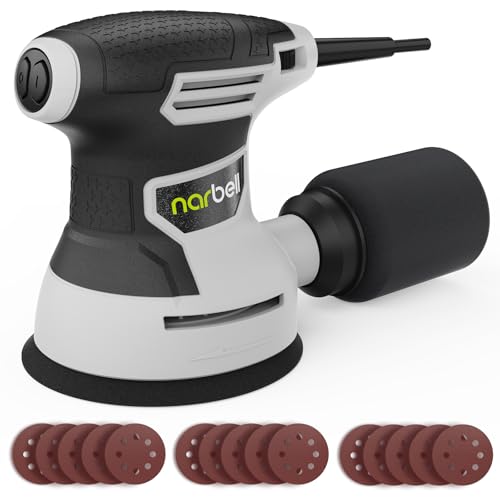
NARBELL Orbital Sander 3.0AMP 360W 14000RPM Random Orbit Sander Tool

DCK Random Orbital Sander 3.0 AMP Corded Palm Sander 5-Inch
More Details On Our Top Picks
For woodworkers who want a handheld belt sander without a lot of fuss, this Jellas unit brings a useful mix of reach and cleanup support. The 10-foot cord gives you room to move around a bench or large board, and the 2-in-1 vacuum adapter helps the dust bag setup feel less limiting than a bag alone.
The trade-off is the usual belt-sander reality, it’s built for fast material removal, not delicate finish work. That makes it better for trimming, flattening, and rough shaping than for a final pass on visible surfaces, and the 3 x 21 inch belt format is a better fit for broad work than tight corners.
Strong Points
- Variable speed control helps you slow things down for touchier wood tasks.
- The long cord gives you more freedom around larger benches and panels.
- The dust bag plus adapter setup gives you a more practical cleanup path.
- Handheld belt format suits faster stock removal on flatter sections.
Points To Note
- Belt sanders leave a more aggressive finish, so you’ll still want a follow-up pass on visible work.
- The shape is less friendly in tight inside corners and narrow trim areas.
- Dust management depends on the attachment path you use, so setup matters.
Feature Card
Who It Suits Best
You’ll get the most from this if your projects focus on boards, tabletops, shelves, or rough leveling where speed matters more than ultra-fine finishing.
Where A Sibling Pick Shines
BOSCH GSS20-40 Orbital Finishing Sander 1/4-Sheet 2 Amp is the better fit for smoother finish work and lighter surface prep.
Compared with the Jellas belt sander, this BOSCH leans toward controlled finish work rather than fast stock removal. A 1/4-sheet format usually feels easier to guide on cabinets, doors, and painted trim, and the dust collector helps keep sanding dust from spreading across the workspace.
That combination makes sense in a home shop or garage where you want cleaner edges and less aggressive abrasion. The 2 amp motor and 12,000 OPM, or oscillations per minute, point to light, steady sanding rather than heavy shaping, so the honest read is that it suits detail-minded work more than rough correction.
What We Like
- The 1/4-sheet format gives you a familiar, easy-to-control sanding footprint.
- 12,000 OPM supports smoother finish prep on wood and coated surfaces.
- The dust collector helps limit cleanup after small or mid-size jobs.
- Its lighter-duty profile suits sanding that calls for restraint, not force.
Room For Improvement
- It is not the right tool for rapid leveling or heavy material removal.
- The sheet style asks for more changeover attention than a simple belt setup.
- You may find it slower on very rough surfaces that need a first aggressive pass.
Quick Facts
Who Should Grab It
This fits finish carpenters, garage hobbyists, and home improvers who want a calmer sander for trim, panels, and touch-up work.
Skip It When
Ingersoll Rand 315G Straight Line Air Sander is the smarter route for body filler and long, flat automotive panels.
The 315G is built for straight-line work, and that matters the moment you start leveling filler or chasing a long, flat panel. Its twin-piston layout keeps reserve power in the system, so the tool is less likely to bog down during tougher passes, which is exactly what you want in auto body prep.
Compared with the BOSCH finishing sander, this is much more specialized and less forgiving in casual woodworking roles. The low-vibration body and lighter build help during longer sessions, though the air-tool setup means you’ll be thinking about compressor compatibility and hose management too.
Highlights
- Twin pistons help keep torque in reserve during tougher sanding passes.
- The long pad suits body filler shaping and flat-panel leveling.
- Low vibration improves comfort during longer body shop sessions.
- The lighter body can feel easier to guide on extended surfaces.
Minor Gripes
- It is a specialty air tool, so it makes less sense for general home sanding.
- You’ll need an air setup, which adds planning and workspace clutter.
- The format is not meant for tight detail corners.
Spec Overview
Whose Shelf It Belongs On
You’ll get the most from this in a body shop or home garage where long panels and filler work come up often.
Another Choice May Suit
Ingersoll Rand 315 Straight-Line Air Sander is a better match for someone who wants the same style of tool with a more straightforward, classic setup.
Where the previous picks stay close to handheld sanding, this Protmex machine is aimed at walls and ceilings. The extendable, foldable handle matters because ceiling work can get awkward fast, and the LED light helps you see low spots and patch lines in dim rooms or corners.
The 6-speed range and 800 to 2200 RPM span give you room to slow down for touchy surfaces or speed up when you need coverage. The honest caveat is size and setup, since a drywall tool like this makes more sense for remodels, texture removal, and room-by-room projects than for quick touch-ups.
Upsides
- The long handle helps you reach ceilings without constant ladder repositioning.
- Built-in dust collection is a major plus during drywall sanding.
- The LED light helps you spot uneven patches and missed areas.
- Variable speed gives you more control over different wall surfaces.
- The included sanding discs give you a starting point for immediate work.
Areas To Watch
- It is specialized gear, so it is not the right fit for small wood finishing tasks.
- Storage takes more room than a compact palm sander.
- The setup is more involved than a basic handheld tool.
Details At A Glance
Built With In Mind
This is the right fit for remodelers, drywall patchers, and home improvers handling large wall or ceiling areas.
Look Elsewhere When
DCK Random Orbital Sander is the more sensible pick for furniture, trim, and general sanding around the house.
The 311A sits in the middle ground between detail control and more forceful air sanding. Dual-action motion helps reduce the chance of obvious swirl patterns, which is useful in repaint prep, while the side exhaust keeps air moving away from the working face.
Compared with the 315G, this one is shorter and more compact in spirit, so it suits tighter areas and angle work better than long-panel sanding. The 0.25 hp rating and 12,000 RPM tell you it has enough pace for prep work, though you still need the compressor setup that comes with any pneumatic tool.
Best Bits
- Dual-action motion helps support cleaner finish prep.
- The 6-inch adhesive pad covers a useful amount of surface.
- Side exhaust keeps the airflow directed away from the work area.
- Compact angle-tool style suits tighter body prep zones.
Softer Spots
- It is an air tool, so compressor access is part of the equation.
- The design is better for prep than for heavy shaping.
- Adhesive-pad systems ask for cleaner disc handling during swaps.
Core Details
Who Will Love This
You’ll appreciate this most in auto detailing, paint prep, or bodywork where a compact air sander is easier to place than a long-format tool.
Reach For A Different Pick When
BOSCH GSS20-40 Orbital Finishing Sander is the calmer choice for household sanding and lighter finish work.
Compared with the 315G, this 315 keeps the same straight-line format but reads as the cleaner, more classic air-sander option. The long pad helps you stay flat on body filler and large panels, which is exactly where straight-line machines make the most sense.
The 3000 spm pace, or strokes per minute, points to steady, controlled sanding rather than frantic removal. That said, it is still a pneumatic tool, so you’ll want to think about air supply, hose routing, and where the machine will live in your shop between jobs.
Reasons To Buy
- The long pad supports even contact on extended surfaces.
- Straight-line motion suits filler leveling and panel shaping.
- The tool profile is easy to understand for experienced bodywork users.
- Steady stroke rate favors controlled pass after controlled pass.
Small Caveats
- The tool is specialized, so it has little value in casual home sanding.
- Air-tool storage and compressor use add extra setup steps.
- The pad length can feel awkward in tight, curved spots.
Feature Rundown
Perfect Match For
This belongs with someone doing body filler work, panel smoothing, or similar automotive prep in a dedicated workspace.
Where A Sibling Pick Shines
Ingersoll Rand 311A Dual-Action Angle Air Sander is better for compact angle work and more flexible prep tasks.
This NARBELL feels like a strong all-around palm sander for shop tasks that call for flexibility. The 3.0 amp motor, 14,000 RPM top speed, and six settings give you more room to tailor the pace than the simpler two-speed-feeling tools in this list.
The included dust bag and 15 sanding sheets make it appealing for someone setting up a home sanding kit without piecing together everything separately. In most garages, that convenience matters more than flashy wording, though the trade-off is that random-orbit sanding still needs the right grit choice for the best result.
Bright Spots
- The variable-speed layout helps you match the tool to different surfaces.
- The kit includes sanding sheets, which makes setup easier.
- The dust bag supports cleaner work in enclosed spaces.
- Its palm-sander size is easy to keep under control.
- The motor and speed range give it useful range for home projects.
Worth Noting
- The included discs may not cover every grit step you want for a project.
- Dust collection through a bag is helpful, but not as complete as a larger extractor setup.
- The machine still asks for some practice with grit selection and pressure.
At A Glance
Made For
This suits home woodworkers and DIY improvers who want a corded palm sander that feels adaptable without becoming complicated.
Another Choice May Suit
DCK Random Orbital Sander is the better fit for someone who values low vibration and a similarly compact 5-inch form.
The DCK lands in the sweet spot for everyday sanding around furniture, shelves, and home repair jobs. Compared with the NARBELL, it keeps the same 5-inch palm-sander shape but adds a low-vibration note that should feel easier on your hands during longer sessions.
Six speed settings and a 12,000 OPM ceiling give you room to slow down for finish work or speed up for surface prep. The dust bag and included papers make it a practical starter kit, though the real value comes from pairing that comfort with a tool you can keep reaching for without much mental overhead.
Standout Traits
- Low vibration helps the tool feel calmer during extended sanding.
- The 5-inch size suits common home and furniture tasks.
- Six speeds let you tune the pace for different surfaces.
- The dust bag and included papers make the kit ready for use.
Honest Caveats
- The tool is still corded, so outlet placement matters.
- Dust bag collection is useful, but it will not replace a larger dust system.
- Like most random-orbit sanders, surface finish still depends on your grit choice.
Feature Snapshot
Right Fit For
You’ll likely appreciate this most for mixed-use home sanding, especially furniture touch-ups and general woodworking cleanup.
Swap It Out When
Jellas 7Amp Handheld Belt Sander is the smarter call for aggressive material removal on larger wood surfaces.
How To Choose The Right Low Profile Sanders
Match The Tool To The Surface
Low-profile sanding starts with the material in front of you. Belt sanders make sense for faster leveling on wood, while random-orbit and orbital finishers are better for smoother surface prep and less obvious scratch patterns.
Straight-line air sanders belong in bodywork, where long flat panels and filler need a steady, even path. Drywall tools are a different lane entirely, and their reach, dust handling, and head size matter more than handheld agility.
Look At Control Before Raw Power
Speed range, vibration, and grip shape matter more than a big motor label in many real jobs. A 5-inch palm sander with six speeds can feel more useful than a heavier machine that never settles into your hand.
Low vibration helps during longer sanding runs, especially on furniture or trim, because it reduces fatigue and helps you stay more precise. The trade-off is that gentler tools remove material more slowly, so rough jobs still call for a more aggressive format.
Dust Handling Changes The Whole Job
Dust bags, collectors, and vacuum adapters sound simple, but they change how long you can work before cleanup becomes a nuisance. In a garage, that can mean less mess around finished pieces, and in a house, it can mean less settling dust on nearby surfaces.
Some tools pair better with external extraction, while others keep the setup self-contained. The right choice depends on where you sand most often and how much cleanup you want to deal with afterward.
Think About Power Source And Space
Corded sanders are steady and easy to keep running, which suits benches, shops, and fixed work areas. Pneumatic models ask for an air compressor, so they make sense only when you already have the setup or plan to build one.
For ceiling work, drywall sanding, and long passes, reach and storage become part of the decision too. A compact tool can live on a shelf beside your other gear, while a large wall sander wants more room and a clearer plan.
Things Worth Knowing First
Common Shopping Slip Ups
A lot of sanding regret starts with choosing the wrong style for the job. A belt sander feels efficient on wood, but it can be too aggressive for finish surfaces and too awkward for tight corners.
Another common miss is overlooking dust control, which matters more than it first appears. A solid collection setup keeps the work area cleaner and helps you stay focused longer.
The Upgrade Payoff
Higher-tier sanders usually cost more because of steadier motors, better comfort features, and more specialized layouts. That extra spend often shows up in reduced vibration, better control, and a tool that fits a narrow job more cleanly.
The upgrade makes sense for frequent use, bodywork, or large remodeling jobs where consistency matters. For occasional shelf sanding or a small repair, a simpler model often covers the need without extra complexity.
Closing Thoughts
Your best match depends on the kind of sanding you do most often, not the loudest spec on the page. For woodworking, the Jellas and BOSCH picks cover two different moods, one aggressive and one controlled. For automotive or drywall work, the Ingersoll Rand pair and the Protmex serve more specialized needs. Choose the tool that fits your surface, your space, and the amount of cleanup you’re willing to live with, and the rest gets easier.