Measuring a part correctly can save a lot of second-guessing, especially in a machine shop, home garage, or repair bench where fit matters down to a hairline. These micrometers suit you if you want tighter size checks than a caliper usually gives, with options ranging from simple analog tools to a digital thickness gauge for sheet-like materials. The list leans toward outside micrometers, so you can match the tool to shafts, stock, and finished parts without overbuying extra range you may never use.
Some picks favor broader coverage, while others focus on finer control or easier reading. That mix gives you a cleaner way to choose the right tool for your work.
Quick Look At The Shortlist

HDLNKAK Outside Micrometer Set 0-3 Inch 3 Pcs

HDLNKAK Outside Micrometer Set 0-4 Inch 4 Pcs

HDLNKAK Outside Micrometer 0-1 Inch

HDLNKAK 0-6 Inch Outer Diameter Micrometer Set 6-Piece

Accusize Industrial Tools 0-3 Inch x .0001” Ultra-Precision M-Type Outside Micrometers Carbide Tipped 3 Pc Set EG00-0903

Neoteck Digital Thickness Gauge 0.5Inch 12.7Mm Silver Grey
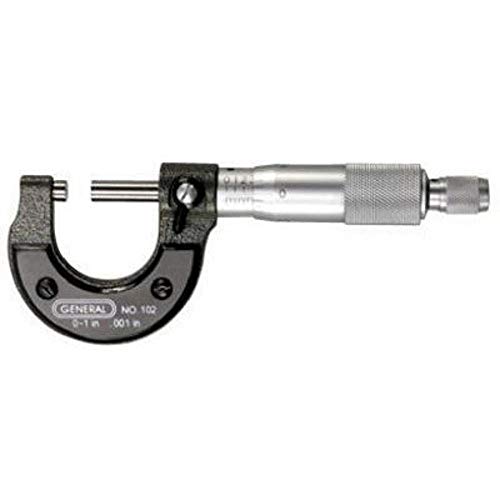
General Tools 102 0-Inch to 1-Inch Micrometer

Mitutoyo 103-177 Outside Micrometer 0-1 Inch Ratchet Stop
More Details On Our Top Picks
This three-piece set makes sense for routine shop checks, where you want outside measuring coverage without a lot of extra clutter. The 0.0001 inch graduations matter because they give you finer scale reading than a looser instrument, though the trade-off is slower, more careful setup. For a garage lathe bench or light machining area, that balance feels sensible.
Compared with the single-range General Tools 102, this set gives you more span right away, so you’re not boxed into one size band. The honest read is that it suits you best when you want a compact kit and a case to keep the tools organized between jobs.
Strong Points
- Three-piece range covers common outside measurements without piling on excess tools.
- 0.0001 inch graduation supports careful size checks on finished parts.
- Alloy construction usually brings a sturdy feel for bench work.
- Case storage helps keep the set together in a crowded drawer.
Small Caveats
- Fine graduations ask for patient reading, especially in dim shop lighting.
- Three-piece coverage still leaves gaps compared with larger span sets like the HDLNKAK 0-6 inch kit.
- Regular cleaning matters, because dust and shop grit can make precision tools feel less smooth over time.
Feature Snapshot
Who It Suits Best
You get the most out of this set in a home shop, training bench, or light production space where you measure a range of small outside dimensions.
Where A Sibling Pick Shines
HDLNKAK Outside Micrometer 0-1 Inch fits better for you if your work stays inside a narrow size window and you want one focused tool instead of a three-piece set.
This set follows the same family as the 0-3 inch HDLNKAK option, but the extra inch of range gives you more room for larger shafts, bushings, and parts. That wider coverage matters in repair work, where you don’t always know what size will land on the bench next. The 0.0001 inch graduation keeps the focus on detail rather than rough sizing.
The trade-off is pretty straightforward, a broader kit takes up more space and can feel like more tool than a tiny bench really needs. For most mixed-use shops, though, that extra flexibility pays off more often than a narrower set would.
Highlights
- 0 to 4 inch coverage handles a wider spread of part sizes.
- Fine graduations support careful checks on close-fitting work.
- Four-piece structure offers more versatility than the 0-3 inch version.
- Case storage helps protect the set between jobs.
Points To Note
- Extra range is useful, but it also means a larger kit to manage.
- Like the smaller HDLNKAK set, the fine scale rewards calm, careful reading.
- Wiping the anvils and spindle after use helps preserve smooth movement and cleaner readings.
Details At A Glance
Best Suited To
You’ll like this most in a small machine shop, maintenance corner, or hobby setup where part sizes vary enough to justify the extra range.
Swap It Out When
Accusize Industrial Tools 0-3 Inch x .0001” Ultra-Precision M-Type Outside Micrometers Carbide Tipped 3 Pc Set EG00-0903 suits you better when you want a more specialized, carbide-tipped option for finer bench work.
A single-range micrometer like this keeps things clean and simple, which helps when your work stays centered on small parts. The 0 to 1 inch span is a neat fit for shafts, pins, and other compact components that show up often in repair and fitting work. Compared with the larger HDLNKAK sets, it asks for less drawer space and less mental sorting.
The catch is that narrow focus can be a strength and a limit at the same time. You gain convenience for one common zone, but you give up the broader range that the 0-3 inch and 0-4 inch kits provide.
Bright Spots
- Focused 0 to 1 inch range suits small, repeatable checks.
- 0.0001 inch graduation gives you fine reading for close work.
- Single-tool format keeps bench storage simple.
- Good match for apprentices and casual shop use alike.
Areas To Watch
- The limited range leaves larger parts to another tool.
- Fine graduations still call for careful handling and steady lighting.
- Like most precision tools, it benefits from dry storage and routine wipe-downs.
Core Details
Right Fit For
You’re in the sweet spot with this one if your work revolves around small-diameter parts and you prefer a simpler tool cabinet.
Look Elsewhere When
HDLNKAK Outside Micrometer Set 0-4 Inch 4 Pcs makes more sense for you when your bench sees a wider spread of sizes and you want room to grow.
This six-piece kit stretches from small to larger outside measurements, so it works well in a bench that sees a mixed flow of parts. The tungsten carbide tip is the notable detail here, because carbide is a very hard wear-resistant material that helps the contact points hold up under repeated use. For a busy shop, that can matter more than a flashy spec sheet.
It also comes with a sturdy portable case, which makes the set easier to move between stations or store without pieces wandering off. Compared with the smaller HDLNKAK kits, this one feels built for broader coverage, though the extra size means it’s not the lightest choice to keep in a cramped drawer.
Reasons To Buy
- 0 to 6 inch coverage reaches well beyond the smaller sets in this list.
- Tungsten carbide tip adds wear resistance at the contact points.
- Six-piece format suits a shop that handles varied part sizes.
- Portable case helps with storage and transport between work areas.
- 0.0001 inch scale supports fine reading across the range.
Worth Noting
- The wider kit takes more room than the compact 0-1 inch option.
- More pieces can mean more handling and more chances to misplace one in a messy bench.
- Keeping carbide contact surfaces clean helps preserve the smooth feel people expect from a precision set.
Feature Rundown
The Right Fit
You’ll get the most from this set in a workshop, maintenance bay, or fabrication space where size variety is part of the daily routine.
Another Choice May Suit
Mitutoyo 103-177 Outside Micrometer 0-1 Inch Ratchet Stop fits you better when you want a tighter focus on one range and a more refined feel in a single tool.
This Accusize set leans into detail work, and the M-Type format points to a frame style commonly associated with more rigid handling in precision measuring tools. Carbide-tipped contact points also matter here, because they’re meant to stand up well where repeated contact becomes part of the job. That combination suits you best in a more careful bench environment than in a rough, grab-and-go toolbox.
Compared with the HDLNKAK sets, this one reads as more specialized than generalized. You may find it a better match for finishing work, inspection routines, or any task where repeatability matters more than having the broadest range on the shelf.
Best Bits
- 0 to 3 inch span fits many common shop checks.
- .0001 inch reading supports fine dimensional work.
- Carbide-tipped contacts add durability at the measuring faces.
- M-Type design appeals to users who want a more refined feel.
Softer Spots
- The range stops at 3 inches, so larger parts need another tool.
- Carbide tips reward careful storage and clean handling.
- The more specialized design makes sense for serious use, but it may feel like more than casual users need.
Spec Overview
Whose Shelf It Belongs On
This belongs on the shelf of a machinist, inspector, or advanced hobbyist who wants a more specialized feel in the hand.
Reach For A Different Pick When
General Tools 102 0-Inch to 1-Inch Micrometer suits you better if you want a simpler, narrower-range tool for everyday small-part checks.
This one breaks from the outside micrometer pattern and moves into digital thickness checking for thinner materials. The LCD display can make readings easier to parse at a glance, and the inch/mm conversion helps when your job mixes measurement systems. For leather work, paper stacks, film, or fabric, that kind of quick reading often feels more practical than a traditional mechanical scale.
One thing worth considering is that a thickness gauge is a different tool from a classic outside micrometer, so it fits a different kind of bench task. Compared with the HDLNKAK and Accusize options, it’s less about round parts and more about thin, flat materials that need a fast, direct readout.
Upsides
- Digital LCD display simplifies reading at a glance.
- Inch and millimeter conversion supports mixed measurement habits.
- One-hand press operation suits quick, repetitive checks.
- Good fit for thin goods like paper, film, leather, and fabric.
Minor Gripes
- This is a thickness gauge, so it does not replace a full outside micrometer set.
- Digital tools need battery awareness and cleaner storage habits than simple analog instruments.
- The narrower measurement style limits it to sheet-like tasks rather than general shaft work.
Feature Card
Built With In Mind
You’re the right match for this gauge if your work involves thin, flexible materials and you want a fast digital readout.
Not Your Match When
Mitutoyo 103-177 Outside Micrometer 0-1 Inch Ratchet Stop is the better pick when your work centers on round parts and more traditional outside measurement.
This General Tools micrometer keeps to the basics, and that can be exactly what you want for everyday bench checks. The 0 to 1 inch span is straightforward, so you can move quickly through small parts without juggling a larger kit. It sits in a comfortable middle ground between the single-purpose HDLNKAK 0-1 Inch and the more premium Mitutoyo option.
The trade-off is that the graduation is 0.001 inch, which is less fine than the 0.0001 inch sets earlier in the list. For general fit checks, that may still be plenty, but detail-heavy work usually benefits from a more exact scale.
Standout Traits
- Simple 0 to 1 inch range suits common shop measurement tasks.
- 0.001 inch graduation is easy to read for straightforward checks.
- Compact format keeps storage and handling uncomplicated.
- Good step up from rough measuring tools.
Room For Improvement
- The coarser scale gives up some detail compared with finer micrometers in this roundup.
- The narrow range limits use on larger pieces.
- Clean, dry storage helps keep the spindle movement feeling consistent over time.
Key Specs
Who Should Grab It
This suits you well if you want a straightforward tool for basic shop measurement without moving into specialist territory.
Where A Sibling Pick Shines
HDLNKAK Outside Micrometer 0-1 Inch fits better for you if you want the same narrow span but with finer 0.0001 inch reading.
This Mitutoyo model feels like the refined end of the roundup, especially for you if repeatable hand feel matters as much as the number on the scale. The ratchet stop helps apply consistent measuring pressure, which matters because uneven force can throw off a reading on delicate work. The baked-enamel finish also gives it a more finished surface than the plain shop-tool look you see on some value sets.
With 0.001 inch graduation and ±0.0001 inch accuracy, it sits in a precise but still readable zone for careful bench work. The honest read is that it shines for users who want a trusted-feeling single tool rather than a multi-piece kit with broader range.
Positives
- Ratchet stop helps keep measuring pressure more consistent.
- 0.001 inch graduation is readable without feeling overly coarse.
- ±0.0001 inch accuracy makes it fit detailed work.
- Baked-enamel finish gives the tool a polished, durable surface feel.
Things To Consider
- The 0 to 1 inch range keeps it focused on smaller parts.
- Single-tool coverage is less flexible than the HDLNKAK 0-3 inch or 0-4 inch sets.
- Precision tools like this reward careful storage and a light touch during cleanup.
Technical Sheet
Who Will Love This
You’re the best fit for this micrometer if you do careful shop work, inspection tasks, or any job where repeatable pressure matters.
Look Elsewhere When
HDLNKAK Outside Micrometer Set 0-4 Inch 4 Pcs suits you better when you need broader range and a multi-piece kit for varied parts.
How To Choose The Right Micrometers
Match The Range To Your Parts
The first thing to weigh is range, because a micrometer that covers your parts cleanly saves time and mental friction. A 0 to 1 inch tool suits pins, shafts, and small fixtures, while 0 to 3 or 0 to 4 inch sets give you more breathing room for mixed bench work. A 0 to 6 inch kit stretches farther, but that extra span makes the set larger and less nimble on a crowded table.
Think about the parts that show up most often, not the odd project you handle once a season. A broad range can feel comforting, yet a focused tool often feels better in day-to-day use. The right match usually comes from the size band you live in, not the one you occasionally wish for.
Choose The Readout That Fits Your Pace
Graduation tells you how finely the tool is marked, and that affects how closely you can read a measurement. 0.0001 inch scales suit careful inspection work, while 0.001 inch models are easier to scan for general checks. Digital thickness gauges add an LCD screen, which can feel faster for sheet materials where you want a clear number with less eye strain.
The trade-off is simple, finer scales ask for more patience, and digital tools ask for more attention to power and handling. For bench work that changes all day, clarity can matter as much as extreme resolution. You want a reading style that matches your rhythm.
Look Closely At Materials And Contact Points
Carbide-tipped micrometers deserve attention because carbide is very hard and resists wear at the contact faces. That matters in a shop that sees repeated use, since the measuring points are where abuse shows first. A baked-enamel finish or case storage does not change the reading by itself, but both help the tool hold up better in real storage and transport.
Precision tools are only as pleasant as their moving parts feel after a few weeks on the bench. Clean threads, protected faces, and a case keep the tool easier to trust. That’s not glamour, just practical ownership.
Pick The Style That Matches The Workday
Outside micrometers suit shafts, rods, and finished parts, which makes them the natural choice for machining and inspection. A thickness gauge fits thin, flat materials like paper, film, leather, and fabric, so it solves a different problem altogether. The best choice is the one that matches the material in your hand, not just the number on the page.
For beginners, a simpler single-range tool can be easier to live with. For more varied shop work, a set with multiple ranges pays for itself in convenience. The short version is this, buy for the work you actually do.
What To Weigh Before You Choose
Common Shopping Slip Ups
One common miss is buying a range that’s too narrow for the parts you handle every week. Another is chasing extreme resolution when a clearer, easier-to-read scale would help more in your actual bench routine. You also want to avoid mixing up outside micrometers with thickness gauges, because they solve different measurement jobs.
Storage gets overlooked too. A case, clean contact faces, and a dry drawer matter more than people expect once the tool starts living on a real shop bench. That’s where many problems start.
What The Higher Tier Buys
Higher-tier micrometers usually pay for better contact materials, more refined pressure control, and a smoother feel in the spindle and frame. In this roundup, the Mitutoyo 103-177 and the Accusize carbide-tipped set show how those details can support more deliberate work. You’re paying for the parts of the tool that matter after the novelty wears off.
The upgrade makes sense when you measure often, inspect closely, or depend on repeatable hand feel. For occasional use, a simpler set can still be enough. For daily shop work, the extra refinement stops feeling optional.
Final Thoughts
Your best choice depends on the kind of measuring you do most. The HDLNKAK sets give you flexible coverage, the Accusize option leans into more specialized precision, and the Mitutoyo 103-177 offers the most polished single-tool feel in the group. For thin materials, the Neoteck gauge fills a different role altogether. Pick the range and readout that match your bench, and the tool will feel useful from the first job onward.