Moisture problems rarely start with a dramatic stain. They usually begin in a basement corner, behind a shower wall, or under a window where humidity lingers a little too long. A good moisture meter helps you spot those trouble areas before the damage spreads, and the right match depends on whether you want surface checks, wall scanning, or broader home inspection coverage.
That’s why this roundup mixes pinless, pin-type, and mold test options. You’ll see choices for drywall, wood, concrete, firewood, and indoor air concerns, so you can match the tool to the part of the home that needs attention. The best fit for you is the one that makes the problem obvious without making the process fussy.
Quick Look At The Shortlist

General Tools LCD Moisture Meter #MM8

Povlen Pinless Moisture Meter Digital Detector

ENESNES Mold Test Kit for Home, 8 Detection Tests
Dr.meter Pinless Wood Moisture Meter MD918
PREXISO Wood Moisture Meter 7 in 1

General Tools MMH800 Pin/Pinless Moisture Meter

RDINSCOS Ball Probe Moisture Meter

LASELION 2-in-1 Pin & Pinless Moisture Meter MS03
More Details On Our Top Picks
This pinless model makes sense for routine checks in rooms where you do not want to poke every surface. The non-invasive design fits painted drywall, trim, and other finished areas where leaving marks would be annoying.
Compared with the more tool-heavy picks later in the list, the MM8 keeps the idea simple and approachable. For a busy home with a damp corner or a recurring leak concern, that can be exactly enough.
What We Like
- Pinless reading style suits finished surfaces.
- The LCD screen keeps readings easy to check.
- Good for spotting damp areas without surface damage.
- Handy for quick rooms-to-room walkthroughs.
Things To Consider
- Pinless tools are better for screening than deep, pinpoint confirmation.
- Very uneven surfaces can make placement more finicky.
- You may still want a second check tool for stubborn problem spots.
Feature Snapshot
Who It Suits Best
Homeowners who want a straightforward moisture check for walls and finished surfaces will get the most from this one.
Another Choice May Suit
General Tools MMH800 Pin/Pinless Moisture Meter suits you better if you want temperature and humidity data alongside moisture readings.
This Povlen option leans into broad material coverage, which is useful in homes where the same meter might move from framing lumber to drywall to masonry. The sound alarm adds a more immediate cue, so you do not have to stare at the screen the whole time.
It feels more multi-purpose than the simpler MM8, though the trade-off is a little more feature juggling. For basement touchpoints, shop work, or mixed-material repair jobs, that broader reach makes sense.
Highlights
- Works across several common building materials.
- Sound alerts help during quick checks.
- LCD output is easier to follow during repeat scans.
- Useful for renovation work with changing surfaces.
Areas To Watch
- More functions can mean a slightly less simple first setup.
- Pinless design still favors screening over exact spot confirmation.
- Alarm use may feel less helpful in very quiet spaces.
Core Details
Made For
DIY repair work and mixed-material inspection suit this meter especially well.
Skip It When
Dr.meter Pinless Wood Moisture Meter MD918 suits you better when you want a more stripped-down wood-focused tool.
This kit serves a different job than the meters around it, because it looks at mold-related concerns rather than only surface moisture. That matters in rooms with stale air, HVAC worries, or a visible patch that needs a closer look.
The detailed guide and lab analysis make it better suited to someone who wants a more structured screening process. It is not a quick scan tool, though, so you should expect a slower, more deliberate routine than the pinless picks.
Bright Spots
- Gives you multiple detection attempts in one kit.
- Useful for HVAC, surfaces, and indoor air checks.
- The guide helps make the next step less confusing.
- Fits homes where the concern goes beyond surface dampness.
Small Caveats
- It works more like a screening kit than a fast meter.
- Paperwork and sample handling take more attention than a handheld scan.
- You may prefer a meter first, then this kit for follow-up.
Details At A Glance
Built With In Mind
Homes with recurring odor, damp HVAC areas, or uncertain surface issues fit this kit well.
Where A Sibling Pick Shines
General Tools LCD Moisture Meter #MM8 suits you better if you want a fast first-pass moisture check before moving to lab-style confirmation.
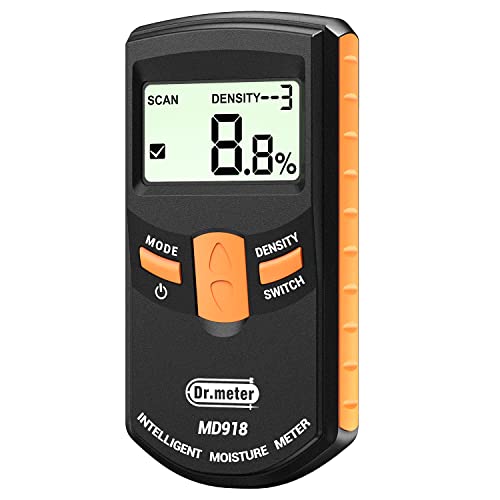
The MD918 keeps things focused on pinless, non-destructive checking, which makes it easy to bring into a workshop or around stacked firewood. The 4% to 80% range is broad enough to cover the usual dampness questions without making the interface feel crowded.
Compared with the Povlen model, this one looks more stripped back and easier to treat as a dedicated wood meter. That simple lane can be an advantage for home projects where you want less to think about.
Standout Traits
- Non-destructive use suits finished wood surfaces.
- Wide measuring range covers common wood tasks.
- Good match for firewood prep and storage checks.
- Smaller tool profile makes it easy to keep nearby.
Worth Noting
- Wood-centered design leaves less room for mixed-material jobs.
- Pinless scanning works best on reasonably even contact areas.
- You may still want a different tool for wall and concrete work.
Quick Facts
Right Fit For
Woodworkers and firewood users who want a compact, easy-going meter will feel at home with this one.
Look Elsewhere When
PREXISO Wood Moisture Meter 7 in 1 suits you better if you need pins and extra measurement modes for building materials.
The PREXISO leans into hands-on use, especially with its pin-type setup and multiple measurement modes. Single-point, multi-point average, and max-min readings give you more ways to interpret a damp wall, a stack of lumber, or a floor section that keeps acting up.
That flexibility is useful, but it also means this is less of a grab-and-go tool than the simpler pinless options. For remodel work or repeated checks in a workshop, though, that extra control can feel worth it.
Best Bits
- Pin-type contact gives direct surface readings.
- Several measurement modes support different inspection styles.
- Temperature and humidity display helps with room context.
- Calibration scales broaden use across softwood, hardwood, and building materials.
- Rubber side grips make repeat checks more comfortable.
Points To Note
- Pin use means the surface gets penetrated during reading.
- More modes bring a little more learning at the start.
- Automatic power-off is helpful, though some users may prefer more manual control.
Spec Overview
Who Should Grab It
DIY remodelers and woodworkers who want more control over how they read a surface will appreciate this model.
Swap It Out When
Dr.meter Pinless Wood Moisture Meter MD918 is the easier choice if you want to avoid pin marks on finished wood.
The MMH800 stands out because it combines pin and pinless measuring with temperature and humidity readouts in one tool. That makes it useful in homes where the question is not just, “Is this damp?”, but also, “What’s happening in the room right now?”
It feels better suited to ongoing inspection than a basic spot check, especially in a basement, utility room, or older house with mixed materials. The trade-off is that more information usually means more to learn at first.
Reasons To Buy
- Pin and pinless modes give you two inspection styles.
- Temperature and humidity data add useful room context.
- Strong fit for repeat checks in problem-prone areas.
- Useful for comparing material readings with air conditions.
- Good choice for a more complete home inspection routine.
Room For Improvement
- More functions mean a busier learning curve than simpler meters.
- Some spaces only need the lighter MM8 style of use.
- Carrying extra capability can feel unnecessary for casual spot checks.
Technical Sheet
Best Suited To
Home inspectors, landlords, and hands-on homeowners checking the same problem area over time will get strong use from this meter.
Reach For A Different Pick When
General Tools LCD Moisture Meter #MM8 suits you better if you only want a simpler pinless screen for fast checks.
The ball probe design gives this model a more specialized feel, especially for basement inspection and wall checks. The 5 to 40 mm depth range matters because it gives you a sense of how far the meter is reading beneath the surface, which is useful when a shallow scan is not enough.
That deeper reach makes it feel more serious than the lighter pinless options, though you may find it a touch more specific than you need for casual room checks. Still, for damp lower-level spaces, it has a clear job.
Positives
- Ball probe format suits wall and basement work.
- Depth range gives useful context for deeper checks.
- Custom alarm threshold helps mark a chosen level.
- Flashlight support is handy in dim utility spaces.
Softer Spots
- It feels more specialized than a general household meter.
- Depth-focused use can be more than some rooms require.
- Flashlight and alarm features add utility, but they also add interface steps.
Feature Rundown
The Right Fit
Basement-focused homeowners and anyone tracking moisture through wall surfaces will get the most from this model.
A Better Fit Elsewhere
LASELION 2-in-1 Pin & Pinless Moisture Meter MS03 suits you better if you want a broader material list with both pin and pinless use.
The MS03 gives you both pin and pinless options, which makes it a sensible all-around choice for homes where the material changes from one job to the next. Wood, concrete, and drywall coverage keeps it useful in renovation settings, while the LCD hold function helps you pause on a reading without rushing.
The built-in flashlight and auto power off round out the package for daily use in dim storage areas or repair spaces. It does ask for a little more decision-making than a single-mode meter, but the flexibility is hard to ignore.
Strong Points
- Pin and pinless modes broaden day-to-day usefulness.
- Works across wood, concrete, and drywall.
- Hold function helps you review a reading after the fact.
- Flashlight is handy in closets, basements, and utility corners.
- Auto power off supports more casual everyday handling.
Honest Caveats
- Dual-mode tools usually ask for a little more setup knowledge.
- Very simple spot-check jobs may not need this much flexibility.
- Pin mode still means contact with the surface.
Core Details
Whose Shelf It Belongs On
DIYers who move between walls, wood, and concrete will get the most out of this meter.
Not Your Match When
General Tools LCD Moisture Meter #MM8 suits you better if you want a simpler pinless tool for quick surface checks.
How To Choose The Right Moisture Meter For Molds
Start With The Material You Need To Check
Wood, drywall, concrete, and HVAC parts all ask for a slightly different approach. Pinless meters are easier on finished surfaces, while pin-type tools give you direct contact that helps with tighter, more exact spot checks.
For a room with repeated damp patches, a dual-mode tool gives you more options. For a quick sweep of painted walls or trim, a pinless model usually feels simpler and cleaner.
Match The Tool To The Problem Size
A small stain near a window does not need the same setup as a basement with repeated moisture issues. A handheld moisture meter helps you move fast, while a mold test kit serves a more structured screening purpose.
That difference matters because a meter tells you where the dampness sits, while a test kit helps you think about what the dampness may have led to. You save time when you use the lighter tool first and reserve the more involved kit for follow-up.
Look For Readable Outputs And Practical Extras
LCD screens, hold functions, alarms, flashlights, and temperature or humidity readouts all help in real rooms with weak lighting or awkward angles. Those extras do not replace judgment, but they make the process easier to repeat and compare.
The honest trade-off is simplicity. The more a meter can do, the more you may need to learn at the start, so casual users often prefer a cleaner interface while more frequent inspectors may welcome the extra context.
Think About Long-Term Use
You also want a tool that fits where you actually store and use it. A compact pinless meter is easier to keep in a drawer or tool bag, while a fuller-featured model earns its keep in a workshop, rental property, or older house with recurring problem areas.
That practical fit usually matters more than any single spec. The right choice is the one you’ll reach for before the stain turns into a bigger repair job.
A Quick Reality Check
Common Shopping Slip Ups
Plenty of people focus only on the screen and ignore the detection style. That’s how someone ends up with a pinless model for a job that really needs contact reading, or a pin-type tool for delicate trim they do not want to mark.
Another common miss is overlooking the material mix in the home. Basements, drywall, firewood, and masonry do not all call for the same meter, so the shortest path is to match the tool to the surfaces you check most.
Where The Extra Money Goes
Higher-tier models usually cost more because they combine more than one measuring style, add room-condition readings, or include better guidance through the display and controls. That extra flexibility can save time in homes with repeated dampness or mixed surfaces.
The upgrade makes sense when you inspect often, work across different materials, or want more context than a simple moisture reading. For occasional spot checks, a basic pinless model usually does enough without overcomplicating the task.
Closing Thoughts
The best moisture meter for molds depends on how you want to work, not just what problem you’re trying to spot. A simple pinless model suits quick wall checks, a pin-type tool helps with direct contact, and a mold test kit adds a more structured follow-up path. For most homes, the smartest choice is the one that matches your surfaces, your storage space, and how often you expect to use it.