You need a multitool that fits real electrical work, not just a crowded spec sheet. The right one saves pocket space on service calls, speeds up stripping and crimping, and keeps small fixes from turning into tool hunts. Some picks lean compact and simple, while others bring folding pliers, locking storage, or a built-in tester for faster on-site checks. This roundup helps you match the tool to your daily jobs, from outlet swaps to cable prep.
Quick Look At The Shortlist

18 in 1 Multi Tool Folding Pliers
Gerber Truss 17-in-1 EDC Multitool Pliers

LAOA 8-in-1 Electrician Pliers with Voltage Tester
LAOA Electrician Pliers 8-in-1 USB-C

Klein Tools L1412 5-in-1 Cable Stripping Tool

8-in-1 Wire Stripper with Voltage Tester

CAT 14-in-1 Multitool Pliers

Performance Tool W86506 13-in-1 Electrician Multi-Tool
More Details On Our Top Picks
Fold-out pliers make this one feel more like a compact kit than a single-purpose stripper, which suits long service days and mixed repair work. The high-carbon steel build points toward stronger wear resistance, though that kind of metal tool usually asks for a little more care after dirty jobs.
Compared with the lighter, more focused picks later in this roundup, this model leans into versatility first. You get the sense it belongs in a pouch or bag for electricians who want one tool that can handle a wider spread of tasks without taking up much room.
Strong Points
- Folding design keeps the tool compact in a pocket or pouch.
- Multiple functions suit mixed electrical and general repair tasks.
- High-carbon steel construction should stand up well to regular carry.
- Good for service calls where tool swaps slow you down.
Things To Consider
- More moving parts usually mean more cleaning after dusty work.
- Broad function sets can feel less specialized than a dedicated stripper.
- Folding tools sometimes suit pouch carry better than bare-pocket carry.
Key Specs
Who It Suits Best
Electricians who want a compact all-rounder for service calls, home fixes, and grab-and-go carry will get the most from it.
A Better Fit Elsewhere
Klein Tools L1412 fits you better for NM cable stripping, especially in remodel work centered on 12/2 and 14/2 Romex.
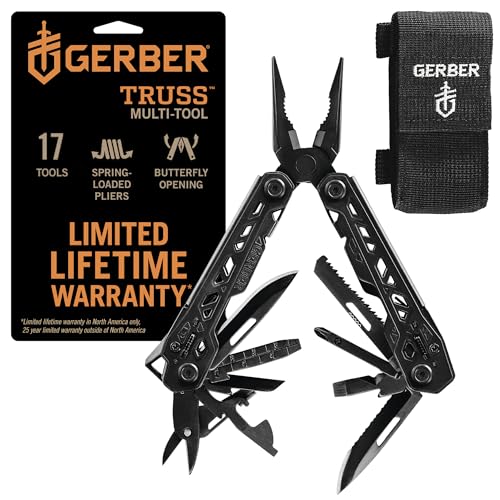
This Gerber leans more pocket-friendly than the folding-pliers style above, and the included sheath makes carry feel more organized. The needle-nose pliers and pocket knife combination fits electricians who split time between utility tasks and light cutting jobs, though the knife edge means you’ll want to keep local carry rules in mind.
The 17-tool layout is broad enough for everyday use without looking oversized. Compared with the heavier utility-first pick, this one suits you better when portability matters as much as function.
What We Like
- Compact EDC shape makes it easy to carry all day.
- Needle-nose pliers help with tight spaces and finer grip work.
- Sheath adds simple storage and keeps the tool together.
- Balanced tool count covers common day-to-day tasks.
Room For Improvement
- The knife adds utility, but it also adds carry considerations.
- Less purpose-built for wire prep than dedicated electrician tools.
- Sheath carry suits a pouch better than a loose pocket.
Feature Snapshot
Made For
Electricians who want a compact multitool for service bags, EDC carry, and light repair work will find the fit natural.
Another Choice May Suit
Performance Tool W86506 suits you better for straightforward electrical basics without the added knife-focused carry style.
The built-in voltage tester gives this LAOA a more job-focused feel than the Gerber above, especially for quick checks before you start working. That matters in home repair and light service work, where you want fewer separate tools in your hand and less rummaging in a bag.
The layout covers stripping, cutting, splitting, twisting, and home repair tasks, so it reads as a broad utility piece rather than a narrow specialty tool. One thing worth considering, though, is that an all-in-one design still asks you to accept some compromise in hand feel versus a dedicated plier or stripper.
Highlights
- Voltage tester adds a useful extra check in the same tool.
- Multiple wire-handling functions reduce tool swapping on site.
- Good fit for home repairs and simple service tasks.
- Useful when you want one compact hand tool for small jobs.
Points To Note
- Multi-function tools rarely feel as specialized as single-purpose ones.
- The broader layout can take more attention to keep clean.
- Best suited to lighter electrical work rather than heavy daily abuse.
Core Details
Who Should Grab It
DIYers and light-duty electricians who want a compact multitool with a tester built in should feel right at home here.
Swap It Out When
LAOA Electrician Pliers 8-in-1 USB-C suits you better when rechargeable convenience matters more than a simpler, battery-free tool.
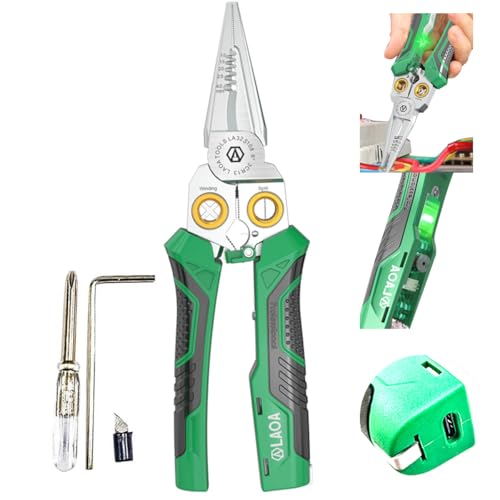
Rechargeable power changes the feel of this LAOA, because you do not have to keep track of replacement batteries for the tester side. That makes it attractive for electricians who use a multitool often and want one less small maintenance task on the list.
Compared with the battery-free LAOA above, this version leans into convenience rather than simplicity. The trade-off is straightforward, since rechargeable gear usually asks you to keep an eye on charging habits, but the USB-C approach makes daily upkeep easier to live with.
Positives
- USB-C charging keeps power management more convenient.
- Combines stripping, cutting, splitting, pulling, crimping, and testing.
- Useful for electricians who want fewer loose accessories.
- Good fit for recurring field work and toolkit carry.
Softer Spots
- Rechargeable tools need occasional charging discipline.
- More built-in functions can mean more parts to keep tidy.
- The added electronics may not suit every rough job site equally well.
Spec Overview
The Right Fit
Frequent users who want a rechargeable multitool for service bags, home projects, and everyday electrical tasks will see the most value here.
Look Elsewhere When
Klein Tools L1412 makes more sense for cable stripping on NM runs, especially in remodel work with 12-14 AWG cable.
Romex-focused work is where this Klein starts to separate itself from the more general multitools above. The 12-14 AWG range and NM cable ripper setup make it a strong match for remodels, panel-related cable prep, and regular residential cable stripping.
The magnetic detail and wire-looping hole are small touches, but they matter when you’re moving through repetitive jobs and want the tool to handle cable more cleanly. The honest read is that this is more specialist than all-purpose, so it fits best in a kit built around electrical runs, not mixed household repairs.
Best Bits
- Focused on 12-14 AWG NM cable work.
- Ripper function suits 12/2 and 14/2 Romex.
- Magnetic detail helps with day-to-day handling.
- Wire-looping hole adds a practical extra step.
- Very sensible for repetitive residential cable prep.
Areas To Watch
- Specialty focus means less appeal for broader multitask carry.
- Best value comes in cable-centric work, not general utility.
- Cleanup around cable insulation still matters after use.
Technical Sheet
Best Suited To
Residential electricians and remodel-focused pros who spend a lot of time on NM cable will get the cleanest fit here.
Where A Sibling Pick Shines
Performance Tool W86506 suits you better for broader basic electrical tasks when you want a more general-purpose hand tool.
The 10-18 AWG range gives this pick wider reach than the Klein cable specialist above, so it fits more mixed repair jobs. That matters in outlet work, appliance wiring, HVAC service, and automotive tasks where wire sizes do not always stay neatly in one lane.
The 12V-250V AC/DC tester range adds a practical layer, although the stronger the tool’s versatility, the more you should think about how you’ll store and keep track of it. For many shop kits, though, this is the kind of mid-range multitool that feels sensible rather than flashy.
Bright Spots
- Covers a broader wire range than a more cable-specific stripper.
- Tester support adds convenience for common service checks.
- Good fit for outlets, HVAC, and light automotive work.
- Combines several hand-tool functions in one compact form.
Small Caveats
- Broad range helps versatility, but it can trade off specialization.
- Storage matters more once a tool starts doing many jobs.
- Mixed-use tools benefit from regular cleaning after gritty work.
Details At A Glance
Whose Shelf It Belongs On
Service techs and mixed-trade handypeople who want one tool for wiring checks and strip-cut-crimp work should find it useful.
Reach For A Different Pick When
LAOA Electrician Pliers 8-in-1 USB-C suits you better if rechargeable power matters more than a broader wire range.
Aluminum handles and stainless steel tools give this CAT a sturdier, more work-ready feel than the simpler pocket multitools earlier in the list. The included pouch and safety lock matter in daily carry, because they make storage neater and help keep the tool closed between jobs.
This is a sensible middle ground for electricians who want broader utility without moving into oversized gear. The trade-off is that it stays more general than the Klein cable specialist, so cable-heavy work still points elsewhere.
Upsides
- Aluminum handles add a solid hand feel.
- Stainless steel tool parts suit regular carry.
- Storage pouch keeps the multitool organized.
- Safety lock adds peace of mind during transport.
- Good balance for mixed electrical and general tasks.
Worth Noting
- General-purpose layout is less specialized for cable prep.
- Pouch carry works best for keeping it together cleanly.
- Multi-tool maintenance is easier when you wipe it down after gritty work.
Feature Card
Perfect Match For
Electricians who want a sturdy everyday multitool with a pouch and lock will appreciate the balance here.
Skip It When
Klein Tools L1412 is the better fit for you if NM cable stripping is the main task on your list.
This Performance Tool keeps the focus on basic electrical work, which makes it easy to understand and easier to slot into a general tool bag. The 10 to 18 AWG solid-wire range gives it practical reach for routine stripping and cutting, especially for homeowners, apprentices, and service techs handling everyday repairs.
Compared with the more specialized Klein and the rechargeable LAOA, this one feels straightforward rather than loaded with extras. That simplicity is the appeal, and it also means less to learn before you start using it on common projects.
Reasons To Buy
- Simple layout suits basic electrical tasks.
- Wire stripping and cutting cover the core jobs well.
- Long-nose pliers add useful reach in tighter spots.
- Works well for general-purpose repair kits.
- Easy to understand for beginners and occasional users.
Honest Caveats
- Less specialized than dedicated cable or tester-focused tools.
- Best fit comes from general use, not niche tasks.
- Simple multitools still benefit from regular cleaning and careful storage.
Core Details
Built With In Mind
Beginners and practical home repair users who want a simple multitool for basic electrical work should feel comfortable with this pick.
Where Shoppers Go Wrong
CAT 14-in-1 Multitool Pliers suits you better if you want a sturdier pouch-carry option with a safety lock.
How To Choose The Right Multitool For Electricians
Start With The Work You Do Most
Wire stripping, crimping, cable splitting, and cutting do not matter equally for every job. A remodel electrician usually needs strong NM cable handling, while a service tech may value a tester and fast access more than a long feature list.
Tool count matters less than task fit. An 18-in-1 model sounds broad, but a 5-in-1 cable specialist can save more time on Romex-heavy work because the shape matches the job better.
Check The Build And Carry Style
Steel tools, aluminum handles, folding frames, sheaths, and safety locks all affect how a multitool feels after a long day. Folding pliers shrink the footprint, while a sheath keeps pocket carry cleaner and helps prevent loose-tool clutter in a bag.
The trade-off usually shows up in weight, size, and cleaning. More parts can mean more dirt to wipe away, and a pocket-friendly form can give up a little hand comfort compared with a bigger fixed tool.
Match The Power And Testing Features To Your Routine
Voltage testers add convenience, especially for outlet work and quick checks before you start. Rechargeable models reduce battery swaps, which is handy for frequent use, though you still need to keep them charged and stored properly.
For occasional weekend repairs, a basic battery-free tool may be enough. For daily field work, the extra convenience can feel worth the added complexity.
Think About Wire Range And Repetition
AWG, or American Wire Gauge, is the wire size system used on most electrical tools. A narrower range works fine for specialized jobs, while a broader range helps when your day moves between outlets, fixtures, HVAC, and other small repairs.
Repetitive work rewards simple, clean ergonomics. You want a tool that opens smoothly, grips confidently, and stays easy to store once the day is done.
Things Worth Knowing First
Common Shopping Slip Ups
Many people focus on tool count and ignore the main task. That leads to a multitool that looks versatile but feels awkward for the work you do most.
Another miss is forgetting about carry. A sheath, pouch, or lock can matter as much as an extra function when your kit lives in a truck bag or tool belt.
Where The Extra Money Goes
Higher-tier multitools usually spend more on materials, fit, and tighter moving parts. That can mean better handle feel, cleaner storage, and a calmer experience during repeated use.
You also see the difference in task focus. Special-purpose cable tools and rechargeable models cost more because they solve a narrower problem with less friction.
Final Thoughts
You have solid choices here, whether you want a broad multitool, a cable-focused stripper, or a pocketable carry piece. For most electricians, the best fit comes from the job you repeat most often, not the longest feature list. The Klein stands out for NM cable work, the LAOA rechargeable model suits frequent field carry, and the Performance Tool keeps things simple for everyday repairs. Pick the one that matches your routine, and the tool will feel useful instead of just well equipped.