
One quick cut can lead you to two very different tools, and that choice matters more than you might think. A table saw holds the wood steady for clean, repeatable cuts, while a circular saw lets you move quickly and work almost anywhere. If you have ever wondered which one fits your project, space, and skill level, the answer becomes clearer once you compare how each tool really works.
What Is a Table Saw?
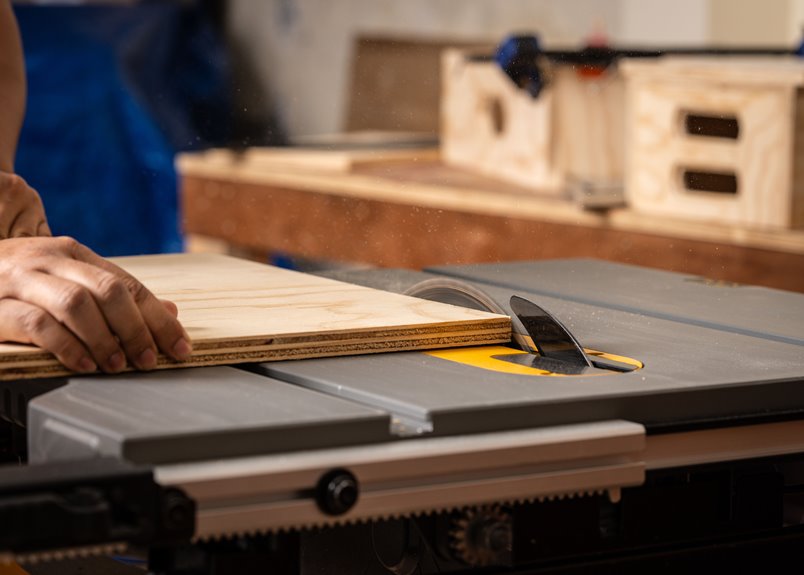
A table saw is a stationary power tool built around a circular blade that rises through a flat tabletop. It keeps the blade fixed while you move the material through it. You use it when you want clean, straight cuts you can repeat with confidence.
Its blade design helps you slice boards with control, while the fence and miter gauge guide each piece into place. Because the blade stays in one spot, you can focus on steady feeding and careful alignment instead of chasing the cut. That setup feels solid and familiar once you learn it.
When you work with lumber, plywood, or cabinet parts, this tool gives you a reliable place to build with confidence.
What Is a Circular Saw?
A circular saw is a handheld power tool that uses a rotating blade to make straight cuts, and you guide it across the material by hand. You can use it for rip cuts, crosscuts, bevel cuts, and even plunge cuts when the job requires more flexibility.
If you’re working on a job site, handling a large sheet of plywood, or cutting in a tight space, this tool gives you a practical way to cut without moving the material to a fixed saw.
Circular Saw Basics
If you need to cut wood on the go, the circular saw is usually the tool that comes to mind. You hold it in one hand or both, and its spinning blade does the work while you guide it. That makes it feel familiar quickly, even if you’re new to the crew.
The motor and grip sit in the same body, so you can steer the saw with control and confidence. For safety, check the blade guard basics before each cut because it helps shield you from the blade while it’s at rest and moving. Since the tool stays in your hands, you can move it where the project needs you, not the other way around. That freedom is why many people trust it.
Key Uses Explained
Whenever you need a saw that can handle many jobs, the circular saw often becomes your best friend on the worksite or in the garage. You can bring it to the lumber pile, climb a ladder with care, or trim sheets right where they sit. That jobsite mobility helps you keep moving, while your material transfer workflows stay simple because you don’t haul heavy panels to a fixed machine.
You can cut plywood, framing lumber, decking, and even angle cuts whenever the project asks for them. With a guide, you get cleaner lines and more confidence. So whenever you want speed, reach, and freedom in one tool, the circular saw fits right into your crew and your pace.
Key Differences Between Table Saws and Circular Saws
Though both tools use a circular blade, a table saw and a circular saw work in very different ways, and that difference changes almost everything about how you use them.
A table saw stays put, so you feed the wood through a fixed blade with steady control. A circular saw moves with you, so you guide the blade across the material manually. That’s why one feels shop ready and the other feels job site friendly.
In tool design evolution, the table saw grew into a mounted workhorse, while the circular saw stayed light and portable.
For maintenance and storage, the table saw needs more space and setup care, but the circular saw slips onto a shelf or into a truck with ease.
You’ll feel that contrast right away.
Table Saw Cuts: Accuracy, Power, and Repeats
When you use a table saw, the fixed blade helps you line up each cut with precision.
The stable setup also provides solid material support, so your boards stay in place while you work.
As a result, you can make consistent repeat cuts with less guesswork and more confidence.
Precision Edge Alignment
Because the blade stays fixed and the wood moves through it, a table saw gives you a strong edge for straight, repeatable cuts.
When you want clean alignment, you can trust the fence calibration to guide your board and keep the edge square. Good blade tracking also matters because it helps the cut stay true from start to finish.
- You set the fence once, then feed the stock with steady pressure.
- You keep the material flat, so the edge doesn’t drift.
- You get crisp contact, which helps cabinets, trim, and panels fit together.
- You feel less stress because the saw does the heavy lifting with you.
That setup gives you a calm, confident workflow, and it helps you feel right at home in the shop.
Consistent Repeat Cuts
With a table saw, repeated cuts feel almost effortless once you set the fence and lock in your measurement.
You can run board after board through the same setup and trust the result. That steady rhythm helps whenever you’re doing batch production, because each piece matches the last without extra effort. It also makes identical joinery much easier, so your parts fit together well.
If you have ever felt tired of measuring the same line again, this tool gives you relief. You stay in control, and the saw handles the repeat work for you. That kind of consistency builds confidence, especially when your project needs a clean, matched look from start to finish.
Stable Material Support
A table saw does more than repeat the same cut over and over. It also gives your material a steady place to rest while the blade does the work. You notice the difference right away because the board doesn’t twist as much, and you aren’t fighting every inch.
- The tabletop gives you solid workbench stability for long boards.
- The fence keeps each piece lined up, so you stay in control.
- Flat support helps you cut smoother edges with less wobble.
- Good clamping support holds odd pieces if you need extra help.
Because your stock stays put, you can focus on the cut instead of chasing the wood. That steady setup helps you work with care and achieve clean results.
Circular Saw Cuts: Portability and Flexibility
Whenever you need to cut material right where it sits, the circular saw is a practical tool.
It offers strong jobsite maneuverability, so you can move from room to room or climb a ladder without dragging a heavy setup along.
That flexibility is especially useful when cutting oversized panels, because you don’t have to wrestle them onto a fixed table first.
Instead, you guide the saw over the work and keep the cut on the material where the project is located.
With a straightedge or guide, you can stay confident and in control.
For you, that means less hassle, more flexibility, and a tool that fits the pace of real work.
It’s a smart choice when space is tight and your team needs to keep moving.
Which Saw Is Better for Rip Cuts?
For rip cuts, the table saw usually gives you the cleaner and easier path, especially when you need straight, repeated cuts along the grain. You’ll feel more in control because the fence supports rip cut accuracy and keeps each board on track. A circular saw can still help, but it requires more from your hands and your edge guide setup.
When you’re working on shelves, trim, or frame parts, the table saw often saves you time and stress. Still, your space and the size of the board matter too.
- Choose the table saw for repeat jobs.
- Use the circular saw for long sheets.
- Check the fence before every cut.
- Match the tool to your workspace.
Which Saw Is Better for Crosscuts?
Which saw wins on crosscuts? For most clean, repeatable crosscuts, a table saw is the safer choice. You guide the board past a fixed blade, so the cuts stay square and steady. That helps when you’re matching parts in finish carpentry layout or making a stack of shelves.
Still, a circular saw can shine when you need angled trim cuts or quick work on a long board. If you pair it with a straight edge, you can get solid results fast.
If you want control and repeatability, lean toward the table saw. If you want mobility and easy setup, the circular saw keeps you moving without much fuss.
Best Projects for a Table Saw
You’ll get the best results from a table saw when you work on cabinet making projects that require clean, repeatable cuts. It also excels at rip cuts, since you can guide boards safely and keep each piece consistent. When you need to cut sheet goods like plywood into smaller sections, a table saw helps you make straight, accurate cuts without much fuss.
Cabinet Making Projects
If you start a cabinet making project, a table saw often becomes the heart of the shop because it gives you the straight, repeatable cuts that cabinets demand.
You’ll feel more confident once every panel, rail, and stile fits the same way. That steady control helps you with:
- cabinet face frame joinery
- drawer box construction
- matching cabinet sides
- sizing shelves and doors
Once you build this way, your parts line up cleanly, and your work feels less stressful. You also save time because you don’t keep rechecking every cut manually.
Rip Cuts
Rip cuts are where a table saw really starts to shine, especially after cabinet work has you thinking about clean lines and tight fits. You feed the board past the blade, and the saw does the heavy lifting with steady control. That’s why the rip cut technique feels so dependable in a busy shop.
You can set the fence once, then make the same cut again without guessing. When you’re matching boards for shelves, frames, or trim, that repeatability saves time and stress. A good edge guide setup matters on a circular saw, but a table saw gives you that support built in.
Sheet Goods Breakdown
Because sheet goods can feel huge and awkward, a table saw gives you the steady control that makes the job less stressful. You can divide plywood and MDF with cleaner lines, safer support, and less wrestling. That matters whenever you want your cut list to feel doable, not like a fight.
- You guide the panel through the blade with confidence.
- You use panel sizing strategies to trim big sheets into manageable parts.
- You get repeatable widths for cabinets, shelves, and wall units.
- You keep sheet goods handling smoother, which helps you and your helper stay in sync.
Best Projects for a Circular Saw
A circular saw is most useful when you need to cut where the work is, not where a shop machine is waiting. It is well suited for portable sheet cutting, on site framing, deck repairs, fence builds, and quick trim work. You can work with a crew and still feel confident because this tool travels with you.
| Project | Why It Fits | Best Result |
|---|---|---|
| Plywood | Easy breakdown | Clean panels |
| Framing | Fast cuts | True walls |
| Decking | Field use | Smooth edges |
| Shelving | Simple sizing | Neat fit |
| Remodels | Flexible cuts | Less hauling |
If you are handling large sheets or jobsite lumber, you can save time and keep moving. That is why many people reach for it first when space is tight and the task cannot wait.
Safety Differences Between Table Saws and Circular Saws
Whenever you compare a table saw and a circular saw, safety works a little differently with each one. A table saw keeps the blade fixed, so your hands stay closer to the danger zone when you rush. A circular saw moves with you, so control matters more each second.
- On a table saw, use blade guard systems and a riving knife every time.
- For kickback prevention, keep the fence aligned and the stock flat.
- With a circular saw, brace the material well and watch the blade path.
- Wear eye and ear protection, and let the tool reach full speed before cutting.
You will feel safer when you slow down, stay alert, and trust simple habits that protect your work and your fingers.
Table Saw Vs. Circular Saw: Cost and Space
On one hand, a table saw requires a larger budget and more floor space, while a circular saw keeps both costs and space needs lower. When you are building a garage shop, that difference matters quickly. A table saw can put more strain on your budget, but it provides a stable work surface. A circular saw fits budget friendly workshop setups and stores easily in compact tool storage solutions.
| Tool | Cost | Space |
|---|---|---|
| Table saw | Higher | Large |
| Circular saw | Lower | Small |
| Best fit | Shop use | Tight areas |
You can start small, save space, and still work with confidence. As your projects grow, your setup can grow with you.
How to Choose Between a Table Saw and Circular Saw?
Choosing between a table saw and a circular saw starts with the kind of work you do most, because the right tool should make your job easier, not harder. If you cut lots of straight, repeated pieces, a table saw gives you steady results. If you move from place to place, a circular saw fits better.
- Check your workspace limitations at the outset.
- Match the tool to your usual cuts.
- Consider budget and long term value.
- Choose the one that feels safe and natural in your hands.
You don’t need the best saw in the abstract. You need the one that suits your shop, your pace, and your goals.
When you choose that way, you join a crowd of makers who work smarter and feel more confident.
Frequently Asked Questions
Can a Circular Saw Replace a Table Saw for Furniture Building?
Yes, you can, but you will face portability tradeoffs and may need guides or clamps to keep edge quality high. For furniture building, you can get there with patience, though a table saw still speeds repeatable accuracy.
Do Table Saws Make Cleaner Bevel Cuts Than Circular Saws?
Yes, table saws usually give you cleaner bevel cuts. You’ll often get better bevel accuracy and edge finish, especially on repeat cuts. Most of that polish comes from stability, so you’ll feel more confident while cutting.
Which Saw Is Easier for Beginners to Control?
You’ll usually control a circular saw more easily at first, because it has a gentler learning curve and fits your hands well. A table saw offers cutting stability, but you will need more setup and confidence.
Can Either Saw Cut Sheet Goods Without Support?
No, you should not cut sheet goods unsupported with either saw. Doing so creates safety risks and can lead to poor cuts. You will get cleaner, safer results when you support the panel with outfeed tables or sawhorses.
How Much Blade Maintenance Do These Saws Typically Need?
Usually, you will need little maintenance beyond regular blade cleaning and occasional sharpening when cuts start to dull. Both saws respond well to the same habit, keep them clean, and they will keep working well.