
Choosing the less complicated router can still feel tricky, but you can make it much easier by matching the tool to your work. When you build trim, shelves, or small projects, a palm router might be all you need. When you want one tool for cabinets, edge work, and tougher cuts, a midsize model often fits better. Next, look at power, speed control, bases, and bit compatibility, because the right mix can save you time, stress, and a few headaches later.
What Kind of Woodworking Router Do You Need?
So, what kind of woodworking router do you really need? You need one that matches your project scale and your skill level.
If you’re just starting out, a beginner router with medium power gives you enough control without feeling overly sensitive in your hands.
For small trim jobs, a lighter tool feels comfortable and easy to guide.
As your projects grow, you may want more power for cleaner cuts and steadier performance. Also, check the collet size so your bits fit properly, because that saves you trouble later.
Variable speed helps too, since it lets you slow down for larger bits and speed up for finer work.
In short, choose the router that fits the work you do most often, and you’ll feel right at home.
Woodworking Router Types Explained
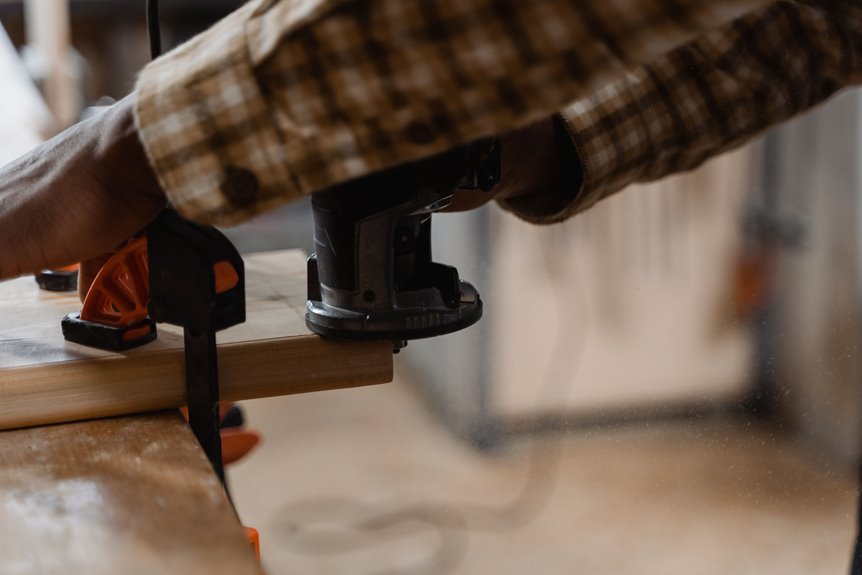
Whenever you’re choosing a router, the two main types you’ll see are fixed base and plunge base models. A fixed base router gives you steady control for edge work, while a plunge router lets you start cuts in the middle of the wood with more freedom.
Once you know what each one does best, it becomes much easier to match the tool to your project without second guessing yourself.
Fixed Base Routers
A fixed-base router is a steady, predictable choice many woodworkers trust early on. You’ll feel comfortable with it because the base stays locked, so you can guide cuts with control. That makes it well suited to edge profiling techniques and cabinet door shaping, where repeatable depth matters.
You also get a clear view of the bit, which helps you stay confident as you work. If you prefer clean lines and less fuss, this style fits well. It’s especially useful for roundovers, chamfers, and dadoes on the bench or in a table. Pair it with a solid fence, and you can shape parts more smoothly. When you want reliable results without extra complexity, this router can feel like a trusted shop tool.
Plunge Base Routers
A plunge base router gives you control that a fixed base cannot, because you can lower the bit into the work instead of starting at the edge. You’ll find this tool useful whenever you need clean cuts in the middle of a board. It works well for mortise layouts, recessed inlays, and stop cuts that need a clean start and finish.
- Set the depth, then ease the bit down with steady pressure.
- Guide the cut with confidence, even in tight spaces.
- Stop at the marked line and lift out cleanly.
Because accuracy matters, this router helps you work with confidence instead of guesswork.
Router Power and Speed
Power and speed do a lot of the heavy lifting when you choose a router, and getting them right can save you from rough cuts and tired arms. You want enough strength for the jobs you’ll tackle, so check motor amperage ratings on corded models and look for higher voltage and longer runtime on cordless tools.
A midsize router usually gives you the best all around balance for home shop work. Use variable speed so you can slow down for large bits and keep smaller cutters moving cleanly. When you match power to the cut, you’ll feel more in control, and your work will look polished and consistent.
Fixed-Base vs. Plunge Routers
When choosing between a fixed-base router and a plunge router, consider the cuts you make most often. A fixed-base router works well for edge shaping and rounding.
A plunge router gives you better control for mortises, inlays, and other cuts that start in the middle of the wood.
Your best choice depends on the kind of projects you build, the control you want, and how much flexibility you need.
Fixed-Base Router Uses
When you mainly shape edges and smooth profiles, a fixed-base router is often the easiest and most natural tool to use. You keep the base planted, so your cuts feel steady and your control stays strong. That’s why it works well for edge profiling and decorative shaping on shelves, tabletops, and trim.
- You can follow a guide easily.
- You get cleaner, more even results.
- You feel less strain during repeat cuts.
When you work with a shop crew or a weekend build group, that consistency helps you fit right in. A fixed-base router also works well for bit changes and setup on a bench. When you want reliable shaping without extra fuss, this style gives you a calm, confident way to work.
Plunge Router Advantages
A plunge router gives you greater control because you can start the cut in the middle of the wood and lower the bit only when you’re ready.
That makes it especially useful for mortising precision or clean inlay starting cuts.
You don’t have to force the tool into position, so the cut begins smoothly and is easier to manage.
When a project requires dropping into a workpiece, you can guide the bit straight down, then move with steady control.
This style also helps when tasks call for exact entry points.
For woodworkers who value careful setup and clean results, a plunge router is a practical choice.
Key Selection Factors
Choosing between a fixed-base and a plunge router comes down to how you work and the cuts you make most often. If you shape edges, round corners, and want steady control, a fixed-base router fits well. If you cut mortises, start in the middle of a board, or need easy depth entry, a plunge router may be the better choice. For project scale matching, think about your usual jobs and choose the tool that saves time, not stress.
- Fixed-base for edge work.
- Plunge for interior cuts.
- A combo kit if you want room to grow.
Ergonomic handling also matters when you hold the tool for long sessions. A balanced grip and clear view help you stay confident and cut clean.
Key Router Features to Look For
Whenever you narrow down router features, the details matter more than the brand name on the box. You want enough power for your usual cuts, plus variable speed so larger bits stay calm and clean. A fixed base handles edge work well, while a plunge base gives you better control for cuts that start in the middle.
Check the collet size because your bits need a secure fit, and a 1/2 inch collet helps with bigger jobs. Good router ergonomics matter too, since comfortable handles and clear sightlines help you stay steady. Dust collection also earns its place because less mess means better visibility and less frustration.
Finally, choose a depth adjuster that feels precise so your cuts repeat easily and your bench feels like your own workshop home.
Choose a Router for Your Projects
Which router fits your project best? Start by matching the tool to the scale of the work, because your router should feel like a helper, not a burden. For trim work and small shelves, a palm router keeps you agile.
For cabinets, tabletops, and general shop tasks, a mid-sized router offers the balance most woodworkers prefer.
- Choose a lighter model if you want better control on small cuts.
- Choose more power if you need to handle wider, deeper work.
- Prioritize comfortable ergonomics, so your hands stay steady and less tired.
If you want one router for many jobs, a combination setup can be a practical middle ground. You’ll work with more confidence, and your cuts will often come out cleaner.
When the router suits your projects, the whole shop feels easier to use and enjoy.
Router Bits, Collets, and Compatibility
A router bit and collet go hand in hand, and that small match can make or break your work.
You want bit compatibility first, because the shank must fit the collet exactly, usually 1/4 inch or 1/2 inch. If you force a mismatch, you invite wobble, rough cuts, and an insecure grip on the tool. For heavier bits, a 1/2 inch collet often gives better security and steadier results. Check whether your router includes both sizes, because that keeps you flexible as your skills grow.
Also, inspect the collet for wear, dirt, or damage before every use. A clean, snug collet holds the bit true, so you can work with more confidence and less stress.
Budget, Brand, and Warranty
Once you have matched the bit, collet, and router correctly, the next thing to consider is how much you want to spend, because price should support the work you plan to do, not work against it. You don’t need the most expensive tool, but you do need one that feels steady in your hands and fits your shop goals.
Many budget brands can serve you well for light or regular use, especially when you’re learning and want good value without overspending.
- Set a realistic budget before you shop.
- Compare brand reputation, parts availability, and service.
- Check warranty coverage so repair concerns stay low.
A trusted name often provides smoother support, but a lower price can still make sense when the build feels solid.
Frequently Asked Questions
How Important Is Router Weight for Handheld Use?
Router weight matters a lot for handheld use because it improves one handed control and reduces fatigue during extended use. Choose a lighter router for small jobs, but keep enough mass for stability and accuracy.
Do All Routers Work With a Router Table?
No, you do not. You need to check router table compatibility, because many routers do not mount well. Fixed base mounting usually works best for tables. Choose a model designed for table use, and you will feel ready.
What Dust Collection Options Are Available?
You have a few dust collection options: built-in ports, dust hoods, and vacuum port adapters. Choose a router with dust hood compatibility, then connect it to your shop vacuum to help keep your workspace cleaner and easier to manage.
How Do You Choose the Right Collet Size?
Choose a collet size that matches your bit’s shank diameter, usually 1/4 inch or 1/2 inch, and check collet compatibility before you buy. You’ll feel confident, included, and ready for safer, cleaner routing.
When Is a Spindle Lock Necessary?
You need a spindle lock whenever you want faster blade changes and secure bit retention, especially if you swap bits often. It saves time, reduces hassle, and helps you feel confident in your setup.