
Nearly 40% of grinder injuries happen from kickback or wheel failure, so the safest cut starts long before the disc touches metal. When you choose the right wheel, secure the workpiece, and set your stance correctly, the job becomes easier fast. The hardest part is starting the cut without binding the blade or damaging the edge, and that is where the real difference shows up.
Choose the Right Cutting Disc
Before you make the first cut, you need the right disc because the blade does most of the real work.
Start by matching the disc to your metal by checking the disc material and the thickness of your workpiece. Thin discs suit sheet metal, while thicker ones handle heavy steel with less wear. Next, make sure the disc diameter fits your grinder, or you’ll fight the tool instead of the metal. Also, inspect the edge for cracks or chips before you mount it. Finally, confirm that the rpm rating on the disc is higher than your grinder’s speed. That detail helps keep the cut smooth and gives you a confident start.
Wear the Right Safety Gear
You need more than just the grinder to stay safe, so start with safety glasses and a face shield to block sparks and flying bits.
Wear gloves, hearing protection, and snug clothing that won’t catch on the wheel or get in your way.
Once you suit up the right way, you can focus on the cut with more confidence and less worry.
Safety Glasses And Face Shield
When sparks start flying, your eyes need strong protection, and that means wearing both safety glasses and a face shield for angle grinder work. Start with snug eye protection that seals well, then add a clear face shield to block hot chips and dust. The glasses guard your eyes from fine grit, while the face shield helps cover your whole face when the disc bites into steel.
Put on both pieces before you switch on the grinder, because once sparks move, there’s no second chance. Keep the shield clean so you can see your cut line clearly. When you work with the crew, you look out for each other and stay ready.
Good protection isn’t overkill. It’s how you stay steady, safe, and part of the job.
Gloves, Hearing, And Clothing
Gloves, hearing protection, and the right clothing all work together to keep you safe while you cut metal, and they matter more than most people would think.
You should wear snug gloves that give you grip without slipping or snagging. Next, add hearing protection because angle grinders can pound your ears fast, even during short cuts. Then choose protective clothing that covers your arms and legs. Long sleeves, long pants, and nonflammable fabric help block sparks from reaching skin. Also, skip loose cuffs, dangling jewelry, and baggy clothes that can catch the wheel. If your shirt feels a little too casual for the job, trust that feeling. Dress like you belong in the workshop, and your gear will help you stay focused, calm, and ready.
Mark and Clamp the Metal
Start by marking the cut line clearly, because a clean line makes the whole job much less stressful. Use a marker, chalk, or scribe, and measure twice before you cut. That short pause helps you avoid a bad line.
Then clamp the metal securely to a bench or use a vise for smaller pieces. You want the workpiece to stay still, not move around. Check that it can’t shift or vibrate, because movement can affect both your cut and your confidence.
When the line is easy to see and the metal is held firmly in place, you set yourself up for a smoother, safer cut.
Set Up the Grinder for Cutting
Now that your cut line is marked and the metal is clamped steady, you can set up the grinder with less guesswork.
First, unplug it and check that the disc is compatible with both your grinder and the metal you’re cutting. Choose a thin cutting disc for cleaner control, and inspect it for chips, cracks, or warping before installing it.
Next, slide the disc onto the spindle in the correct direction and tighten the nut firmly. Use the spindle lock to keep the shaft from turning while you work.
After that, adjust the guard so it shields you from sparks and grit.
Finally, hold the grinder with both hands and test the balance. When it feels secure in your grip, you’re ready to move on with confidence.
Start the Cut With a Shallow Groove
Make your initial pass light and let the disc just kiss the metal. That shallow groove gives you a clear path and helps you stay in control.
After that, deepen the cut with steady, careful passes instead of forcing it.
Light Initial Pass
As you first bring the disc to the metal, use a light touch and let it trace a shallow groove along your marked line. You aren’t forcing the cut yet; you’re creating a clean guide pass that helps the tool stay true. Keep both hands steady, and let the grinder do the work as you follow the line with calm focus.
This shallow score gives your cut a clear path, so you feel less wobble and more control. Whenever the disc drifts, ease back and realign instead of pushing harder. That small reset keeps you in the groove, literally and mentally.
As the line appears, you’ll notice the cut opening up in a way that feels manageable, like the job is finally on your side.
Deepen Gradually
With the shallow guide groove in place, you can start cutting deeper at a steady pace. Keep your body relaxed and let the disc do the work. Increase cut depth a little with each pass, then pull back and check the line. That rhythm helps you stay in control and keeps the groove from wandering.
| Pass | Focus |
|---|---|
| 1 | Lighten pressure |
| 2 | Deepen the groove |
| 3 | Clear chips |
Use controlled passes instead of trying to reach full depth at once. You will feel the grinder settle in, and that is a good sign. If the metal heats up, pause for a moment and let it cool. Stay with the line, keep both hands firm, and trust the process. You are not rushing the job, you are guiding it.
Cut Metal With Steady Pressure
A steady hand does the real work here because the grinder should glide through the metal instead of fighting it. Keep your cutting rhythm calm and even, and let pressure control guide every move.
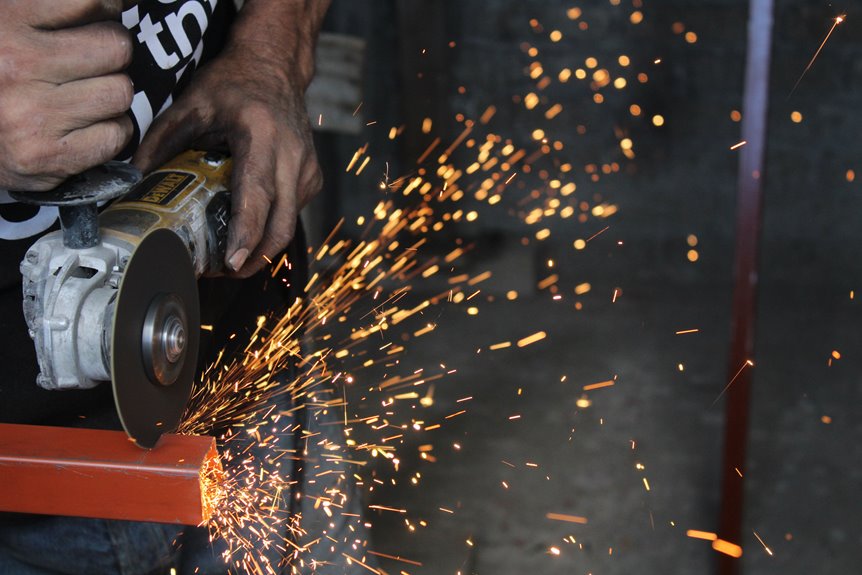
Start with the disc at full speed, then touch the edge to the line with just enough force to bite. When you push too hard, the tool can wander, kick, or leave a rough edge. Hold both hands firm, breathe, and feed the disc slowly.
When sparks flow in a steady stream, you’re doing it right. If the cut starts to drift, ease up and reset your angle. You aren’t wrestling the metal, you’re training it to open cleanly. That steady pace helps you stay in control and finish with confidence.
Cut Thick Metal and Rebar
When you cut thick metal or rebar, the right disc makes the job safer and far less frustrating.
Use a disc made for heavy steel, then keep your cuts steady and make them in small passes instead of forcing one big bite. That pace helps you stay in control and keeps the grinder from fighting back.
Choosing The Right Disc
How do you pick a disc that can handle thick metal or rebar without wasting time or damaging your grinder? Start with disc selection and a quick compatibility check. Choose a cut off wheel rated for steel, with the correct diameter for your grinder and a maximum RPM above your tool’s speed. That match keeps you in control and helps you cut with confidence.
- Picture a thin wheel slicing through a rebar rod like a sharp knife.
- Picture a thicker disc cutting into heavy steel without wobbling.
- Check the label on the disc against your grinder, clean and ready.
When you choose the right disc, you get solid results instead of bent wheels and extra hassle.
Deepening Cuts Safely
For thick metal or rebar, you can deepen the cut safely by working in calm, steady passes instead of trying to power through in one go. Keep control of each pass, letting the disc bite a little deeper each time, then easing off before the motor strains. This rhythm protects the wheel and helps you stay in charge.
After each pass, pause for heat management so the disc and metal can cool, because hot steel can fight back with sparks and wear. Keep your grip firm, stay slightly to the side, and follow the groove you already made.
When the cut starts to wander, reset your angle and make another light pass. That patient pace helps you and your gear work as one, even on stubborn stock.
Make Cleaner Cuts on Sheet Metal
Sheet metal can seem difficult to cut cleanly, but a few simple habits make a big difference. You’ll get a cleaner cut when you keep the disc thin, the line clear, and your hands steady.
For a clean edge, clamp the sheet flat so it can’t chatter.
- Mark the path with a fine line you can follow like a road.
- Let the grinder skim the metal at first, so the groove stays narrow.
- Move with light pressure and short, even passes.
That slow rhythm helps you stay in control and leaves less cleanup for burr removal. When you keep the sheet supported and guide the disc patiently, the cut looks sharper and feels more professional. You don’t need brute force here, only steady timing and a little confidence.
Smooth Sharp Edges After Cutting
Freshly cut metal often looks rough, and that’s normal, so don’t worry if the edge feels sharp at first.
You can clean up the edge quickly with a file, flap disc, or sanding pad. Start by checking for burrs, since tiny spikes can scratch skin or snag your hands. Then run your tool along the cut edge with light pressure and steady strokes. Keep the piece clamped so you stay in control.
After that, wipe away dust and feel the edge carefully. If it still catches, make another pass. Small touchups make a big difference, and they help your metal project look finished, clean, and ready to use without a sharp, jagged edge.
Avoid Common Angle Grinder Mistakes
Even if you have used an angle grinder before, a few small mistakes can turn a simple cut into a messy or unsafe job. Slow down and check the basics first.
Inspect the blade for cracks, chips, or wobble, and match the disc to your metal and grinder. RPM compatibility matters because the wrong disc can fail fast. Clamp the workpiece tightly so it can’t shift when the disc bites. Keep both hands on the tool, stand off to the side, and let the wheel reach full speed before you cut.
- A cracked disc on a bench
- Steel clamped securely in place
- Sparks flying past your boots
Frequently Asked Questions
Can I Cut Stainless Steel With a Standard Metal Disc?
No, you should not use a standard metal disc on stainless steel. Check stainless disc compatibility first. You will get better results and safer cuts with the correct disc, and you will stay within disc wear limits.
How Do I Cut Metal Pipe Without Flattening It?
You’ll keep the pipe round by supporting it with a V-block or wood cradle and by placing the clamps carefully. Mark your cut, secure the pipe firmly, and cut lightly without forcing the disc.
What’s the Best Way to Cut Rusty or Painted Metal?
Rust can be tough, but you can cut it cleanly. You will get better results if you brush off loose rust and paint first, then prepare the coating, clamp the metal securely, and use light, steady passes with the right disc.
Can an Angle Grinder Cut Bolts Without Damaging Nearby Parts?
Yes, you can cut bolts without damaging nearby parts when you use precise cutting and careful removal. Clamp the work, shield surrounding metal, and make light passes so you stay in control and protect nearby components.
How Do I Reduce Sparks When Cutting Metal Indoors?
To reduce sparks during indoor cutting, clamp the metal, use a thin disc, and cut gently at a 90 degree angle. Spark control improves when you stand aside, shield the area, and make short passes.