Electric orbital sanders earn their keep in places where hand sanding gets old fast, like cabinet projects, bodywork touch-ups, ceiling prep, and finishing passes on furniture. The right pick depends on pad size, speed range, dust handling, and how much control you want in one hand. You’ll see that difference clearly here, from compact dual-action tools to heavier-duty drywall gear.
Quick Look at the Shortlist

Protmex Drywall Sander 1000W
SPTA Mini Orbital Polisher 3 Inch 780W

WORKPRO 5-Inch Random Orbit Sander
NARBELL Orbital Sander 3.0AMP 360W

Metabo HPT 5-Inch Finishing Sander SV13YST

DEWALT Random Orbit Sander DWE6420
More Details On Our Top Picks
Ceiling work can get messy in a hurry, and this Protmex setup is built around that problem. The 1000W motor, vacuum dust collection, LED light, and foldable, extendable handle point to long overhead sessions where visibility and reach matter more than finesse.
The six-speed range from 800 to 2200 RPM gives you room to slow down for tighter control or open it up for faster removal. It fits well in a renovation project, though the larger body and hose-led setup will feel less nimble than the compact palm sanders below.
Strong Points
- Vacuum-assisted dust control helps keep cleanup more manageable in occupied spaces.
- LED illumination is useful on ceilings, corners, and dim basement work areas.
- Foldable and extendable handling makes overhead work less awkward.
- Six speed settings give you more control over aggressive removal and lighter passes.
- Comes with 15 sanding discs, so you can start a job without hunting for extras.
Things To Consider
- It’s a purpose-built drywall tool, so it’s less versatile than the 5-inch sanders in this list.
- The extended frame takes more storage space than a palm sander.
- Dust collection systems work best with regular emptying and hose checks.
Feature Snapshot
Who It Suits Best
You’ll get the most out of this pick during drywall finishing, popcorn ceiling removal, and large overhead prep work.
A Better Fit Elsewhere
WORKPRO 5-Inch Random Orbit Sander suits woodworking shoppers who want a smaller tool for flat panels and edge blending.
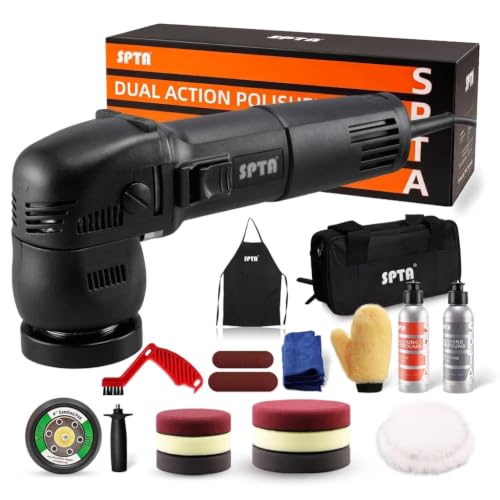
Detail work asks for control, not brute force, and that’s where this SPTA mini polisher makes sense. The extended front grip, middle-mounted speed dial, and 3-inch pad size are all aimed at tighter body panels, curved surfaces, and spots where a larger orbit sander would feel clumsy.
The dual-action motion, meaning the pad both spins and oscillates in a small offset pattern, helps spread contact more evenly across paint and wax tasks. In a garage setup, that usually matters more than raw size, though the smaller pad naturally covers less area than the 5-inch tools in this roundup.
What We Like
- Compact 3-inch format makes it easier to work around trim, mirrors, and tighter panels.
- Dual-action movement spreads contact in a way that suits careful finishing work.
- Speed control runs from 2000 to 5500 OPM for more detailed correction and polishing.
- Front grip and dial placement support steadier one-handed control.
- Included pads, sanding discs, and brush help round out the kit for automotive use.
Minor Gripes
- The small pad size means more passes on larger panels.
- It’s geared toward detailing, so it won’t replace a full-size sander for woodworking.
- Accessory storage can get busy once pads and discs start multiplying.
Core Details
Who Will Love This
You’ll appreciate this most for car detailing, waxing, and careful paint correction in a home garage.
Where A Sibling Pick Shines
Metabo HPT 5-Inch Finishing Sander SV13YST makes more sense for furniture sanding and broader flat surfaces.
For woodworking, this WORKPRO lands in a very practical middle ground. The 5-inch pad, 2.5 amp motor, and six-speed range from 7000 to 14000 RPM make it a sensible fit for sanding tabletops, cabinet parts, and other flat stock where you want speed without losing control.
The dust collector and 15 sandpapers make the setup feel ready for a weekend project, though the bag-style collection is not as contained as the vacuum-driven drywall tool above. You may find it especially useful in a garage or small shop where easy setup matters more than a polished, pro-shop finish.
Upsides
- 5-inch format covers panels and boards faster than the 3-inch detail tool.
- Six speed levels help you match the cut to softer or harder wood.
- 2.5 amp motor gives it enough muscle for common home-shop sanding.
- Dust collector helps reduce mess during bench work.
- Included sandpapers make it easier to get started right away.
Worth Noting
- Bag-style dust capture usually needs frequent emptying during heavier sanding.
- The tool is built for general woodworking, so it’s less specialized than the Metabo HPT finishing sander.
- Larger hands may want to check grip comfort before settling on it for long sessions.
Quick Facts
Made For
You’ll get solid mileage from this on furniture prep, shelf building, and regular woodworking projects.
A Better Fit Elsewhere
DEWALT Random Orbit Sander DWE6420 suits shoppers who want a simpler, long-running workshop staple with a familiar 5-inch layout.
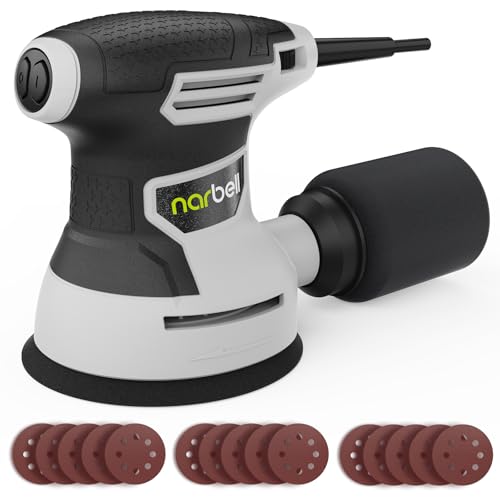
This NARBELL model keeps the format familiar, then trims it into a smaller palm-sander shape that suits casual shop use. The 3.0 amp rating, 14000 RPM top speed, and 5-inch pad line up well with bench sanding, painted trim, and lighter smoothing jobs.
Compared with the WORKPRO, it pushes a little harder on top speed while staying easy to hold in one hand. The lighter format is handy for quick touch-ups, though the dust bag and compact body mean you’ll want to stay on top of cleanup as the pile builds.
Bright Spots
- Compact palm-sander design feels easy to manage on smaller projects.
- Six speed settings support both rougher passes and finer finishing.
- 14000 RPM top speed gives it useful range for common sanding tasks.
- 15 sandpapers and a dust bag make the kit feel well rounded for the bench.
Small Caveats
- The dust bag will need regular clearing during longer sessions.
- It’s smaller and lighter than the Protmex drywall tool, so it’s not the match for overhead demolition-style sanding.
- Light gray finish may show shop dust quickly, so wiping it down now and then keeps it looking tidy.
Details At A Glance
The Right Fit
You’ll likely like this most for light carpentry, trim cleanup, and quick sanding jobs around a home shop.
Swap It Out When
Protmex Drywall Sander 1000W is the better match for ceiling work and large wall prep where dust collection matters more.
Some sanders feel built for short bursts, and this Metabo HPT leans the other way, with comfort clearly in the lead. The palm-style grip, compact frame, and 9,000 to 13,000 RPM range make it a sensible fit for furniture refinishing, longer edge work, and anyone who wants a steadier hand feel.
The dust collection hose connector is the practical detail here, especially in a small workshop where keeping the surface clear matters. The honest read is that it’s less about flashy extras and more about a comfortable layout that can stay useful through a long project.
Reasons To Buy
- Palm-style grip helps reduce hand strain during longer sanding sessions.
- 5-inch format fits broad surfaces and common finishing work.
- Variable speed from 9,000 to 13,000 RPM gives you useful control.
- Hose connector supports a cleaner workspace when paired with collection gear.
- Compact, lightweight build is easy to store on a crowded tool shelf.
Areas To Watch
- It’s tuned for finishing, so heavy stock removal belongs elsewhere.
- The hose connector adds a bit of setup compared with simpler bag-only tools.
- Comfort grip helps over time, though some users still prefer a taller handle for bench work.
Spec Overview
Built With In Mind
You’ll suit this best if you sand furniture, shelves, or trim and want a comfortable tool for repeat sessions.
Another Choice May Suit
WORKPRO 5-Inch Random Orbit Sander fits better for shoppers who want a more general-purpose woodworking tool with a broader speed span.
This DEWALT lands in the familiar zone where many workshop sanders live, simple to understand and easy to bring into regular rotation. The 5-inch PSA layout keeps it straightforward, which suits sanding shelves, refinishing parts, and keeping one dependable tool close at hand.
Compared with the Metabo HPT, it feels more stripped back and less focused on comfort extras, which some shops actually prefer. The trade-off is obvious, fewer frills usually mean fewer distractions, but you’ll want to rely on the shape and layout rather than add-ons.
Best Bits
- 5-inch format fits common sanding and finishing jobs.
- PSA setup keeps the tool easy to understand and maintain.
- Works well as a general-purpose sander for a home shop.
- Familiar layout makes it easier to slot into an existing tool kit.
Points To Note
- It doesn’t lean on extra comfort features the way the Metabo HPT does.
- PSA sanding usually means staying organized with your abrasive supply.
- The minimalist design is handy, though some users will want a more cushioned grip for longer sessions.
Feature Card
Whose Shelf It Belongs On
You’ll get the best fit from this if you want a no-nonsense sander for routine workshop jobs.
Look Elsewhere When
Metabo HPT 5-Inch Finishing Sander SV13YST suits you better when comfort during longer sanding sessions matters more.
How To Choose The Right Electric Orbital Sanders
Match the pad size to the surface
A 3-inch tool fits car curves, trim details, and tight corners far better than a broader 5-inch body. The 5-inch format, like the WORKPRO, Metabo HPT, and DEWALT picks here, covers flat boards and furniture faster, so your project size should lead the choice. For ceiling work, pad size matters less than reach and dust handling, which is why the Protmex drywall sander sits in its own lane.
Pay attention to speed range and motion
Variable speed matters because sanding and polishing do not ask for the same pace. OPM, or oscillations per minute, shows how often the pad moves in a dual-action tool, while RPM tracks rotational speed in a more general way, and both affect how aggressive the tool feels. Slower ranges help with control on finish work, while higher ceilings on speed help with faster material removal, though more speed also asks for a steadier hand.
Dust handling changes the whole experience
Dust bags, hose connectors, and vacuum collection do more than keep the bench tidy, they change how long you can work before cleanup starts stealing time. In a small shop, the Metabo HPT’s hose connector or the Protmex vacuum setup can feel worth the extra setup because they keep the work surface clearer. A basic bag is simpler, but it tends to ask for more emptying, especially during long sanding sessions.
Comfort decides whether you keep using it
Palm-style grips, front handles, and balanced bodies matter more than people expect once a project runs past the first hour. The SPTA mini polisher and Metabo HPT lean toward hand comfort, while the drywall sander sacrifices some nimbleness for reach and coverage. Tool weight, grip shape, and how the speed control sits under your thumb all affect fatigue, which is why a good-feeling sander often gets used more.
A Quick Reality Check Before You Choose
Common Shopping Slip Ups
A lot of sanding frustration comes from choosing the wrong pad size for the job. A compact 3-inch detail tool feels great on trim, then drags its feet on tabletops, while a heavier drywall unit is far too much for quick shelf cleanup. Another easy miss is dust capture, because a simple bag works, but it asks for more maintenance than many shoppers expect.
What The Extra Money Goes Toward
Higher-tier models usually spend more on grip comfort, better dust routing, smoother speed control, and sturdier housings. That matters in a garage or renovation space where the tool sees repeated use and your hand notices every vibration and awkward angle. Spending up makes the most sense when you sand often, work on large surfaces, or want less cleanup between passes.
Closing Thoughts
Your best match comes down to the work in front of you, not the loudest motor number on the page. For ceilings and drywall, the Protmex stands apart; for detailing, the SPTA makes more sense; for general shop sanding, the WORKPRO, Metabo HPT, and DEWALT each cover a slightly different comfort and control balance. Pick the shape that fits your projects, and the rest gets easier.