Field knives dull at the worst moments, usually after a long day outdoors or a stretch of routine kitchen use. You want a sharpener that fits your pack, your bench, and your patience level without turning a quick touch-up into a project. The list below favors practical edge care, clear control, and real-world portability. It should help you choose a tool that matches how you actually carry and maintain your blades.
Quick Look At Our Top Picks

Work Sharp Benchtop Whetstone Knife Sharpener

CAMILLUS GLIDE Compact V-Notch Multitool Sharpener

Benchmade Guided Field Sharpener
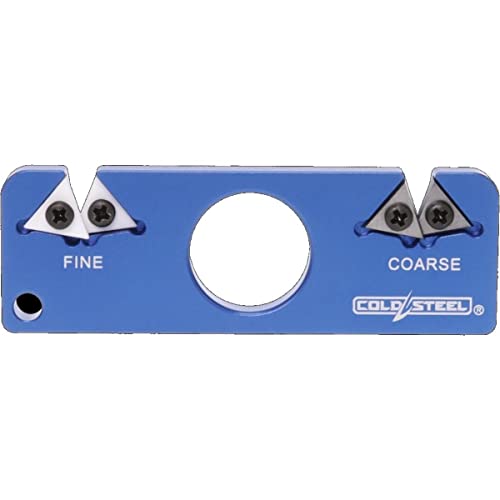
Cold Steel CS-KS-21CC 2-in-1 Knife Sharpener

AccuSharp Pocket Stone Sharpener with Pouch, 3 Inch

Gatco Edgemate Pocket Knife Sharpener

SHARPAL 210N TRANSFOROD 11-In-1 Adjustable Angle Knife Sharpener

Angerstone Portable Whetstone Knife Sharpening Stone 400/1000
More Details On Our Top Picks
Bench sharpening has a different feel from pocket sharpening, and that’s the point here. The adjustable guides set to 15 degrees or 17 degrees help you keep a repeatable angle, while the guided setup can also be removed for freehand work. That makes this a sensible fit for kitchen knives, fillet knives, and the kind of pocket blade that needs steady maintenance at home.
The trade-off is size, because a benchtop whetstone setup belongs on a work surface rather than in a pack. You may also prefer a simpler carry tool for camp, but for a garage, shed, or kitchen counter, this gives you more control than a quick pull-through sharpener. The honest read is that it suits someone who values consistency more than speed.
What We Like
- Guided angles help keep a steady bevel.
- Freehand mode gives you more flexibility.
- Works across kitchen, pocket, and fillet blades.
- Feels better suited to careful edge maintenance than rushed touch-ups.
Points To Note
- Benchtop format takes up more room than a compact field tool.
- Learning the angle settings may take a little patience.
- Less convenient for pack carry or truck storage.
Feature Rundown
Who It Suits Best
You suit this pick best if you sharpen at a workbench, kitchen counter, or other fixed spot and want more control than a pocket tool gives.
A Better Fit Elsewhere
Benchmade Guided Field Sharpener suits you better for trail bags or vehicle kits, since it stays more travel-friendly than this benchtop setup.
This one leans toward quick, practical edge care for mixed gear, which is handy in a shed or campsite toolbox. The V-notch format gives you a simple contact point for knives, and the ceramic-carbide blend is aimed at broad utility rather than fussy technique. Compared with the Work Sharp benchtop unit, it asks for less setup and rewards faster touch-ups.
You may find the shape especially useful for a knife, ax, shear, or hook that just needs a practical edge reset. The trade-off is that simple multi-tool sharpeners rarely feel as precise as guided bench systems, so this suits straightforward maintenance more than careful blade tuning. For most field kits, that balance is pretty sensible.
Strong Points
- Compact format fits easily in a pack or tackle box.
- Multi-angle design covers more than just knives.
- V-notch layout keeps use straightforward.
- Good for fast maintenance between bigger sharpening sessions.
Areas To Watch
- Less exact than a guided angle system.
- Multi-purpose designs can feel less specialized for fine finishing.
- Small size may be easier to misplace in loose gear.
Core Details
Right Fit For
You fit this pick best if you keep mixed tools in a truck, boat, tackle box, or camp kit and want a small sharpener with simple handling.
Swap It Out When
Angerstone Portable Whetstone Knife Sharpening Stone 400/1000 suits you better for slower, more deliberate edge work with a stone-based feel.
Guided sharpening in the field is the whole story here, and Benchmade gives you enough structure to keep the work orderly. The 20 degree angle guides help hold a consistent bevel, while the five grit stages let you move from repair toward finishing without improvising every step. That makes it especially appealing for hunters, hikers, and anyone who wants a compact kit with a little more sequence to it.
The dual ceramic rods are useful for most serration sizes, which matters more than it sounds like when a blade has mixed edge work. Compare that with the CAMILLUS GLIDE, which is easier to grasp at a glance but less deliberate, and you’ll see the difference right away. The only real catch is that a multi-stage system asks for a bit more time and attention, so it suits steady hands better than rushed touch-ups.
Highlights
- 20 degree guides make the angle easier to repeat.
- Five grit stages support a full sharpening sequence.
- Dual ceramic rods handle many serrated edges.
- Compact field format fits outdoor carry better than a bench tool.
- Well suited to routine maintenance during trips or hunts.
Small Caveats
- More steps mean more time than a simple pull-through unit.
- Learning the sequence may take a little practice.
- Less suited to people who want the fastest possible touch-up.
Feature Card
Made For
You suit this pick best if you want a field sharpener with more structure than a pocket stone and less bulk than a benchtop setup.
Where A Sibling Pick Shines
Cold Steel CS-KS-21CC 2-in-1 Knife Sharpener suits you better for a simpler, smaller backup in a kit that values speed over steps.
A small sharpener that can live in a pack or glove box has a clear appeal, and this Cold Steel option leans into that simple role. The 2-in-1 format suggests a two-stage approach in a compact body, which is useful when you want a backup sharpener that does not take over your kit. Compared with the Benchmade unit, it sounds less layered and easier to pull out in the moment.
That simplicity helps in a rushed camp setting or on a weekend fishing trip, where you may want a fast fix rather than a careful edge rebuild. The trade-off is obvious: a compact 2-in-1 sharpener usually gives up some nuance in exchange for speed and portability. It suits you best as a carry tool, not as the center of a full sharpening station.
Bright Spots
- Compact body is easy to store with other gear.
- Two-stage format keeps the process straightforward.
- Good backup choice for travel and camp kits.
- Fast to grab for routine edge touch-ups.
Honest Caveats
- Less detail-oriented than guided multi-stage systems.
- Small size can feel limiting for longer sharpening sessions.
- Works better as a backup than as a main sharpening station.
Details At A Glance
Whose Shelf It Belongs On
You suit this pick best if you want a compact spare sharpener for a gear bag, truck console, or drawer near the trail door.
Another Choice May Suit
Work Sharp Benchtop Whetstone Knife Sharpener fits you better for home sharpening sessions where angle control matters more than carry size.
A pocket stone brings back the slower, more hands-on side of edge care, and that’s a strength rather than a flaw. This AccuSharp model uses a 3-inch, dual-sided stone in a pouch, which makes it a compact carry option for straight blades, fish hooks, camping knives, and hunting knives. Compared with the Cold Steel 2-in-1 sharpener, it asks more of your technique but gives you a more traditional sharpening feel.
The benefit shows up for people who like a stone in the hand and want a tool that can restore, repair, and hone rather than just touch up. The trade-off is that a small stone takes more time and a steadier touch, and the pouch is one more thing to keep track of in a pack. For field use, that is still a very workable setup.
Reasons To Buy
- Small stone format travels easily with outdoor gear.
- Dual-sided layout gives you more than one grit surface.
- Good for straight blades that need careful maintenance.
- Pouch helps keep the stone together with your kit.
Room For Improvement
- Needs more hand skill than guided sharpeners.
- Three-inch size can feel small for larger blades.
- Pouch storage adds one more item to manage.
Spec Overview
Best Suited To
You suit this pick best if you enjoy a stone-based sharpening style and want something small enough to travel with camping or fishing gear.
Look Elsewhere When
SHARPAL 210N TRANSFOROD 11-In-1 Adjustable Angle Knife Sharpener suits you better for a more feature-packed setup with several sharpening stages.
The Gatco Edgemate has the feel of a pocket tool that wants to do a little of everything without getting fussy. Tungsten carbide is the headline material here, and that usually means an emphasis on quick edge work rather than delicate finishing. In a kitchen drawer, garden shed, or field kit, that broad usefulness makes sense for routine maintenance.
Compared with the AccuSharp pocket stone, this sharpener should feel more immediate and less technique-heavy, which helps on busy days. The trade-off is that carbide tools can be more aggressive than a stone, so you may prefer lighter passes and a little restraint. That’s the honest read, especially for blades you want to keep in steady shape over time.
Best Bits
- Portable size works well in pocket kits.
- Tungsten carbide supports quick edge refreshes.
- Useful for knives, scissors, shears, and similar tools.
- Fits many everyday maintenance jobs without extra setup.
Minor Gripes
- Carbide edge care can feel more aggressive than stone work.
- May suit quick maintenance better than fine finishing.
- Small tools can be easy to misplace in cluttered storage.
Technical Sheet
The Right Fit
You suit this pick best if you want a compact maintenance tool for mixed household and outdoor gear.
Reach For A Different Pick When
Work Sharp Benchtop Whetstone Knife Sharpener fits you better for slower, more controlled sharpening at a fixed work surface.
This SHARPAL model stands out for people who want more sharpening stages in one tool. The adjustable angle setup, monocrystalline diamond surfaces, ceramic rods, a tapered rod, and leather strops give it a layered approach that feels more deliberate than the simpler pocket sharpeners above. That matters in hunting and outdoor use, where one tool may need to handle different blade conditions.
You may find the learning curve a little steeper than with the CAMILLUS GLIDE or Gatco Edgemate, but the payoff is more control. Leather strops are the finishing touch in many sharpening kits, used to refine the edge after the main grinding steps, and that extra step is what gives this model a more complete feel. For someone who likes a tool with several working parts, it fits well.
Upsides
- Adjustable angle system supports more controlled work.
- Diamond and ceramic elements cover different stages.
- Tapered rod helps with detailed edge care.
- Leather strops add a finishing step.
- Good match for users who want more than a basic touch-up tool.
Worth Noting
- More features usually mean more steps to learn.
- Not as instant as a simple pull-through sharpener.
- Several parts may take more storage space in a kit.
At A Glance
Built With In Mind
You suit this pick best if you like a more advanced sharpening kit for hunting blades, outdoor carry, or a gear bench at home.
Not Your Match When
Cold Steel CS-KS-21CC 2-in-1 Knife Sharpener suits you better for a slimmer, less involved backup in a small pack.
Dual-grit stones suit people who want a more hands-on path to edge care, and this Angerstone kit keeps that idea compact. The 400 grit side is for faster edge restoration, while the 1000 grit side is for finer honing, so you can move from rough correction to a cleaner finish with one stone. The cowhide pouch is a sensible touch for camp, bushcraft, or field carry.
Compared with the AccuSharp pocket stone, this version gives you the same general stone-first feel but with a clearly stated grit progression. You may appreciate that extra clarity if you already know how you like to sharpen, though it does still ask for time and a steady hand. For trail kits and outdoor maintenance, that is a very usable balance.
Positives
- Dual grit setup covers rough repair and finer finishing.
- Compact size suits field and camp carry.
- Cowhide pouch helps keep the stone organized.
- Good choice for people who prefer stone sharpening by hand.
Softer Spots
- Stone sharpening takes more patience than a pull-through tool.
- Small size may feel slower on larger blades.
- Pouch storage means one more accessory to keep track of.
Core Details
The Right Fit
You suit this pick best if you want a compact whetstone for camping, bushcraft, or a field kit and don’t mind a slower hand-sharpening process.
Where A Sibling Pick Shines
Benchmade Guided Field Sharpener suits you better if you want more guidance and a multi-step system for sharpening away from home.
How To Choose The Right Field Knife Sharpeners
Match The Sharpener To Your Setting
Your setting matters more than flashy extras. A benchtop whetstone like the Work Sharp makes sense at home, while pocket tools such as the Gatco Edgemate or Cold Steel 2-in-1 belong in a kit, truck console, or tackle box. Field use rewards compactness, but a fixed work surface gives you more control.
Choose Between Speed And Precision
Pull-through tools and V-notch sharpeners usually favor speed, which helps on a camping trip or during a quick reset before heading back out. Guided systems such as the Benchmade sharpener and the SHARPAL 210N give you more structure, angle control, and finishing steps. That extra control takes longer, but it usually gives you a cleaner edge.
Pay Attention To Blade Types
Straight blades and serrated edges need different support. The Benchmade model includes dual ceramic rods for many serration sizes, while broader tools like the CAMILLUS GLIDE and SHARPAL 210N are built around more mixed-use sharpening. A stone, like the Angerstone 400/1000, is more flexible in skilled hands, but it also asks more from you.
Think About Carry, Cleaning, And Storage
Small sharpeners are easier to carry, but they can vanish into gear clutter fast. Pouches help, as seen with the AccuSharp and Angerstone stones, because they keep loose parts together after a trip. Larger systems are harder to store, yet they tend to feel steadier during longer sharpening sessions.
What To Weigh Before You Choose
Mistakes Worth Dodging
A common mistake is choosing a sharpener that looks versatile but does not match your blade style. Another is ignoring the learning curve, especially with stone-based options that reward patience and a steady hand. People also forget storage, then end up with a sharpener that stays home because it never fits the kit.
When Paying More Pays Off
Higher-priced sharpeners usually bring angle guides, more abrasive stages, better finishing tools, or tougher materials. That extra structure matters for someone who sharpens often, carries serrated blades, or wants a cleaner result with less guesswork. For casual touch-ups, a simple pocket sharpener often makes more sense, but heavier use can justify the upgrade.
Closing Thoughts
The right field sharpener depends on how you carry your knives and how much control you want over the edge. Work Sharp and Benchmade suit more deliberate sharpening, while CAMILLUS, Cold Steel, and Gatco lean toward compact convenience. Stone fans will probably gravitate to AccuSharp or Angerstone, and SHARPAL is the richer setup for people who want more steps in one tool. Pick the one that fits your routine, not the one with the longest feature list.