You want a sander that keeps up with real work, not a tool that feels fine for ten minutes and then turns fussy. That matters in body shops, wood shops, and garage projects where finish quality, orbit size, pad diameter, and vibration shape the result more than flashy wording does. The list below focuses on pneumatic options and a few adjacent picks that still fit the orbital sanding conversation, so you can match the tool to your pace, your material, and your tolerance for cleanup.
Quick Look At The Shortlist

Dynabrade (59040) Dynorbital-Spirit 6″ 3/32″ Orbit

Dynabrade (59035) Dynorbital-Spirit 5″ 3/32″ Orbit

Dynabrade (59025) Dynorbital-Spirit 6″ 3/16″ Orbit

Dynabrade (59020) Dynorbital-Spirit 5″ 3/16″ Orbit

Dynabrade (59010) Dynorbital-Spirit 6″ 3/8″ Orbit

Gedu Professional Air Random Orbital Palm Sander 6 inch

SPTA 7 Inch 180mm Rotary Polisher

Makita GV5010 5″ Disc Sander
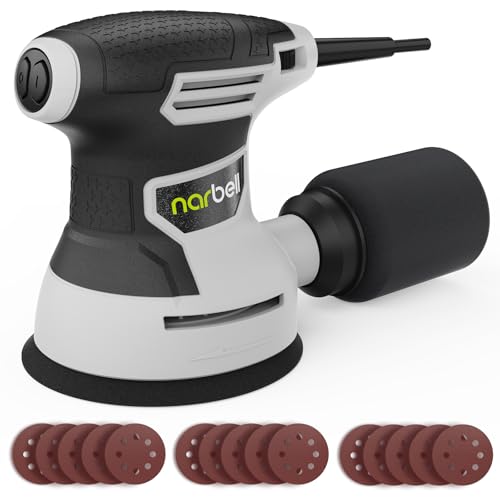
NARBELL Orbital Sander 3.0AMP 14000RPM 6 Speeds
More Details On Our Top Picks
The 3/32 inch orbit keeps the cut subtle, so you get a sanding pattern that suits finish work more than rough shaping. In a paint booth or a busy cabinet shop, that smaller orbit helps you stay more in control on flatter panels, and the 6 inch pad gives you enough coverage without feeling bulky.
Compared with the 3/16 inch Dynabrade models below, this one is the gentler choice. The honest trade-off is speed, since slower material removal is the cost of a smoother touch, but that balance makes sense for finer prep and people who care about surface quality first.
Strong Points
- 3/32 inch orbit favors finer finishing.
- 6 inch pad covers a useful amount of surface.
- Pneumatic setup suits shops that already run air tools.
- Low-aggression feel helps on delicate panels and topcoats.
Points To Note
- Smaller orbit removes material more slowly than the 3/16 inch versions.
- You need an air system, so cordless convenience is off the table.
- Non-vacuum use means dust collection depends on your shop setup.
Feature Rundown
Who It Suits Best
Finish-focused woodworkers and bodywork users who want a calmer sanding pattern will get the most from this model.
Where A Sibling Pick Shines
Dynabrade (59025) suits you better for faster prep, especially on rougher stock where the 3/16 inch orbit moves material with less hesitation.
You get the same fine 3/32 inch orbit as the first Dynabrade pick, but the 5 inch pad makes this one feel easier to steer around tighter spaces. That matters on door edges, small panels, and any job where a full 6 inch pad starts to feel like too much tool.
Compared with the 6 inch 59040, this model gives up some coverage for better agility. For trim work or narrower automotive sections, that trade feels sensible, though a larger shop surface will still go faster with the wider pad above.
What We Like
- Smaller pad improves reach in cramped spots.
- Fine orbit keeps the sanding action restrained.
- Good fit for detail passes and edge work.
- Air-powered format suits a pro shop setup.
Small Caveats
- Five inches covers less area than the 6 inch models.
- Non-vacuum design leaves dust control to your setup.
- Air-tool use means hose management stays part of the routine.
Core Details
Built With In Mind
Detail-oriented users who work around tighter curves, trim, or small refinishing zones will appreciate the compact pad and mild orbit.
Swap It Out When
Dynabrade (59040) is the better match for larger flat panels, where the 6 inch pad speeds coverage without changing the feel much.
This version shifts the orbit to 3/16 inch, and that change is enough to matter in day-to-day prep work. The 6 inch pad still gives you broad coverage, but the sanding action lands with more bite than the 3/32 inch model, so you can move through rougher material with less hesitation.
Compared with the softer Dynabrade 59040, this one is the more assertive middle ground. For a shop that needs one sander to bridge initial leveling and general sanding, it has a useful, not-too-fussy balance, though finishing purists may still prefer the gentler orbit above.
Upsides
- 3/16 inch orbit brings more cut than the finer Dynabrade option.
- 6 inch pad stays productive on larger work surfaces.
- Good middle ground for prep and smoothing.
- Pneumatic drive suits steady shop use.
Areas To Watch
- It feels less delicate than the 3/32 inch Dynabrade models.
- Air supply and hose routing still matter.
- Non-vacuum use means your dust setup does more of the work.
Details At A Glance
Right Fit For
Shop users who want one tool for a mix of smoothing and moderate stock removal will find the orbit size practical.
Look Elsewhere When
Dynabrade (59040) makes more sense for finish-first work, since its smaller orbit leaves a lighter sanding signature.
The 5 inch pad keeps this model nimble, while the 3/16 inch orbit gives it more drive than the finer Dynabrade versions. That combination works well in smaller shops, where you want a tool that can still remove material without feeling oversized on trim, corners, or tighter cabinet parts.
Compared with the 59020’s 5 inch sibling from above, this one shifts toward faster correction rather than smoother finishing. The trade-off is easy to understand: more cut, less finesse, and for general sanding that’s often exactly the middle ground you want.
Bright Spots
- Five-inch pad stays handy on smaller workpieces.
- 3/16 inch orbit gives stronger sanding action.
- Good choice for repair work and prep stages.
- Pneumatic build fits established shop air systems.
Room For Improvement
- Less gentle than the 3/32 inch Dynabrade option.
- 5 inch pad is slower on broad flat surfaces.
- Dust handling depends on your shop setup because it’s non-vacuum.
Feature Card
Whose Shelf It Belongs On
You’ll get the most from this pick in a repair shop or woodworking space that needs a compact body with a bit more sanding bite.
Another Choice May Suit
Dynabrade (59035) is better for tighter work where the same 5 inch size is paired with a lighter orbit.
This is the most assertive Dynabrade in the list, and the 3/8 inch orbit makes that clear right away. A larger orbit means a more noticeable sanding path, so you can move faster through rough prep, though the finish will not feel as delicate as the smaller-orbit models above.
Compared with the 59025, this one leans harder into removal instead of compromise. That makes it useful in body work, rough leveling, and similar jobs where speed matters more than a soft touch, but finish-sensitive users will likely prefer the smaller-orbit options instead.
Reasons To Buy
- 3/8 inch orbit brings the most aggressive feel in this group.
- 6 inch pad keeps the work moving across wider surfaces.
- Useful for heavier prep and correction passes.
- Pneumatic design suits a busy air-tool shop.
Softer Spots
- Less suited to fine finish work than the 3/32 inch Dynabrade models.
- The stronger cut can feel like too much for delicate panels.
- Non-vacuum setup leaves cleanup planning to you.
Core Details
The Right Fit
Users who routinely strip, level, or prep rough surfaces will appreciate the stronger orbit and broad pad.
Skip It When
Dynabrade (59040) is the calmer choice for finish-heavy work where a lighter sanding footprint matters more than speed.
Gedu takes a simpler route than the Dynabrade tools, and that can work in your favor if you want a straightforward air sander without the premium-shop personality. The 6 inch pad gives you useful coverage, and the low-vibration, dual-action format should feel easier to live with during longer sanding sessions in a garage or small refinishing setup.
Compared with the Dynabrade 59020 and 59035 models, this one reads as a more budget-minded air tool with less brand cachet but a familiar shape. The trade-off is that you’re leaning on the supplied feature set rather than a long spec sheet, so it fits best for practical use more than obsessive detailing.
What We Like
- 6 inch pad gives solid surface coverage.
- Dual-action design helps the sanding pattern stay even.
- Low-vibration build is easier on longer sessions.
- Straightforward format suits first-time air-tool users.
Honest Caveats
- Source details are lighter than the Dynabrade listings.
- You still need compressed air and hose space.
- Non-vacuum sanding means dust management stays external.
Feature Snapshot
Best Suited To
Practical users who want a 6 inch air sander for general prep, without paying for a heavier feature stack, will get the most from this model.
Reach For A Different Pick
Dynabrade (59025) is the smarter swap for you when you want a more clearly defined orbit and a more established shop-tool profile.
This SPTA unit sits a little outside the pure orbital sander lane, yet it still matters for anyone working on painted panels, gloss correction, or finishing tasks that overlap with sanding. The 7 inch, 180 mm format gives you a broad footprint, so it makes more sense for larger automotive surfaces than for tight woodworking corners.
Compared with the Dynabrade picks, this is more of a polishing companion than a true sanding specialist. That makes it useful in a detailing bay, though you should treat it as the broader finishing option rather than the cleanest match for general orbital sanding.
Highlights
- 7 inch, 180 mm size covers broad panels quickly.
- Fits polishing and buffing workflows.
- Useful for auto finishing tasks that need wider contact.
- Accessory set adds setup flexibility.
Minor Gripes
- It is less centered on orbital sanding than the Dynabrade tools.
- The larger format can feel awkward in cramped spaces.
- Best use is more specialized than a general-purpose sander.
Technical Sheet
Made For
Auto-detailing users who want one tool for polishing and buffing on larger body panels will find the format useful.
A Better Fit Elsewhere
Dynabrade (59040) is the cleaner match for true orbital sanding, especially when you want a more controlled finish on flat work.
The Makita GV5010 is not an orbital sander in the same sense as the Dynabrade tools, but it earns a place here because plenty of shop work still starts with a simple 5 inch disc sander. That direct-contact approach gives you a more straightforward feel, which can be useful for shaping, edge cleanup, and jobs where you want the pad to follow your hand with less debate.
Compared with the orbital models, this one is less about random motion and more about direct sanding control. That difference matters in real use, because the disc format can feel more deliberate on small tasks, though it is not the gentlest path for finish-critical surfaces.
Positives
- 5 inch disc format stays manageable in hand.
- Simple sanding path helps with direct control.
- Useful for shaping and cleanup work.
- Compact design suits smaller tool storage spaces.
Areas To Watch
- It is a disc sander, not a random orbit tool.
- Less suited to ultra-smooth finishing than the Dynabrade models.
- Different sanding behavior means the learning curve feels a bit separate.
Core Details
Who Should Grab It
Hands-on users who want a compact disc tool for shaping and cleanup will get more value from this Makita than from a larger orbital unit.
Where Shoppers Go Wrong
Dynabrade (59040) is the better call for finish sanding, because its random orbit action leaves a softer result on prepared surfaces.
NARBELL brings the most consumer-friendly feature set in this roundup, with a 3.0 amp motor, 14,000 RPM top speed, six variable speeds, a 5 inch pad, a dust bag, and 15 sanding sheets. That makes it attractive for home garages and lighter woodworking, where a simple electric tool often feels easier than setting up pneumatic gear.
Compared with the air-powered Dynabrade models, this one trades shop-level specialization for convenience and included extras. The honest read is that it fits casual and semi-regular sanding better than heavy daily production, but for a compact kit, the value equation is easy to understand.
Best Bits
- Six speed settings help match the surface and the task.
- 5 inch pad keeps the tool easy to handle.
- Dust bag adds a simple cleanup aid.
- Included sanding sheets help you start sooner.
Worth Noting
- Less specialized than the pro-grade pneumatic Dynabrade tools.
- 5 inch pad covers less ground than 6 inch options.
- Accessory-heavy kit can matter more than raw sanding power for some tasks.
At A Glance
Perfect Match For
You’ll like this most if you want an electric palm sander for light projects, occasional furniture prep, or garage use with less setup.
Where Another Pick Suits Better
Dynabrade (59040) is the stronger fit for shop users who want a pneumatic machine with a finer finish pattern and a more pro-focused feel.
How To Choose The Right Professional Orbital Sanders
Orbit Size Changes The Job
Small orbits, like 3/32 inch, lean toward smoother finish work. Larger orbits, like 3/16 inch and 3/8 inch, move more material and suit heavier prep.
Pad diameter matters just as much. A 5 inch pad fits tighter spaces and smaller parts, while a 6 inch pad covers broader panels with fewer passes.
Air Power Versus Electric Convenience
Pneumatic sanders need compressed air, hoses, and a setup that already supports shop tools. That makes them natural for body shops and busy woodworking spaces.
Electric palm sanders are easier to place in a garage or home workshop. You give up some shop-level specialization, but you also skip the compressor hurdle.
Vibration, Control, And Finish Quality
Lower vibration helps during longer sanding sessions, especially on edges and curved parts. A calmer feel can make the tool easier to guide in straight lines, which matters more than people expect.
Variable speed also helps, especially on electric models. Slower settings give you more control on delicate surfaces, while higher settings help with quicker material removal.
Dust Handling And Everyday Cleanup
Non-vacuum sanders depend on your own dust plan, whether that means a dust bag, shop extraction, or regular cleanup. That is normal for many pro tools, but it changes how tidy the workspace stays.
For cabinet work or vehicle prep, a cleaner sanding setup saves time later. A tool that looks simple on paper can feel much less simple once dust starts collecting in seams and corners.
What To Weigh Before You Click
Common Shopping Slip Ups
A lot of shoppers focus on pad size and forget orbit size, then end up with a tool that feels too gentle or too aggressive. The fix is simple, match the orbit to the amount of correction you actually do.
Another common miss is ignoring the power source. A pneumatic model is a poor fit for a garage without air, while an electric sander can feel limiting in a shop that already runs hoses all day.
The Case For Spending Up
Higher-tier orbital sanders usually cost more because of better balance, tighter build quality, and a smoother feel in the hand. That matters most in daily shop use, where small comfort gains add up fast.
Spending up makes sense when you sand often, care about finish consistency, or work on surfaces that punish vibration. For occasional use, a simpler electric model can make more practical sense.
Frequently Asked Questions
What makes an orbital sander more useful than a basic disc sander?
A random orbit model blends rotation with a small offset motion, which helps reduce obvious swirl marks. A disc sander gives you a more direct feel, but it usually asks for a steadier hand on finish work.
Is a 5 inch pad or 6 inch pad better?
A 5 inch pad is easier to guide in tighter spaces and on smaller parts. A 6 inch pad covers more surface, so it usually feels faster on broad panels.
Do pneumatic orbital sanders suit home garages?
They can, but only when you already have a compressor and the right air setup. Without that gear, an electric model like the NARBELL is usually simpler to live with.
Why do orbit sizes vary so much?
Orbit size changes how aggressively the pad moves across the surface. Smaller values favor finish work, while larger values remove material more quickly.
Is variable speed worth having?
Yes, especially on electric models where you may switch between gentle finishing and quicker sanding. It gives you more control over heat, cut rate, and surface feel.
Closing Thoughts
You can narrow this whole category quickly by asking two questions, how fine do you want the finish to be, and how much setup are you willing to manage. The Dynabrade models stay closest to true pro-shop expectations, while the Gedu and NARBELL picks make more sense for simpler garages and lighter use. The Makita and SPTA entries sit a bit off the main orbital path, yet they still help if your work leans toward shaping or polishing. Match the orbit, pad size, and power source to your real routine, and the right sander becomes easier to spot.