Ranch work, hunting trips, and camp chores ask for a knife that feels steady in hand and doesn’t get fussy about hard use. You want a blade that fits your carry style, handles cleanly, and matches the kind of cutting you actually do, from skinning to food prep around camp. This lineup focuses on that kind of practical fit, with a mix of fixed blades, one folder, and even a cleaver-style option for heavier kitchen tasks. The trade-offs matter too, because compact knives carry easily while larger ones bring more reach and leverage.
Quick Look At The Shortlist

Knives Ranch Slick Skinner 3129 (Cattle Bone)

Knives Ranch Slick Skinner 3129 (Indian Rosewood)

Knives Ranch Damascus Hunting Knife 3117

Knives Ranch 9″ Hunting Knife 2132 (Rosewood)


Knives Ranch Gut-Hook Skinning Knife 2067
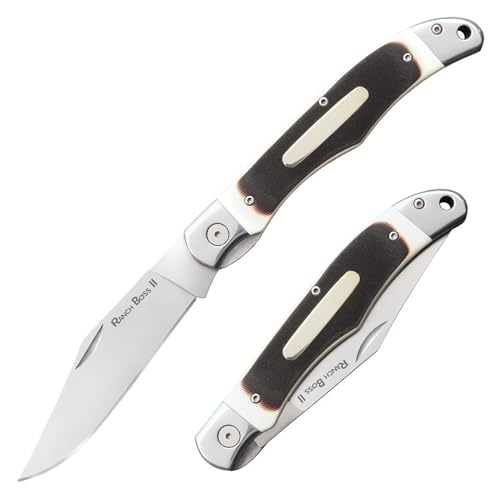
COLD STEEL Ranch Boss II Folding Knife

PAUDIN 7-Inch Cleaver Knife

Knives Ranch Full Tang EDC Skinning Knife 4402-B
More Details On Our Top Picks
That 7-inch overall length keeps this skinner compact without feeling toy-like, and the 2 5/8-inch edge gives you a tight working tip for controlled cuts. The full tang build, where the blade steel runs through the handle for added strength, suits ranch carry better than a delicate showpiece.
For skinning, trimming, and general field chores, the 1/8-inch blade thickness keeps the profile slim enough for detail work. The trade-off is simple, you give up some reach compared with the longer options later in this list, but you gain easier belt carry and quicker handling.
Strong Points
- Full tang construction supports steadier use in wet or gloved conditions.
- 240-layer Damascus pattern adds a more traditional working-knife look.
- Dual horizontal and vertical sheath carry suits different belt setups.
- Shorter blade is easier to manage for close trimming work.
Things To Consider
- Short reach can feel limiting on larger field tasks.
- Damascus steel needs routine drying and basic edge care after use.
- The compact size favors detail work over heavier slicing.
Feature Snapshot
Who It Suits Best
You benefit most from this one if you want a compact fixed blade for skinnier work, belt carry, and lighter ranch chores.
A Better Fit Elsewhere
Knives Ranch 9″ Hunting Knife 2132 (Rosewood) suits you better for longer field cuts and camp tasks that need more blade.
You get the same compact 3129 silhouette here, but the Indian rosewood handle shifts the feel toward a warmer, more traditional grip. That matters in cold weather or long work sessions, where wood can feel a little less slick than synthetic options.
The blade dimensions match the cattle-bone version, so the real choice comes down to hand feel and style rather than cutting geometry. The honest read is that this one makes sense for someone who wants the same carry-friendly skinner with a more classic handle material.
What We Like
- Rosewood handle adds a classic field-knife look.
- Compact size carries easily on a belt.
- Full tang build supports confident daily handling.
- Same sheath carry flexibility as the other 3129 model.
Minor Gripes
- Handle choice is the main difference, so performance stays similar to item 1.
- Wood handles usually benefit from a little more care than synthetic scales.
- Short blade still favors close work over bigger tasks.
Core Details
Who Will Love This
You fit this one best if you want the same compact skinner as item 1 but prefer the look and feel of rosewood.
Another Choice May Suit
Knives Ranch Gut-Hook Skinning Knife 2067 suits you better if your work leans more toward dressing and you want that extra hook feature.
This 8.5-inch knife sits in a sweet spot for campers who want a little more blade than the skinners above without jumping to the longer 9-inch model. The 4-inch blade and 5/32-inch thickness give it a balanced feel for camp food prep, kindling chores, and general utility work.
Micarta, a fabric-and-resin handle material known for grip and durability, makes sense here because bushcraft work rarely happens in ideal conditions. The leather sheath rounds it out for belt carry, though you’ll want to keep leather dry and clean after damp outings.
Upsides
- Mid-size proportions suit many outdoor tasks.
- Micarta handle should feel secure in wet or cold hands.
- Damascus steel construction gives it a more traditional working-knife character.
- Leather sheath supports straightforward belt carry.
- Good match for camping kits that need one do-it-all blade.
Softer Spots
- Leather needs routine drying and care after use.
- It is less compact than the 7-inch skinners in this list.
- The design leans more field utility than fine slicing.
Details At A Glance
Made For
You’ll appreciate this knife most in a camping kit, hunting pack, or bushcraft setup that needs one reliable fixed blade.
Where A Sibling Pick Shines
Knives Ranch 9″ Hunting Knife 2132 (Rosewood) suits you better if you want extra blade length for bigger outdoor cuts.
This one reads like the most substantial fixed blade in the Knives Ranch group, with a 9-inch total length and a 4 1/2-inch blade that gives you more working reach. The 3/16-inch thickness adds a sturdier feel, which helps when you want a knife that doesn’t feel overly delicate in camp or field chores.
Rosewood keeps the handle traditional, and the horizontal plus vertical leather sheath loops make carry setup more flexible than a single-orientation sheath. The trade-off is weight and bulk, so you may find it less convenient than item 1 or item 5 for everyday belt carry.
Bright Spots
- Longer blade helps with broader cutting motions.
- Thicker stock adds a solid in-hand feel.
- Rosewood handle gives it a classic ranch-knife look.
- Dual-carry sheath loops make belt placement easier.
- Well suited to camp and bushcraft use.
Room For Improvement
- Larger size is less discreet for carry.
- Wood and leather both benefit from basic upkeep after outdoor use.
- The extra length can feel more like a camp tool than a small utility knife.
Technical Sheet
Best Suited To
You’re the best match for this knife if you want a larger fixed blade for camping, bushcraft, and heavier belt carry.
Skip It When
Knives Ranch 7″ Skinner 2095 makes more sense for tighter carry needs and lighter trimming work.
The 7-inch size makes this one the easiest carry option among the fixed blades here, and that matters more than it sounds once a knife spends all day on your belt. Its 3-inch blade keeps the footprint small, so it suits trimming, light skinning, and quick camp tasks without feeling bulky.
Compared with item 4’s longer reach, this model is the simpler grab for folks who want less knife hanging at the waist. The honest read is that it feels like a straightforward working skinner, nothing flashy, and that’s exactly the point.
Reasons To Buy
- Compact dimensions make it easy to carry.
- Short blade is handy for close work.
- Black-accent styling keeps the look understated.
- Leather sheath supports simple belt carry.
Areas To Watch
- Short blade limits reach for broader cutting jobs.
- Leather sheath care matters after damp use.
- Less versatile than the mid-size and long-blade picks above.
Feature Rundown
Whose Shelf It Belongs On
This fits you best if you want a small fixed blade for light field use and everyday carry.
Reach For A Different Pick When
Knives Ranch 3117 suits you better if you need a more versatile mid-size knife for camping and bushcraft.
The gut-hook gives this knife a more specialized edge than the simpler skinners in the lineup, and that can matter during field dressing where an extra hook-shaped cutting point helps with certain tasks. The 3-inch blade and 5/32-inch thickness keep it compact, so it still fits into a practical carry system instead of turning into a bulky tool.
Because it’s a full tang fixed blade, the structure feels aimed at steadier outdoor use rather than light utility alone. You may find the hook feature either very handy or a little niche, depending on how often you actually handle skinning work versus general camp cutting.
Best Bits
- Gut-hook adds a specialized field-dressing function.
- Compact 3-inch blade keeps carry manageable.
- 5/32-inch thickness gives it a solid profile.
- Leather sheath supports dual carry setups.
Points To Note
- Specialty hook is not equally useful for every task.
- Leather sheath needs normal care after wet outings.
- Short blade keeps it in a close-work lane.
Core Details
Right Fit For
You fit this one best if your kit needs a compact skinning knife with an added hook for dressing tasks.
Look Elsewhere When
Knives Ranch 7″ Skinner 2095 suits you better if you want a simpler blade without the specialty hook.
Unlike the fixed blades above, this folder is built for pocket carry, which makes it easier to keep on hand during daily outdoor work. The 4-inch SK-5 blade, paired with a liner lock, gives you a folding layout that closes into a smaller package for travel and general use.
The faux sawed bone handle brings a traditional look, though a folder always asks for a little more attention to the pivot and locking surfaces over time. You’ll likely appreciate it most if you prefer a folding knife that can live in a pocket instead of riding on a sheath.
Highlights
- Folding format is easier to pocket carry.
- 4-inch blade gives useful reach for a folder.
- Liner lock adds familiar folding-knife structure.
- Traditional handle styling has a classic ranch feel.
Small Caveats
- Folders need more attention to moving parts than fixed blades.
- Not the right fit for users who want a sheath knife.
- Blade and handle style lean more classic than minimalist.
Quick Facts
Made For
This is a smart match for you if you want a folding ranch-style knife that lives more easily in a pocket than on a belt.
A Better Fit Elsewhere
Knives Ranch Slick Skinner 3129 (Cattle Bone) suits you better if you want a fixed blade with simpler carry and fewer moving parts.
This cleaver breaks from the hunting-knife pattern and gives you a kitchen-focused tool for heavier chopping, slicing, and prep work. The 7-inch format and German high-carbon steel make more sense in a busy home kitchen or restaurant line than on a belt, and the G10 handle adds a durable, grippy feel.
Dishwasher-safe construction is convenient, though many cooks still prefer hand washing anything with a serious edge to keep the finish in better shape. Compared with the ranch-style knives in this list, this one serves food prep duties far better than field carry.
Positives
- Cleaver shape handles dense prep work well.
- G10 handle is a tough, easy-grip material.
- Useful for kitchens that process a lot of ingredients.
- Dishwasher-safe design adds everyday convenience.
Trade Offs
- Not aimed at hunting or belt carry.
- Heavier kitchen shape takes some getting used to.
- Dishwasher convenience does not replace normal edge care.
Feature Card
The Right Fit
You fit this knife best if your real use is chopping and slicing ingredients in a kitchen setting.
Where A Sibling Pick Shines
Knives Ranch 3117 suits you better if you need a field knife rather than a kitchen cleaver.
This model leans toward the practical side of the Knives Ranch lineup, with a full tang body and a bone handle that keeps the look classic. The heavy-duty horizontal carry sheath matters just as much, because a snug sheath fit makes belt carry feel more secure on long days outdoors.
It sits between the smaller skinners and the larger field knife, so it makes sense for everyday ranch tasks that need a compact fixed blade with less bulk. The main trade-off is that you’re not getting the longer reach of item 4 or the added hook feature of item 6.
Standout Traits
- Full tang build supports steady handling.
- Bone handle gives it a traditional ranch look.
- Horizontal sheath carry suits low-profile belt wear.
- Good middle ground for everyday field use.
Worth Noting
- Less reach than the bigger camp knives here.
- Sheath carry style may suit some belts better than others.
- Classic materials can call for routine care after outdoor use.
Feature Rundown
Perfect Match For
You’re the right match for this knife if you want a compact ranch carry piece with a traditional handle and secure sheath setup.
Where Shoppers Go Wrong
Knives Ranch 9″ Hunting Knife 2132 (Rosewood) suits you better if your cutting tasks lean larger and you want more blade length.
How To Choose The Right Ranch Knives
Start With The Work You Actually Do
The first decision is size, because ranch knives are built for different jobs. A 7-inch skinner feels handy for trimming and close work, while a 9-inch blade gives you more reach for camp chores and broader cuts. That gap matters more than finish or pattern, since the wrong length can make a knife feel awkward fast.
Match Blade Shape To Carry Style
Fixed blades and folders solve different problems. A fixed blade rides in a sheath and gives you a simpler tool with fewer moving parts, while a folder like the COLD STEEL Ranch Boss II slips into a pocket more easily. For daily carry, that choice is often about comfort and access rather than raw cutting power.
Pay Attention To Handle Material
Handle material changes how a knife feels after an hour of use. Bone and rosewood bring a traditional look, Micarta adds a grippier working feel, and G10 on the PAUDIN cleaver brings a tougher kitchen-style grip. The catch is that wood and bone usually ask for a little more care, especially after damp outdoor work.
Don’t Skip Sheath And Carry Details
Sheath design sounds minor until you wear the knife all day. Horizontal carry can feel easier under a jacket or on a crowded belt, while dual horizontal and vertical loops give you more placement options. If you split time between truck, barn, and camp, that flexibility can be the thing you notice most.
What To Weigh Before You Decide
Hidden Buying Traps
A common mistake is chasing style and forgetting use case. A gut-hook looks smart for dressing work, but it’s less useful for general chores, and a long camp blade can feel clumsy for close trimming. You also want to think about maintenance, because leather sheaths and classic handle materials benefit from basic drying and care.
The Upgrade Payoff
Higher-tier knives in this category usually earn their keep through better steel work, fuller tang construction, and more careful handle or sheath choices. Damascus blades, for example, bring layered steel construction and a distinct look, while sturdier stock and dual-carry sheath options improve day-to-day practicality. Spending more makes sense when you want a knife that lives on your belt often and sees real field use, not just light occasional cutting.
Frequently Asked Questions
What makes a good ranch knife?
A good ranch knife matches the job, whether that means skinning, camp prep, or pocket carry. You want the right blade length, a handle that stays comfortable, and a carry setup that fits your routine.
Are fixed blades better than folders for ranch work?
Fixed blades are simpler and usually feel steadier in hard use. Folders win on pocket convenience, so they suit people who want a knife close at hand without a sheath.
Is Damascus steel worth it here?
Damascus steel brings layered construction and a distinctive look, which many people like in a working knife. The trade-off is that it usually asks for a bit more care than plain stainless options.
Which handle material feels easiest to live with?
Micarta and G10 tend to feel practical because they keep a grippy, work-ready texture. Wood and bone look classic, but they usually need a little more attention after outdoor use.
Should you choose a gut-hook model?
A gut-hook makes sense for focused dressing and skinning tasks. For general ranch chores, a simpler blade often stays easier to use day after day.
Final Thoughts
You have a clear spread here, from compact skinners to a larger camp knife, a folding carry option, and even a kitchen cleaver for prep work. That range makes the list useful because your best choice depends less on brand name and more on how you carry, cut, and clean up afterward. For most ranch and outdoor use, the middle-sized fixed blades give the easiest balance of control and reach. Pick the shape that fits your hands, your belt, and your routine, and the knife will feel right a lot sooner.