Cinder block walls, patch jobs, driveway edges, and basement areas each ask for something a little different. Some jobs need crack filling, others need water resistance, and some just need a cleaner application finish than a brush can give. This roundup keeps those differences in view so you can match the product to the surface instead of forcing one fix everywhere.
Quick Look At Our Top Picks

DAP Concrete and Mortar Filler and Sealant 10.1 Oz

DAP Textured Concrete Premium Elastomeric Filler & Sealant 10.1 Oz

SIKA Sikaflex Concrete Fix Limestone 10.1 fl oz

MasonryDefender Concrete Sealer 1 Gallon
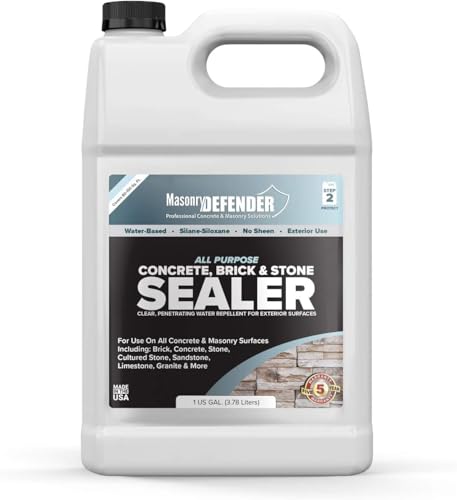
MasonryDefender All Purpose Brick Stone & Concrete Sealer 1 Gallon

Professional Microfiber Sealer Applicator Pad Blue

DOMINATOR SG+ Clear Acrylic Sealer 1 Gal.

Ames Research Laboratories BMX5RG Blue MAX Waterproofer 5 Gallon
More Details On Our Top Picks
Small mortar cracks and hairline gaps ask for a filler that behaves predictably, and this gray DAP tube fits that kind of repair well. It suits quick patch work along cinder block seams, garage edges, and other spots where you want the repair to blend without making a scene.
The 10.1 oz tube keeps cleanup manageable and storage simple, which helps for occasional upkeep rather than a full wall project. The trade-off is scale, since a tube like this is better for spot fixes than larger sealing jobs, so it feels more like a hand tool than a bulk material.
Strong Points
- Gray color helps the repair sit closer to common concrete tones.
- Tube format is handy for small touch-ups around block joints.
- Works well for local repairs where a full bucket would be overkill.
- Simple to store between seasonal maintenance tasks.
Things To Consider
- Small size means you may need more than one tube for broader patching.
- Best suited to repair work, not whole-surface sealing.
- Tube cleanup matters, since dried material can be annoying around the nozzle.
Feature Snapshot
Who It Suits Best
It suits homeowners handling minor block cracks, joint touch-ups, or patch jobs that need a straightforward finish.
Where Another Pick Suits Better
MasonryDefender Concrete Sealer 1 Gallon suits you better when you want coverage across a driveway, sidewalk, or larger block wall.
Compared with the plain filler above, this DAP option leans more toward a finished look thanks to its textured concrete style. That makes it a sensible match for visible repairs on cinder block or masonry where you want the patch to sit more quietly in the surface.
“Elastomeric” means the material is meant to stay flexible, so movement at small joints is less likely to make the repair look tired right away. The trade-off is that a textured finish can be a better visual match than a smooth one, though it also asks you to be a little more careful during application.
What We Like
- Textured finish helps the patch blend into concrete surfaces.
- Flexible formula suits joints that see mild movement.
- Gray tone keeps attention away from the repair line.
- Good fit for visible areas along block walls or steps.
Room For Improvement
- Textured material rewards a steadier hand during application.
- Still a small tube, so large areas call for multiple passes.
- Best kept for repair work rather than broad sealing jobs.
Core Details
Built With In Mind
It suits you best for visible patching on masonry where appearance matters as much as basic fill.
Swap It Out When
SIKA Sikaflex Concrete Fix Limestone fits better for wider joints or spots that need a more distinctly elastic seal.
This one stands out for people who want a sealant that feels purpose-built for cracks and joints rather than simple cosmetic filling. The limestone color helps it sit more naturally on lighter masonry, and the paintable polyurethane finish gives you room to match the surrounding surface later.
Polyurethane is a sealant base known for flexibility, so it suits places that move a bit with weather or settling. The honest read is that it asks more care than a basic tube filler, but that extra control can pay off in cleaner-looking seams on block and concrete.
Highlights
- Made for cracks and joints, not just surface touch-ups.
- Paintable finish helps you blend the repair into surrounding masonry.
- Limestone color works well with lighter concrete tones.
- Flexible sealant base supports small movement at the repair line.
- Good match for cinder block seams that need a neater finish.
Points To Note
- Paintability helps, but it also adds another step if you want a matched finish.
- Better suited to focused sealing than large-area coverage.
Details At A Glance
Whose Shelf It Belongs On
It fits homeowners and maintenance pros who want cleaner-looking crack sealing on block, brick, or concrete.
Look Elsewhere When
MasonryDefender Concrete Sealer 1 Gallon suits broader water resistance jobs where you care more about coverage than a paintable repair line.
Some cinder block jobs need more than patching, they need moisture management without changing the surface look. This MasonryDefender sealer is built for that quieter role, since its penetrating water-repellent approach keeps the finish clear and non-glossy.
That clear finish matters on driveways, walkways, and patios where you want the concrete to still look like concrete. The trade-off is that invisible protection can feel less dramatic than a wet-look coating, but many homeowners prefer that restraint for older hardscape surfaces.
Bright Spots
- Clear finish keeps the original concrete appearance intact.
- Non-glossy look suits people who want a natural surface.
- Penetrating formula is a smart fit for outdoor walk areas.
- Good option for cinder block surfaces where sheen would look out of place.
Minor Gripes
- Invisible protection can feel subtle compared with decorative sealers.
- Best used where the goal is water resistance, not a changed finish.
- Surface prep still matters, so cleanup before application is worth the effort.
Spec Overview
Made For
It suits you best for driveways, patios, sidewalks, and block surfaces where you want the original finish to stay visible.
Reach For A Different Pick When
DOMINATOR SG+ Clear Acrylic Sealer fits better for a wet-look decorative finish on pavers and ornamental concrete.
This MasonryDefender option leans into flexibility, which helps when your hardscape mixes brick, stone, and concrete in the same outdoor area. That broad compatibility makes it easier to keep one sealer on hand for a patio wall, a block edge, or a walkway border.
Because it dries transparent, it keeps the surface look mostly intact rather than adding a heavy visual layer. The catch is that a universal-style product can feel less specialized than the concrete-only picks above, so the fit depends on how mixed your masonry really is.
Upsides
- Works across brick, stone, and concrete surfaces.
- Transparent finish keeps masonry looking natural.
- Handy for yards with more than one surface type.
- Gives you one sealer for several outdoor jobs.
Softer Spots
- General-purpose coverage may be more than you need for a single-surface job.
- Better for exterior masonry than highly decorative finish work.
- Surface prep still drives how well the coating lays down.
Technical Sheet
Right Fit For
It suits homeowners with mixed masonry around the house who want one broad exterior sealer instead of separate products.
A Better Fit Elsewhere
MasonryDefender Concrete Sealer 1 Gallon fits better when your focus stays on concrete-only areas and you want a more surface-specific approach.
For sealers, the applicator matters almost as much as the liquid itself, and this microfiber pad addresses that part of the job directly. The blue pad format is handy for stone, tile, concrete, and slate, especially where curves, corners, or tight edges make a standard applicator feel clumsy.
Its microfiber build is paired with a sponge foam insert, so the pad has enough body to carry material without feeling floppy. It’s a useful companion piece for cinder block sealing projects, though the trade-off is obvious, since you still need the sealer itself and a little care to keep the pad clean between uses.
Reasons To Buy
- Microfiber surface helps reach curved and tight areas more easily.
- Sponge foam insert adds control during application.
- Useful on natural stone, tile, concrete, and slate.
- Good support tool for edge work around block and masonry.
Areas To Watch
- It’s an applicator, so you still need a compatible sealer.
- Pad care matters after use, especially with thicker sealant residue.
- Best value comes from detail work, not large open surfaces.
Feature Card
The Right Fit
It suits you best for detail-oriented sealing jobs where edges, curves, and awkward spots need a cleaner finish.
Another Choice May Suit
MasonryDefender Concrete Sealer 1 Gallon makes more sense when your priority is the coating itself rather than the applicator.
This is the most style-forward pick in the group, and that makes sense because it’s aimed at decorative concrete and pavers. The high-gloss, wet-look finish brings color enhancement into the picture, so it suits areas where the surface itself is part of the design.
There’s a clear trade-off, though, since this is not the quiet, invisible approach used by MasonryDefender’s concrete sealer. It also carries a cold-weather application warning, so timing matters more here than with a basic repair tube or a simpler water repellent.
Positives
- High-gloss finish creates a more decorative look.
- Wet-look effect helps colors stand out on pavers and concrete.
- Useful for driveways, patios, and walkways with visual character.
- Oil stain resistance is a helpful layer of surface protection.
- Fast-dry profile is appealing for projects where downtime matters.
Small Caveats
- Not intended for stone or clay surfaces.
- Cold conditions make application timing more important.
- Glossy finishes are a style choice, not a match for every surface.
Core Details
Who Should Grab It
It suits homeowners or contractors working on decorative pavers, patios, and concrete areas where finish matters as much as protection.
Where Shoppers Go Wrong
MasonryDefender Concrete Sealer 1 Gallon is the calmer choice when you want protection without a glossy surface change.
This Ames option is the most large-scale waterproofer in the roundup, and that matters for foundations, basements, roofs, and floor areas that need broader coverage. The 5 gallon size gives it a different job than the tube fillers above, since it’s aimed at heavy surface work rather than repair lines.
Its indoor and below-grade exterior use makes it especially relevant for foundation areas that sit close to moisture. The compromise is simple: you’re committing to a much larger container, so it makes sense for bigger jobs and less sense for one small crack in a cinder block wall.
Best Bits
- Large 5 gallon format suits broad waterproofing jobs.
- Works for interior and below-grade exterior concrete surfaces.
- Good match for foundations and basement areas.
- Useful when a project needs more than spot sealing.
- Liquid rubber style supports larger coverage needs.
Worth Noting
- Larger container makes it a poor fit for tiny repairs.
- Storage and handling are more demanding than with tube products.
- Best reserved for projects that justify the volume.
At A Glance
Perfect Match For
It suits you best for basements, foundations, and large concrete areas where waterproofing coverage matters more than a small touch-up.
Skip It When
DAP Concrete and Mortar Filler and Sealant 10.1 Oz is the easier fit for a small crack, a single seam, or a quick patch job.
How To Choose The Right Cinder Block Sealers
Start With The Surface You’re Treating
Cinder block is porous, which means it can take in moisture and show wear differently from smooth poured concrete. A crack filler handles narrow joints and chips, while a penetrating sealer is better for broad surfaces that need water resistance without changing the look much. Decorative coatings sit in a third lane, where appearance matters alongside protection.
The job matters more than the brand name on the tube. A basement wall, a patio edge, and a driveway patch each need different behavior from the product, even though they all sit under the same keyword.
Match The Formula To The Movement
Some seams stay stable, while others shift with temperature, settling, or traffic nearby. Flexible sealants such as polyurethane and elastomeric formulas are useful where tiny movement can reopen a rigid patch, and that’s why they show up in crack and joint repair products. Penetrating silane siloxane sealers do a different job, since they soak into the surface instead of building a visible layer on top.
That difference matters in real use. A moving joint wants stretch, but a broad wall wants coverage and moisture resistance, so the best choice depends on how the surface behaves over time.
Pay Attention To Finish And Visibility
A clear, non-glossy sealer keeps the original masonry look, which suits older cinder block or utilitarian exterior walls. A high-gloss acrylic product creates a wetter, more decorative look, which works better on pavers, patios, and ornamental concrete than on plain block.
You also want to think about whether the repair should disappear or stand out. For many homes, the calmest finish is the most useful one, because it lets the wall or walkway keep its normal appearance.
Think About Coverage And Application
Small tubes are convenient for spot work, and gallon containers make more sense for larger walls, walkways, or foundations. Applicator pads can also matter more than expected, especially around curves, corners, and narrow edges where a brush can leave a messy line.
That’s the part many people overlook. A smart sealant can still look uneven in a hard-to-reach area, while the right applicator can make a midrange product behave much better.
What To Weigh Before You Click Through
Common Shopping Slip Ups
A common mistake is choosing a decorative sealer for a repair job, or a small repair tube for a broad wall. Another one is ignoring whether the surface is concrete-only, mixed masonry, or a material that needs a clearer compatibility match.
Cleanup and prep also matter more than people expect. Dust, loose grit, and old residue can interfere with how well any sealer sits on cinder block.
What The Higher Tier Buys
Higher-tier products often cost more because they bring a more specialized chemistry, a stronger finish goal, or a larger usable volume. That can mean better fit for moving joints, deeper water resistance, or a finish that looks more intentional on exposed concrete.
The upgrade makes sense when the surface is visible, the area is large, or the repair needs to blend in rather than just fill a gap. For small routine fixes, a simpler product is often enough.
Frequently Asked Questions
Can you use a concrete sealer on cinder block?
Yes, many concrete sealers work on cinder block because both surfaces are porous masonry. The key is matching the formula to the job, since a crack filler, penetrating sealer, and decorative coating all behave differently.
What’s better for cinder block cracks, filler or sealer?
A filler is better for actual cracks and joints that need material to bridge the gap. A sealer is better for broader moisture control across the surface.
Do you need a glossy finish on cinder block?
No, most cinder block areas look better with a clear or low-sheen finish. Gloss makes more sense for decorative concrete and pavers than for plain block walls.
Are larger containers always better?
No, larger containers make sense only when the surface area justifies them. Small repairs are easier with a tube, while foundations and wide wall sections can justify a gallon or more.
Does application tool choice matter?
Yes, tool choice can change how clean the finish looks, especially around corners and edges. A microfiber pad can help where a brush feels awkward or leaves excess material behind.
Closing Thoughts
The right cinder block sealer depends less on the label and more on the surface in front of you. Small cracks call for a filler, visible joints benefit from a flexible sealant, and larger walls or foundations need a product that matches the scale of the job. Once you separate repair, water resistance, and finish, the shortlist gets much easier to read. Choose the option that fits your surface first, and the rest tends to fall into place.