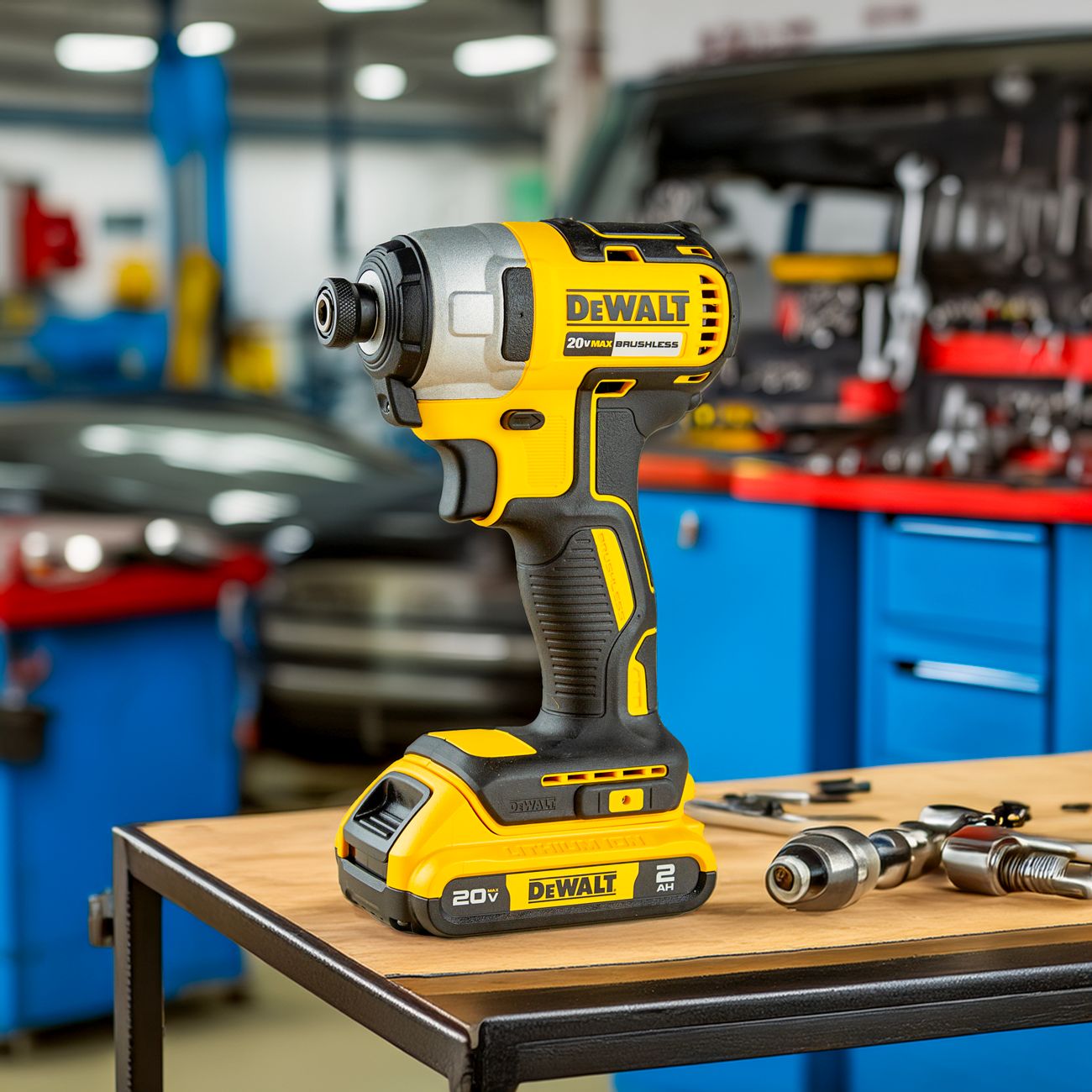

A fastening tool that sends spin and short hammerlike bursts into screws helps stubborn hardware turn without dragging on your wrist. It is a compact cordless power tool built around torque pulses, which makes it useful for long deck screws, lag screw work, and other fasteners that a regular drill can slow down.
You will use this overview to separate fastening force from drilling control, choose the right accessories, and decide whether your next purchase should be a drill, an impact driver, or both.
The Tool Built For Fasteners
The body stays compact, the nose is short, and the bit holder accepts a 1/4-inch hex shank bit. That layout makes sense because the tool is built to turn screws, not to bore neat holes through lumber or drywall.
Inside, a spring-and-anvil mechanism stores rotational force, then releases it in quick impacts per minute as resistance rises. The twist lands in pulses instead of one hard shove, so your wrist gets less shock while the screw keeps moving.
How The Impact Mechanism Works
Torque climbs fast, then the internal hammer slips and strikes the anvil. That collision adds force without forcing the motor to stall every time the screw head digs in.
The result matters on long construction screws, deck fasteners, and lag screw jobs where a standard drill starts to bog down. You get more turning force at the fastener, less twisting in your hand, and a cleaner path into dense wood.
That extra turning force is what makes the tool feel planted when dense wood resists every inch.
Impact drivers are built around torque pulses, not smooth spinning. That difference is why they feel aggressive on hard screws but easier on your grip.
Why It Feels Stronger Than A Drill
A drill and an impact driver can share a battery and still feel like different animals in use. The drill gives smoother control and a wider speed range, while the impact tool delivers sharper bursts that keep driving when resistance climbs.
| Tool | Primary job | Feel in hand |
|---|---|---|
| Drill | Drilling holes and light fastening | Smoother, steadier, easier for alignment |
| Impact driver | Driving screws and stubborn fasteners | Snappier, louder, more forceful |
| Hammer drill | Masonry drilling with rotary hammer action | Heavier, built for concrete and block |
That table hides a practical point: a drill gives you controlled rotation, while the impact tool trades some finesse for raw fastening power. Smaller size and lower weight also matter, since less mass makes overhead work and deck framing less tiring.
Hammer drills sit in a different lane. Their pounding motion helps a masonry bit chew through concrete, not a wood screw settle into framing lumber, so the tool choice starts with the material and the job, not just the power number on the box.
Drill Control Versus Fastening Force
A drill shines when you need a clean hole or a screw started slowly near an edge. The clutch helps cap torque before a soft board splits or a cabinet hinge wanders off line.
The impact tool makes the opposite trade. It accepts more noise and vibration so you can keep fastening without the motor twisting back at you, which is why deck work and framing crews keep one close at hand.
That steadier drive is exactly what keeps it in rotation on jobs that demand speed and repetition.
Jobs Where It Earns Its Place
Long screws into framing lumber are the classic match. A 3-inch deck screw or a lag screw can stall a drill halfway in, while the impact action keeps the tip engaged and the head seated.
Wood, Metal, And Common Home Tasks
- Deck boards: Drives coated deck screws without the bit camming out as fast.
- Fence repairs: Helps with long exterior screws in pressure-treated lumber.
- Metal brackets: Seats self-tapping screws into light-gauge steel with less slip.
- Cabinet assembly: Works for coarse pocket screws, not for delicate hinge work.
- Furniture repair: Pulls stubborn hardware from hardwood where hand tools stall.
Homeowner assemblies give you another clear case. A stuck hinge screw, a rusted outdoor bracket, or a long lag bolt into a ledger board all reward the extra torque because the fastener, not the hole, is the hard part.
A drill still matters for pilot holes, but the fastening step is where this tool earns its place. That split is the key to choosing the right tool for the next section of your toolbox.
By contrast, lighter fastening and delicate assembly still favor a tool that offers finer control.
Where A Drill Still Makes More Sense
Thin stock and tiny screws can crack fast when the driving force arrives in pulses. Cabinet face frames, drawer slides, hinge plates, and trim work ask for smooth control, low speed, and a clutch that stops before damage starts.
Delicate Materials Need Gentle Torque
Plywood veneers, soft pine, and hardwood edge grain all punish rough starts. A standard drill lets you creep up on the screw head, seat it flush, and stop before the threads overrun the material.
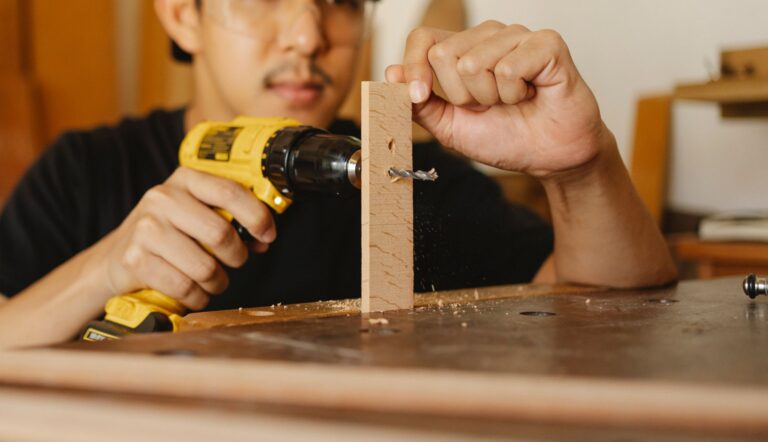
Precision hole drilling is another limit. Centering a bit for a shelf pin hole, a dowel hole, or a clean pilot in a visible face calls for a drill with steadier rotation and better depth control, not a tool that pulses under load.
Cabinet Work Demands Alignment
A face frame screw needs to land square, and a hinge screw needs just enough clamp force to hold alignment. The impact tool can overdo both, which is why finish carpenters keep a drill close for setup and the impact tool for heavier fastening nearby.
That tradeoff becomes clearer once the right bit and chuck setup determine how well each screw bites.
Use the drill for finesse and the impact tool for bite. That split saves stripped heads, split boards, and a lot of backtracking.
Bits, Chucks, And Compatibility
The common nose design grips a 1/4-inch hex shank bit, and the quick-change chuck makes swaps fast. That setup matters because a round-shank drill bit will not seat the same way, so the accessory has to match the tool.
Impact-Rated Bits Versus Standard Bits
Tougher steel and a shank built to handle repeated strikes make impact-rated bits stand up better than standard ones. Standard bits can snap, twist, or shed their edges sooner because they were made for smooth drill rotation, not hammerlike loading.
Socket adapters open another use case for nuts, bolts, and lag hardware. A 1/4-inch hex to socket adapter lets you spin a nut driver socket, but the adapter and the socket both need the right fit or the connection wobbles under load.
Pilot Holes Keep Hardware Straighter
A pilot hole reduces splitting in wood and lowers the load on the motor. For hardwood, thick screws, or anything close to an edge, the small starter hole helps the fastener track straight instead of wandering sideways.
- Use impact bits: Their tougher shanks hold up to the repeated blows.
- Match the head: Phillips, Torx, and square drives each need the right bit shape.
- Choose tight adapters: A sloppy socket adapter wastes torque and chews hardware.
- Start with pilot holes: Dense wood, long screws, and hardwood grain need them most.
Wrong accessories waste power in a hurry. A standard drill bit in the chuck, a soft Phillips bit, or a loose adapter all invite cam-out, rounded heads, and that ugly moment when the screw stops turning but the bit keeps chewing.
Once the bit slips, control disappears, and technique matters as much as the hardware itself.
Using One With More Control
Steady pressure matters more than brute force. Set the bit fully into the fastener, keep the tool square to the work, and let the tool do the turning instead of pushing so hard that the bit starts to wander.
A Simple Working Sequence
- Fit the bit: Seat an impact-rated bit firmly in the hex chuck.
- Mark the spot: Use a pencil line or an awl so the screw starts straight.
- Drill a pilot hole: Use a drill for dense wood, thick screws, or edge work.
- Start slow: Ease into the fastener so the tip bites cleanly.
- Finish with control: Stop as soon as the head sits flush and the material stays intact.
Noise, vibration, and fatigue are part of the package. The tool sounds sharper than a drill because the internal hammer clicks, and that repeated shock can tire your hand faster during a long fence run or a framing day.
Safety still comes down to habits. Keep a firm stance, wear eye protection, and avoid loose sleeves near rotating bits. The tool is compact, but the bit can still catch a screw head and whip a wrist if the angle is sloppy.
A firm grip and straighter approach help, because even compact drivers can kick unexpectedly.
Picking The Right Driver For Your Toolbox
Your project list should steer the purchase. Deck screws, lag screws, and repeated fastening in wood point toward the impact tool, while hole drilling, cabinetry, and mixed trim work tilt the choice toward a drill.
| Need | Best pick | Why it fits |
|---|---|---|
| Long screws in wood | Impact driver | Higher fastening torque with less wrist twist |
| Clean holes | Drill | Smoother speed control and better bit alignment |
| Concrete or block | Hammer drill | Rotary pounding helps masonry bits cut |
| Mixed home repairs | Drill plus it | Each tool covers a different job class |
Specs That Matter Most
Battery platform matters because the battery and charger ecosystem can lock you into one brand family. Voltage shapes runtime and power headroom, with 12V tools feeling compact and 18V or 20V Max tools handling heavier fastening with more confidence.
Brushless motor models waste less energy as heat and can feel livelier under load, while brushed motor tools tend to be cheaper and simpler inside. Kit versus bare tool matters too, since a kit gives you battery and charger in one box, and a bare tool only makes sense when your battery stack already matches.
Do You Really Need One
A drill alone covers shelf brackets, picture frames, basic furniture, and many small repairs. Add an impact tool once your home work starts leaning toward long screws, outdoor lumber, or any fastener that keeps beating up your wrist.
For a beginner with a tight budget, the decision is practical rather than glamorous. A drill comes first for general use, but a combo kit makes sense faster than most people expect once deck boards, lag screws, and stubborn hardware show up on the weekend list.
With those real-world tasks in mind, the choice between bare tool and combo kit gets easier.
Wrap Up
The main point is simple: this tool is built for driving, not for general drilling. Once you match the job to the fastening force, the choice gets easy, and your screws go in straighter with less strain on your hand.
FAQ
What is the difference between a drill and an impact driver?
A drill spins smoothly and handles holes, light screws, and alignment work with more control. The impact tool adds hammerlike torque pulses, so it drives long screws and stubborn hardware with less wrist twist.
What do you use an impact driver for?
You use it for screws and fasteners that need more force than a standard drill gives. Deck screws, lag screws, fence repairs, metal brackets, and stuck outdoor hardware are all solid matches.
Do I really need an impact driver?
You need one only when your projects lean toward repeated fastening in wood or metal. A drill covers many small household jobs, but an impact tool earns its spot fast on decks, framing, and tough screws.
Can you use an impact driver like a drill?
You can drive screws with it, but hole drilling is a poor fit for most work. The pulse action makes clean alignment harder, so a drill stays the better tool for pilot holes and precision drilling.
When should you not use an impact driver?
Avoid it for delicate trim, cabinet work, tiny screws, and tasks that need slow, smooth control. Softer materials, visible finishes, and close-to-edge fastening all favor a drill with a clutch.