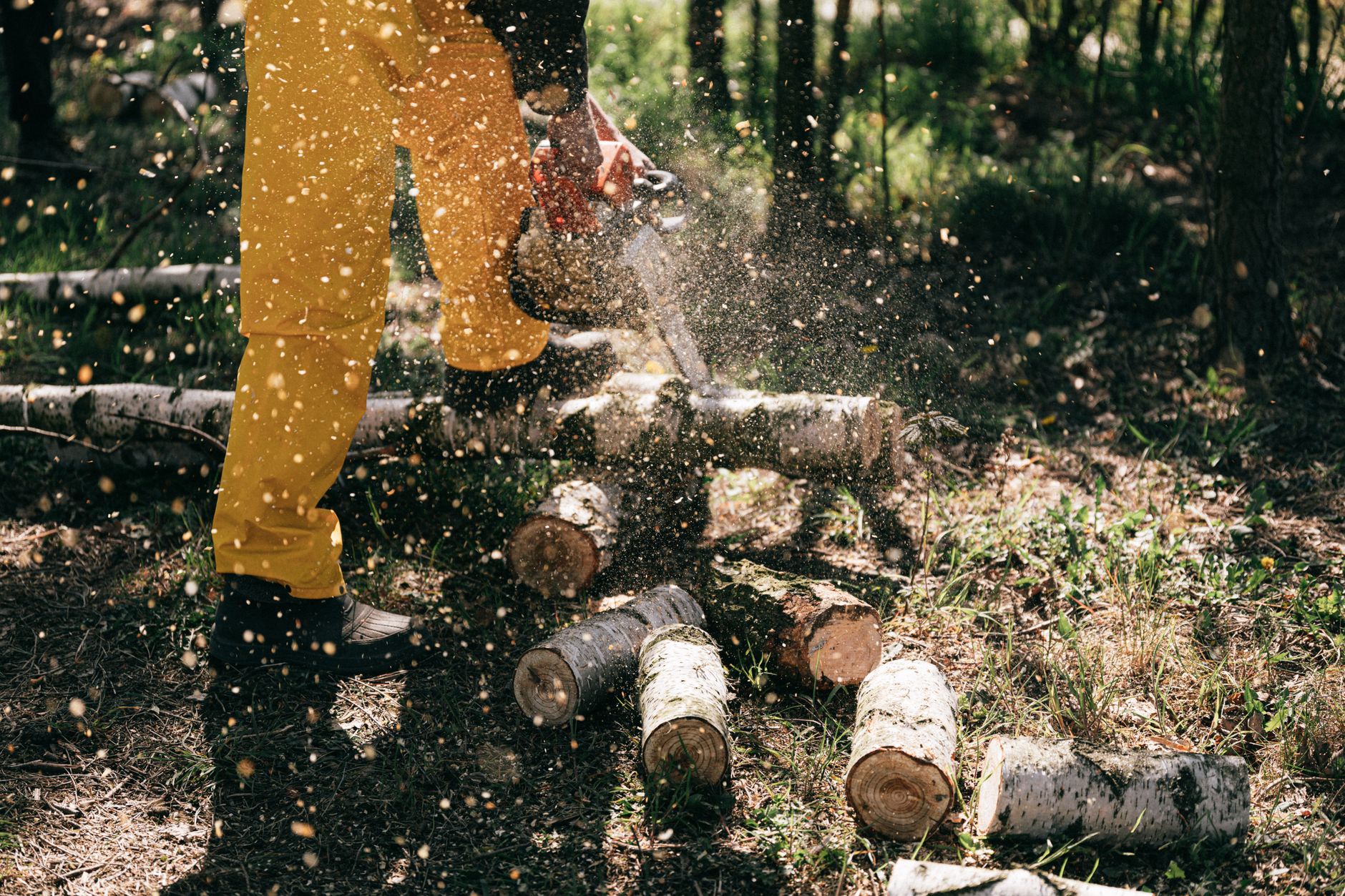

Before the first cut, check the chain, put on protective gear, grip the saw with both hands, and work only from a stable stance with the bar and chain moving. A small limb can still kick back hard enough to change a routine yard job in seconds.
You can use the steps below to move from first inspection to shutdown with less risk. The focus stays on beginner tasks, basic cutting technique, and the jobs that belong with a trained pro.
Start With the Limits of the Job
A homeowner saw handles light cutting better than rushed storm cleanup. A 14-inch or 16-inch bar suits trim work, small logs, and yard debris, while a larger saw belongs to heavier felling and bucking tasks.
The real limit is risk, not only size. A leaning tree, a hung-up limb, or a trunk under tension can shift without warning, and that movement turns a simple cut into a trap. Kickback, pinching, and loss of control are the hazards to respect before anything else.
Storm-damaged wood loads the bar in ways a standing tree does not. Tension closes the cut, compression grabs the chain, and the saw can jerk before your hands react.
Missouri Extension and forestry programs from places like Husqvarna and Tractor Supply all push the same point for a reason: basic yard work is one thing, but a tree with a lean, a split stem, or overhead hang-ups is not a casual weekend task. That judgment call matters before you ever fuel the saw, and it helps you decide whether you should be using a chainsaw at all.
That same caution carries over to the gear you wear, which has to absorb mistakes the saw cannot forgive.
Put On the Protective Gear That Matters
PPE goes on before the saw starts. A helmet or hard hat, eye protection, hearing protection, gloves, cut-resistant leg protection, and sturdy boots form the practical set for a beginner.
- Head protection A helmet or hard hat helps with falling twigs and the top-of-tree debris that surprises new users.
- Eye coverage Glasses or a face shield keep chips and dust out of your eyes during every pass.
- Hearing protection Ear muffs or plugs matter because a gas saw can run loud enough to tire your focus fast.
- Hand grip Gloves help with vibration, sweat, and better control on the front handle.
- Leg protection Chainsaw chaps or pants add a layer that can slow contact with the moving chain.
- Footwear Sturdy boots with good traction keep your stance planted on dirt, leaves, or wet grass.
Close-fitting clothing lowers snag risk, and loose hood strings, dangling straps, or long sleeves with cuffs can catch near the bar. Put the gear on before the first pull cord tug, because the first cut is where many beginners get careless.
Personal protective equipment is not a formality. It is the layer that buys you a margin when a branch bounces, a log rolls, or your footing shifts on uneven ground.
With your body protected, attention shifts to the machine itself before the first cut ever begins.
Inspect the Saw Before the First Pull
A chain that is slack, dull, or dry changes the whole feel of the cut. Check tension, sharpness, and lubrication before you start, because a chainsaw that is ready behaves predictably and one that is not tends to wander, smoke, or bind.
Check the Cutting Parts
The chain should sit snug on the bar but still move by hand when the engine is off. Look for sharp cutters, clean depth gauges, and a bar groove that is free of packed sawdust.
Bar and chain oil matters because friction rises fast when metal runs dry against metal. The bar nose and drive links need oil to shed heat, and that heat is what shortens chain life and can make the saw feel sticky.
Confirm the Controls and Fuel
The chain brake should lock the chain, the throttle trigger should move smoothly, and the oil system should feed as the saw runs. On a gas model, use the fuel mix listed by the maker, then wipe spills from the cap and housing before ignition.
Battery saws skip 2-stroke fuel, but the inspection rhythm stays the same: sharp chain, proper tension, working brake, and enough oil in the reservoir. A clean start keeps debris out of the clutch area and helps the saw run with less drama once the chain meets wood.
A smooth start depends on the saw being ready, but the real control comes from how you position yourself.
A chain that is too loose can jump the bar, and one that is too tight can overheat the bar nose. That small adjustment changes both safety and cut quality.
Set Up the Cut and Your Working Position
Clear the area before the chain moves. Brush away loose branches, mark an exit path, and keep other people outside the work zone so they do not step into the swing path or the falling line.
Stand to the side of the bar, not directly behind it, with your feet planted shoulder-width apart. That stance gives the saw room to travel while your body stays out of the cutting path.
Hold the Saw With Two Hands
Your left hand belongs on the front handle and your right hand on the rear handle with the throttle trigger. Two-handed control keeps the tool from twisting if the wood bites back or the chain catches uneven grain.
Keep your elbows relaxed and your weight centered before the chain touches wood. A balanced body lets the saw do the work, and it keeps your upper body from leaning into the bar when the cut starts to close.
The cleanest cuts start with room to move. Once your stance is set, the next step is starting the engine without letting the chain drag across the ground.
Once your stance is settled, the startup itself has to preserve that balance instead of upsetting it.
Start the Chainsaw the Safe Way
A secure start on level ground gives you the best control. Place the saw on firm footing, lock the chain brake, and follow the maker’s sequence so the chain stays still until the engine settles.
- Set the saw down Rest it on clear ground with the bar away from brush, stones, and your legs.
- Engage the brake Lock the chain before pulling the starter so the chain cannot move during ignition.
- Stabilize the body Put one foot through the rear handle or brace the saw as the maker directs.
- Pull in sequence Use the choke, primer, and starter steps listed for your model.
- Let it idle Give the engine a moment to settle before you squeeze the throttle.
A saw that fires and races into wood on the same beat is hard to control. Let the chain stop its idle wobble before you move toward the cut line, because a calm start makes the rest of the job easier to read.
Gas models, electric corded saws, and battery units start a little differently, but the rule stays fixed: the chain remains braked and still while you bring the tool to life. That pause is what keeps the bar from drifting into your boot or the ground.
Because a steady start sets the tone, the cutting motion should stay controlled rather than rushed or forced.
Make Clean Cuts Without Forcing the Chain
Bring the chain to full speed before the bar enters wood. A chain that is already moving fast slices cleanly, while a chain that drags into the cut tends to chatter, smoke, and grab.
Use Smooth Pressure
Feed the bar into the wood with steady pressure and let the chain teeth do the work. Muscling the saw through the grain bends your wrists, loads the motor, and makes the cut wander.
That cutting action is more like sawing with a sharp knife than pushing a shovel. The kerf should open with the chain’s own pull, and your job is to guide, not to force.
Keep the Bar Tip Clear
The upper nose of the bar is the kickback zone. Touching that tip to wood can throw the bar back toward you in a fast arc, which is why the nose stays out of the cut unless the task truly calls for it.
A safety chain helps, but it does not erase reactive forces. The chain speed, tooth shape, and wood density all shape how hard the saw pulls, so the cleanest cut comes from a steady stance and a full-speed entry.
That is the core of how to use a chainsaw safely during the cut itself: keep the bar moving freely, stay balanced, and avoid contact with the tip unless you have a clear reason. Most beginner kickback starts with careless tip contact, not with the main cut.
That control becomes even more important when the work changes from a single cut to handling pieces of wood.
Handle Logs, Limbs, and Small Trees in Order
Logs on the ground move less when they are supported well. Block them so the wood cannot roll, then cut in stages so the bar never gets trapped by a collapsing section.
Cut Ground Logs in Stages
A log resting on two supports has tension at the top and compression at the bottom. Cut partway from the loaded side, then finish from the opposite side so the wood does not pinch the bar.
For longer logs, keep the far side supported until the final inch or two. That small habit stops the piece from dropping suddenly and splintering under its own weight.
Trim Limbs Before Bigger Wood
Limbing works best from the base of the branch toward the tip, with the trunk always giving the branch a solid anchor. Stay aware of springy limbs, because bent wood can snap back as soon as the cut releases tension.
Approach a Small Tree With a Fall Plan
A small tree can still twist, hinge, or barber-chair if the grain and lean work against you. Mark the direction of fall, clear two escape paths, and stop if the trunk leans into power lines, fences, or structures.
That judgment matters more than the cut itself. A beginner can handle a straight, small trunk on open ground, but a side lean, rotten base, or heavy crown is a sign to stop and call a pro.
Those same rules also shape how you cut wood with a chainsaw when the job looks simple but the fibers are loaded. Limbing, bucking, and basic felling awareness all depend on support, tension, and a clear path out.
As soon as wood starts shifting under load, small mistakes turn into the kickback and binding problems that follow.
Recognize Kickback, Binding, and Other Beginner Errors
Kickback starts when the bar tip meets wood or another hard surface and the chain reacts upward. The saw can snap back fast enough that your hands barely register the motion before the bar is moving toward your face.
- Tip contact Keep the upper bar nose out of the cut and avoid sweeping the tip through brush or hidden wood.
- Pinched bar Stop the saw, shut it off, and ease the pressure before you try to free a trapped bar.
- High cuts Never cut above shoulder height, because control falls apart as your arms lift and fatigue rises.
- Leaning posture Stay off-balance and the saw starts steering your body instead of the other way around.
- Walking with chain on Shut the saw off or engage the brake before you move between cuts.
- Dull chain A blunt chain forces extra pressure, which raises heat and makes binding more likely.
Binding is a mechanical problem, not a patience problem. The kerf closes on the bar because the wood is under load, and the right fix is to relieve pressure before you continue rather than yanking harder on the saw.
Common beginner mistakes are easy to spot in real work: cutting from a ladder, leaning over the bar, or using the tip because the full length feels too short. Each one steals control, and each one is avoidable with the stance and grip you already set up.
Those errors are easier to prevent than recover from, and good shutdown habits help keep them from returning.
Shut Down, Clean Up, and Keep the Saw Ready
Turn off the engine and use the chain brake before you carry the saw anywhere. That small habit matters on the walk back to the truck, across a driveway, or between two branches lying a few feet apart.
Clean the Saw After Use
Brush off sawdust from the clutch cover, bar groove, and air intake after the saw cools. Packed dust holds moisture and grit, and both shorten the life of the drive parts.
Check chain tension again after a session, because a warm chain can settle as it cools. A quick oil check and a look at the cutters help the saw start predictably next time instead of fighting you on the first pull.
Store It in a Safe Place
Keep the saw dry, bar covered, and fuel caps closed. A sharp chain, proper oil level, and clean housing turn the next use into a controlled start rather than a repair job.
That routine closes the loop on how to use a chainsaw without creating extra risk for the next task. A clean tool and a careful shutdown are part of safe operation, not an afterthought.
The same discipline that ends a job well is what makes the next one safer from the start.
Final Thoughts
The safest cuts come from a saw that is inspected, a body that is balanced, and a job that stays within your limits. Put on PPE before the engine starts, keep the chain sharp and oiled, stand to the side, and let the tool do the work while you stay out of the kickback path.
FAQ
How do beginners use a chainsaw safely?
Begin with full PPE, a pre-use inspection, and a stable starting method on the ground or with secure support. Keep both hands on the saw, stand to the side of the bar, and avoid cutting with the tip or above shoulder height.
What is the proper way to cut with a chainsaw?
Bring the chain to full speed, then feed it into the wood with smooth pressure. Support the material so it cannot roll or pinch the bar, and let the saw cut at its own pace instead of forcing it through the grain.
How do you cut a small tree with a chainsaw?
Check the lean, clear the area, and set two escape paths before you start. Make a small notch on the fall side and a back cut only when the tree is straight enough for a beginner task, then leave the job alone if the trunk is leaning hard or damaged.
What are the most common chainsaw mistakes?
Tip contact, dull chain work, poor stance, and cutting with one hand sit near the top of the list. Moving with the chain running and leaning over the bar also raise the chance of kickback or a pinched saw.
How do you check a chainsaw before using it?
Look at chain tension, cutter sharpness, bar oil, the chain brake, throttle response, and the bar groove. Wipe away fuel spills or debris, then start the saw only after those checks are clear.
What safety gear do you need before using a chainsaw?
You need a helmet or hard hat, eye protection, hearing protection, gloves, cut-resistant leg protection, and sturdy boots before the saw starts. Close-fitting clothing helps too, because loose straps and cuffs can catch near the bar.