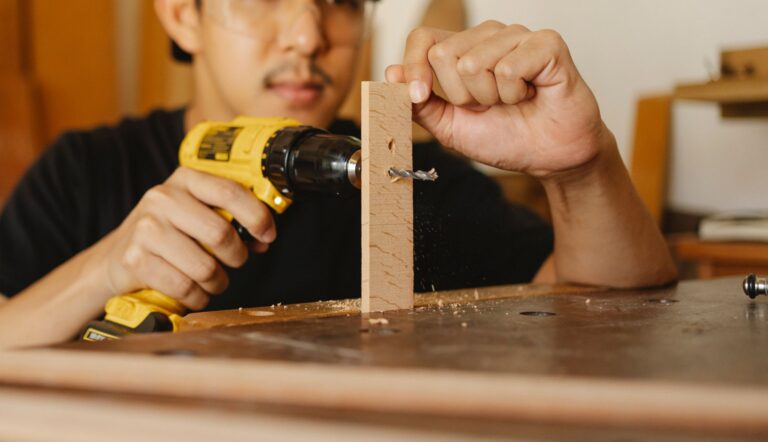
Rough framing on a demo site calls for speed, while a finish cut rewards tighter control. A reciprocating saw is made for fast, aggressive cuts through demolition material, while a jigsaw is built for straight cuts, curved cuts, and cleaner openings in wood, metal, and plastic.
This article covers the practical differences between reciprocating saws and jigsaws, helping homeowners and DIYers choose the right tool for renovation, trim work, and other everyday cutting tasks.
The Motion That Changes the Cut
The stroke pattern is the reason these tools feel so different in use. A reciprocating saw moves the blade back and forth, while a jigsaw runs the blade up and down through a guided shoe, and that changes vibration, accuracy, and finish quality.
| Tool | Blade motion | Cut behavior | Best fit |
|---|---|---|---|
| Reciprocating saw | Push-pull stroke | Fast, rough, more vibration | Demolition, nails, pipe, thick stock |
| Jigsaw | Up-and-down stroke | Controlled, cleaner, steadier | Curves, templates, cutouts, finish work |
That motion changes how the blade loads the material. The longer blade on a reciprocating saw can flex in thin stock, so the cut may wander, while a jigsaw blade stays shorter and more guided, which helps on sheet goods and trim.
Variable speed helps both tools start cleaner and cut with less grab. Slow starts matter most on marked lines, then faster speed helps once the blade is fully engaged in the workpiece. That matches guidance from tool makers such as Milwaukee and Ryobi, which sell cordless models with variable-speed triggers.
Milwaukee’s Sawzall name is widely used as shorthand for a reciprocating saw, and that naming reflects the tool’s rough-work reputation. The motion decides the cut style, so the same battery platform can still feel very different in your hands depending on the tool attached.
That same motion gives each tool a different personality once the blade meets wood, metal, or fasteners.
Where Each Saw Earns Its Keep
That motion difference becomes obvious once the job moves from neat layout work to rough removal. The reciprocating saw fits demolition, nail-embedded lumber, pipe, thick stock, and awkward access, while the jigsaw fits curves, templates, interior openings, and finish-oriented woodworking.
| Project | Better tool | Why it fits |
|---|---|---|
| Demo wall studs | Reciprocating saw | It cuts through hidden fasteners and rough framing fast. |
| Sink cutout in a countertop | Jigsaw | It follows a template and handles interior starts well. |
| Trim a 2×4 | Jigsaw for finish, reciprocating saw for tear-out | Clean edge matters more than brute force on exposed lumber. |
| Cut pipe in a cramped bay | Reciprocating saw | Long reach and aggressive blades work in tight access. |
| Curved shelf profile | Jigsaw | Its narrow blade turns with the layout line. |
You will notice the project changes the answer faster than brand names do. A contractor may reach for a reciprocating saw for demolition because speed matters more than the edge, but the same workspace may call for a jigsaw once the cut has to stay visible and neat.
Concrete job matching helps here. Cutting old drywall around plumbing lines can work with a jigsaw when the opening needs a tidy edge and the sheet is already clear of screws. Removing a toilet flange or slicing copper and PVC in a repair wall favors a reciprocating saw because reach and speed matter more than finesse.
BobVila.com often frames the same tradeoff for homeowners: rough work rewards speed, while finished work rewards control. That logic is the simplest way to decide on a reciprocating saw or jigsaw for DIY projects before you buy either tool.
Precision matters because cleaner cuts usually mean less sanding, less rework, and a better final fit.
Cut Quality, Control, And Finish
A jigsaw leaves cleaner edges because its narrow blade is easier to guide along a line. A reciprocating saw cuts more aggressively, so its longer blade flexes more under load and can drift in thin or unsupported material.
Why Thin Material Wobbles
Thin stock moves with the blade instead of resisting it. The reciprocating saw sends more vibration into the workpiece, so the cut can chatter and widen before you notice the line slipping. Solid support reduces that movement, but it does not turn the tool into a finish saw.
What Improves Control
A sharp blade, steady feed rate, and firm backing all improve the result. Orbital action on some jigsaws can speed rough cuts with a slight forward sweep, but it usually leaves a rougher edge on visible wood. The same tool can feel much more precise once you slow down at the start and let the blade settle.
On a sink opening, that control helps prevent laminate chipping. On a trim board, it keeps the cut inside the pencil line so sanding stays minor. A jigsaw also handles plunge cuts better than many beginners expect, especially with a blade made for the material and a base plate that stays flat.
Support both sides of the workpiece before you cut. A board that sags can close on the kerf, and that binding sends the saw off line fast. That is one reason a jigsaw for curves and finish cuts stays useful long after rough tear-out is done.
The practical split is simple. Use the jigsaw for visible edges and shaped cuts, then use the reciprocating saw when the finish no longer matters. That difference becomes even clearer once you look at blade types.
Blade selection often decides whether a cut stays tidy or turns rough before the motor ever struggles.
Blades That Matter More Than The Motor
The blade teeth and tooth spacing usually affect the result more than raw motor power. A coarse demolition blade tears quickly through wood with nails, while a fine-tooth blade leaves a smoother edge in lumber or sheet metal, and both tools can cut wood and metal with the proper blade.
Blade Choice For Common Materials
- Coarse wood blades clear sawdust fast and suit teardown work and pruning.
- Fine-tooth metal blades slow the cut and give better tooth engagement on pipe or conduit.
- Bimetal blades last longer in mixed materials, especially nails in framing.
- Down-cut jigsaw blades reduce tear-out on laminate and veneer faces.
- Specialty scroll blades make tighter curves in thin wood or plastic.
Tooth count matters, but tooth shape matters too. Fewer, larger teeth clear chips faster and suit demolition, while finer teeth leave a cleaner finish and reduce grab. That chip behavior explains why a blade swap can change the result more than a higher amp rating or bigger battery pack.
For wood cutting, a jigsaw blade marked for plywood behaves differently from one made for hardwood, and that difference shows in tear-out and speed. For metal cutting, a fine-tooth blade on either tool helps with pipe or conduit, while a bimetal blade handles mixed material and nails better than a cheap high-carbon blade.
You can think of blade length the same way. A blade that is too short chatters, and a blade with the wrong tooth pattern loads up with heat and scrap. That is why blade boxes matter as much as the saw itself when you are comparing reciprocating saw vs jigsaw for woodworking or metal work.
A matching blade can make one saw handle a job comfortably while the other feels nearly useless.
Project Matches For Homeowners And DIYers
Home repair work usually breaks into rough jobs and finish jobs, and that split tells you which saw earns a spot in the kit. The reciprocating saw fits demolition, plumbing rough-ins, pruning, and removing fasteners or old framing, while the jigsaw fits trim work, cabinetry, sink cutouts, laminate, and interior openings that need a controlled edge.
Jobs That Favor Rough Power
Teardown is where the reciprocating saw feels natural. It slices through screws, nails, drywall studs, and old pipe without asking for much working room, and that reach matters in basements, attics, crawlspaces, and around joists where another tool will not fit.
Pruning is another strong use. A pruning blade on a reciprocating saw can cut limbs faster than hand tools, though the vibration makes two-handed control worth the effort. Plumbing rough-ins also fit the tool because copper, PVC, and cast-off framing often show up in the same opening.
Jobs That Favor Clean Control
Cabinet work and trim work belong to the jigsaw. A sink cutout, a notch in laminate, or a curved shelf edge all demand line tracking that a reciprocating saw cannot match. The smaller blade can also start inside a drilled hole, which helps with interior openings.
A drywall repair patch with a receptacle opening is a good split-use example. Start with the jigsaw for the neat cut, then switch to the reciprocating saw only if the wall hides screws or stubborn framing. Protect the finished face first, then let access decide the next tool.
That split gives you a practical answer to reciprocating saw or jigsaw for DIY projects. Use the jigsaw where appearance matters, and use the reciprocating saw where access and speed matter more than finish. The next limit to know is how far each saw can safely be pushed.
Access and speed help, but every tool eventually runs into a point where control starts to matter more.
The Limits That Separate Convenience From Mistakes
A reciprocating saw can cut a 2×4, but it is not the best tool for a neat finish cut on exposed lumber. The long blade flexes, vibration rises, and the edge can look chewed even with a steady hand, which makes it better for cleanup than for visible trim.
Do not force a reciprocating saw blade, twist it hard in a cut, or use it where precision and a clean edge matter. The blade can bind, the motor can slow, and the cut can jump. Those mistakes are common when a beginner treats demolition as if it were finish carpentry.
- Do not twist hard because side pressure bends the blade and widens the cut.
- Do not bury the tip in material that cannot clear chips and heat.
- Do not chase finish edges with a demolition blade on visible lumber.
- Do not skip support under thin stock, or the blade will wander.
- Do not use dull teeth on metal, since heat and grab both climb fast.
Jigsaws have limits too. Thick stock can stall them, heavy demolition can punish the blade, and cutting through nails or buried hardware can bend a fine blade quickly. A jigsaw also asks for more patience in dense hardwood, where variable speed and the right blade matter more than brute force.
The physical reason is easy to miss. A reciprocating saw moves a longer blade through a wider arc and creates more reciprocating mass, so vibration rises as blade length increases. A jigsaw keeps the blade short and guided at the shoe, which is why it tracks better but gives up some reach and aggression.
Tool safety starts with the material in front of the blade. Clamp thin stock, clear hidden fasteners, and keep the shoe or base plate flat so the cut starts under control instead of under pressure. That habit lowers kick, wandering, and blade damage on both tools.
Good technique also determines whether the tool feels manageable or becomes difficult to correct mid-cut.
Which Saw To Buy First For A Starter Toolkit
A jigsaw makes the most sense first for woodworking, repair projects, and cleaner cuts that show in the finished room. It handles plywood, trim, laminate, and interior cutouts with far more control than a rough-cut tool, so it covers a wide range of homeowner tasks.
A reciprocating saw makes the better first purchase when your work leans toward demolition, remodeling tear-out, plumbing, or pruning. It saves time on ugly work and gets you into tight spots where another saw will not fit, which is why contractors keep one close for cleanup and access work.
- Buy the jigsaw first for cabinets, shelves, sink openings, and other visible cuts.
- Buy the reciprocating saw first for tear-out, pipe, framing removal, and yard cleanup.
- Choose variable speed so you can start clean and slow the blade in delicate material.
- Match the blade pack to wood, metal, and demolition work instead of one general blade.
- Plan for cordless models if you work away from outlets or move between rooms often.
For many tool kits, the practical answer is a jigsaw for refinement and a reciprocating saw later for rough work and cleanup. That order saves you from buying a demolition tool for a trim project and keeps your first cuts cleaner. Once both are on hand, the choice becomes situational instead of frustrating.
That balance makes the first purchase less about loyalty and more about what your projects actually demand.
Bottom Line
In practice, the real choice comes down to matching the tool’s motion to the task at hand. Use the reciprocating saw for rough access, demolition, and buried material. Use the jigsaw for curves, cutouts, and finished edges. Your best result comes from matching the blade, the material, and the cutting capacity before you start.
FAQ
What is the difference between a reciprocating saw and a jigsaw?
One tool drives a push-pull blade for aggressive cuts, while the other uses an up-and-down stroke for cleaner, more controlled work. The difference shows most clearly in demolition, metal cutting, and curved cuts.
Which tool is better for curved cuts, straight cuts, or demolition?
For tight curves and cleaner straight cuts in sheet goods or trim, one saw usually wins, while the other is better for demolition and rough access work. The jigsaw follows layout lines more easily, and the reciprocating saw cuts faster through hidden material.
Can a reciprocating saw cut a 2×4?
With a proper wood blade, a 2×4 goes through quickly on a reciprocating saw. The cut is usually rougher than a jigsaw cut, so it works better for tear-out, framing removal, and other hidden cuts than for exposed finish lumber.
What should you not do with a reciprocating saw?
Do not twist the blade hard, force it through dense stock, or use it for visible finish cuts. Those mistakes increase vibration, make the blade wander, and leave a rough edge that takes extra cleanup.
Which saw is more useful for a homeowner or DIYer?
For plywood, trim, laminate, and sink cutouts, a jigsaw usually earns the most shelf time in a homeowner’s shop. A reciprocating saw becomes more useful when the work shifts to demolition, plumbing rough-ins, pruning, or removing fasteners and old framing.
Can both tools cut wood, metal, and plastic?
Wood, metal, and plastic are all fair game when the blade type matches the material. Coarse wood blades, fine-tooth metal blades, and specialty blades for plastic or laminate change the cut quality more than the saw body does.