A compact kit of essentials lets you tighten hardware, hang shelves, patch small wall damage, and handle simple assembly jobs without stopping halfway through. A lean kit saves space and money, and the right mix matters more than a giant box of extras.
For apartments and houses alike, you can build a compact set around the repairs you actually face and avoid paying for specialty gear you may never touch.
Start With the Repairs You’ll Actually Face
Loose cabinet pulls, a picture frame on drywall, and a sticky door latch show up far more often than roof work or tile cutting. That is why the smartest starter tool kit for DIY begins with the jobs on your weekend list, not the repairs you may never touch.
Project frequency is the clean filter here. You gain more from one good screwdriver set and one adjustable wrench than from a box stuffed with specialty drivers, oversized sockets, or odd cutters that sit untouched for years.
Buy for the common fixes
- Tighten hardware. Screws on hinges, knobs, and outlet plates loosen with vibration and daily use.
- Hang shelves. A tape measure, level, stud finder, and drill handle the average wall mount.
- Patch small damage. A utility knife and putty knife cover caulk lines, drywall scoring, and trim cleanup.
- Assemble furniture. A cordless drill with bit set saves time on flat-pack pieces and brackets.
- Adjust plumbing fittings. An adjustable wrench and pliers cover sink traps, supply lines, and valves.
Those jobs form the backbone of tools for common home repairs. They also share a pattern: each task needs a tool that can handle several fasteners or materials without forcing you into a full workshop.
Skip specialty gear at the start
Tool aisles tempt you with large socket sets, drywall saw kits, and niche drivers for one screw head you may never meet. A compact budget home tool set works better when each item earns its spot on at least three real jobs.
A good example is a stud finder. It matters for wall mounting because it helps you place anchors or screws in framing, but it has no value for a leaky faucet or a broken drawer slide. That kind of use-case check keeps spending tied to the repairs you actually see. That same logic carries into the hand tools that do the heavy lifting next.
Practical repairs call for tools that can handle the jobs you run into most often.
The Core Hand Tools That Belong in Every Kit
A hammer, a screwdriver set, pliers, and an adjustable wrench cover more daily fixes than any other four tools. They are the base layer of essential tools for homeowners because they solve fastening, gripping, bending, and light striking without much learning curve.
Tool choice matters here. A claw hammer gives you pulling power for nails, Phillips and flathead drivers handle most screws, slip-joint pliers grip irregular shapes, and an adjustable wrench covers nut sizes that never seem to match the box label.
The four hand tools you reach for most
- Hammer. Use it for nails, light tapping, and removing stubborn trim fasteners with the claw.
- Screwdriver set. Keep both Phillips and flathead tips because furniture, outlets, and hardware rarely use the same head.
- Pliers. They grip wire, twist small parts, and pull stuck staples or nails without chewing up the surface.
- Adjustable wrench. It fits several nut sizes, so you can tighten plumbing parts and appliance connections with one tool.
Allen keys deserve a spot too, especially for furniture from IKEA, desk frames, and chair hardware. Their value comes from shape, not muscle, since many flat-pack items still depend on hex fasteners that a standard driver cannot touch.
One tool should cover several fasteners
Multiuse beats duplication in a basic home repair tool kit. A 16-ounce claw hammer, a six- to 10-piece screwdriver set, and one medium adjustable wrench handle far more tasks than separate tools that overlap.
A utility knife belongs in the same group because it opens packages, scores drywall paper, trims carpet edges, and cuts caulk lines cleanly. On repair day, that clean cut matters, since torn material leaves ragged edges that take longer to finish and hide well. Next, layout tools help you place those repairs where they belong the first time.
Clean cuts only go so far when a repair still needs accurate placement and square lines.
Measuring, Layout, and Alignment Done Right
The cleanest install starts before a screw goes in. Tape measure errors and crooked layout lines create extra holes, uneven shelves, and trim that looks off even after the fastener is tight.
A level, a square, and a tape measure help you place parts where they belong before small errors turn into bigger fixes. That saves time, but it also prevents avoidable patching and rework on your home repair tools checklist.
The measuring tools that earn early purchase
- Tape measure. Use a 16- or 25-foot tape for room dimensions, shelf spacing, and cut lengths.
- Level. A small torpedo level checks shelves, frames, and appliance alignment in tight spaces.
- Carpenter’s square. It helps you mark right angles for cuts, shelves, and box-like assemblies.
- Straightedge. It gives you a clean guide for scoring drywall, marking boards, or checking edge straightness.
A level is cheap insurance because gravity never lies. A picture frame that leans a few degrees may look fine on day one, yet your eye catches that slant every time you walk past it.
Measuring tools save more than time
Accurate layout also cuts waste. A board cut one inch short is dead weight, and a shelf mounted one stud off center can turn into extra anchors, extra patching, and a weaker hold.
A stud finder makes sense in this group too. It tells you where framing sits behind drywall, which matters for heavy mirrors, towel bars, floating shelves, and TV mounts. That single reading can change whether your hole lands in solid wood or hollow gypsum. The next step is adding power, because drilling changes what you can repair on your own.
Once the layout is right, drilling becomes the fastest way to expand what you can fix yourself.
Why a Cordless Drill Changes the Whole Toolkit
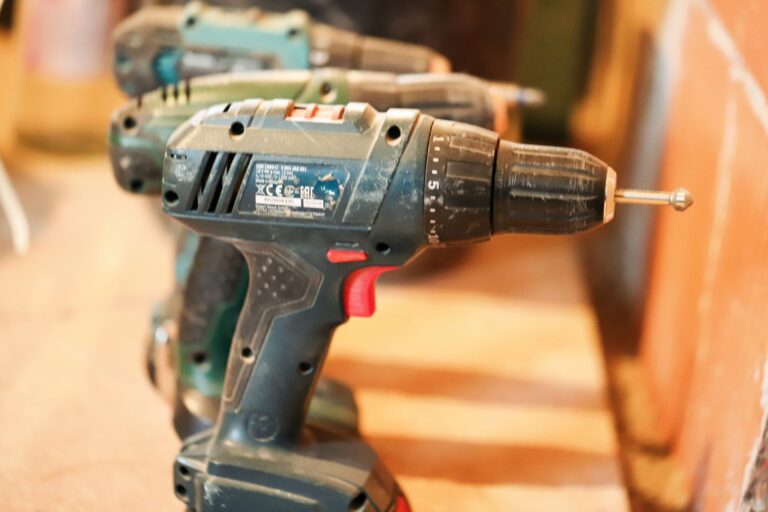
A cordless drill becomes the workhorse once you move past hand tightening. It drives screws faster than a manual driver, drills pilot holes for cleaner entry, and handles mounting jobs that would otherwise eat up your evening.
Battery format matters more than brand loyalty. A drill, batteries, charger, and accessory system should fit together cleanly so you can add bits later without ending up with incompatible chargers or awkward add-on packs.
| Tool setup | Best use | Why it matters |
|---|---|---|
| Corded drill | Long indoor jobs near an outlet | Constant power, no battery to manage |
| Cordless drill | Furniture, mounting, and quick repairs | Portable, fast setup, broad task range |
| Impact driver | Long screws into dense material | More torque, less wrist strain |
| Basic drill and bit set | Drilling and screw driving | One tool covers most starter kit jobs |
Bits matter as much as the drill
Drill bits turn a drill into a problem solver. A basic set should cover wood, metal, and masonry, since you may mount a shelf bracket one day and drill through a patio paver or metal bracket the next.
Home Depot carries broad starter assortments, but the real buying rule is simpler: choose bits that match the material you cut most, then add the rest later. That keeps the kit light and the cost tied to your actual wall, wood, and hardware jobs.
The physics behind cleaner drilling
Speed alone does not make a clean hole. A pilot hole reduces splitting in wood because it gives the screw or bit a path to follow, and that lowers radial stress at the edge of the material.
Torque matters too. Too much force drives fasteners crooked, while too little leaves them spinning in place. A drill with adjustable clutch settings gives you control, especially on drywall anchors, cabinet hardware, and soft woods. Those same basics make cutting, gripping, and prying less frustrating, which is where the next group earns its keep.
That added reach makes the simpler cutters and grips more valuable on everyday fixes.
Cutting, Gripping, and Light Prying for Everyday Fixes
Stubborn trim and bent wire are part of normal home maintenance. That is where pliers, a utility knife, and a small pry bar earn their space, because they handle the jobs where twisting, slicing, or careful lifting beats brute force.
A flashlight belongs nearby. Dark cabinets, crawl spaces, under-sink plumbing, and breaker-panel corners all hide fasteners and leaks, and poor light turns a simple fix into a clumsy one.
Wear safety glasses before cutting, prying, or striking metal. A tiny chip from wood, tile, or rusted hardware can travel farther than you expect.
Cutting tools handle more than packages
The utility knife is one of the most versatile home repair tools in the kit. It scores drywall paper before patching, trims weathered caulk, slices carpet backing for a neat edge, and opens sealed boxes without mangling the contents.
Blade control matters because a sharp utility knife cuts with less pressure. Lower force means cleaner edges and fewer slips, which is why dull blades cause more trouble than many beginners expect.
Prying should stay light and deliberate
A small pry bar or flat trim tool removes baseboard, lifts molding, and nudges stuck pieces without wrecking the wall behind them. The tool works best where controlled leverage matters more than strength.
There is a hard line between paintable trim removal and a structural repair. Cracked plaster, swollen subflooring, or warped framing can point to deeper damage that sits outside a compact DIY kit, and that is the point where a specialist tool or pro help makes better sense. That boundary is what makes the buy order matter, because your budget should follow the jobs you keep seeing.
Budgeting by likely repairs keeps the kit lean and avoids tools that sit unused.
Buy First, Buy Later, and Skip for Now
Order matters because budgets do not stretch forever. Put hand tools at the top, measuring tools next, then add the cordless drill and bits, since that sequence covers the widest range of early repairs with the fewest duplicates.
A true budget home tool set grows in layers. The trick is to buy the next item only after the earlier ones have already shown their use on a real task.
Buy first
- Hammer and screwdriver set. These solve the most frequent tightening and assembly jobs.
- Pliers and adjustable wrench. They cover gripping, twisting, and basic plumbing hardware.
- Tape measure and level. They keep mounting and layout accurate from the start.
- Utility knife. It handles cutting, scoring, and clean trim work.
Buy later
- Cordless drill with bits. Add this once screw driving and mounting show up on your list.
- Stud finder and square. Buy them sooner for wall work, later for light apartment use.
- Pruning saw or larger saws. These belong to heavier carpentry tasks, not the opening kit.
- Socket sets and specialty drivers. Wait until a specific repair calls for them.
Skip for now
Large duplicate sets create clutter fast. A dozen screwdrivers that all overlap one another give you more plastic and less usefulness than one solid screwdriver set with a few bit adapters.
Fix.com and similar home repair resources lean on the same practical lesson: match tools to jobs, not to shelf space. That keeps your home repair tools from becoming dead weight in a hallway closet. Once the kit is trimmed to the right size, storage and maintenance decide whether it stays useful.
A smaller kit works best when every piece has a place and stays ready for use.
A Compact Kit Stays Useful Only If It Stays Organized
A toolbox or soft bag keeps the starter kit portable and visible. Once tools scatter across drawers, the missing bit, the dead battery, or the lost hex key slows a five-minute fix into a half-hour search.
Storage also protects metal surfaces from rust and battery packs from clutter. Moist basements, garage corners, and damp laundry rooms can shorten tool life, so dry storage matters even for a small collection.
Keep safety glasses in the same kit, not in a separate cabinet. The habit makes them easier to grab before drilling, cutting, or striking metal.
Organize by task, not by brand
Group the tools you grab together: measuring gear in one pocket, drivers and bits in another, cutting tools in a sleeve, and fasteners in a small parts box. That layout matches the way repairs unfold, so you spend less time hunting and more time finishing the job.
Battery chargers deserve a fixed spot with a label or cable tie. A cordless drill is only useful when the pack has charge, and a charger buried under extension cords gets forgotten at the worst moment.
Maintenance keeps the kit ready
Wipe blades and metal jaws after use, then close the utility knife before you put it away. A quick dry cloth removes dust and moisture that speed up surface rust on pliers, wrenches, and drill chucks.
Check the flashlight, replace worn driver bits, and keep spare AA or AAA cells nearby for the level or light. Small habits like that turn a starter tool kit for DIY into something you can trust on a Sunday night leak or a loose towel bar.
Those habits are what make a starter kit dependable when a small problem shows up at home.
Final Thoughts
The smartest home repair tools are the ones that solve the repairs in front of you, not the repairs you may never touch. Start with hand tools, add measuring gear, then bring in the cordless drill and a modest bit set once mounting and assembly become regular work. A compact, organized kit stays useful because every item has a job and a place.
FAQ
What tools do I need for basic home repairs?
You need a hammer, screwdriver set, pliers, adjustable wrench, tape measure, level, utility knife, flashlight, and a cordless drill with bits. That mix covers tightening, hanging, measuring, cutting, and light assembly without crowding your closet.
What tools should every homeowner own?
A claw hammer, adjustable wrench, tape measure, utility knife, and cordless drill give most homeowners a solid starting kit. Add a stud finder and Allen keys if you hang items or assemble furniture with any regularity, since those two tools solve common wall and flat-pack jobs.
What is the best tool set for home repair?
A well-matched set is the one that fits your space, your budget, and the repairs you actually handle most often. A lean starter tool kit with quality hand tools, a tape measure, level, utility knife, and cordless drill covers most small fixes without piling up duplicates.
What is the difference between a starter kit for an apartment and a house?
An apartment kit can stay smaller because wall mounting and light assembly cover many jobs. A house kit should add a stud finder, pry bar, more drill bits, and a few extra fasteners because trim, shelving, and small repair work show up more often.
How do I store and maintain home repair tools?
Store the kit in a toolbox or bag with dry compartments, then keep blades covered and batteries charged. Wipe metal parts after use, replace dull bits, and keep safety glasses with the tools so the kit stays ready for the next repair.