Angle grinder diamond blades earn their keep in messy, ordinary jobs, like cutting tile in a bathroom redo, opening a mortar joint, or trimming masonry on a driveway patch. The right disc saves time, keeps the cut cleaner, and helps your grinder feel less like a blunt instrument. This roundup focuses on the shapes, arbor sizes, segment styles, and material fit that matter most in real use.
The Shortlist At A Glance

Benchmark Abrasives 4 Inch Tuck Point Crack Chaser

LOZLIN Diamond Blades 3-Pack 4.5″ Diamond Multi-Purpose Saw Blades

4-1/2 inch Indestructible Cutting Discs for Angle Grinder
FOXBC 4-1/2 Inch Diamond Cutting Wheel Metal Cut Off

4-1/2 inch Tile Cutter Diamond Saw Blade for Angle Grinder

Makita E-02668 4-1/2″ Diamond Blade, Continuous Rim

4-1/2 Inch Segmented Diamond Saw Blades 2-Pack

ZORUNNA 3 Pack 4 1/2 inch Diamond Blade for Grinder
More Details On Our Top Picks
This disc makes the most sense for patch work around cracked mortar, loose grout, or narrow masonry joints. The 4-inch size keeps it compact on an angle grinder, so it suits repair jobs where a larger blade would feel clumsy.
The trade-off is focus, not versatility, because a tuck point blade is built for one job more than many. For a garage wall repair or a brick walkway fix, that specialization can be exactly what you want.
What We Like
- Compact 4-inch format suits tight repair lines.
- Useful for grout, mortar, brick, stone, and concrete patching.
- Keeps your grinder aimed at narrow seams instead of wandering across the surface.
- Helpful for homeowners handling occasional masonry touch-ups.
Points To Note
- Its narrow purpose leaves less room for general cutting.
- Cleaning masonry dust out of the work area still takes a little effort.
Core Details
Who It Suits Best
You get the most from this one in repair-heavy spaces, especially where narrow grout lines or cracked mortar need careful cleaning.
A Better Fit Elsewhere
LOZLIN Diamond Blades 3-Pack 4.5″ Diamond Multi-Purpose Saw Blades suits you better for mixed material work that moves from stone to tile to plastic without changing discs as often.
This 3-pack leans toward versatility, which helps when your project list keeps changing from countertop work to garage fixes. The 4.5-inch diameter is a familiar angle-grinder size, so it feels less specialized than the Benchmark Abrasives tuck point blade.
The black-tooth style gives it a more aggressive look than the continuous-rim Makita pick, and that usually appeals to shoppers who want broader material coverage. For mixed renovation work, that broader stance can save a few swaps.
Strong Points
- Three blades in the pack give you a practical backup supply.
- Works across marble, quartz, stone, tile, metal, and plastic.
- 4.5-inch size fits a common grinder setup.
- Handy for households juggling more than one surface type.
Softer Spots
- Multi-purpose designs usually trade away some single-material focus.
- Mixed-material blades can feel less specialized on demanding masonry jobs.
Feature Rundown
Who Should Grab It
You fit this best when your workbench sees many surfaces, and you want one compact set that covers several household jobs.
Where A Sibling Pick Shines
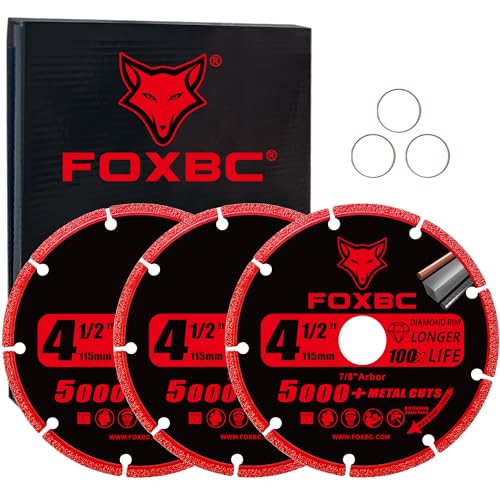
FOXB C 4-1/2 Inch Diamond Cutting Wheel Metal Cut Off works better for metal-heavy cutting, especially rebar and steel, where a more dedicated metal disc makes more sense.
This three-piece set leans into rougher work, especially where rebar, porcelain tile, granite, or marble can all show up in the same project. Compared with the LOZLIN set, it reads more like a hard-use utility pack than a general craft blade bundle.
The 7/8-inch arbor gives it a familiar fit on many grinders, and that keeps setup straightforward. For basement finishing, patio jobs, or shop repairs, the honest read is that this pack suits hands that need a tougher all-around cutting disc.
Upsides
- Three discs cover multiple cutting sessions.
- Works with a wide spread of hard materials.
- 7/8-inch arbor is a common grinder fit.
- Useful for renovation work where materials change often.
Areas To Watch
- Broad material use can mean less specialty focus than a dedicated tile blade.
- Rough-site use usually means more cleanup around the cutting area.
- Three-pack storage takes a little more drawer room than a single disc.
Technical Sheet
Built With In Mind
You get the best match here for renovation and jobsite work where hard materials keep changing and you want one disc style that can stay in the rotation.
Skip It When
Makita E-02668 4-1/2″ Diamond Blade, Continuous Rim makes more sense for smooth tile cuts where a quieter, more refined edge is the priority.
Metal cutting is the clear lane here, and that makes this FOXBC pack feel narrower but more intentional than the general-purpose options above. The listing’s claim of 5000-plus cuts on rebar, stainless steel, and angle iron points straight at heavy shop or jobsite work.
The 7/8-inch arbor keeps it in the same common-fit family as the ONEGOTOOL and Inwell picks, so the real difference is material focus rather than mount style. For fabrication tasks, that focus can be worth more than a do-everything blade that spreads itself thin.
Highlights
- Built around metal-focused cutting rather than mixed materials.
- Three-pack setup helps keep extras on hand.
- Works with rebar, stainless steel, and angle iron.
- Good match for shop benches and fabrication carts.
Room For Improvement
- Metal specialization makes it less useful for tile or stone.
- Storing metal-cutting discs apart from masonry discs helps keep your kit organized.
Details At A Glance
Best Suited To
You should look here for metalwork, fabrication, and contractor-style cutting where rebar and steel show up often.
Another Choice May Suit
Benchmark Abrasives 4 Inch Tuck Point Crack Chaser suits masonry repair more closely, especially for grout and mortar lines that need a narrower cutting path.
This set is aimed squarely at finish work, where porcelain, ceramic, glass, and marble ask for cleaner control than a rough-cut disc usually gives. Compared with the FOXBC metal wheel, this one fits tile and decorative surfaces far better, which matters when a visible edge has to look tidy.
The three-piece count gives you some breathing room across multiple rooms or repeated trim cuts. For bathroom updates and kitchen backsplash work, that small cushion can matter more than a single standout blade.
Reasons To Buy
- Targets tile and decorative hard surfaces.
- Three blades support larger remodel projects.
- Useful for clean trim work around sinks, walls, and counters.
- Well matched to angle grinder owners doing home finish jobs.
Small Caveats
- Its specialty focus leaves metal cutting to a different disc.
- Glass and tile work usually calls for careful handling and slower setup.
Feature Snapshot
The Right Fit
You get the most from this blade set in remodel spaces where tile lines, counter edges, or stone trim need a cleaner finish.
Look Elsewhere When
Inwell 4-1/2 Inch Segmented Diamond Saw Blades 2-Pack is the better call for concrete, brick, and heavier masonry work that needs a more segmented cutting profile.
The continuous rim shape is the key detail here, because that means the cutting edge runs as a smooth band rather than as separated segments. In plain terms, that usually suits cleaner cuts on general-purpose jobs, and it’s a different feel from the segmented Inwell and ZORUNNA blades.
For homeowners who only want one blade on hand for common projects, this Makita model feels straightforward and tidy. The honest read is that it gives up some rough-surface aggression, but that same trade makes it easier to trust on lighter, more careful cuts.
Positives
- Continuous rim design favors smoother cutting.
- General-purpose focus helps with common home tasks.
- Compact 4.5-inch size works with many small grinders.
- Good fit for users who want one simple blade in the kit.
Things To Consider
- Less segmented aggression can make it less suited to rough masonry.
- General-purpose blades are useful, but they rarely match a specialty disc on its own turf.
Core Details
Who Will Love This
You fit this best when you want a cleaner-feeling all-purpose disc for routine home work rather than a blade aimed at one hard material.
Where Shoppers Go Wrong
FOXBC 4-1/2 Inch Diamond Cutting Wheel Metal Cut Off is the smarter choice for steel-heavy jobs, where the Makita’s general-purpose style would be too broad.
Segmented blades like this one are built with divided cutting sections, and that format usually helps on harder masonry materials. Inwell pairs the 4.5-inch size with a 7/8-inch to 20 mm arbor, which makes it feel practical for grinders that need a familiar fit.
The 2-pack angle matters too, because it gives you a spare without forcing you into a large bundle. Compared with Makita’s continuous rim blade, this set leans more toward brick, concrete, and stone than toward smoother finish cutting.
Best Bits
- Two blades give you backup for longer projects.
- Segmented design suits rougher masonry work.
- Works across stone, marble, granite, concrete, and brick.
- 7/8-inch to 20 mm arbor expands fit options.
Trade Offs
- Segmented blades tend to feel less refined on finish cuts.
- Masonry dust still needs cleanup after the job wraps up.
Spec Overview
Whose Shelf It Belongs On
You should keep this set in the kit for concrete patching, brick trimming, and other heavy masonry tasks where segmented cutting makes sense.
Where A Sibling Pick Shines
Benchmark Abrasives 4 Inch Tuck Point Crack Chaser is better for narrow repair lines, especially grout and mortar work that needs a slimmer tool path.
ZORUNNA’s pitch is all about fit flexibility, because the 7/8-inch to 5/8-inch arbor range makes it easier to match different grinder setups. The 1/4-inch segment width gives the blade a more defined cutting profile, which helps when you want a masonry disc that feels purpose-built.
It also covers dry and wet cutting on concrete, masonry, brick, and block, so it has a real contractor-style spread without looking oversized. Compared with the Inwell pair, this 3-pack adds one more blade and a more flexible arbor setup, which matters for shops with mixed tools.
Bright Spots
- Three blades make the set easy to keep in rotation.
- Two arbor sizes improve compatibility.
- Works for dry or wet masonry cutting.
- Good fit for concrete, block, brick, and general masonry tasks.
Minor Gripes
- Segmented masonry blades are less suited to polished finish work.
- Mixed-tool compatibility still calls for careful arbor checking before setup.
- After wet cutting, drying and storage matter more so the set stays tidy.
Feature Card
Made For
You get the best fit here for masonry projects where you want one pack that works across concrete, brick, and block with a little extra arbor flexibility.
What Separates Premium From Basic
LOZLIN Diamond Blades 3-Pack 4.5″ Diamond Multi-Purpose Saw Blades is the easier choice for mixed-material work, while ZORUNNA leans harder into masonry and arbor compatibility.
How To Choose The Right Angle Grinder Diamond Blades
Match The Blade To The Material
Diamond blades are not all aimed at the same job. Continuous rim styles suit smoother cuts on tile and similar surfaces, while segmented blades give harder masonry a more aggressive cutting feel.
That choice matters in a kitchen backsplash, on a concrete curb, or during brick repair, because the wrong blade can leave you fighting the tool. Match the material first, then look at the rim style.
Check Size And Arbor Fit
Diameter has to match your grinder, and arbor size has to match the spindle. A 4.5-inch blade is common, but a 4-inch tuck point disc or a dual-arbor blade can be the better fit for specific jobs.
The trade-off is simple: more compatibility often comes with less specialization. For your toolbox, that usually means keeping one blade for clean trim work and another for rougher masonry or metal tasks.
Think About Pack Count And Job Length
A single blade makes sense for occasional work, but 2-packs and 3-packs help during remodels, fabrication jobs, or longer repair projects. Extra discs also save you from stopping halfway through a job because the first blade has worn down.
Storage and organization matter too, especially in a garage where tile discs, metal wheels, and masonry blades can get mixed together. Labeling the set by task keeps the next job simpler.
Balance Finish Quality Against Cutting Speed
Continuous rim blades usually feel calmer and more refined on visible cuts. Segmented and aggressive-cut styles often move faster through harder material, but they can leave a rougher edge.
That’s the real trade, not a matter of better or worse. For visible tile lines, smooth matters more, while for concrete or brick, speed and bite usually matter more.
What To Weigh Before You Choose
Common Shopping Slip Ups
Many people start with material range and forget arbor size, then end up with a blade that does not fit the grinder. Another easy miss is buying a general-purpose disc for a job that really needs a narrow tuck point or finish-cut blade.
That mistake shows up fast on the workbench. A little checking up front saves you from a blade that feels almost right and still sits unused.
What The Higher Tier Buys
More expensive blades usually pay for tighter focus, better pack count, or a more refined cutting style. Metal-specific and masonry-specific discs can also cost more because they are built around a narrower use case.
The upgrade makes the most sense for regular remodel work, fabrication, or repeated cutting sessions. For a one-off patch job, a simpler blade often covers the need without extra complexity.
Frequently Asked Questions
What size angle grinder blade is most common here?
4.5-inch blades show up most often in this category. That size fits many everyday grinder setups without feeling oversized.
What is the difference between segmented and continuous rim blades?
Segmented blades have separated cutting sections and usually suit rougher masonry work. Continuous rim blades have a smooth edge and are often chosen for cleaner cuts on tile and similar materials.
Do multi-purpose diamond blades work as well as specialty blades?
They work well for mixed tasks, especially around renovation projects with different surfaces. Specialty blades usually do better when you keep to one material, like tile or metal.
Why does arbor size matter so much?
The arbor is the center hole that mounts the blade on the grinder. A mismatch means the blade will not fit the tool properly.
Is a 3-pack worth it for occasional work?
It can be, especially when you want spare blades on hand for a larger project. For very light use, a single blade may be enough.
Closing Thoughts
The best angle grinder diamond blade for your work depends on what you cut most often, not on the longest feature list. The Benchmark Abrasives pick makes sense for mortar repair, the Makita blade feels easy to live with for general jobs, and the FOXBC and ZORUNNA options lean harder into metal or masonry. For tile, the dedicated finish blades give you a cleaner path. Choose the blade that matches your most common material, and your grinder will feel far more useful.