Battery powered sanders earn their keep in places where cords get in the way, like trim touch-ups, porch railings, cabinet edges, and furniture refreshes. You also avoid hunting for an outlet in a garage, upstairs room, or half-finished remodel space. The right one depends on the shape of the job, because a detail sander, a random orbital model, and a bandfile each solve a different problem.
The Shortlist At A Glance

WEN Cordless Detail File Sander (20437)

ONEAND 18V Cordless 5 in. Random Orbit Sander Tool Only

AVID POWER 20V Cordless Orbital Sander 5 Inch

GALAX PRO Cordless Detail Sander 20V

DEWALT 20V MAX XR Cordless Bandfile Power Tool Belt Sander (DCM200B)
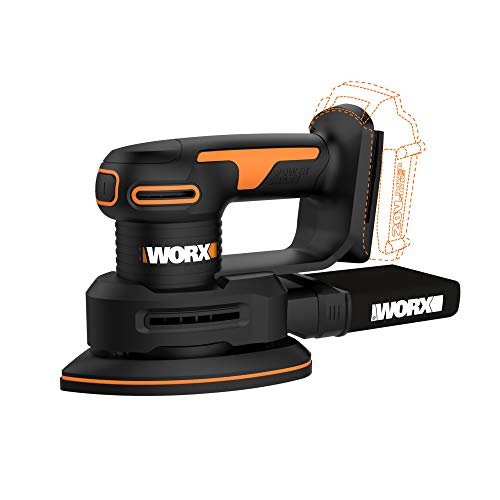
Worx WX822L.9 20V Power Share Cordless Detail Sander

BLACK+DECKER 20V MAX Mouse Sander (BDCMS20B)

DCK Random Orbital Sander 3.0 AMP Corded Palm Sander
More Details On Our Top Picks
The WEN 20437 makes sense for trim, small moldings, and awkward spots where a larger pad just gets in the way. Its 20V Max battery and included charger turn it into a ready-to-run cordless kit, which helps during quick patch jobs in a hallway or around built-ins.
The detail-file shape gives you a narrow contact area, so you can work more deliberately than with a 5-inch orbital model like the ONEAND or AVID POWER picks. The honest trade-off is slower coverage on broad panels, but that narrow focus is exactly why this style earns a place in a mixed workshop.
What We Like
- Narrow sanding face helps with edge work and tight curves.
- Battery and charger are included, so the kit feels straightforward.
- Variable speed gives you more control for delicate sanding passes.
- Cordless setup suits quick fixes in rooms without easy outlet access.
Small Caveats
- It is a specialty tool, not a broad-surface workhorse.
- File-style pads can feel slow on large flat boards.
- Pad care matters, since fine debris builds up with repeated use.
Feature Snapshot
Who It Suits Best
Home fixers who handle trim, furniture edges, or narrow sanding zones will get the most from this layout.
Where A Sibling Pick Shines
AVID POWER 20V Cordless Orbital Sander 5 Inch fits you better for wider panels and faster material removal on flatter surfaces.
The ONEAND 18V keeps the familiar 5-inch random-orbit format, which is the shape many people reach for first in a garage or basement shop. Random-orbit means the pad spins while moving in a small circular pattern, helping reduce visible swirl marks on wood.
Because it is tool only, it makes the most sense for someone already using a compatible 18V setup. That trade-off keeps the up-front kit lean, but it also means you need to own the battery side of the equation before the sander really earns its place.
Highlights
- Five-inch pad size suits shelves, tabletops, and cabinet doors.
- Random-orbit action works well for general refinishing and prep.
- Tool-only format can reduce clutter for an existing battery system.
- Simple footprint is easy to store on a crowded shelf.
Worth Noting
- You need your own compatible battery and charger.
- Flat-panel work still takes patience around edges and corners.
- Dust cleanup depends on how often you empty the collection area.
Core Details
Right Fit For
DIYers who already own an 18V battery ecosystem and want a standard all-purpose sander will get the most out of it.
Another Choice May Suit
WEN Cordless Detail File Sander (20437) suits you better for narrow trim and confined repair zones where a full 5-inch pad feels clumsy.
The AVID POWER model stands out because it pairs a familiar 5-inch body with six speed settings, listed at 7000 to 11000 RPM, so you can slow down for delicate work or step up for faster sanding. RPM means revolutions per minute, which tells you how quickly the pad turns.
That range makes it a better workshop companion than the tighter WEN detail file for broader boards, and it feels more flexible than the tool-only ONEAND for people starting from scratch. The included 30 sandpapers and dust collection bag add convenience, though you still need to manage paper wear and bag emptying the usual way.
Standout Traits
- Six speed steps help match the tool to different surfaces.
- 5-inch format is versatile for shelves, doors, and panels.
- Thirty sandpaper sheets give you a useful starter stack.
- Dust bag helps keep cleanup more manageable in a home shop.
Points To Note
- Higher speeds can still leave marks if you press too hard.
- Consumable sandpaper will need replacing as jobs pile up.
- The round pad is less precise than a dedicated detail tool.
Spec Overview
Best Suited To
You get the most from this pick in a weekend workshop, especially for repaint prep or smoothing flat furniture parts.
Look Elsewhere When
GALAX PRO Cordless Detail Sander 20V is the better fit for narrow corners and fine household finish work.
The GALAX PRO leans hard into detail work, with a compact body, a dust collection system, and a listed 12000 RPM top speed for quicker surface prep in cramped areas. That high-end speed ceiling can help in home-decorating jobs where you need a sharper bite than a gentle finishing tool would provide.
Compared with the WEN detail file, this one is aimed more at tight-space sanding on flat or angled surfaces than at ultra-fine edging. You also get battery and charger included, which makes the kit feel self-contained, though dust collection still calls for regular emptying so airflow stays clear.
Bright Spots
- Compact shape helps you reach cabinet corners and trim edges.
- Dust collection system supports a cleaner work area.
- Battery and charger are part of the package.
- Twenty sanding sheets help you get started right away.
Areas To Watch
- Very high speed can feel aggressive on softer surfaces.
- Detail format is not meant for broad boards.
- Dust system performance depends on routine emptying and fit.
Details At A Glance
Whose Shelf It Belongs On
You will appreciate it most in a home renovation corner where trim, tight joints, and awkward edges need attention.
Where A Sibling Pick Shines
BLACK+DECKER 20V MAX Mouse Sander (BDCMS20B) suits lighter touch-up work better when one-handed control matters most.
The DEWALT DCM200B is built for more aggressive shaping than the smaller detail tools in this lineup. A bandfile, also called a belt-file sander, uses a narrow moving belt, which helps you reach weld seams, metal edges, and narrow stock with more purpose than a round-pad sander.
Because it is bare tool only, it assumes you already live inside the 20V MAX XR ecosystem. That makes it a strong fit for trades-style work or serious shop use, while casual furniture sanding may feel like overkill next to the AVID POWER or ONEAND picks.
Reasons To Buy
- Narrow belt format suits edge shaping and cleanup work.
- Cordless design keeps you mobile around benches and job sites.
- DEWALT build style usually appeals to repeat-use shop setups.
- Good match for metalwork tasks that need focused removal.
Trade Offs
- Bare tool only means you need compatible batteries already.
- Bandfile use takes a steadier hand than a simple palm sander.
- It is less comfortable for broad finish sanding on large panels.
Technical Sheet
Made For
Shop users and remodelers who need edge-focused sanding or cleanup on narrow metal or wood sections will get the most from it.
Swap It Out When
Worx WX822L.9 20V Power Share Cordless Detail Sander is the gentler fit for smaller home projects and cabinet corners.
The Worx WX822L.9 is the sort of compact detail sander you reach for in cabinet corners, stair rails, and small repair spots where control matters more than raw coverage. Its Power Share battery platform helps the tool fit into an existing Worx setup, which is handy in garages with a growing tool rack.
Unlike the DEWALT bandfile, this one stays in the comfort zone of home detail work, and it feels more approachable than a bigger 5-inch orbital on awkward edges. The trade-off is simple, it is not built to chew through wide boards quickly, so it suits finishing tasks better than rough shaping.
Best Bits
- Compact detail head helps in corners and narrow cutouts.
- Tool-only format suits existing Worx battery owners.
- Light footprint is easy to manage during vertical work.
- Good fit for home repairs and cabinet refreshes.
Softer Spots
- It is a specialty shape, not a general sanding solution.
- Dust cleanup still depends on keeping the work area clear.
- Large panels will feel slow compared with a 5-inch orbit sander.
Feature Card
The Right Fit
You will like this most for light renovation work, especially where the sanding area is small and the shape is awkward.
A Better Fit Elsewhere
AVID POWER 20V Cordless Orbital Sander 5 Inch works better for fuller surface prep and broader boards.
The BLACK+DECKER Mouse Sander stays popular because the small pointed nose gives you control in corners, along edges, and on narrow trim. Compact and ergonomic means the body is shaped for easier handling, which matters during longer touch-up sessions or one-handed use on ladders and shelves.
It sits closer to the WEN and Worx detail tools than to the bigger AVID POWER orbit sander, and that is a good thing for small household fixes. The trade-off is obvious, you give up coverage speed, but you gain the kind of reach that makes annoying little jobs feel less awkward.
Positives
- Mouse-style nose reaches into corners and tight angles.
- Compact body helps with one-handed control.
- Ergonomic shape can feel easier during overhead touch-ups.
- Handy for paint prep on small pieces of trim.
Room For Improvement
- Tool only format means you need a compatible battery already.
- Small pad size is slower on broad surfaces.
- Detail sanding papers can wear quickly on rough patches.
Core Details
Built With In Mind
You should look here for quick household fixes, small furniture touch-ups, and other tasks that need a careful hand more than brute force.
Consider Something Else When
ONEAND 18V Cordless 5 in. Random Orbit Sander Tool Only is the better fit for more general sanding over larger panels.
The DCK model steps away from batteries and into corded territory, which matters because you get steady power for longer sanding sessions without thinking about charge levels. Its 3.0 amp motor, six speeds, and 12000 OPM top speed give it a familiar all-purpose profile for bench work, furniture prep, and home decorating projects.
OPM means oscillations per minute, a useful way to judge how quickly the pad moves in a random-orbit pattern. Compared with the cordless picks above, this one is the better choice for a fixed workspace, though you lose the grab-and-go convenience that makes battery powered sanders so handy in the first place.
What We Like
- Steady corded power suits longer sanding sessions.
- Six speeds help you tune the tool to the task.
- Five-inch pad keeps it versatile for common home projects.
- Dust bag and sandpapers add useful starting value.
Honest Caveats
- The cord limits movement compared with cordless picks.
- It is less convenient for outdoor or stairway work.
- Dust bag maintenance still matters for smoother airflow.
Quick Facts
Who Should Grab It
You will like this most for steady bench sanding where outlet access is easy and runtime matters more than mobility.
Where Another Pick Fits Better
AVID POWER 20V Cordless Orbital Sander 5 Inch fits you better for job-site flexibility and cordless movement.
How To Choose The Right Battery Powered Sanders
Match The Tool Shape To The Job
Detail sanders handle corners, trim, and narrow profiles, while 5-inch random-orbit models cover tabletops, cabinet fronts, and larger boards more efficiently. A bandfile like the DEWALT DCM200B serves a different role, since its narrow belt is aimed at edges and cleanup rather than finish sanding across a panel.
That shape choice matters more than marketing language. A compact mouse or detail sander can feel slow on a deck board, while a round orbital model can feel clumsy around molding.
Check Battery Setup Before You Shop
Tool-only listings make sense only when you already own compatible batteries and a charger. That is why the ONEAND, Worx, BLACK+DECKER, and DEWALT bare-tool options fit a different house than the WEN or GALAX PRO kits, which include a battery side from the start.
Matching platforms saves space and avoids duplicate chargers. For garage users, that can be the difference between a tidy shelf and a pile of orphaned packs.
Look At Speed And Control Together
Higher speed helps with fast material removal, but control matters just as much for finish work. Variable speed, like the settings on the AVID POWER and DCK units, lets you back off on soft wood and open the throttle on rougher spots.
One thing worth considering is hand feel. A compact housing with a shaped grip can help during overhead sanding or side-of-cabinet work, especially on jobs that last longer than expected.
Plan For Dust And Consumables
Dust collection bags and ports keep the work area cleaner, but they still need emptying and occasional attention. Sandpaper availability matters too, because a sander is only as useful as the sheets or belts you can keep on hand.
For most home projects, that practical side matters as much as motor power. A tidy tool that eats papers too quickly can become more annoying than a simpler model with easier upkeep.
Things Worth Knowing First
Common Shopping Slip Ups
One common mistake is choosing a shape that does not match the project. A detail sander feels right for trim and corners, but it wastes time on wide cabinet doors.
Another slip-up is overlooking the power setup. Tool-only listings are fine for established battery systems, but they are frustrating for a first cordless setup.
What The Higher Tier Buys
Higher-tier sanders usually pay for better control, stronger motors, and more thoughtful dust handling. That shows up in smoother handling during longer sessions and less stopping to clean around the pad.
It can also mean more specialized geometry, like the DEWALT bandfile format. That extra money makes sense when your work leans toward frequent sanding, tighter tolerances, or more demanding materials.
Frequently Asked Questions
What Is The Main Difference Between Detail And Orbital Sanders?
Detail sanders use a smaller shape for corners, trim, and tight spots. Random-orbit sanders cover broader surfaces faster and are better for general refinishing.
Why Do Some Listings Say Tool Only?
Tool only means the battery and charger are not included. That works best when you already own a matching cordless system.
Is A Corded Sander Still Worth Considering?
Yes, especially for a fixed workshop where outlet access is easy. You get steady power without thinking about battery charge.
What Does Variable Speed Change In Real Use?
Variable speed lets you slow the pad for careful finishing or increase it for faster removal. That helps you adapt to different woods and repair jobs.
Which Sander Style Feels Most Versatile?
A 5-inch random-orbit sander usually covers the widest range of household jobs. It is a solid middle ground between tiny detail tools and heavier specialty shapes.
Final Verdict
You can make a strong case for any of these picks, but the right one depends on how your projects actually look. The WEN, Worx, and BLACK+DECKER models suit careful detail work, the AVID POWER and ONEAND options feel more flexible for general sanding, and the DEWALT bandfile is the serious specialist in the group. The DCK corded sander rounds things out for steady bench use. Choose the shape that matches your space, then the rest gets much easier.