Big flat head screwdrivers look simple, but the right one matters fast once you’re dealing with stubborn cabinet hardware, tight utility panels, or long reach tasks behind appliances. You want a tip that seats cleanly, a handle that doesn’t punish your palm, and a shaft that matches the job instead of fighting it. This roundup focuses on choices that make sense for everyday home use, shop work, and the kind of repairs that get awkward in a hurry. Some picks lean toward durability, others toward holding screws, reach, or set value.
The Shortlist At A Glance

Klein Tools 600-6 Keystone Screwdriver 6-Inch Square Shank

Klein Tools 6026K Slotted Screw-Holding Screwdriver
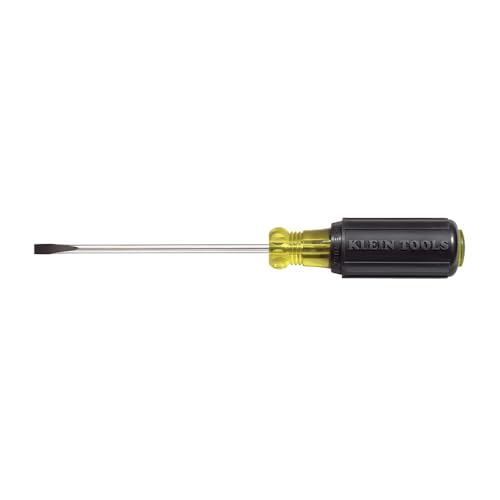
Klein Tools 601-4 Flathead Screwdriver 3/16-Inch Cabinet Tip

CRAFTSMAN Screwdriver Set 2 Piece Bi-Material

Nxtop 12-inch Long Screwdriver Magnetic Tip 2 Pack

CRAFTSMAN Screwdriver Set Slotted Flat Head 5 Piece
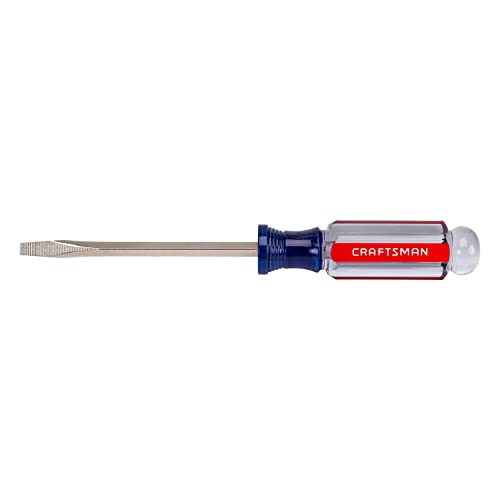
CRAFTSMAN Slotted Screwdriver Acetate Handle 3/16 x 4 in

Wera 05018272001 Kraftform Plus 932 A Slotted Screwdriver
The square shank gives this Klein a more rugged feel than the slimmer household drivers below it. That matters in utility work, hardware repairs, and other jobs where you may end up applying extra torque by hand. The keystone tip also suits broader slotted screws, so it feels more task-specific than a general-purpose pick.
The honest trade-off is size, because a heavier shank can feel less nimble in cramped trim work. For most garage benches and maintenance kits, though, that extra solidity is exactly the point. You’re getting a screwdriver that looks built for steady, forceful use rather than delicate cabinet tuning.
Strong Points
- Square shank adds a sturdy hand tool feel.
- Keystone tip fits wider slotted fasteners cleanly.
- Good match for tasks that ask for pressure.
- Made in the USA, which many tool shoppers value for familiar fit and finish.
Points To Note
- Bulkier than a cabinet-style driver, so it’s less graceful in tight access spots.
- More specialized than a small set item like the CRAFTSMAN 5-Piece option.
Key Specs
Who It Suits Best
Toolbox users who handle heavier slotted screws and want a traditional, sturdy feel will get the most from this one.
A Better Fit Elsewhere
Klein Tools 601-4 Flathead Screwdriver 3/16-Inch Cabinet Tip suits you better for smaller trim screws and narrow openings.
The split-blade design is the big story here, because it helps the driver hold onto the screw instead of letting it slip away immediately. That’s useful overhead, inside panels, and anywhere your other hand is busy keeping the part aligned. Compared with the Klein 600-6, this one trades raw heft for a more task-guiding feel.
You may find it especially handy for stainless steel work, where controlled placement can save time and frustration. The Cushion-Grip handle also points to comfort during longer sessions, though screw-holding drivers usually feel a bit more specialized than standard flat heads. It’s a smart match for steady installs, not the only screwdriver you’d want in a box.
What We Like
- Split-blade tip helps hold screws in place.
- Positive gripping action supports one-handed positioning.
- Cushion-Grip handle is better for longer jobs.
- Useful for fittings where dropping hardware is annoying or hard to recover.
Room For Improvement
- More specialized than a standard slotted driver.
- Not the first pick for general rough use.
Feature Snapshot
Made For
You’ll appreciate this most for overhead installs, recessed screws, and any project where keeping the fastener steady matters more than speed.
Another Choice May Suit
Klein Tools 600-6 Keystone Screwdriver 6-Inch Square Shank is the better match for tougher, more force-heavy slotted work.
This Klein is the trim-friendly option in the group, with a 3/16-inch cabinet tip and a shorter 4-inch round shank. That shape helps where clearance is tight, like cabinet hardware, light fixtures, and other close-quarters screw work. Compared with the 600-6, it gives up brute leverage in exchange for better control in small spaces.
The cushion grip adds comfort without turning the handle bulky, which is a nice balance for routine household repairs. The honest read is that this isn’t the screwdriver you reach for first on heavy fasteners, but it’s the one that often feels right for delicate access. For compact kits, that trade makes sense.
Highlights
- Cabinet tip suits smaller slotted screws and neat hardware work.
- 4-inch round shank is easier to manage in tight spots.
- Cushion grip supports steady control on short jobs.
- Good companion for a broader driver like the Klein 600-6.
Small Caveats
- Shorter reach can feel limiting on deeper screws.
- Less force-oriented than the square-shank Klein 600-6.
- Best kept for lighter, more precise tasks.
Core Details
Whose Shelf It Belongs On
Homeowners, cabinet installers, and anyone who works around narrow openings will get the most from this compact driver.
Reach For A Different Pick When
Klein Tools 6026K Slotted Screw-Holding Screwdriver makes more sense for overhead work or jobs where the screw needs extra support.
This two-piece CRAFTSMAN set keeps things simple, which can be exactly what you want in a kitchen drawer or garage tray. The bi-material handle construction usually means a harder inner structure with a softer outer layer, so the grip feels calmer in the hand during routine turns. Compared with the single-purpose Klein models, this one is more about practical coverage than specialized reach.
You may like it most as a starter set or a backup pair for everyday screwdriving around the house. The trade-off is obvious, though, because a two-piece kit won’t cover the same range as the larger CRAFTSMAN five-piece set below. Still, for basic maintenance, it keeps clutter low and usefulness high.
Positives
- Two-piece format keeps the kit easy to store.
- Bi-material handles tend to feel more comfortable than bare hard handles.
- Useful for common household screw tasks.
- Straightforward setup works well for quick grab-and-go repairs.
Areas To Watch
- Limited piece count means fewer sizes to choose from.
- Less specialized than the Klein screw-holding or cabinet-tip options.
Technical Sheet
Right Fit For
Apartment kits, first-tool drawers, and households that want a short, simple screwdriver pairing will get the most value here.
Skip It When
CRAFTSMAN Screwdriver Set Slotted Flat Head 5 Piece suits you better when you want more size coverage in one bundle.
Reach is the defining feature here, and the 12-inch length makes a difference around appliance backs, deep housings, and recessed screw heads. The magnetic tip helps keep hardware aligned, which is handy when you’re working in awkward positions and don’t want a screw dropping out of reach. Compared with the compact Klein 601-4, this set is built for access more than finesse.
The two-pack format adds a little flexibility, especially for mixed home repair bags or a workshop drawer. One thing worth considering is storage, because a long driver takes more space than the shorter options in this list. For deep access tasks, though, that extra length earns its keep.
Reasons To Buy
- 12-inch length helps reach deep or awkward screw locations.
- Magnetic tip can make screw placement easier in tight spots.
- Two-pack format gives you a bit of redundancy.
- Useful for jobs behind fixtures, panels, and appliances.
Things To Consider
- Long shaft is less convenient in shallow drawers.
- More reach can mean less precision than shorter cabinet-style drivers.
- Dual head format is handy, but it adds complexity compared with a simple single-tip driver.
Details At A Glance
The Right Fit
DIYers who deal with appliance panels, equipment enclosures, or deep-set screws will get the most use from this long pair.
Where A Sibling Pick Shines
Klein Tools 601-4 Flathead Screwdriver 3/16-Inch Cabinet Tip is better for close-up cabinet work and tighter hand clearance.
Five pieces gives this CRAFTSMAN set a wider role than the two-piece version, and that makes it easier to keep one kit ready for a few different screw sizes. For household maintenance, that usually means less hunting around for the right driver. Compared with the Klein singles, this set is about convenience and coverage, not a single specialized use.
You may find it useful in a first toolbox, a garage shelf, or a shared home repair kit where one person’s “small” screw is another person’s “too tight.” The trade-off is that a set can be less refined than a premium standalone driver, but that’s normal at this level. It’s a solid practical bundle for people who want coverage without overcomplicating the drawer.
Best Bits
- Five-piece spread covers more slotted screw sizes.
- Good starter kit for general household work.
- Easy to assign one set to a workshop and another to the house.
- Less clutter than collecting separate drivers one by one.
Minor Gripes
- Set format can be less specialized than a single-purpose screwdriver.
- Not as reach-focused as the Nxtop 12-inch pair.
Spec Overview
Who Should Grab It
Homeowners and first-time tool kit builders will appreciate the wider size spread and the simple set format.
Look Elsewhere When
Klein Tools 6026K Slotted Screw-Holding Screwdriver is the stronger fit for overhead work where the screw needs extra control.
This is the plain-spoken, everyday driver in the lineup, and that’s a strength rather than a compromise. The heat-treated alloy steel shaft aims for durability, while the satin-nickel finish should hold up well in a normal tool drawer and resists that tired, scratched look better than bare metal. Compared with the broader CRAFTSMAN set, this one feels more like the screwdriver you grab for a single task and put back without thinking.
The acetate handle gives it a traditional feel, and the shape is set up for both lighter and firmer turns. For routine maintenance, that balance is useful because it doesn’t ask for a special job to earn a place in your kit. The honest caveat is that it’s simple, so people wanting extra features will probably look toward the Klein models or the Wera below.
Positives
- Heat-treated alloy steel supports tougher everyday use.
- Satin-nickel finish gives the shaft a cleaner look over time.
- 3/16-inch by 4-inch size works well for common small screws.
- Handle shape supports both light and firmer turns.
Honest Caveats
- More basic than the bi-material CRAFTSMAN set.
- No special holding or reach feature for awkward spots.
Core Details
Built With In Mind
This suits you best for routine household repairs, small furniture fixes, and the kind of drawer-level work that rewards a simple reliable driver.
Swap It Out When
Wera 05018272001 Kraftform Plus 932 A Slotted Screwdriver makes more sense when handle comfort and a more refined grip matter most.
Wera takes a more comfort-focused approach than the CRAFTSMAN and Klein drivers above, and that shows in the Kraftform Plus handle. The 12mm head and 8-inch blade length point toward a screwdriver meant for real hand use, especially where a balanced grip matters during repeated turns. You may notice it most during longer repair sessions, because that’s where handle shape starts to matter as much as tip size.
The longer blade gives you extra reach without turning the tool into an awkward pole, which is a useful middle ground for many workshop tasks. Compared with the Klein 600-6, this one feels less about brute force and more about a smoother working rhythm. It’s a strong fit for people who value hand comfort and a more polished feel in the tool itself.
Highlights
- Kraftform Plus handle is shaped for comfortable gripping.
- 8-inch blade gives you useful reach for many tasks.
- Better suited to repeated use than a bare-bones driver.
- Distinct feel compared with the more rugged Klein options.
Worth Noting
- Longer blade is not as compact as the CRAFTSMAN 3/16 x 4 in driver.
- Comfort-first design may matter more than raw force for some jobs.
Feature Card
Perfect Match For
You’ll get the most from this if you spend a lot of time turning fasteners by hand and want a grip that feels calmer over longer sessions.
A Better Fit Elsewhere
Klein Tools 600-6 Keystone Screwdriver 6-Inch Square Shank is a stronger pick for heavier, more force-forward slotted work.
How To Choose The Right Big Flat Head Screwdrivers
Tip Shape And Screw Fit
Big flat head screwdrivers live or die by tip fit. A keystone tip, like the Klein 600-6, suits wider slots and more force-heavy work, while a cabinet tip, like the Klein 601-4, gets into smaller, tighter spaces with less fuss. A poorly matched tip chews up screw heads and makes the job feel harder than it should.
Match the blade width to the screw slot before you think about handle color or brand. That simple step matters in furniture repair, appliance panels, and electrical covers, where a sloppy fit can turn a five-minute task into a stripped-head headache.
Handle Comfort And Control
Handle material changes the whole feel of the tool. Cushion-grip and bi-material handles usually sit easier in the palm during longer sessions, while acetate or harder handles can feel more traditional and direct. The Wera Kraftform Plus stands out here, because its shape is built around hand comfort rather than just basic utility.
You’ll care most about this during repeated turns, overhead work, or fasteners that need steady pressure. A more comfortable handle does not make the screwdriver stronger, but it can help you stay controlled when the job runs longer than expected.
Reach, Clearance, And Storage
Blade length decides how the screwdriver behaves around obstacles. A 12-inch tool like the Nxtop pair reaches deep housings and recessed screws, while a 4-inch driver like the Klein 601-4 works better in tight cabinet spaces and smaller drawers. Longer reach helps access, but it also takes up more room in storage.
That trade-off matters in real life, especially in a compact toolbox or kitchen drawer. Keep a shorter precision driver and a longer reach option if your repair work moves between furniture, fixtures, and appliance panels.
Single Driver Or Set
A single screwdriver often gives you a more focused feel and cleaner balance. Sets like the CRAFTSMAN 2-piece and 5-piece options are better when you want coverage and simple organization without buying each size separately. For a lot of households, that mix of convenience and modest storage needs makes more sense than collecting one driver at a time.
Pick the format that matches how you work. A set helps during general maintenance, but a specialty driver earns its place when you keep running into the same screw style over and over.
Things Worth Knowing First
Mistakes Worth Dodging
One common slip is picking size by appearance instead of by screw slot. Another is buying a long driver for every job, then discovering it feels clumsy in cabinets, drawer tracks, and other tight spaces. You can avoid both by keeping one compact driver and one reach-focused option in the same kit.
It also helps to separate general use from specialized use. A screw-holding model is a smart tool for awkward positions, but it’s not the only driver you’ll want if most of your work happens on open benches.
Where The Extra Money Goes
Higher-tier flat head screwdrivers usually spend more of the budget on handle shaping, shaft material, and fit consistency. That can mean a better-feeling grip, a tougher shaft finish, or a design that holds screws more securely during awkward installs. The Wera and the Klein screw-holding model are good examples of that kind of refinement.
The upgrade makes sense when you use the tool often or work in positions where comfort and control matter more than basic function. For occasional drawer repairs, a simpler CRAFTSMAN set can be enough, but repeated use tends to reward better ergonomics.
Frequently Asked Questions
What makes a big flat head screwdriver different from a small one?
A bigger flat head driver fits wider slotted screws and usually gives you more surface contact. That helps when the fastener needs a steadier push.
Is a screw-holding screwdriver worth it?
It’s very useful for overhead work and awkward alignment jobs. The holding tip saves you from juggling the screw and the driver at the same time.
Should you choose a set or a single screwdriver?
A set works better for general household use because you get more size coverage. A single driver makes more sense when you keep reaching for one common screw size.
Why does handle material matter so much?
Handle material changes how the tool feels during repeated turns and harder pressure. Softer grip sections usually feel easier on your hand during longer work sessions.
What’s the main reason to choose a longer blade?
A longer blade helps you reach recessed screws and deeper housings. The trade-off is less convenience in storage and sometimes less precision in tight spaces.
Final Thoughts
You’ve got several good directions here, and the right one depends on how your repairs actually happen. For force-heavy work, the Klein 600-6 makes sense, while the Klein 6026K is the better choice when the screw needs to stay put. If your work leans toward cabinets, quick household fixes, or long sessions with your hand on the handle, the smaller Klein, the CRAFTSMAN set, or the Wera may fit better. A screwdriver is a simple tool, but the right shape saves time and irritation in ways that show up fast.