Blacksmithing asks a lot from the surface under your hammer, and the wrong anvil makes every strike feel less controlled. This roundup focuses on heavier shop anvils, a compact bench block, and one useful tong set for handling hot stock, so you can match the tool to the work you actually do. Whether your setup lives in a garage corner, a shared workshop, or a small jewelry bench, the differences in mass, horn shape, and working surface matter fast.
Quick Look at the Shortlist

VEVOR Cast Steel Anvil 22 Lbs Double-Horn Anvil
VEVOR Single Horn Anvil 86Lbs Steel Anvil
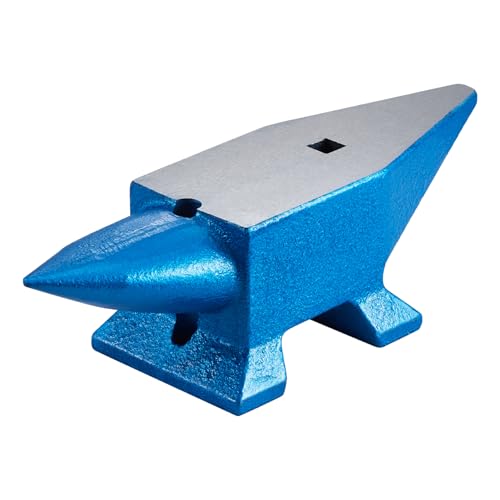
VEVOR Single Horn Anvil 22Lbs Steel Anvil

Blacksmith Tongs Wolf Jaw Blacksmithing Tool 15 in

QWORK Mini Cast Iron Horn Anvil 1lb Bench Block

VEVOR Single Horn Anvil 116lbs Cast Steel Anvil

VEVOR Single Horn Anvil 55lbs Cast Steel Anvil

65 lbs Anvils for Blacksmithing Cast Steel Blacksmith Anvil
More Details On Our Top Picks
For a small forge corner, this 22-pound VEVOR gives you a compact body with two working horns, so you can move between shaping tasks without a bulky footprint. The drop-forged steel build and 55 HRC hardness matter because they help the face stay firm under repeated hammering, though the lighter mass means it suits lighter stock better than thick bar.
The stable base helps on a bench or stout stand, and the polished working area should clean up more easily after scale buildup than a rougher finish. You may find it especially useful for hobby forging, light bends, and jewelry-adjacent metalwork, while a heavier shop anvil will still feel steadier for larger heats.
Strong Points
- Double horns add shaping options without a larger footprint.
- Drop-forged steel suits frequent hammering and general shop use.
- The polished working surface helps with quicker cleanup.
- At 22 pounds, it’s easier to place on a bench or stand.
Things To Consider
- The lighter mass can feel less planted during heavier strikes.
- Bench users may still want a very solid mounting surface.
Core Details
Who It Suits Best
Beginners, hobby smiths, and jewelry-minded metalworkers who want a small anvil with real forging features fit this best.
A Better Fit Elsewhere
VEVOR Single Horn Anvil 55lbs Cast Steel Anvil suits you better for fuller shop work, especially when you want more mass without jumping to the heaviest option.
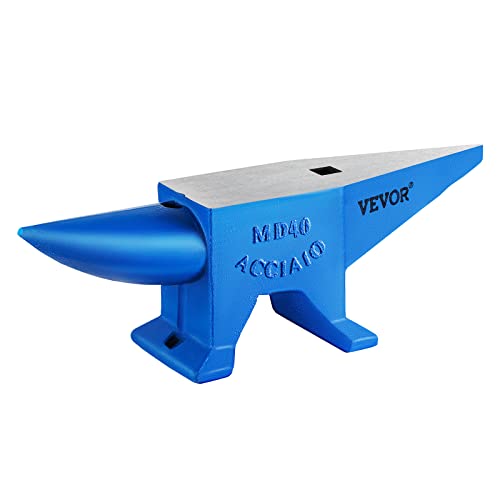
Compared with the 22-pound VEVOR picks, this 86-pound single-horn anvil brings far more planted feel to the bench. That extra mass matters during repeated forging sessions because the anvil absorbs more of the strike instead of walking around on the stand, though it also makes setup less convenient.
The single horn keeps the layout straightforward, which suits smiths who want a broad face and a familiar curve for bending and forming. In a small garage forge, you’ll probably appreciate the steadier feel more than the simpler portability, and that trade-off is exactly why this sits higher in the lineup.
Upsides
- Heavier body helps keep the anvil planted during hammering.
- Single-horn design keeps the working shape easy to read.
- Good fit for regular forging, bending, and general forming.
Small Caveats
- Moving and positioning it takes more effort than lighter anvils.
- The simpler profile leaves fewer shaping surfaces than multi-head designs.
Feature Rundown
Who Should Grab It
Shop smiths who want a sturdier bench anvil for regular metal shaping will get the most from this size.
Swap It Out When
VEVOR Single Horn Anvil 116lbs Cast Steel Anvil makes more sense for larger stock and heavier blows, while QWORK Mini Cast Iron Horn Anvil 1lb Bench Block suits detail work far better.
This 22-pound VEVOR keeps the manageable footprint of the first anvil, but the round and square holes make it more tool-friendly for basic forming operations. Those openings matter because they let you support punches, punches, and other shop tools more cleanly, so your work stays centered instead of wandering across the face.
The 50 HRC hardness and drop-forged steel construction point to a durable little workhorse for light forging and metal shaping. Compared with the double-horn model, this one leans more toward function than variety, and that makes it a sensible middle step for a growing home forge.
Bright Spots
- Round and square holes increase tool support options.
- Compact weight keeps it practical for smaller benches.
- Drop-forged steel construction suits regular light metalwork.
- Works well for learning basic forming techniques.
Areas To Watch
- Light mass still limits confidence on larger bar stock.
- Cleaning scale from the holes takes a little extra attention.
- It offers less shaping variety than a double-horn layout.
At A Glance
Made For
Home forge users who want a light anvil with useful openings for punches and support tools fit this best.
Where A Sibling Pick Shines
VEVOR Cast Steel Anvil 22 Lbs Double-Horn Anvil makes more sense for you if curved shaping is the main task, while VEVOR Single Horn Anvil 86Lbs Steel Anvil suits more stable shop work.
The anvil picks above give you the surface, but tongs decide how safely and steadily you move hot stock to it. This wolf jaw set is aimed at holding awkward shapes with a wider gripping face, which is useful for bladesmith work, beginner practice, and general shop handling when a standard flat jaw feels too loose.
At 15 inches, the length offers enough reach to keep your hand back from heat without turning the tool into a burden. The trade-off is that specialized jaws always work best within their shape range, so this is a smart everyday tong only when your stock matches its grip style.
Positives
- Wolf jaw shape helps secure irregular stock.
- 15-inch length gives useful hand clearance.
- Well suited to bladesmith and forging practice.
- Helpful for beginners learning controlled handling.
- More specialized than general-purpose shop tongs.
Minor Gripes
- The jaw shape is more task-specific than all-purpose tongs.
- Storage matters, since long-handled tools can clutter a wall rack.
Details At A Glance
Whose Shelf It Belongs On
Beginners, bladesmiths, and craft smiths who need a more secure hold on shaped metal will use this most.
Look Elsewhere When
QWORK Mini Cast Iron Horn Anvil 1lb Bench Block is the better fit for detail bench work, while the heavier VEVOR anvils matter more for full forging sessions.
The jump from the wolf jaw tongs to this little bench block is dramatic, because this QWORK anvil is built for detail work rather than hot-stock handling. At 1 pound, it disappears neatly onto a craft bench and gives you a horned surface for jewelry shaping, small bends, and model work where a full anvil would feel clumsy.
That tiny footprint is the real selling point, and it also sets the limit. It’s a small tool for small material, so the honest read is that it shines in a jewelry room or maker bench, not in a forge that sees heavy hammering.
Reasons To Buy
- 1-pound size fits crowded benches with ease.
- Useful for jewelry, model work, and light craft metalwork.
- Horned shape adds a little more forming flexibility.
- Easy to store when you need the bench clear.
Points To Note
- Too small for normal blacksmithing hammer work.
- Light weight means you’ll want careful bench placement.
Feature Card
Built With In Mind
Jewelry makers, model builders, and craft metalworkers who need a small shaping surface will get the most from it.
Reach For A Different Pick When
VEVOR Cast Steel Anvil 22 Lbs Double-Horn Anvil is a better match for light forging, and VEVOR Single Horn Anvil 55lbs Cast Steel Anvil suits a more serious bench setup.
Once you move into 116 pounds, the anvil starts to feel less like portable shop gear and more like a fixed workstation anchor. That extra mass is useful for larger stock and forceful hammering, because the surface stays calm under repeated strikes and gives you a more stable forging rhythm.
The large countertop and stable base reinforce that use case, while the round horn keeps bending tasks practical. It’s a serious choice for a dedicated smithing area, though the weight alone makes it a poor fit for anyone who still needs to rearrange the shop often.
Highlights
- 116-pound body offers strong bench stability.
- Large working area supports bigger stock.
- Round horn keeps bending and shaping straightforward.
- Cast steel construction suits frequent shop hammering.
Room For Improvement
- Moving it takes planning and a permanent spot helps.
- Overkill for light craft work or tiny bench setups.
Spec Overview
Perfect Match For
Dedicated smiths who want a heavy, fixed anvil for larger shaping sessions will feel right at home here.
Another Choice May Suit
VEVOR Single Horn Anvil 55lbs Cast Steel Anvil is easier to live with in a shared garage, while VEVOR Single Horn Anvil 86Lbs Steel Anvil gives up some mass for easier handling.
This 55-pound VEVOR sits in a useful middle band, heavier than the 22-pound models but far easier to place than the 116-pound option. The 800°C heat treatment and 50 HRC hardness suggest a working face built for impact, while the reported rebound rate above 70% points to a surface that returns energy well during forging.
That rebound can help your hammer work feel more efficient, especially on repeated shaping tasks in a home forge. The honest trade-off is that it still asks for careful stand setup, and the single horn means you get straightforward versatility rather than a specialty shape spread.
Best Bits
- 55-pound size lands between light and heavy use cases.
- Heat-treated face adds confidence for repeated strikes.
- Reported rebound rate supports efficient forging rhythm.
- Single horn keeps the layout easy to work with.
Worth Noting
- Still heavy enough that stand stability matters a lot.
- Less specialized than a multi-head anvil for complex shaping.
Technical Sheet
The Right Fit
Home forge smiths who want a balanced working weight without jumping into the heaviest class will appreciate this most.
Consider Something Else When
VEVOR Single Horn Anvil 86Lbs Steel Anvil gives you more planted mass, while 65 lbs Anvils for Blacksmithing Cast Steel Blacksmith Anvil offers more shaping zones.
The multi-head layout sets this one apart from the simpler single-horn anvils above, because it gives you several shaping surfaces in one body. That matters for step forging, rounded transitions, and quick changes between flattening and forming, so the tool works like a small station rather than a single-purpose block.
The 55 HRC high-frequency quenched surface and polished finish add to that appeal, since both point toward a face meant for more controlled hammering. It’s a thoughtful fit for smiths who want flexibility without moving to the largest anvil in the group, though the shape also asks you to learn its geometry.
Positives
- Multi-head design adds several shaping options.
- 55 HRC surface supports harder contact work.
- Polished finish helps spread force more evenly.
- Rounded horn section suits bending and flattening.
- Useful for step forging and profile shaping.
Softer Spots
- The more complex body takes some learning.
- Shape variety helps most once your technique is settled.
Core Details
Who Will Love This
Smiths who want multiple shaping zones in a single anvil and already know their way around profile work will get the most from it.
Skip It When
QWORK Mini Cast Iron Horn Anvil 1lb Bench Block is the cleaner fit for tiny craft pieces, while VEVOR Single Horn Anvil 116lbs Cast Steel Anvil suits much heavier forge work.
How To Choose The Right Blacksmithing Anvils
Weight Changes The Whole Feel
An anvil’s weight shapes how it behaves under the hammer. Lighter pieces, such as the 22-pound VEVOR models, are easier to move and mount, but they can feel livelier during heavier blows.
Heavier anvils like the 86-pound and 116-pound VEVOR options stay planted better, which helps when you forge longer stock or repeat the same move many times. The right choice depends on whether your setup is temporary or fixed, because moving a 116-pound block around gets old fast.
Horn Shape And Working Surface Matter
A single horn keeps the layout simple and familiar for bending, scrolling, and shaping. A double-horn design, like the 22-pound VEVOR with two horns, gives you more curved contact choices in a smaller body.
Multi-head anvils add even more shaping zones, which helps with step forging and profile work. That extra flexibility has a trade-off, since more shapes also mean a little more time learning where each part belongs.
Material And Surface Hardness Tell You About Durability
Drop-forged or cast steel usually makes sense for shop anvils because it supports repeated hammering without feeling soft. Hardness figures such as 50 HRC or 55 HRC suggest a tougher working face, which matters once your projects move beyond light craft use.
Cast iron bench blocks like the QWORK mini anvil belong to a different job class, mostly jewelry and small-form work. They’re practical, but they won’t replace a real forging anvil for hot bar or thicker stock.
Match The Tool To Your Space And Skill Level
A compact bench or shared garage calls for a smaller anvil that’s easy to mount and store. Dedicated forge spaces can handle heavier bodies, and that extra mass usually pays off in steadier work and less movement under impact.
Beginners often do well with a simpler face and a manageable weight, while more experienced smiths may value specialized surfaces and more shaping zones. That’s why the shortlist stretches from the 1-pound QWORK block to the 116-pound VEVOR workhorse, because blacksmithing does not live in one size.
What To Weigh Before You Buy
Common Shopping Slip Ups
One common mistake is focusing on weight alone. A heavy anvil helps stability, but a poor horn layout or a working surface that’s too small can make the tool awkward in daily use.
Another trap is buying a bench block for forge work. The QWORK mini anvil is useful for jewelry and models, yet it won’t replace a proper steel anvil for hot stock.
When Paying More Pays Off
Higher-tier anvils usually cost more because they bring more mass, more usable surface, or more careful shaping across the body. In this category, that extra money often goes into steadier rebound, more refined finishing, and better support for repeated hammering.
That upgrade makes sense for anyone shaping metal often, especially in a permanent shop. For occasional craft work, a lighter and simpler tool can be the smarter spend.
Frequently Asked Questions
What Weight Works Best For A Home Forge?
Many home forges do well with something in the middle, around the 55-pound range. That size gives you more steadiness than a 22-pound anvil without the setup burden of a 116-pound block.
Is A Single Horn Or Double Horn Better?
A single horn keeps things straightforward and is easy to learn on. A double horn gives you more shaping options in a similar footprint.
Can A Mini Anvil Replace A Full Blacksmithing Anvil?
No, a mini anvil is for jewelry, small craft metalwork, and bench shaping. It works best beside a larger forging setup, not instead of it.
Why Does Hardness Matter On An Anvil?
Hardness helps the working face resist deformation from repeated strikes. That matters most when you forge often or work with thicker stock.
Do Tongs Matter As Much As The Anvil?
Yes, because good tongs control the metal before it ever reaches the face. The right grip makes your hammer work steadier and safer for everyday handling.
Closing Thoughts
Blacksmithing gear works best when you match it to the way you actually hammer, move, and store it. The light VEVOR anvils suit smaller spaces, the 55-pound and 86-pound options settle into more regular shop use, and the 116-pound model belongs in a fixed forge. For detail work, the QWORK mini block earns its place, while the wolf jaw tongs fill the handling gap. Choose the shape and weight that fit your bench, and the rest of the work starts to feel a lot more natural.