Carpenter hammers do more than strike nails. The right one changes how hard your arm works, how cleanly nails start, and how much control you keep during framing, trim work, or demolition.
This roundup focuses on hammers that suit everyday jobsite use, weekend repairs, and heavier build work alike. You’ll see lighter options for finesse, heavier heads for framing, and a few designs that make nail starting less awkward in tight spots.
The Shortlist At A Glance

IRWIN Fiberglass Claw Hammer 16 oz. (1954889)
Spec Ops Nailing Hammer 20 Oz

ESTWING Ultra Series Hammer 19 oz E19S

ESTWING Ultra Series Hammer 19 oz EB-19SM


ESTWING BIG BLUE Framing Hammer 25 oz E3-25SM
Spec Ops Fiberglass Hammer 20 Oz

VAUGHAN Dalluge Titanium Framing Hammer VN07180
More Details On Our Top Picks
The IRWIN brings a straightforward shape that works well for routine hanging, light framing, and small repair jobs around the house. A fiberglass handle usually helps soften the feel compared with a plain metal shaft, and the forged steel head gives you a sturdier striking end for repeated use.
You may notice the ProTouch grip most on longer sessions, where a secure hold matters more than flash. Compared with the heavier framing hammers later in this list, this one makes more sense for general tasks and less aggressive nail driving.
Strong Points
- Forged steel head supports regular jobsite wear.
- ProTouch grip adds comfort during longer chores.
- Fiberglass handle keeps the feel lighter in hand.
- Good match for basic carpentry and home repairs.
Things To Consider
- Not built for the heaviest framing work.
- The lighter profile gives up some driving force.
- Grip texture may feel plain beside premium handles.
Feature Snapshot
Who It Suits Best
Home improvers and light-duty carpenters who want a dependable all-round claw hammer will get the most out of it.
Where A Sibling Pick Shines
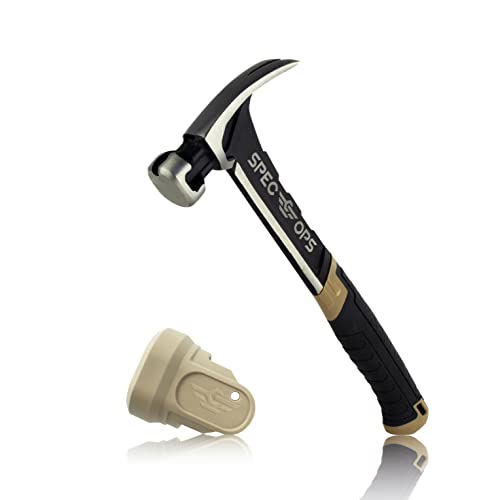
Spec Ops Tools Nailing Hammer for Framing, Carpentry & Demolition, Rip Claw, Smooth Face and Shock-Absorbing Grip, 20 Oz suits heavier framing and rougher demo work better.
This hammer leans into rough work, with a rip claw for pulling fasteners and a smooth face for cleaner strikes. The mallet cap changes the feel in a useful way, because it lets you tap parts into place without switching tools every few minutes.
On a framing crew or during demolition prep, that mix saves motion and keeps your tool bag simpler. Compared with the more general IRWIN, this Spec Ops model feels aimed at tougher jobs and less at casual household repairs.
Highlights
- Mallet cap adds useful tapping flexibility.
- Rip claw supports pulling and prying tasks.
- Smooth face suits cleaner nail strikes.
- Good fit for framing and demo-heavy days.
Areas To Watch
- The extra purpose can feel like overkill for quick fixes.
- Heavier work focus brings more fatigue in smaller jobs.
- Mallet cap ownership means another surface to keep clean.
Core Details
Made For
Framers, remodelers, and hands-on DIYers who need one hammer that can do several rough-task jobs will find the fit strong.
A Better Fit Elsewhere
IRWIN Fiberglass Claw Hammer 16 oz. (1954889) suits lighter household work more neatly and feels easier to carry all day.
The E19S sits in the middle of the lineup nicely, with a 19 oz head that gives you more driving force than a lighter 16 oz hammer without jumping into the bulk of the 25 oz option. The genuine leather grip gives it a classic feel, and that matters during long framing days where hand comfort starts to count.
For most jobsite use, the smooth face makes sense because it keeps contact straightforward on nails and framing hardware. Compared with the Spec Ops nailing hammer, this ESTWING feels a touch more traditional, and that may suit you better if you like a simpler tool with fewer moving parts in the experience.
What We Like
- 19 oz head lands in a practical middle zone.
- Leather grip adds a traditional, steady hold.
- Smooth face supports cleaner, predictable strikes.
- Works well for framing and general carpentry.
Small Caveats
- Leather needs a little more care than synthetic grips.
- The style feels less modern than newer shock-absorbing designs.
- Not the lightest option for overhead use.
Technical Sheet
Who Will Love This
Carpenters who like a traditional-feeling framing hammer with a modest weight and a cleaner strike face will appreciate it most.
Another Choice May Suit
VAUGHAN DALLUGE 16 oz Titanium Framing Hammer, Magnetic Nail Holder, Milled Face Carpenter Hammer, VN07180 fits professionals who want lighter head material and magnetic nail starting.
Compared with the smoother E19S, this EB-19SM adds a milled face, which means a textured striking surface for better nail purchase. That texture matters on fast-moving framing work, especially when your hands are moving quickly and you want the head to sit on the nail with less slip.
The built-in nail starter also stands out, because one-handed nail starting saves a bit of awkward balance on ladders and in tight framing spaces. The honest read is that this one makes more sense for users who already know why a milled face matters and want that extra bite.
Bright Spots
- Milled face helps grip nails more securely.
- Magnetic nail starter supports one-handed use.
- Shock Reduction Grip softens the hand feel.
- Strong choice for fast framing workflow.
Points To Note
- Milled face can be too aggressive for delicate finish work.
- More jobsite-specific than the simpler ESTWING E19S.
- Grip care still matters after dusty construction days.
Feature Rundown
Best Suited To
Experienced framers and serious DIY users who want more control during fast nail work will get the most from it.
Swap It Out When
IRWIN Fiberglass Claw Hammer 16 oz. (1954889) makes more sense for lighter household work and simpler tool bags.
This Stiletto takes a different path from the heavier framing hammers above, using a titanium head and a 10 oz striking weight for finer control. The curved axe-style handle gives it a distinctive feel, and the shorter 14-1/2 inch length should feel nimble in finish work or component placement.
The milled face and straight claw make it useful for nail work where you want precision more than brute force. In a trim kit or on component lines, the lower recoil is the practical advantage, since your hand and wrist can feel less punished over a long day.
Positives
- Titanium head keeps the tool notably light.
- Lower recoil feel helps during repeated swings.
- Curved claw suits extraction and light prying.
- Compact length helps in tighter work areas.
Worth Noting
- 10 oz weight is better for finesse than heavy driving.
- Wood handle care matters over the long term.
- Cost profile makes sense only for specific use cases.
At A Glance
The Right Fit
Finish carpenters and detail-focused users who want a lighter, more precise hammer will feel at home with this one.
Look Elsewhere When
ESTWING BIG BLUE Framing Hammer 25 oz E3-25SM suits users who need more mass and reach for rough framing work.
The 25 oz head puts this ESTWING into a more forceful class than the 19 oz options above, and that extra mass can help on heavier framing work. The straight rip claw is useful for nail pulling and prying, while the longer handle gives you more reach and leverage in broad construction tasks.
The milled face is the detail that keeps it from feeling overly raw, because it helps the head bite into nails more securely. You may find the weight tiring in overhead use, yet that same heft pays off when the work calls for repeated driving and rough demolition.
Best Bits
- 25 oz weight brings serious driving force.
- Straight rip claw helps with prying and removal.
- Milled face supports a firmer nail grip.
- Long handle helps with reach and leverage.
Room For Improvement
- Heavier build can feel tiring over time.
- Less suited to delicate trim work.
- More tool than casual home repair usually needs.
Details At A Glance
Whose Shelf It Belongs On
Framers and remodelers who want a heavier hammer with more leverage will appreciate the way it works in tougher builds.
Reach For A Different Pick When
Stiletto FH10C Claw Hammer fits finer work better, especially for trim jobs and lighter carrying needs.
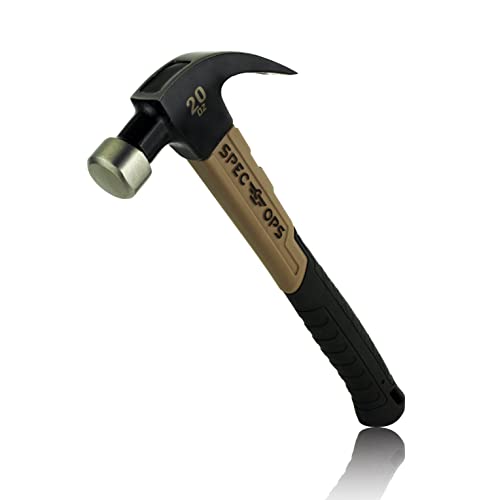
This Spec Ops model sits between the lighter general-purpose hammers and the heavier framing options, which makes it a sensible middle-ground pick. The fiberglass handle, curved claw, and smooth face cover a broad range of carpentry and demolition tasks without pushing too hard toward one specialty.
For jobsite use, the shock-absorbing grip is the detail you’ll care about after a long stretch of repeated swings. Compared with the IRWIN 16 oz model, this one is better suited to tougher work, while it still avoids the extra bulk of the 25 oz ESTWING.
Upsides
- 20 oz weight gives solid all-purpose drive.
- Curved claw helps with pulling nails and light prying.
- Smooth face keeps strikes cleaner on fasteners.
- Shock-absorbing grip helps during longer sessions.
Softer Spots
- Less specialized than the milled-face framing picks.
- Not as compact as lighter general hammers.
- Fiberglass handle keeps it practical, not premium-feeling.
Quick Facts
Built With In Mind
Carpenters and remodelers who want one hammer that handles both build and teardown work will get a strong fit here.
Not Your Match When
ESTWING Ultra Series Hammer 19 oz EB-19SM suits you better if your priority is a milled face and a built-in nail starter.
The titanium head is the headline here, and it changes the feel by keeping the hammer light while still aimed at hard construction work. That lighter head can help reduce fatigue over a long day, while the magnetic nail holder makes one-handed starting easier on metal or sheet material.
Compared with the steel-bodied ESTWING BIG BLUE, this Vaughan is a more specialized tool for users who want nimble framing control rather than brute mass. In a pro bag, that balance makes a lot of sense, though casual home repair use would rarely call for this much refinement.
Reasons To Buy
- Titanium head keeps the swing feel light.
- Magnetic nail holder helps on awkward starts.
- Milled face improves contact on nail heads.
- Well suited to linemen, framers, and builders.
Points To Note
- Specialized features may be more than some jobs need.
- Titanium focus makes it a niche upgrade.
- Best value comes from regular, high-volume use.
Core Details
Perfect Match For
Professional framers and trade users who want a lighter, higher-control hammer for repetitive nail work will see the most value.
Where Shoppers Go Wrong
IRWIN Fiberglass Claw Hammer 16 oz. (1954889) is the smarter pick for casual household work and simpler everyday tasks.
How To Choose The Right Carpenter Hammers
Match Head Weight To Your Work
A 16 oz hammer feels handy for repairs, hanging tasks, and lighter carpentry because it’s easier to control in close quarters. Once you move into 19 oz or 20 oz territory, the tool starts doing more of the driving for you, which matters on framing days or repeated fastening runs. A 25 oz head, like the heavier ESTWING BIG BLUE, brings more force, but it also asks more from your arm and shoulder.
Choose The Face Style With Purpose
A smooth face suits general carpentry and cleaner nail contact, so it’s a safe all-around choice. A milled face, meaning a textured striking surface, helps the head stay planted on the nail, which matters on faster framing work and overhead angles. That extra grip is useful, but it can feel too aggressive for delicate finishing.
Pay Attention To Grip And Handle Material
Fiberglass handles often give you a sturdy, practical feel with some vibration softening, while shock-absorbing grips aim to reduce the sting that comes with repeated swings. Leather, like the handle on the Stiletto FH10C, has a different feel altogether, more traditional and refined, though it asks for a bit more care. Titanium heads change the balance too, because they reduce overall weight while still serving demanding work.
Think About The Job, Not Just The Hammer
A general-purpose hammer works well for a homeowner who handles occasional repairs and trim fixes. Framers, remodelers, and demolition-heavy users usually need rip claws, nail starters, or a more aggressive face. The right match saves motion, and that’s where comfort turns into real usefulness.
A Quick Reality Check
Common Shopping Slip Ups
A lot of people pick too much hammer for the job, then wonder why their arm feels worn out after simple fixes. Another common miss is choosing a smooth-faced model for fast framing work, or a milled face for finish tasks where it can leave a harsher touch. Storage matters too, because leather grips and milled faces can need more care after dusty workdays.
The Upgrade Payoff
The extra money usually goes into head material, grip design, face treatment, and better nail-starting features. Titanium and shock-reduction setups make the biggest sense for frequent users, especially on pro jobs or long renovation days. For occasional home use, a simpler fiberglass model like the IRWIN often covers the need without extra complexity.
Frequently Asked Questions
What weight works best for most carpentry?
A 16 oz to 20 oz hammer covers most everyday carpentry well. That range gives you enough control for routine work without turning the tool into a chore.
What does a milled face do?
A milled face has a textured striking surface that helps it grip nail heads better. That can help during framing, though it’s less gentle for precise finish tasks.
Are titanium hammers worth it?
Titanium models usually make sense for frequent use because they stay lighter in hand. The trade-off is a more specialized feel that some casual users won’t need.
Why choose a rip claw?
A rip claw makes nail pulling and light prying easier. That shape is handy on framing and demolition jobs, where removal matters as much as driving.
Which hammer is best for mixed use?
The Spec Ops Fiberglass Hammer 20 Oz fits mixed carpentry and demolition work well. It sits in a useful middle zone without leaning too far toward delicate or heavy-duty use.
Final Thoughts
You get the most from a carpenter hammer when the weight, grip, and face style match the work in front of you. Light general-purpose models suit quick home jobs, while milled-face framing hammers make more sense for repeated construction tasks. Titanium and shock-absorbing designs bring extra comfort and control, but only pay off fully when you use them often. Pick for the way you work, not just the way the tool looks, and you’ll end up with something that feels right in hand.