

Carpenter Squares earn their keep on the jobs that punish guesswork, from framing a shed to laying out a shelf in a cramped garage. The right tool saves you from repeated marks, awkward angles, and slow rechecking, especially when you want a clean layout without dragging a full shop around. This roundup focuses on tools that fit everyday carpentry, woodwork, and home repair work, with a close eye on size, material, and how each design changes the way you work.
Quick Look At The Shortlist

Crescent Lufkin EX6 Extendable Layout Tool 6″

SHALL Rafter Square and Combination Square Tool Set

WETOLS Corner Clamps for Woodworking 4-Piece 5.5″ Set

Preciva 12″ Woodworking Square Ruler
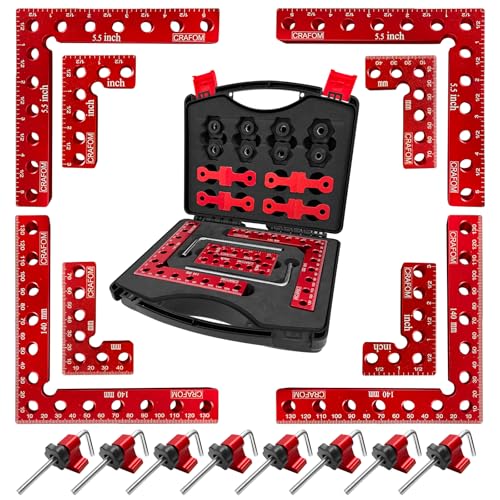
crafom Corner Clamp Set of 8

Arrow Fastener Combination Square 12-Inch

RONGPRO 2-Piece Rafter Square Set

Preciva Carpenter Square 12-Inch
More Details On Our Top Picks
The EX6 suits you well when space matters more than a full bench kit. Its 6-inch fold-out extension arm is the practical detail here, since it lets one tool cover more layout work without carrying separate 7-inch and 12-inch squares.
That makes it a smart fit for jobsites, garage shelves, and toolbox carry, especially for quick marks between larger tasks. The trade-off is straightforward, a compact layout tool rarely replaces a larger square for every framing job, so you may still want a bigger blade on hand for long spans.
Strong Points
- Fold-out reach keeps the tool compact in storage.
- One tool can cover more than a fixed small square.
- Useful for quick marks in tight work areas.
- Easy to keep in a standard tool bag.
Things To Consider
- Shorter layout reach may feel limiting on bigger framing jobs.
- You may still want a larger square for long wall runs.
- The moving arm adds a part that deserves careful storage.
Core Details
Who It Suits Best
Apartment handymen, remodelers, and anyone carrying tools between rooms will get the most from this compact format.
Swap It Out When
RONGPRO’s 2pcs Rafter Square set makes more sense for you when you want both 7-inch and 12-inch sizing in the same kit.
This set leans into variety, which helps when you move between framing, marking, and general shop layout. The 7-inch rafter square and 16-inch zinc-alloy combination square give you two very different reaches, while the stainless steel ruler adds a cleaner reference for straight marking.
The materials matter here, too. Aluminum alloy keeps the rafter square light, zinc alloy adds a sturdier feel to the combo square, and the included pencils plus scriber make it easier to start work without hunting through a drawer.
What We Like
- Two square styles cover more woodworking tasks.
- Stainless steel ruler helps with long, straight marks.
- Included pencils and scriber save setup time.
- Mixed materials give the kit a practical feel.
Small Caveats
- More pieces means more parts to keep together.
- The larger kit can feel less minimalist than a single square.
- Tool storage matters here, especially for the slimmer accessories.
Feature Snapshot
Right Fit For
You get the most from this set when you want one kit for framing, furniture work, and household repairs without piecing tools together later.
A Better Fit Elsewhere
Preciva’s Carpenter Square 12-Inch suits you better when you want a single-purpose layout tool with a simpler carry profile.
These clamps solve a different problem from the square-style tools above, they help hold a corner steady while glue or fasteners do their part. The 5.5-inch aluminum alloy bodies and six-sided scales make them feel more like an assembly helper than a pure marking tool, which is useful on cabinets, drawers, shelves, and frames.
For a busy shop, that kind of support can save you from juggling parts with one hand while trying to align joints with the other. The honest read is that they belong in your clamp kit, not as a replacement for a layout square, so they work best alongside one of the earlier picks.
Highlights
- Helps hold 90-degree corners during assembly.
- Four pieces give you more clamp coverage.
- Good match for cabinets, drawers, and shelving.
- Aluminum alloy build suits repeat shop use.
Areas To Watch
- These are clamps first, not a marking square.
- They add bulk to your bench setup.
- Six-sided scale markings are handy, but they don’t replace a dedicated ruler.
Details At A Glance
Whose Shelf It Belongs On
You should reach for this set when you assemble boxes, frames, or cabinet carcasses and need a steady hand on every corner.
Look Elsewhere When
Arrow Fastener’s Combination Square 12-Inch suits you better when layout marks matter more than holding parts in position.
The Preciva square is aimed at people who care about fine layout, not just rough framing marks. Its stainless steel blade, retractable ledge, and mixed notch spacing give you more control when you want cleaner reference lines on smaller woodworking parts.
The 12-inch length is useful on benchtop jobs, trim work, and repeated marking, especially where a smaller square feels cramped. The trade-off is that a detail-focused tool like this can feel more deliberate than a plain framing square, so it rewards careful use more than fast, casual checks.
Positives
- Fine notch spacing helps with precise layout work.
- Stainless steel blade supports a cleaner marking edge.
- Retractable ledge gives you another way to reference the workpiece.
- Well suited to trim, furniture, and smaller shop tasks.
- 12-inch reach gives more room than a compact square.
Room For Improvement
- The more detailed layout style asks for a steadier hand.
- It is less about speed than a simple rafter square.
- Fine markings may feel busy for basic rough-in jobs.
Spec Overview
Made For
You will like this most when your projects involve cabinets, trim, or furniture parts that need a cleaner mark than rough framing allows.
Where A Sibling Pick Shines
Crescent Lufkin’s EX6 Extendable Layout Tool suits you better if compact carry and quick field use matter more than fine notch detail.
This set leans into volume, and that helps during box building or repeated corner assembly. The 3-inch and 5.5-inch aluminum alloy pieces give you multiple sizes in one kit, while the anodized red finish is the kind of detail that tends to stay visible in a crowded bench drawer.
For hobby shops and light production work, having eight clamps available can keep the workflow moving without constant reshuffling. The flip side is storage, because more pieces mean more things to sort, clean, and keep together after a job wraps up.
Reasons To Buy
- Eight clamps give you broad coverage for assembly tasks.
- Two size options help with different box and frame parts.
- Anodized finish adds useful surface protection.
- Good support for repeat cabinet and drawer work.
Minor Gripes
- More pieces means more organization at the end of a project.
- The kit takes more drawer or shelf space than a single clamp.
- Best suited to assembly support, not layout marking.
Core Details
The Right Fit
You should choose this set for cabinet assembly, box builds, and any project where holding several 90-degree corners at once saves time.
Another Choice May Suit
Preciva’s 12″ Woodworking Square Ruler suits you better when layout accuracy matters more than clamp count.
This one is the most tool-like of the bunch, in the sense that it tries to do several jobs without feeling overbuilt. The stainless steel ruler, zinc alloy body, and bubble level help with layout, angle marking, depth checks, and basic alignment, which makes it useful for woodworking, household repairs, and construction touch-ups.
The bubble level is the detail that changes how you use it, because it helps you line up components without reaching for a second tool. For most garages and small workshops, that can streamline setup, though the extra functions also mean a bit more to learn than a plain square.
Upsides
- Handles layout, marking, and alignment in one tool.
- Bubble level adds a helpful visual reference.
- Stainless steel ruler is suited to repeated measuring.
- Good match for mixed repair and shop tasks.
Softer Spots
- More features can make the tool feel busier than a simple square.
- You may need a little time to learn each function well.
- Single-tool versatility still won’t replace every dedicated shop gauge.
Feature Rundown
Built With In Mind
You get the best value from this square when you want one tool for marking, checking alignment, and handling everyday household fixes.
Where A Sibling Pick Shines
SHALL’s Rafter Square and Combination Square Tool Set makes more sense for you if you want a broader kit with a separate rafter square and accessories.
Two square sizes in one package give this set a simple appeal. The 12-inch and 7-inch pieces cover different layout jobs, and the included woodworking pencil helps you get started without building a separate marking kit around it.
That makes the set friendly for beginners, part-time DIY work, and anyone who wants a straightforward layout bundle. The honest trade-off is that it still follows a basic format, so it suits general carpentry better than detail-heavy shop work like precision furniture fitting.
Bright Spots
- Two square sizes give you more flexibility.
- Included pencil helps with quick marking.
- Good starter setup for routine carpentry work.
- Aluminum alloy construction keeps the pieces light.
Points To Note
- Basic kit styling may feel simple for advanced shop use.
- You may want a more specialized tool for fine joinery.
- Keeping the pencil with the squares helps avoid misplaced parts.
Core Details
Best Suited To
You will like this set most as a starter layout kit or as a simple grab-and-go bundle for home projects.
Where Shoppers Go Wrong
Preciva’s 12″ Carpenter Square suits you better when you need a single tool with a simpler profile and a more focused use case.
This Preciva square keeps the formula simple, which is exactly what many home workshops need. With a 12-inch aluminum alloy body and 1/16-inch scale, it covers common layout work, from parallel lines and vertical marks to drilling position checks and saw-height reference.
That sort of multipurpose design fits people who want one steady tool instead of a cluttered drawer of niche gadgets. It won’t be as specialized as the more detailed Preciva ruler above, yet it feels easier to pick up for regular carpentry, repair work, and general shop use.
What We Like
- Handles several common layout tasks with one tool.
- 12-inch size works well for everyday shop projects.
- Aluminum alloy body keeps carry weight down.
- Useful for saw setup, marking, and drill positioning.
Honest Caveats
- It stays focused on utility rather than extra features.
- Specialized detail work may call for a more exacting square.
- The simple format is best suited to common tasks, not niche jigs.
Spec Overview
Who Should Grab It
You should choose this square when you want a straightforward, all-around layout tool for routine woodworking and home repair jobs.
Skip It When
SHALL’s Square and Combination Square Tool Set suits you better when you want more pieces and more measuring range in one purchase.
How To Choose The Right Carpenter Squares
Match the square to the job
Carpenter squares split into a few different roles, and the first step is choosing the one that matches your work. A rafter square makes sense for framing and fast angle checks, while a combination square gives you more reach for marking, depth checks, and alignment. Clamps belong in a separate lane, since they hold parts in place rather than laying out a line.
For trim work and furniture parts, a square with finer graduations matters more than a big, plain body. For framing, the reverse is often true, since you want speed, clear edges, and a size that reads well in a rougher setting.
Look at material and feel
Material changes how a square behaves in your hand. Aluminum alloy keeps things light, stainless steel gives you a cleaner marking edge, and zinc alloy often adds a denser feel that some people prefer for bench work. None of that makes one tool universally better, but it does shape durability, carry weight, and how steady the tool feels on stock.
The finish matters too. A coated or anodized surface can help with surface wear and day-to-day handling, though the trade-off is that finish choices sometimes add cost without changing the basic layout function.
Size and storage are not minor details
A 7-inch square tucks into a bag more easily than a 12-inch or 16-inch tool, which matters on jobsite carry or crowded shelves. Larger tools can be nicer for longer lines and broader stock, but they take more room and can feel awkward in a small kit.
The honest balance is simple, compact tools travel well, while larger ones tend to feel calmer and easier to reference on wider workpieces. Your bench space and vehicle storage should influence the decision as much as the markings on the tool.
Extra functions can help, but only to a point
Combination squares and multi-function layouts earn their keep when you want one tool to do several jobs. Bubble levels, retractable ledges, scribers, and included pencils can make setup smoother, especially in a home shop where you want fewer loose parts.
The trade-off is complexity, because more features mean more parts to keep track of and more habits to learn. For most everyday work, a simpler square still stays useful, which is why plain layouts remain a solid choice for many people.
A Quick Reality Check Before You Choose
Hidden Buying Traps
A common mistake is buying a square that looks versatile but doesn’t fit your real tasks. A clamp set helps with assembly, yet it won’t replace a marking square for layout work, and a fine-detail ruler can feel slower than a plain framing square on rough lumber.
Another easy miss is overbuying accessories you won’t keep organized. Extra pencils, scribers, or multiple square sizes help only when you have a clear place to store them and a reason to reach for them often.
The Case For Spending Up
Higher-tier tools usually cost more because of material quality, added functions, or broader use cases. Stainless steel, zinc alloy, finer notch spacing, and extra accessories all add manufacturing steps, and you feel that in the way the tool behaves on the bench.
Spending more makes sense when you switch between framing, furniture work, and repair tasks often. For occasional weekend projects, a simpler tool usually covers the job without crowding your kit.
Frequently Asked Questions
What type of carpenter square works best for framing?
A rafter square is the usual fit for framing because it gives you fast angle references and an easy edge to follow. A 12-inch option can feel easier to handle on larger stock.
Do you need a combination square for woodworking?
A combination square helps when you want more than right-angle checks, since it can support marking and alignment tasks too. It suits bench work better than a simple framing tool.
Are clamp-style corner tools the same as carpenter squares?
No, clamp-style tools hold parts in place, while carpenter squares help you mark and check angles. They often work together in the same shop.
What size square should you start with?
A 12-inch square is a balanced starting point for many home shops because it covers common layout work without feeling too large. A 7-inch tool is easier to carry, but it gives you less reach.
Which material should you look for first?
Aluminum alloy is a sensible starting point because it stays light and easy to handle. Stainless steel is a stronger fit when you want a cleaner marking edge and a firmer feel.
Final Thoughts
The best Carpenter Squares for you depend on whether you spend more time marking, holding corners, or moving between both jobs. The Crescent Lufkin EX6 is a smart compact carry, the SHALL set brings useful variety, and the Preciva ruler leans into fine layout work. For assembly-heavy shops, the WETOLS and crafom clamp sets make more sense than a plain square. Choose the tool that matches your bench, your storage, and the kind of work you actually do.



