

Cutting pace matters when your saw earns its keep on property lines, storm cleanup, or long pruning runs. The right chain changes how smoothly the bar pulls through wood, how often you stop to re-tension, and how much control you keep through dense cuts. This roundup keeps the focus on fit, chain geometry, and real job-site use, so you can match the chain to your saw and the work ahead.
The Shortlist At A Glance

Husqvarna X-Cut S93G 16 Inch Chainsaw Chain
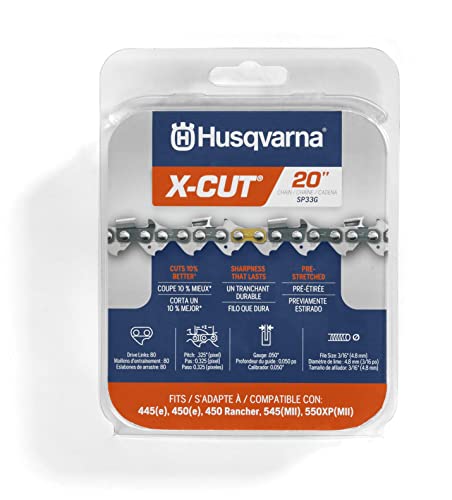
Husqvarna X-Cut SP33G 20 Inch Chainsaw Chain

Husqvarna X-Cut SP33G 16 Inch Chainsaw Chain

KAKEI Chainsaw Chain 16 Inch 3/8″ LP Pitch

Oregon Chainsaw Chain for 24″ Bar

Husqvarna 585550084 24″ C83 X-Cut 3-Pack

Husqvarna X-Cut C83 24 Inch Chainsaw Chain

Stihl 33RS-84 2PK Rapid Super Professional Saw Chain
More Details On Our Top Picks
The S93G fits compact saws that need a tidy, controlled bite rather than brute force. Its 3/8 inch mini pitch, 0.050 gauge, and 56 drive links make the chain easy to match to the right 16-inch setup, and the pre-stretched build helps it settle in with less early adjustment.
That matters for trimming around a yard, clearing smaller limbs, or doing a day of mixed property work where a lighter chain feels calmer in the cut. The trade-off is simple, it’s sized for smaller bars and won’t be the right answer for larger felling rigs.
Strong Points
- Mini pitch helps the chain suit smaller pro saws.
- Pre-stretched construction can reduce early slack checks.
- Low-kickback design adds a more controlled feel in close trimming work.
- Gray finish makes it easy to spot during maintenance.
Points To Note
- It’s built around a 16-inch bar, so size matching matters.
- Smaller-capacity saws benefit most, while larger rigs need a different setup.
Core Details
Who It Suits Best
Yours is a good match for smaller gas saws used in pruning, cleanup, and lighter professional yard work.
A Better Fit Elsewhere
Husqvarna X-Cut C83 24 Inch Chainsaw Chain suits crews cutting larger timber with a 24-inch bar.
A 20-inch bar asks for a chain that feels settled, not twitchy, and this SP33G is built around that middle ground. The .325 pitch sits between smaller pruning chains and larger heavy-cut setups, which makes it a practical match for property work, limbing, and routine cutting with a fuller-size saw.
Compared with the S93G above, this one is the step up for more reach and more material movement. The honest read is that the extra size brings more saw presence too, so your bar, powerhead, and chain need to be in sync.
What We Like
- .325 pitch gives a solid balance of speed and control.
- Pre-stretched construction can help the chain settle after installation.
- Superior lubrication support should help the chain run more smoothly under load.
- Low-kickback design is useful in routine yard and property work.
- The 80-drive-link layout makes the fit clear for 20-inch bars.
Room For Improvement
- It only works for the bar length and link count it was built for.
- Bigger cutting jobs still depend on saw power, not chain size alone.
Feature Snapshot
Who Will Love This
Property owners and maintenance pros with a 20-inch saw will get the most from this chain.
Swap It Out When
Husqvarna X-Cut SP33G 16 Inch Chainsaw Chain makes more sense for tighter yard work and a shorter bar.
This one lands in a sweet spot for common 16-inch saw setups, especially where you want a chain that doesn’t feel oversized. The 66 drive links and .325 pitch point to a cut style that suits routine trimming, cleanup, and steady work around a yard or job site.
Compared with the S93G, it’s a touch more work-oriented in feel while still staying compact. That makes it a sensible middle choice for people who move between pruning, limb clearing, and occasional heavier cuts without jumping to a larger bar.
Highlights
- Built for a common 16-inch setup.
- .325 pitch gives a practical balance for mixed cutting.
- Pre-stretched chain can mean fewer early adjustments.
- Low-kickback design adds a calmer feel in close work.
Areas To Watch
- The chain still needs exact bar and link matching.
- People using larger saws will need a different length.
Details At A Glance
Best Suited To
Weekend landowners and maintenance crews with 16-inch saws should feel right at home here.
Where A Sibling Pick Shines
Husqvarna X-Cut S93G 16 Inch Chainsaw Chain is the tighter, smaller-bar option for lighter pruning work.
Compatibility is the main story here, and that’s useful for battery saw owners who want a clear fit list instead of guesswork. The 3/8 LP, or low profile, pitch and 0.043 gauge point to a slimmer chain setup, while the semi-chisel tooth shape is usually favored for easier maintenance in mixed debris.
That narrower setup feels different from the Husqvarna chains above, which are aimed more at gas-powered pro saws. The trade-off is that you need to pay attention to exact saw fit, but the upside is a chain that aligns well with several named electric models.
Bright Spots
- Fits several specific saw models, which simplifies matching.
- Semi-chisel teeth are often easier to keep in service in grimy conditions.
- Three-chain pack helps you keep spares ready.
- 0.043 gauge supports a slimmer bar setup.
Softer Spots
- Fit matters a lot here, so model matching needs care.
- The thin gauge is intended for the right low-profile bar only.
- Maintenance still matters, especially on dusty trimming days.
Technical Sheet
Made For
Battery saw owners with the listed Ego or DeWalt models are the clearest match for this chain.
Another Choice May Suit
Husqvarna X-Cut SP33G 16 Inch Chainsaw Chain fits a broader pro-saw setup with a more familiar .325 pitch.
This Oregon chain is set up for 24-inch bars, and that alone tells you a lot about the kind of work it’s meant for. The full-chisel cutter style, meaning the tooth shape is squared off for a sharper bite, tends to favor faster cutting in clean wood, which is why it shows up so often on larger saws.
Compared with the Husqvarna 20-inch picks, this one is a more aggressive fit for bigger timber and longer sessions. The trade-off is that full-chisel chains usually ask for more disciplined sharpening and cleaner working conditions, so it suits experienced hands more than casual weekend use.
Reasons To Buy
- Full-chisel cutters are well suited to quicker cutting in cleaner wood.
- 24-inch bar fit supports larger saw work.
- 3/8 pitch and 84 drive links give a clear pro-size configuration.
- Fits several major saw brands, which broadens compatibility.
Honest Caveats
- Full-chisel teeth need regular attention to stay sharp.
- Large-bar setup is more than many home saws require.
- Cleaner cutting conditions suit it better than gritty, neglected wood.
Feature Rundown
Who Should Grab It
Experienced users running larger saws on clean, steady cutting jobs should find this chain well matched.
Look Elsewhere When
Husqvarna X-Cut C83 24 Inch Chainsaw Chain suits you better when you want a lower-stretch 24-inch option.
Three chains in one pack makes sense for crews that rotate saws or like a spare ready in the truck. Each chain is sized for a 24-inch bar with 3/8 pitch, 0.050 gauge, and 84 drive links, so you’re getting a matched set rather than a one-off replacement.
That is a different kind of value from the Oregon single chain above, which leans more toward buying one replacement at a time. The catch is that all three chains still need storage and regular upkeep, so this pack rewards organized maintenance habits.
Upsides
- Three-pack format keeps spares close at hand.
- 24-inch, 84-link setup is clear and consistent across all chains.
- Good fit for crews that cycle through multiple chains in a week.
- Reduces the chance of being stuck with only one worn chain on hand.
Small Caveats
- You’ll need a 24-inch compatible saw to use it.
- Extra chains mean extra storage and cleaning duties.
Core Details
Built With In Mind
Busy crews and property managers who keep multiple chains in rotation will get the most from this pack.
Reach For A Different Pick When
Oregon Chainsaw Chain for 24″ Bar makes more sense if you only need a single replacement chain.
Low stretch and low vibration are the headline traits here, and those two details matter on long cutting sessions. Less stretch can mean fewer adjustments as the day goes on, while lower vibration can make the saw feel calmer in the hands during sustained work, especially on a 24-inch bar.
Compared with the Oregon full-chisel chain, this one leans more toward controlled, consistent use than aggressive bite. That makes it a strong fit for professional users who want steadier handling across repeated cuts rather than the sharpest-feeling tooth profile.
Best Bits
- Low-stretch design can help the chain stay in tune longer.
- Low vibration supports a steadier feel during longer sessions.
- 24-inch, 84-link setup matches larger pro saws.
- Good choice for users who prefer consistency over a more aggressive cutter feel.
Worth Noting
- It still needs the right 24-inch saw match.
- Sharper cutting speed is not the main focus here.
Spec Overview
The Right Fit
Professional users running 24-inch saws and wanting steadier handling will appreciate this chain most.
Where A Sibling Pick Shines
Husqvarna 585550084 24″ C83 X-Cut 3-Pack suits you better when you want spare chains in one order.
This Stihl two-pack is aimed at serious cutting routines where keeping a spare chain on hand matters. The 3/8 pitch, 0.050 gauge, and 84 drive links put it squarely in the large-bar, professional-saw lane, and the Rapid Super line is built for demanding cutting work.
Compared with the Husqvarna 3-pack, this one gives you a smaller pack count but a very direct pro-level setup. The trade-off is obvious, you’re buying for a specific heavy-duty need, not for broad casual use, so exact fit and regular maintenance matter even more.
Positives
- Two-pack format gives you a spare chain ready to go.
- Built for demanding cutting applications.
- 3/8 pitch and 84 drive links suit larger saws.
- Good for users who keep multiple chains in rotation.
Trade Offs
- Its pro focus makes it less sensible for light yard work.
- Pack size is smaller than the Husqvarna 3-pack option.
- Regular sharpening and cleaning still shape long-term performance.
Feature Card
Whose Shelf It Belongs On
Yours is a strong fit for working pros who want a two-pack built around heavy cutting duties.
Skip It When
Husqvarna X-Cut SP33G 16 Inch Chainsaw Chain is the more sensible choice for smaller saws and lighter trimming.
How To Choose The Right Chainsaw Chain For Professional Uses
Match The Chain To The Bar And Drive System
Pitch, gauge, and drive links do the heavy lifting in a chain decision. Pitch is the spacing between cutting teeth, gauge is the thickness of the drive link that rides in the bar groove, and drive links tell you the exact chain length. Match those three first, because a great chain in the wrong size is still the wrong chain.
Bar length comes next, since a 16-inch saw and a 24-inch saw live in very different worlds. Smaller bars suit pruning, brush cleanup, and tighter control, while longer bars help with larger trunk work and faster reach across wider wood. The chain needs to fit the saw, but the job should guide the choice too.
Choose Tooth Style For The Work You Actually Do
Semi-chisel teeth are usually easier to live with on mixed, dusty, or slightly dirty wood. Full-chisel teeth cut more aggressively in cleaner material, which suits fast cutting on larger jobs but asks for more attention at sharpening time.
That difference matters more than many first-time shoppers expect. A chain that feels smooth on a clean log can feel fussy in rougher cleanup work, while a softer-cutting profile may be the steadier pick for all-day use around property edges and storm debris.
Think About Stretch, Vibration, And Maintenance
Low-stretch chains and pre-stretched builds can reduce how often you pause to adjust tension in the early days of use. Low-vibration designs matter too, especially on longer sessions where hand fatigue starts to creep in. Those details don’t change the size of the cut, but they do shape how the saw feels after repeated passes.
Maintenance still decides a lot of the real-life experience. Regular sharpening, cleaning, and correct bar oil use keep the chain running more consistently, and spare chains help busy crews rotate out a dull one instead of forcing a tired chain through the rest of the day.
Match The Purchase To Your Pace Of Work
Occasional property work calls for a chain that’s easy to match, simple to maintain, and not overly specialized. Busy crews and heavy users usually get more value from chains that hold tension well, come in multi-packs, or fit a known professional saw platform. The right choice feels almost invisible once it’s installed, which is exactly what you want.
For a smaller saw, a compact chain can be the calmest answer. For larger felling or cleanup jobs, a longer-bar chain with the right cutter style is more useful, even if it asks a little more from the saw and from your upkeep habits.
A Quick Reality Check
Mistakes Worth Dodging
The most common miss is focusing on brand first and fit second. A chain has to match pitch, gauge, drive links, and bar length before anything else matters.
Another easy mistake is picking a tooth style that fights the wood you handle most. Full-chisel can feel great in cleaner logs, while semi-chisel tends to be friendlier in rougher conditions and less careful maintenance routines.
The Case For Spending Up
Higher-tier chains often cost more because the materials, cutter geometry, and consistency are better controlled. You also tend to get more thoughtful build details, like low stretch or pre-stretched construction, which can matter on a long workday.
That extra spend makes sense when the saw sees regular use, especially on professional cleanup, tree work, or larger property jobs. For occasional cutting, a simpler chain can still make more sense, as long as it fits your bar cleanly and stays easy to maintain.
Frequently Asked Questions
How Do You Know Which Chain Fits Your Saw?
Check pitch, gauge, drive link count, and bar length in the saw manual or on the current chain. Those four details need to line up for a proper fit.
What Does Low-Kickback Mean?
Low-kickback designs are built to reduce the chain’s tendency to react sharply during a cut. That helps keep the saw calmer for routine work and tighter spaces.
Is Full-Chisel Always Better?
No, because full-chisel teeth favor cleaner wood and faster cutting, but they usually need more maintenance. Semi-chisel can be the steadier choice for dirtier or mixed material.
Why Does Gauge Matter So Much?
Gauge is the thickness of the drive link that rides in the bar groove. A mismatch can stop the chain from fitting or running correctly.
Should You Buy One Chain Or A Multi-Pack?
One chain works well for light use or a single saw in rotation. Multi-packs make more sense for busy crews, spare storage, or scheduled sharpening cycles.
Final Thoughts
The best chain for your saw is the one that matches your bar, suits your wood, and fits the rhythm of your work. Smaller chains like the Husqvarna S93G make sense for pruning and lighter cleanup, while the 24-inch options are better for bigger timber and longer cutting sessions. For pro use, fit and cutter style matter more than flash. Choose the chain that keeps your saw calm in the wood, and the rest of the job gets easier.



