

Getting clean layout lines, repeatable angles, and square joins is easier when your tool matches the job. Some of these picks lean toward fine marking for shop work, while others suit framing, student practice, or a toolbox that needs a compact square with real staying power.
You’ll see a mix of stainless steel blades, aluminum bodies, cast iron heads, and small machinist-style sets. That spread matters because the right square for a trim bench is not always the right one for a rafter, a cabinet door, or a long day on site.
Quick Look At The Shortlist

Shinwa Sokutei Angle Scribing Square (62081)

ViewReal 3D Multi-Angle Aluminum Alloy Woodworking Square Ruler

iGaging 4" Precision Double Square

Starrett Student Combination Square 10MH-150

Accusize Industrial Tools 12" 4 Combination Square Ruler Set 0000-8101

Empire Level E280 16-Inch Heavy Duty Professional Combination Square
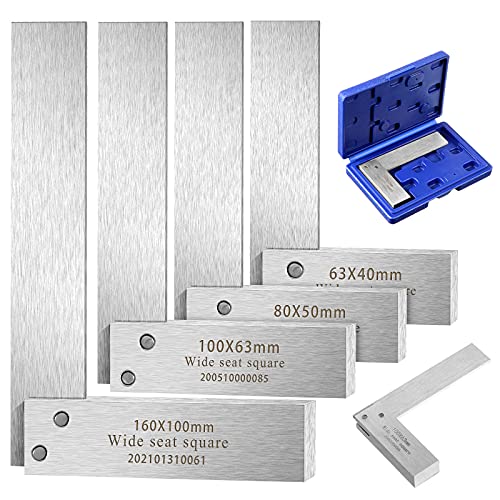
Frienda Machinist Square Set 2, 3, 4, and 6 Inch

LARMEIL Rafter Square Combo Set 12 Inch Aluminum
More Details On Our Top Picks
Angle scribes like this matter most on layout-heavy benches, where a clean transfer line saves time and second-guessing. The Shinwa Sokutei 62081 is aimed at marking rather than bulky framing, so it suits careful joinery, trim fitting, and detail work better than rough site abuse.
That narrower role is its strength, because you get a tool built for control instead of brute size. Compared with the Empire E280 later in this list, this pick feels more specialized and less about long-blade reach, which is exactly what precision-minded woodworkers tend to want.
Strong Points
- Tight layout work feels more manageable.
- Small format slips into a compact kit.
- Useful for angle transfer at the bench.
- Better suited to careful marking than general rough work.
Things To Consider
- Its niche shape is less helpful for big framing tasks.
- You may want a larger square alongside it for longer stock.
- Small tools are easier to misplace in a busy shop.
Feature Rundown
Who It Suits Best
Detail-oriented woodworkers who spend time on scribing, trim, and careful layout will get the most from this square.
Where A Sibling Pick Shines
Choose the Empire Level E280 instead when you want a longer blade and a more all-purpose shop square for broader measuring jobs.
This ViewReal piece leans into angle flexibility, and that makes it feel more versatile than the Shinwa scribing square above. The aluminum alloy body, anodized blue surface, and polished edges are aimed at a cleaner hand feel, which matters during repeated marking on stock or templates.
Its 22.5 to 90 degree protractor range speaks directly to miter work, furniture parts, and shaped cuts where fast angle checks help. The trade-off is that a multi-angle layout tool can be more specialized than a simple combo square, so you’re really choosing breadth of angle use over traditional one-job simplicity.
Upsides
- Angle range fits many miter-style tasks.
- Aluminum alloy body helps keep weight down.
- Anodized finish adds a cleaner handling feel.
- Handy for engineers, carpenters, and craftsmen who move between tasks.
- Useful on benches where angle checks happen often.
Room For Improvement
- Angle-rich tools can feel more task-specific than a plain square.
- Fine scale work may still call for a longer blade elsewhere in the list.
Feature Card
Made For
Woodworkers who switch between angle checks, template work, and general shop layout will make the most of this ruler.
Another Choice May Suit
Frienda’s Machinist Square Set makes more sense for compact bench checks and metalworking-style alignment than this broader angle tool.
Small layout tools have a way of earning their spot fast, especially in a pouch where every inch counts. The iGaging 4 inch double square keeps that promise with a 4 inch 4R blade and a 2.5 inch base, a size that suits close-in checks on boxes, trim, and machine-side tasks.
Compared with the wider ViewReal and the longer Empire, this one is about portability first. The honest read is that it won’t replace a full-size combo square on large panels, but for bench work and quick reference marks, it stays out of the way nicely.
Best Bits
- Very compact size for daily carry.
- 4R blade format supports careful marking.
- 2.5 inch base gives a steady feel on smaller stock.
- Good companion for a toolbox or apron pocket.
Small Caveats
- Short reach makes it less suited to large sheet work.
- You’ll still want a longer square for framing tasks.
- Compact tools can be easy to misplace between jobs.
Details At A Glance
Whose Shelf It Belongs On
Woodworkers who keep a compact kit or move between bench stations will appreciate this small square most.
Look Elsewhere When
Reach for the Accusize 12 inch set instead when your projects regularly need a longer blade and a broader measuring presence.
The Starrett student square is built around learning, but it doesn’t feel flimsy or toy-like. Its 150mm blade, cast iron head, and hardened, tempered blade give it a more serious shop feel, while the mixed inch and millimeter graduations help apprentices read different measuring systems without juggling multiple tools.
That makes it a sensible pick for workshops where teaching and practice happen side by side. Compared with the iGaging compact square, this one gives you a more traditional combination-square setup, which is better for anyone learning consistent layout habits.
Bright Spots
- Helpful size for learning core square work.
- Cast iron head adds a solid feel in hand.
- Hardened and tempered blade is suited to repeated use.
- Dual-unit markings help with mixed measurement habits.
Points To Note
- Student-focused sizing may feel limited for larger projects.
- Cast iron adds heft that some people prefer less for pocket carry.
Core Details
Right Fit For
Apprentices, students, and hobby woodworkers building sound measuring habits will get the most out of this square.
Swap It Out When
Choose the Empire Level E280 if you need a longer professional-style blade for general site work rather than learning-focused use.
The Accusize 12 inch set lands in that useful middle ground where a shop tool stops feeling tiny but still stays manageable on the bench. A 12 inch ruler, combination-square layout, and 4R graduation point toward broader general carpentry work, especially when you need one tool to handle several measurement tasks in a day.
Unlike the Starrett student model, this one is less about teaching and more about broader utility. The satin finish also suggests a calmer visual read on the scale, though the real advantage is the extra working length that helps on wider boards and larger setups.
Highlights
- 12 inch length works well for general carpentry.
- 4R graduation supports familiar layout habits.
- Combination-square setup gives it broad day-to-day usefulness.
- Useful middle size between compact and heavy duty picks.
Areas To Watch
- Not as compact as the iGaging square for pocket carry.
- Not as specialized as the Shinwa for angle scribes.
- Longer tools need a bit more storage space in a crowded box.
Technical Sheet
The Right Fit
This suits general carpenters and home-shop woodworkers who want one square with enough reach for most routine tasks.
A Better Fit Elsewhere
Pick the LARMEIL Rafter Square Combo Set when roof work and framing angles matter more than a traditional combination-square layout.
Longer layout work starts to benefit from more blade reach, and that’s where the Empire E280 earns attention. The 16 inch etched stainless steel blade with inch graduations gives you a clearer measuring span for larger boards, while the True BlueR vial adds a level check that helps when your work shifts from marking to alignment.
Compared with the Accusize 12 inch set, this one leans harder into jobsite utility and tougher handling. The trade-off is simple, you carry more tool, but you also get more presence on larger stock, so it makes sense for professionals and serious weekend carpenters who want a sturdier all-around square.
Reasons To Buy
- 16 inch blade reaches farther across larger material.
- Etched stainless steel blade supports readable markings.
- Inch graduations fit familiar shop and site work.
- True BlueR vial adds an extra leveling reference.
Honest Caveats
- Longer size takes more room in storage and transport.
- Extra reach is handy, but not as pocket-friendly as smaller picks.
- Heavy duty build can feel like more tool than casual hobby work needs.
Spec Overview
Built With In Mind
Professional carpenters, site crews, and anyone working larger boards will appreciate the extra reach and vial support here.
Where Another Pick Suits Better
Choose the iGaging 4 inch double square instead when portability matters more than long-blade reach.
Short machinist squares solve a different problem from the longer combination squares above, because they’re meant for compact, precise checks on benches and machines. This set gives you 2, 3, 4, and 6 inch sizes, so you can choose the reach you need without carrying a single oversized tool through every task.
That size spread makes it useful for alignment work where a wide base and a crisp 90 degree edge matter more than a long blade. The catch is that it’s not the right shape for general rafter layout, so it pairs better with a traditional square than it replaces one.
Positives
- Multiple sizes let you match the task closely.
- Compact steel squares are easy to keep near a machine station.
- Useful for quick right-angle checks on small parts.
- Good support tool for precision-minded shop work.
Softer Spots
- Not a substitute for a full combination square on framing jobs.
- Small tools can get buried in drawers without careful storage.
- Specialized shape narrows the range of tasks it covers.
Feature Snapshot
Best Suited To
Machine-focused woodworkers and shop users who check small parts often will get the most value from this set.
Another Choice May Suit
Turn to the Starrett 10MH-150 when you want a teaching-friendly combination square rather than a compact machinist set.
Roof framing asks for a square that feels purposeful, and this LARMEIL set leans into that role with a 12 inch aluminum triangle ruler and a zinc alloy die-cast square seat. The thickened aluminum profile and wear-resistant scale treatment suggest a tool meant to stay readable and workable through repeated handling.
Compared with the Accusize and Empire picks, this one is more about rafter work than general shop measuring. That narrower focus is a strength for framers, though it means casual bench work may feel more natural with a standard combination square.
Standout Traits
- Built around rafter and framing tasks.
- Thickened aluminum profile gives it a sturdier feel.
- Stamped scale is meant to hold up well over time.
- Zinc alloy seat adds a solid base component.
Minor Gripes
- Specialized framing shape is less flexible for general shop layout.
- Red finish may not matter much if you care only about function.
- Dedicated roof work tools take extra space beside a plain square.
Core Details
Who Will Love This
Framers, roofers, and carpenters doing repeat angle layout will get the most out of this square set.
Skip It When
The Shinwa Angle Scribing Square is the better fit for fine bench marking and detail-oriented joinery.
How To Choose The Right Combination Square For Woodworkings
Match The Square To The Work
Start with the kind of projects you actually handle. Fine joinery and trim fitting lean toward smaller, more precise tools like the Shinwa and iGaging picks, while framing and larger boards make a 12 inch or 16 inch blade far more comfortable.
Angle-heavy work changes the equation again. A rafter square or a multi-angle ruler helps with roofs, miters, and repeated angle transfer, while a student square supports training and mixed-unit reading without feeling overly complex.
Pay Attention To Material And Finish
Material shapes both feel and durability. Aluminum usually keeps weight down, cast iron adds a more planted feel, and stainless steel blades tend to suit everyday shop use because the markings are easier to keep readable.
Finish matters too. Anodized or etched surfaces can help with handling and scale visibility, while stamped or polished surfaces may suit rougher jobsite life, though they can feel different in hand.
Choose Length For Reach, Not Just Size
Blade length changes how a square behaves on real projects. A 4 inch square fits close checks and compact storage, a 12 inch tool handles more general carpentry, and a 16 inch model like the Empire E280 gives you more span on larger stock.
That extra reach can save you from swapping tools mid-task, which is handy in a busy shop. The trade-off is simple, longer tools take more room and are less pocket-friendly.
Think About Skill Level And Storage
Beginners often do better with a square that teaches clean habits, like the Starrett student model. More experienced woodworkers may prefer a specialized tool for one task, such as the Shinwa for scribing or the LARMEIL for rafter work.
Storage matters more than people expect. Short squares and machinist sets tuck away easily, while longer combo squares need a steadier spot in the drawer or tool bag so they stay protected and easy to find.
A Quick Reality Check
Where Shoppers Go Wrong
One common slip-up is buying a square that looks versatile but doesn’t match the work. A rafter square is great for roof layout, yet it won’t replace a true combination square for fine bench marking.
Another miss is ignoring blade length. A compact tool feels neat in the hand, but large panels and longer cuts are much easier with more reach.
The Upgrade Payoff
Higher-tier models usually bring better materials, clearer graduations, and a more solid feel at the contact points. That matters when you mark all day or need a tool that stays readable after repeated use.
Spending more makes sense for frequent shop work, professional carpentry, or any setup where a square gets handled constantly. For light home use, a smaller or simpler model often covers the job without adding clutter.
Frequently Asked Questions
What makes a combination square useful for woodworking?
It helps you check right angles, mark lines, and transfer measurements with far more control than a tape alone. That makes it a steady companion for joinery, trim, and general layout.
Is a 12 inch square better than a compact one?
Not always, because the better choice depends on stock size and workspace. A 12 inch model helps with larger boards, while a compact square is easier to carry and store.
Do beginners need a student square?
A student square helps because it keeps the setup straightforward and encourages consistent measuring habits. The Starrett 10MH-150 is a strong example for that kind of learning path.
Why do some squares use cast iron or steel?
Those materials add a firmer feel and can make the tool seem more anchored on the work surface. That matters when you want steady contact while marking or checking angles.
Can a rafter square replace a combination square?
It can cover framing tasks well, but it’s not a full substitute for bench layout or precision scribing. The LARMEIL rafter square is better as a task-specific tool than a universal one.
Final Thoughts
The right combination square for woodworkings depends on how you build, mark, and store your tools. A compact square suits close bench work, a longer blade fits broader carpentry, and a framing square earns its place only when roof layout is part of the routine. The best result usually comes from matching the tool to your most common task instead of chasing extra features you may never use. Pick the shape that clears your daily jobs with the least fuss, and the rest tends to fall into place.



