Combination squares earn their keep in a shop, on a jobsite, or in a garage where straight lines matter and guesswork does not. You may be laying out trim, checking a saw cut, marking depth, or scribing a clean reference line on stock that refuses to sit still. The right square feels like a steady hand at your side, while the wrong one slows everything down with loose movement or hard-to-read markings. This roundup focuses on shapes, materials, and layouts that fit real use, from student-friendly starter tools to more specialized options.
The Shortlist At A Glance

Starrett Student Combination Square 150mm Blade Length

3.8"Mini 3D Multi-Angle Measuring Square Ruler WT102A

Kapro 325M Magnetic Lock Combination Square 12”

Preciva 12” Woodworking Square Ruler Right Angle Ruler

Johnson Level & Tool 406EM Professional Inch/Metric Combination Square 6″ Silver

RONGPRO Aluminum Alloy 12in Carpenter Square and 12in Zinc-Alloy Combination Square Set
LYFJXX 12 Combination Square 45-90 Degree Marking

Johnson Level & Tool 1904-0700V 7-1/4 Johnny Square MACH-1 Smart Mark Rafter Square with Level Vial
More Details On Our Top Picks
The short 150 mm blade gives you a compact reference edge for bench work, practice layouts, and small stock where a full-size tool can feel clumsy. The cast iron head brings a heavier feel than the lighter options in this list, and that extra mass can help the square sit calmly against your workpiece.
The hardened, tempered blade matters because it resists everyday wear better than soft, flex-prone metal, while the mixed inch and metric graduations make it friendlier for classrooms or mixed-tool shops. The trade-off is plain, though, this is less about bells and whistles than about dependable fundamentals, so it suits learners, apprentices, and anyone who wants a straightforward square without extra clutter.
Strong Points
- Cast iron head feels steady against material.
- Short 150 mm blade suits compact benches.
- Hardened, tempered blade supports regular layout work.
- Dual-unit markings help with mixed measurement habits.
- Simple format keeps learning curves low for new hands.
Things To Consider
- The shorter blade is less useful for larger framing tasks.
- Cast iron can feel heavier in a pouch.
- The design stays basic, so accessory features are minimal.
Feature Snapshot
Who It Suits Best
Apprentices, students, and casual woodworkers who want a compact square with a traditional feel will get the most from it.
Swap It Out When
Kapro 325M Magnetic Lock Combination Square 12” makes more sense for shop work that benefits from magnetic hold and built-in vial visibility.
Small parts work asks for a tool that gets out of the way, and the 3.8-inch body is built for exactly that kind of close-in marking. The 0 to 90 degree range helps with angled checks on little components, while the aluminum alloy body keeps the overall format light enough for tool-roll storage.
The honest read is that this is more specialized than the Starrett above, because the miniature size favors detail work rather than broad layout on sheet goods. That said, it can be very handy on hobby builds, cabinet hardware, and other jobs where a larger square would crowd the cut line. The included carpenter pencils and refills add convenience, though they also make the kit feel more niche than a plain square.
Highlights
- Mini body fits tight spaces and small assemblies.
- 0 to 90 degree range covers common angle checks.
- Aluminum alloy construction keeps it easy to carry.
- Useful for marking around hardware and compact joinery.
- Pencil extras help keep the kit self-contained.
Room For Improvement
- The tiny format is not suited to larger framing work.
- Detail-focused layout can feel cramped on broad panels.
- Accessory-heavy kits may be more than some shops need.
Technical Sheet
Built With In Mind
Hobby woodworkers, craft builders, and anyone marking small parts in a crowded bench area will find the format easy to live with.
Another Choice May Suit
Preciva 12” Woodworking Square Ruler works better for anyone needing a fuller measuring edge and finer notch spacing on larger pieces.
The magnetic lock gives this Kapro a very different personality from the simpler Starrett and Johnson picks, because the rule can stay put while you make adjustments. That matters on a cluttered bench or ladder side setup, where a steadier hold saves small, annoying resets.
You also get a stainless steel scribe, a vial for quick visual checks, and a holster, so the tool leans toward convenience as much as measurement. The five milled sides and dual inch-centimeter markings make it more versatile than the basic student-style square, though the extra features also make it busier to learn at first.
Bright Spots
- Magnetic lock helps hold the rule steady.
- Built-in vial supports fast visual checking.
- Stainless steel scribe adds marking convenience.
- Belt holster helps keep it close at hand.
- Inch and centimeter scales suit mixed measurement habits.
- Five milled sides add useful contact surfaces.
Points To Note
- Extra features add a little learning overhead.
- The magnetic behavior may feel unfamiliar at first.
- More moving pieces usually mean more care during storage.
Core Details
Who Should Grab It
Shop users who want extra layout aids in one tool will appreciate the magnetic lock and holster setup.
Where A Sibling Pick Shines
Johnson Level & Tool 406EM Professional Inch/Metric Combination Square is the calmer choice for anyone who wants a simpler 6-inch tool with less to manage.
Preciva leans hard into fine layout work, and the notch spacing explains why it stands out from the more basic 6-inch Johnson and the compact Starrett. A 12-inch body with a stainless steel blade gives you a longer working edge, while the retractable ledge adds another way to seat the tool against material.
The middle two inches use tighter 1/32-inch spacing, so the scale is built for people who care about small adjustments on joinery, trim, or cabinet details. The catch is that that level of detail is most useful when your work calls for it, since casual users may not need that much granularity every day.
Upsides
- 12-inch reach helps on longer edges and panels.
- 1/32-inch spacing in the middle improves fine marking.
- Stainless steel blade suits regular shop use.
- Retractable ledge adds flexibility in how you register it.
- Multi-angle scribe mark supports varied layout tasks.
Small Caveats
- Fine spacing is more than some hobby projects require.
- The detail focus can slow casual, fast-mark jobs.
- Longer blades take a little more drawer space.
Details At A Glance
Right Fit For
Trim work, cabinet marking, and careful wood layout are where this Preciva makes the most sense.
Look Elsewhere When
Starrett Student Combination Square 150mm Blade Length is a tidier fit for smaller benches and simpler training setups.
The Johnson 406EM stays close to the classic combination-square formula, just in a smaller 6-inch size that suits tight kits and pocket-sized tool rolls. Compared with the Kapro 325M, it strips away the extra hardware and gives you a more straightforward measuring tool for quick checks on trim, shelves, and bench fixtures.
That plain setup is the appeal, because you get an inch-metric layout without having to deal with magnetic parts or a busier accessory set. The honest read is that it fits best in simple shop routines, where compact size matters more than a long blade or specialty add-ons.
Best Bits
- 6-inch size slips into small storage spaces.
- Inch and metric layout handles mixed measuring habits.
- Simple format keeps quick checks easy.
- Works well for trim, shelves, and light bench work.
Areas To Watch
- Shorter reach limits larger layout jobs.
- It does not bring extra layout aids.
- Compact tools can feel cramped on bigger boards.
Feature Card
The Right Fit
Casual woodworkers and home project hobbyists who want a small, no-frills square will get the cleanest use from it.
Skip It When
Kapro 325M Magnetic Lock Combination Square 12” suits more feature-heavy shop work and users who want a longer rule.
This RONGPRO set makes sense for anyone who wants two layout tools in one kit, rather than a single square that does one job at a time. A 12-inch rafter square and a 12-inch combination square cover different parts of woodworking and general home DIY, so you can keep one set on hand for framing and one for finer marking.
The CNC-machined build detail points to a more exact manufacturing approach, and the included woodworking pencil adds convenience for immediate marking. The trade-off is that this is a kit-style purchase, so it takes a little more drawer space and makes the choice less minimal than a single-tool option like the Johnson 406EM.
Reasons To Buy
- Two-tool set broadens your layout options.
- 12-inch size works across many common tasks.
- Rafter and combination formats cover different project needs.
- CNC-machined parts suggest careful piece consistency.
- Included pencil helps you start marking right away.
Minor Gripes
- Two tools take more room to store.
- The kit approach may be more than casual users need.
- More pieces can mean a little extra organization.
Spec Overview
Made For
Contractors, home improvers, and organized hobbyists who prefer a matched layout kit will get the most from this set.
A Better Fit Elsewhere
LYFJXX 12 Combination Square 45-90 Degree Marking is the cleaner choice for anyone who wants a single metal square with a more focused framing feel.
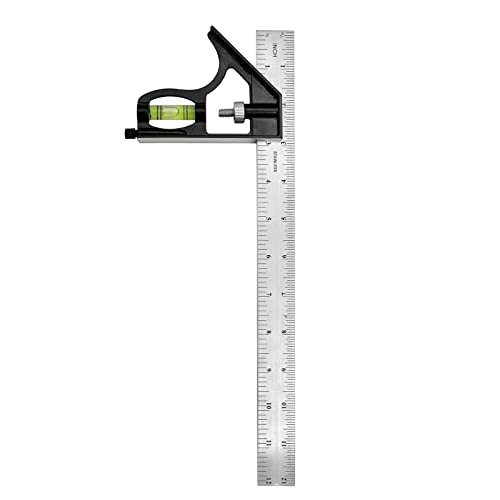
Angle marking sits at the heart of this LYFJXX square, so it feels especially suited to framing and 45-degree reference work. Compared with the Preciva, it reads as a more straightforward metal square for general carpentry tasks, while still giving you a 12-inch reach that works beyond tiny bench projects.
The stainless steel blade is the key factual detail here, and that choice matters because a durable working edge is easier to live with in a busy shop. The trade-off is that this model keeps the feature set focused, so you are paying for dependable structure rather than a pile of extras.
Positives
- 45 and 90 degree marking helps with framing tasks.
- 12-inch length covers a useful range of work.
- Stainless steel blade suits regular handling.
- Simple layout keeps day-to-day use straightforward.
Softer Spots
- The model stays focused, so accessories are limited.
- Users who want fine-notch detail may prefer Preciva.
- The plain build may feel basic to feature seekers.
Core Details
Best Suited To
Framing-minded woodworkers and DIY users who want a direct, no-nonsense square will feel at home with it.
Where A Sibling Pick Shines
Johnson Level & Tool 1904-0700V 7-1/4 Johnny Square MACH-1 Smart Mark Rafter Square with Level Vial is the better match for roof framing and faster rafter-oriented layouts.
This Johnson Johnny Square shifts the focus from classic combination-square work to rafter layout, so it feels most at home in framing-heavy settings. The 7-1/4-inch size keeps it manageable, and the level vial adds a quick visual aid that can help during roof or stair-related marking.
Compared with the longer 12-inch picks in this list, it trades general-purpose reach for a more task-specific shape. That makes it a strong fit for builders who spend time on roof lines and angle transfer, though casual woodworkers may not need the narrower rafter-square format every day.
What We Like
- Rafter-square shape suits framing and roof work.
- Compact 7-1/4-inch size is easy to handle.
- Level vial adds another quick reference point.
- Smart Mark layout helps with faster marking routines.
Worth Noting
- Task-specific shape is less general than a true combination square.
- Shorter reach is less useful on broad panels.
- Best value appears in framing-centered routines, not all-purpose shops.
Feature Rundown
Whose Shelf It Belongs On
Framing crews, roof builders, and layout-focused trade work will get the clearest payoff from this rafter square.
Another Choice May Suit
LYFJXX 12 Combination Square 45-90 Degree Marking is the better all-purpose fit for users who want broader general carpentry coverage.
How To Choose The Right Combination Squares
Match The Tool To Your Work Size
Length is the first practical choice, because a 6-inch square feels different from a 12-inch model the moment you move from trim to framing. Shorter tools fit tight benches and tool rolls, while longer blades help on wider boards and bigger layout tasks. That Starrett student model and the Johnson 406EM both favor compact work, while Preciva, Kapro, and LYFJXX stretch farther across stock.
The right size also changes how often you reach for the tool. A tiny square is handy for drawer parts, hinge plates, and small assemblies, but it can feel cramped on sheet goods or stair work. Longer options ask for more storage room, yet they save time on broader projects.
Look Closely At Markings And Readability
Graduations, or the tiny measurement marks on the blade, matter more than they first appear. Dual inch and metric scales help you move between plans, scraps, and reference notes without mental gymnastics, and finer notch spacing supports more exact layout. Preciva leans hardest into that detail, while Starrett and Johnson keep the marking story simpler.
Clear markings help in dim garages and crowded shops where you want a quick read, not a squint. A blade that is easy to read also slows wear from repeated guesswork, since you spend less time rechecking the same line.
Choose Features That Match Your Routine
Magnetic hold, a vial, a scribe, or a retractable ledge each changes the way you work. Kapro’s magnetic lock helps the rule stay put, and the Johnson Johnny Square’s vial gives you a fast visual reference, while the RONGPRO set leans into having more than one tool at hand. Those extras are helpful for regular shop use, but they are not necessary for every job.
The honest fit question is simple: do you want a plain square, or do you want the tool to do a little more? More features can speed up layout, yet they also add parts to clean, store, and keep track of.
Think About Material And Handling
Material changes the feel in your hand and the way the tool ages in a shop bag. Cast iron, aluminum alloy, zinc alloy, and stainless steel each bring a different balance of weight, durability, and day-to-day handling. A heavier head can settle better on stock, while lighter bodies are easier to carry through a long workday.
The best match depends on your routine. Home users often like lighter tools, while apprentices and trade users may prefer the steadier feel of a heavier build.
What To Weigh Before You Decide
Where Shoppers Go Wrong
Many people start by chasing the longest blade they can find, then realize the square spends most of its life in a small drawer or pouch. Another common miss is overlooking readability, which turns a measuring tool into a squinting exercise in poor light.
It also helps to avoid feature overload. A magnetic lock and vial can be useful, but a simple square often serves better for routine trimming and first-stage woodworking.
Where The Extra Money Goes
Higher-tier models tend to spend their budget on better machining, added layout aids, and more durable working surfaces. That shows up in details like milled edges, stainless steel scribes, magnetic locking, or tighter notch spacing.
Paying more makes sense when your work is repetitive, your measurements need to travel across units, or your tool gets used hard enough that consistency matters. For occasional household projects, a simpler model often feels more sensible.
Frequently Asked Questions
What does a combination square actually do?
You use it to mark right angles, check edges, and transfer measurements onto wood or metal. Many models also help with depth checks and angle marking.
Is a 6-inch square enough for home projects?
For shelves, trim, small boxes, and quick checks, a 6-inch model is usually plenty. Larger framing and panel work feel easier with a 12-inch tool.
Why do some squares include both inch and metric markings?
Dual markings let you work from mixed plans without changing tools. That is handy in shops where project notes, rulers, and hardware specs do not all use the same unit system.
Does a magnetic lock matter?
It helps keep the rule steady while you adjust or mark, especially on a busy bench. Some people like the control, while others prefer a simpler moving rule.
Which material is easiest to live with?
That depends on your work style and how much weight you want to carry. Stainless steel and aluminum alloy are common choices for regular use, while cast iron gives a heftier feel in the hand.
Final Thoughts
The best combination square for you comes down to space, scale, and how much extra help you want built in. Starrett and Johnson keep things straightforward, Preciva leans into fine detail, Kapro adds useful features, and the Johnson Johnny Square shifts toward framing work. For a single, dependable everyday tool, start with the shape and length that match your most common project. The right square should feel ready without making you think twice.