Choosing combustion analyzers is mostly about matching the tool to the job. A residential service tech, a confined-space crew, and a shop that wants basic flue checks all need different levels of sensing, pumping, logging, and carry gear.
The picks below focus on that real-world spread. Some models stay simple and portable, while others add color screens, calibration support, hard cases, or broader gas coverage that helps on long days in the field.
Quick Look At Our Shortlist
TopTes Guard-101 Gas Detector 4 Gas Monitor
testo 310 Residential Combustion Analyzer Kit

Fieldpiece SOX3 Combustion Check

Forsensal Gas Detector with Pump 4 Gas Monitor

Forensics Detectors 4 Gas Monitor + Pump

Forensics Detectors CO Analyzer + Pump
Forensics Detectors 4 Gas Monitor

Forensics Detectors Basic Combustion Analyzer
More Details On Our Top Picks
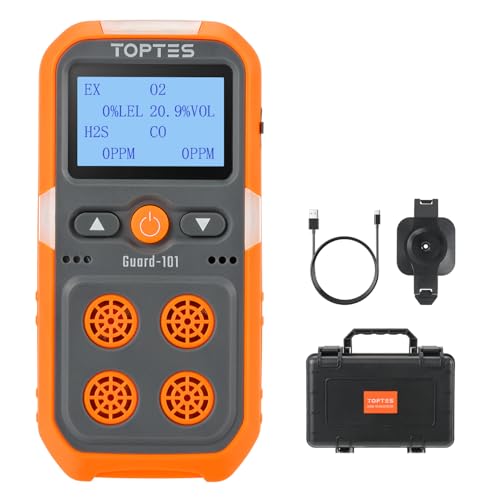
This TopTes unit fits the job where you want broad gas coverage without a lot of ceremony. The H2S, CO, LEL, and O2 mix matters because it gives you one handheld for common site checks, and the vibration plus light and sound alerts help in noisy spaces.
The 14-hour battery life is handy for a long shift or a day of homeowner troubleshooting, though the design still leans more toward alerting than deep analysis. The orange body is easy to spot in a truck bag, which is a small but useful touch.
Strong Points
- Four-gas monitoring covers several common hazards in one handheld.
- Three alarm styles help in loud mechanical rooms or busy work sites.
- Long battery runtime suits full-day use without constant charging.
- The compact shape makes it easy to stash with other jobsite tools.
Points To Note
- It reads more like a general detector than a combustion specialist.
- The listing focuses on alarms, not advanced reporting or graphing.
- You may want a hard case or pouch for cleaner storage in a truck.
Feature Snapshot
Who It Suits Best
Home service techs and general maintenance crews who need a straightforward four-gas detector will get the most from it.
Where A Sibling Pick Shines
For combustion-specific work, the testo 310 Residential Combustion Analyzer Kit suits heating-system service better because it measures flue-related values instead of only gas concentration.
For heating-system service, this testo kit feels purpose-built rather than generalized. You get O2, CO2, draft, pressure, flue temperature, ambient temperature, and combustion efficiency, which helps you understand how a system is running instead of just seeing one gas number.
The included probe, filters, USB charger, and hard case matter in the field because they reduce the amount of separate gear you need to carry. The trade-off is that this is a more specialized setup than the TopTes pick, so it makes the most sense for work around furnaces and residential combustion appliances.
What We Like
- Wide measurement set supports deeper furnace checks.
- Pressure and draft readings help explain weak or uneven performance.
- The hard case makes transport and storage cleaner between calls.
- Included accessories reduce extra setup for routine service days.
- Sensor depth suits technicians who need more than a simple alarm device.
Room For Improvement
- The kit is more specialized, so casual users may not use every function.
- More accessories usually mean a bit more to keep organized.
- It fits service work better than quick safety walk-throughs.
Details At A Glance
Made For
Technicians who work on residential furnaces and want a more complete combustion readout will find the fit strongest here.
A Better Fit Elsewhere
The Fieldpiece SOX3 Combustion Check suits techs who want a simpler combustion tool with automatic pumping and a more compact routine.
The SOX3 keeps the combustion job focused, which is part of its appeal. Its automatic electric pump removes hand pumping from the routine, and that matters on busy service calls where you want to move from one check to the next without fuss.
It measures flue temperature and oxygen percentage, then calculates carbon dioxide and excess air, so you get the kind of reading that helps with tuning and diagnosis. Compared with the testo 310, it looks lighter in breadth, but the simpler workflow can be the better fit for techs who want fewer moving parts.
Highlights
- Automatic pumping reduces manual effort during repeated checks.
- Flue temperature and oxygen readings cover the core combustion basics.
- Carbon dioxide and excess air calculations add useful interpretation.
- Hard case storage helps keep the kit together in a service vehicle.
Softer Spots
- The feature set is narrower than the testo 310’s broader readout.
- Techs who want lots of logged detail may want a more advanced option.
- The automatic pump adds convenience, but it also makes battery awareness worth keeping in mind on long days.
Core Details
Whose Shelf It Belongs On
Field technicians who want a straightforward combustion check tool with less manual effort will appreciate this one most.
Another Choice May Suit
For users who want broader gas monitoring and a full color interface, the Forensics Detectors 4 Gas Monitor with Built-in Pump fits a more data-heavy workflow.
This Forsensal model sits in a useful middle ground for portable site work. The built-in pump, clip, LCD display, and included calibration kit make it feel ready for regular carry, while the 3000mAh rechargeable battery gives it a practical setup for long shifts.
It covers CO, EX, O2, and H2S, so it overlaps with the TopTes unit on hazard coverage but adds a more service-minded package. The honest read is that it suits crews who want a rechargeable monitor with a few extras rather than a stripped-down alarm-only tool.
Upsides
- The pump supports pulled-sample checks in tighter spaces.
- The rechargeable battery keeps charging routines simpler on repeat use days.
- The clip and LCD screen help in fast moving field work.
- Calibration kit inclusion is useful for routine upkeep and organization.
Minor Gripes
- The listing is more about package features than deep combustion-specific detail.
- Carrying the calibration kit means a little more case organization.
- Users focused on flue analysis may prefer the testo 310 instead.
Spec Overview
Best Suited To
Technicians and maintenance crews who want a rechargeable four-gas monitor with a pump and carry clip will find the fit strong.
Skip It When
The testo 310 Residential Combustion Analyzer Kit suits deeper furnace diagnostics better, especially for heating-system work that leans on flue and draft data.
This Forensics Detectors monitor is aimed squarely at crews that care about calibration paperwork and field consistency. The included probe, pump, USB recharge, and USA NIST calibration certificate make the package feel built around repeat professional use, especially in confined-space routines.
Compared with the Forsensal unit, this one leans more into documentation and calibration support than a broader feature bundle. That makes it appealing for work where traceability matters and the tool has to fit into a stricter maintenance rhythm.
Reasons To Buy
- NIST calibration paperwork adds confidence for professional recordkeeping.
- The probe and pump support sample drawing in harder-to-reach places.
- USB recharge keeps the power routine straightforward.
- The 4-gas layout covers common confined-space concerns.
- It feels purpose-built for repeated service use rather than occasional checks.
Worth Noting
- The emphasis here is calibration and process, not a flashy interface.
- It suits professional workflows better than casual home troubleshooting.
- Keeping the probe, charger, and certificate together adds a little more file and case discipline.
Feature Card
Who Should Grab It
Confined-space crews and service techs who need calibration support as part of the routine will get the most from this one.
Reach For A Different Pick When
The Fieldpiece SOX3 Combustion Check suits you better if you want a simpler combustion routine with an automatic pump and fewer extras to manage.
Single-gas work calls for a different mindset, and this CO analyzer matches that narrower job neatly. The 0 to 1000 ppm range with 1 ppm resolution gives you a detailed carbon monoxide readout, while the pump supports sampled checks rather than only ambient sniffing.
Its water, dust, and explosion-proof build language sets it apart from the more general monitors in this list, though that kind of protection usually pairs with a more specialized use case. For garages, boiler rooms, and routine CO-focused checks, it gives you a very direct tool without extra gas channels getting in the way.
Bright Spots
- Fine 1 ppm resolution helps with careful CO monitoring.
- The pump supports pulled samples in practical work zones.
- Proofing against water, dust, and explosion exposure suits rougher environments.
- USB recharge simplifies day-to-day power management.
Small Caveats
- It is a focused CO tool, so it does not cover multiple gases.
- The specialized design makes it less flexible than the four-gas monitors above.
- For mixed combustion work, the broader testo or Forensics 4-gas units fit better.
Technical Sheet
Perfect Match For
Technicians who mainly need carbon monoxide checks in mechanical rooms, garages, or boiler areas will find this narrow format useful.
Look Elsewhere When
The Forensics Detectors 4 Gas Monitor with Built-in Pump suits broader multi-gas jobs better, especially where O2, H2S, and LEL all need attention.
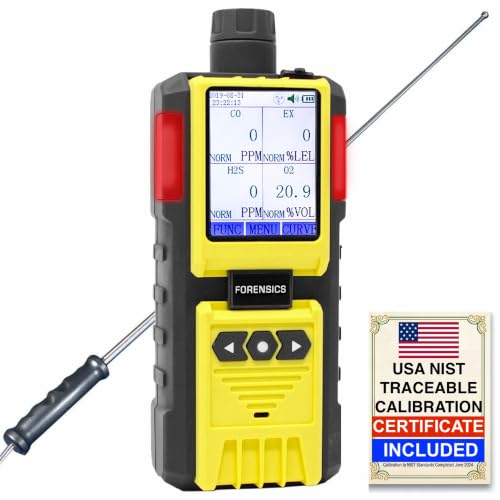
This Forensics monitor is the most data-forward pick in the group. The built-in pump, 4-foot probe, color display, graph functions, and computer data logging make sense for field work where you want to track trends instead of just glance at a single number.
It measures O2, CO, H2S, and LEL, then pairs that with NIST traceable calibration language and UK-made electrochemical sensors, which gives the tool a very professional shape. For crews who document job conditions or compare readings across multiple visits, the display and logging options are a strong match.
Positives
- Graphing helps you spot changes over time more easily.
- Computer logging suits service records and repeated site visits.
- The built-in pump and 4-foot probe help with sample placement.
- Color display improves legibility in a busy work environment.
- Four gas channels keep it versatile for multi-hazard checks.
Areas To Watch
- The richer interface can be more than a simple spot-check user needs.
- Logging and graphing are helpful, but they also add setup steps.
- For quick residential combustion tuning, the testo 310 feels more purpose-built.
Feature Rundown
The Right Fit
Technicians who want a serious multi-gas monitor with logging and visual trend tools will get the strongest match here.
Swap It Out When
The TopTes Guard-101 Gas Detector 4 Gas Monitor suits you better if you want a simpler alert-focused device for everyday safety checks.
This basic combustion analyzer keeps the focus tight on residential flue work. CO and O2 sensing, COAF and excess air readings, plus the water trap and particle and NOx filters give you the essential pieces for a more affordable service setup.
It is factory-calibrated and ready to use, which is useful for techs who want to get to work without sorting through a large kit. Compared with the testo 310, it is less expansive, but that leaner approach can be a smart fit for straightforward residential checks.
Best Bits
- The core flue-gas measurements cover the basics of residential combustion work.
- Water trap and filters help manage the sample path more cleanly.
- Factory calibration and USB recharge reduce setup friction.
- The simpler format is easy to carry and easy to explain to new techs.
Honest Caveats
- It is more basic than the higher-feature Forensics models above.
- Users who need logging or graphing will need a richer pick.
- Sample-path parts need regular attention so the analyzer stays ready.
Core Details
Who Will Love This
Residential techs who want a straightforward combustion analyzer for routine flue checks will find this the easiest fit to live with.
A Better Fit Elsewhere
The Forensics Detectors 4 Gas Monitor with Built-in Pump suits users who need broader gas coverage, a color screen, and graphing for more involved field notes.
How To Choose The Right Combustion Analyzers
Start With The Job You Actually Do
Combustion analyzers split into two broad jobs, flue-focused diagnosis and broader multi-gas safety monitoring. Residential heating work usually benefits from O2, CO2, draft, pressure, and temperature readings, while general site work leans harder on CO, H2S, O2, and LEL coverage.
That difference matters because the right tool saves steps, not just money. A furnace tech with a flue analyzer gets more useful detail than a broad alarm unit, and a maintenance crew in mechanical rooms may prefer the wider gas spread instead.
Look Closely At Sampling And Pump Design
A built-in pump or automatic electric pump pulls a sample through the sensor path for you, which helps in tight spaces and steady checks. Manual pumping can work, but it adds effort and slows repeat readings in a long service day.
Probe length, hose quality, and filter layout matter too. A 4-foot probe or a kink-resistant hose helps keep the tool usable in the field, while water traps and particle filters reduce routine cleanup after dusty or damp work.
Think About Data, Not Just Readings
Some tools stop at the live display, and that is fine for quick safety scans. Others add graphing, logging, or computer transfer, which matters when you need to compare visits, document changes, or explain a problem to a supervisor or homeowner.
Color screens are useful in dim boiler rooms, but they are not essential for everyone. The better question is whether you want a snapshot tool or a recordkeeping tool, because that choice shapes both ease of use and setup time.
Plan For Maintenance And Carry Gear
Calibration support, hard cases, USB charging, and replacement filters sound small until you use the analyzer every week. The more complete kits usually take better care of the instrument and make it easier to keep organized between jobs.
For occasional use, a simpler unit may be easier to live with. For daily service work, the extra structure around storage and upkeep can save time and reduce the chances of a forgotten part slowing you down.
Things Worth Knowing First
Common Shopping Slip Ups
One common mistake is choosing a general gas detector for combustion work that really needs flue data. Another is overlooking pump style, since a model with no pump or a weak sampling setup can feel clumsy in confined spots.
It also helps to think about upkeep early. Filters, traps, probes, and storage cases are part of the real ownership picture, not just accessories in the box.
What The Higher Tier Buys
Higher-tier models usually pay for more than a prettier screen. You are often covering stronger sensing packages, logging, graphing, traceable calibration support, and field accessories that make repeated use easier.
That upgrade makes sense for technicians who document work or move between many sites. For occasional residential checks, a simpler analyzer can be plenty.
Frequently Asked Questions
What does a combustion analyzer measure?
It measures gases and related values linked to combustion, such as oxygen, carbon dioxide, carbon monoxide, draft, pressure, and temperature. The exact mix depends on the model.
Do you need a pump in a combustion analyzer?
A pump helps draw a sample through the analyzer, which is useful in tight or awkward spaces. Hand-pumped or no-pump designs can work, but they usually feel less convenient during repeated checks.
Is a four-gas monitor the same as a combustion analyzer?
No, the two serve different roles even though they can overlap. A four-gas monitor focuses on workplace gas safety, while a combustion analyzer is built around flue and burner diagnostics.
Why do some analyzers include filters and water traps?
They help keep sample paths cleaner by handling moisture and particulates. That can make routine maintenance easier and protect the instrument from messy field conditions.
Which type suits residential heating work best?
A combustion analyzer with O2, CO2, draft, pressure, and temperature readings is the better match. The testo 310 in this list is the clearest fit for that kind of work.
Closing Thoughts
The right combustion analyzer depends on whether you need flue diagnostics, broad gas monitoring, or a simpler CO-focused tool. For residential heating calls, the testo 310 and the Forensics Detectors basic analyzer make the most sense, while the multi-gas models suit field crews that move through tighter, messier spaces. The honest read is that no single pick covers every job neatly. Match the tool to the work you actually do, and the rest gets a lot easier.