Concrete work gets messy fast, and the wrong tool turns a clean cut into dust, drag, and frustration. You need a cutter that matches the material, the cut depth, and the kind of job on your hands, whether that’s a patio edge, siding trim, or a foundation repair. This roundup keeps the focus on real-world fit, so you can match each pick to the work you actually do.
The Shortlist At A Glance
Evolution R230DCT 9 in. Electric Concrete Saw
XtremepowerUS 3200W Electric 16″ Concrete Cut Off Saw

PacTool SS204 Snapper Shear
Evolution R12DCT 12 Inch Concrete Saw

Evolution Power Tools R300DCT 12 inch Concrete Saw
DEWALT Wet Tile Saw, Masonry 4-3/8-Inch

XtremepowerUS 3200W Electric 16″ Circular Saw Concrete Saw

4-1/2 inch Cutting Discs for Angle Grinder, 3-Pack
More Details On Our Top Picks
The 9-inch blade size gives you a useful middle ground for brick, block, and other masonry cuts without pushing into oversized jobsite territory. The included diamond blade matters because it gets you closer to work-ready out of the box, and the 15A motor points to a corded setup that suits long shop sessions or driveway projects.
You’ll notice the 3-1/2-inch cut depth is the real story here, since that’s what opens the door to thicker material than a compact saw can handle. The honest trade-off is size and weight, so it makes more sense for steady cutting than for carrying up ladders or moving around tight interiors.
Strong Points
- Electric operation skips gas mixing and the upkeep that comes with it.
- The included masonry blade helps shorten setup time for typical home projects.
- 3-1/2-inch depth gives you room for thicker brick and block work.
- A corded 15A motor fits longer cutting sessions at a fixed work area.
Things To Consider
- The larger body is less friendly in cramped corners or on a roofline.
- Dust management still matters, so cleanup is part of the job.
- Weight can add fatigue during repeated cuts over a long afternoon.
Feature Snapshot
Who It Suits Best
DIYers tackling patio edging, block, or brick work around a garage or driveway will get the most from this layout.
Where A Sibling Pick Shines
EVOLUTION R12DCT suits you better for cleaner wet-cut work and a lighter-cutting feel on smaller masonry jobs.
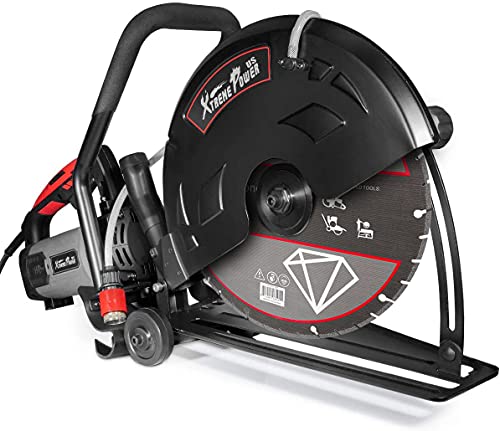
A 16-inch cut-off saw like this leans hard into big masonry work, which is exactly what you want for long straight cuts in brick or concrete. The built-in water line is the key detail, because wet cutting helps keep dust down and tends to make the cut feel calmer in use.
That extra size brings more reach than the Evolution R230DCT, but it also asks for more space, more storage room, and a steadier setup. For garage slabs, wall work, or foundation tasks, that trade-off usually makes sense.
What We Like
- The 16-inch format supports wider, more ambitious cuts.
- Wet and dry use gives you more job flexibility.
- The water line is useful for keeping debris more controlled.
- It fits larger masonry tasks better than compact saws.
Room For Improvement
- The larger frame needs more storage space.
- Setup takes a little more planning than a smaller hand-held cutter.
- Wet cutting adds hose management and cleanup work.
Technical Sheet
Who Should Grab It
Contractors and serious DIYers handling wider slabs, block walls, or foundation sections will appreciate the extra reach.
Swap It Out When
Evolution R230DCT is a better fit for you if you want a smaller electric saw that stores more easily and feels less bulky.
This one takes a different path from the saws above, since it’s built for fiber cement siding rather than thick masonry. That matters for trim work, because a shear style cutter can feel more controlled around installed panels and edge cuts.
For siding projects, the appeal is less about brute force and more about cleaner handling in the hands of someone doing repetitive layout work. It’s not a general concrete cutter, so the honest read is that it belongs in a siding-focused kit rather than on every concrete jobsite.
Highlights
- Purpose-built for fiber cement siding work.
- Shear-style cutting supports careful panel handling.
- Good fit for repeated trim and layout tasks.
Small Caveats
- It’s specialized, so it won’t replace a masonry saw.
- Storage in a siding kit makes more sense than in a masonry cart.
Core Details
Built With In Mind
Siding installers and remodelers who work with fiber cement panels will get the clearest benefit here.
Another Choice May Suit
EVOLUTION R230DCT suits you better for general brick and concrete cutting, especially when you need a true masonry saw.
The water-fed dust suppression is the headline here, and it’s especially useful where you want a calmer cut and less airborne mess around the work zone. That makes this Evolution model feel well suited to renovation work, where cleanup and visibility matter almost as much as the cut itself.
The 12-inch format keeps it more manageable than the larger 16-inch XtremepowerUS saw, while still giving you a serious masonry tool. For most home projects, that balance is easier to live with than the bulkier full-size options.
Positives
- Water-fed suppression helps reduce dust during cutting.
- The 12-inch format is easier to store than larger saws.
- Electric operation avoids fuel handling.
- It suits renovation work where cleanup matters.
Points To Note
- The water system adds another part to manage and rinse.
- It still needs a stable setup area, so cramped spaces are less convenient.
- The tool is larger than a compact tile saw.
Details At A Glance
The Right Fit
Home renovators and DIYers who want a cleaner-cutting masonry saw will get the most value from this setup.
Where A Sibling Pick Shines
DEWALT DWC860W suits you better for smaller masonry jobs where compact handling matters more than extra cut depth.
Compared with the R12DCT, this R300DCT leans into the same 12-inch class without the water-fed suppression focus, so it suits shoppers who want a straightforward electric masonry saw. That keeps the setup simpler, which can matter on routine slab cuts or basic demo work.
The included diamond masonry blade is useful, though the broader trade-off is that this model still asks for the same space and handling discipline as other saws in its size range. For many households, that’s enough tool without getting overly specialized.
Best Bits
- 12-inch size gives you a practical middle ground.
- Electric drive keeps the setup simple.
- The diamond blade helps with masonry jobs right away.
- Good fit for regular cutting without extra complexity.
Area To Watch
- It still takes room to store and move.
- No wet suppression detail is listed here, so dust control depends more on your job setup.
- Long sessions can feel tiring with any saw in this class.
Feature Rundown
Whose Shelf It Belongs On
DIYers doing recurring concrete or block cuts will appreciate the simple, familiar setup.
Look Elsewhere When
XtremepowerUS B08RQZQL5L suits you better for wider cuts and a more aggressive large-format setup.
The smaller 4-3/8-inch format puts this DEWALT saw in a different lane from the bigger Evolution and XtremepowerUS tools. That smaller footprint is useful for tight work areas, quick masonry trimming, and jobs where portability matters more than deep cuts.
For a compact wet tile saw, the appeal is straightforward handling, though you give up the depth and reach of the larger concrete saws in this roundup. That trade-off is easy to accept for smaller remodel tasks, especially in homes with limited storage.
Upsides
- Compact size is easier to move and store.
- Wet saw setup suits cleaner tile and masonry trimming.
- Useful for smaller jobs where bulk would be awkward.
Honest Caveats
- Cut depth is naturally more limited than larger concrete saws.
- It’s better for trim work than heavy slab cutting.
- Smaller tools can feel less useful on large foundation tasks.
Core Details
Made For
Homeowners and remodelers doing smaller masonry or tile trim work will find the size easy to live with.
A Better Fit Elsewhere
EVOLUTION R12DCT suits you better for bigger concrete cuts and a more expansive work zone.
This XtremepowerUS model is the other large-format option in the list, and its 20AMP setup plus water-line attachment point it toward heavier concrete work. For foundation jobs or long, straight cuts, that combination can feel more at home than a compact saw.
The downside is simple: size and setup complexity rise with the reach. Compared with the DEWALT DWC860W, this is the tool you keep for serious masonry rather than quick trim jobs.
Reasons To Buy
- 16-inch class reach fits large masonry work.
- Water-line attachment supports wet-cut use.
- 20AMP setup suits demanding cutting sessions.
- Good match for basement or foundation projects.
Worth Noting
- It needs more room than smaller cutters.
- The wet setup adds cleaning and hose handling.
- Storage and transport are less convenient than compact tools.
Technical Sheet
The Right Fit
Advanced DIYers and jobsite crews working on foundation or structural masonry tasks will get the most from this machine.
Skip It When
DEWALT DWC860W is the better fit for you if you want a smaller saw that handles quick masonry trimming with less bulk.
These are cutting discs rather than a full saw, so they make sense as a consumable accessory for an angle grinder setup. That’s useful when you need a smaller-cutting path for metal, tile, or stone-related work and already own the grinder.
The 7/8-inch arbor size is the detail to pay attention to, since compatibility matters more here than on a standalone cutter. For occasional cutting jobs, a three-pack keeps a spare on hand without taking much storage space.
Positives
- Handy replacement set for grinder-based cutting.
- Small footprint makes storage simple.
- Useful for keeping a spare disc ready.
Minor Gripes
- You need a compatible angle grinder.
- Accessory discs are not a full cutter solution.
- Material choice matters, so the right disc belongs to the right job.
Spec Overview
Who Will Love This
Angle grinder users who want a spare cutting set for occasional shop or remodel work will appreciate this package.
Where A Sibling Pick Shines
PacTool SS204 Snapper Shear suits you better for fiber cement siding, while this pack belongs with a grinder already in hand.
How To Choose The Right Concrete Cutters
Match Blade Size To The Job
Blade diameter shapes both reach and control. A 4-3/8-inch saw like the DEWALT DWC860W works well for lighter trim work, while 12-inch and 16-inch models reach deeper into brick, block, and slab material.
Larger blades usually suit steadier cutting on open work areas, but they also bring more weight and a bigger storage footprint. That trade-off matters on stairwells, narrow driveways, and small garages.
Choose Power Based On Workload
Corded electric cutters, such as the EVOLUTION R230DCT and XtremepowerUS saws, fit long sessions where you have access to power. They keep fuel handling out of the equation, which simplifies maintenance.
The catch is cord management and site access. For a remote corner of a yard or a job far from an outlet, the setup becomes less convenient even before the first cut.
Think About Dust And Cleanup
Wet cutting helps keep debris under control, and the EVOLUTION R12DCT and XtremepowerUS 16-inch wet saws show why that matters on renovation days. Cleaner cutting can also make it easier to see the line you’re following.
That benefit comes with hoses, rinse-downs, and a bit more setup work. For quick driveway trimming, a dry saw may feel simpler, but for indoor-adjacent work, water support often earns its keep.
Use Material First, Brand Second
Fiber cement siding, masonry block, and general concrete do not ask for the same tool shape. The PacTool SS204 Snapper Shear is built for siding, while the heavier Evolution and XtremepowerUS saws are aimed at masonry.
Start with the material, then narrow the blade size, cut depth, and wet or dry setup. That order keeps you from overbuying a tool that looks right but does the wrong kind of work.
What To Weigh Before You Choose
Hidden Buying Traps
Shoppers often focus on blade size and miss the part where power source, cut depth, and jobsite space all have to line up. A large saw is impressive on paper, but it can be awkward in a small garage or on a ladder.
Another common miss is buying a masonry saw for fiber cement siding, or the reverse. The right material match saves time and reduces frustration during layout and cleanup.
The Case For Spending Up
Higher-tier cutters usually bring stronger motors, larger blades, and better support for wet cutting. Those features matter on repeated projects, especially when you want steadier control and less downtime between cuts.
You also pay for easier handling of bigger material. That extra spend makes the most sense for foundation work, thicker masonry, or regular renovation use, not for the occasional patch job.
Frequently Asked Questions
What size concrete cutter works for home projects?
A 9-inch or 12-inch cutter covers a lot of typical driveway, block, and patio work. Smaller 4-3/8-inch tools suit lighter trimming and tight spaces better.
Do wet concrete cutters really matter?
Wet cutting helps control dust and can make the work area easier to manage. It also means you’ll handle hoses and cleanup, so the setup takes a little more planning.
Can a grinder disc replace a concrete saw?
A grinder disc can handle smaller cuts and accessory work, but it won’t replace a full masonry saw. The 4-1/2 inch Cutting Discs for Angle Grinder fit best as a supplement to an existing grinder.
Which tool suits fiber cement siding?
The PacTool SS204 Snapper Shear is the clearest match in this roundup. It’s built for siding work, not heavy masonry cutting.
What matters most besides blade size?
Power source, cut depth, and the type of material all matter just as much. A larger blade means little if the tool doesn’t match the job or your workspace.
Closing Thoughts
The right concrete cutter feels less like a brute and more like a tool that fits the day ahead. For big masonry jobs, the large Evolution and XtremepowerUS saws earn attention fast, while the DEWALT and PacTool picks make more sense in tighter or more specialized work. A grinder disc set rounds things out for smaller tasks and backups. Match the cutter to the material, the cut depth, and the space you actually have, and the job gets a lot simpler.