Scratches, haze, and stubborn water spotting can make a windshield, watch face, or acrylic panel look tired fast. You need the right kind of remover for the material in front of you, because glass polish, cerium oxide, and plastic-safe compounds each behave a little differently. This roundup keeps the focus on fit, finish, and the kind of real-world cleanup job each item handles best.
Quick Look At The Shortlist

Rolite Ultra Fine Scratch Remover 4oz
Diamond Paste Polishing and Lapping Compound Kit 6 Pack

menzerna Polishing Set 8oz HCC1000 MCC2500 3800

polyWatch glass polishing cream

SPTA 5 Pcs 6” Car Glass Polishing Discs
Nu Finish Glass Restore & Repel Kit


99% Cerium Oxide Glass Polishing Powder 14 oz
More Details On Our Top Picks
Rolite leans toward delicate surfaces, which matters more than it sounds like it should. You get a 4 oz size built for plastic and acrylic jobs, including marine Strataglass, Eisenglass, headlights, and aquariums, so it makes sense for clear parts that need a lighter touch. That gentler profile is a good match for home garages and boat owners who want correction without stepping up to a harsher compound.
The trade-off is simple, it is not the pick for deeper defects or hard glass work. Compared with the paste-based Finisolva kit, this one is narrower in scope but easier to keep on hand for small correction jobs. The honest read is that you will appreciate it most when the surface matters as much as the mark.
Strong Points
- Safe-feeling fit for plastic and acrylic surfaces
- Useful for marine enclosures and headlights
- Compact 4 oz bottle suits spot repairs
- Less aggressive than a heavy polishing compound
Things To Consider
- Better for fine marks than serious damage
- Small bottle means frequent repurchasing for larger jobs
- Not the most versatile choice for mixed materials
Feature Snapshot
Who It Suits Best
You get the most from this pick when you maintain plastic or acrylic panels around boats, vehicles, or home displays.
A Better Fit Elsewhere
The striplus cerium oxide powder suits glass-only polishing jobs more than Rolite does, especially for automotive glass correction.
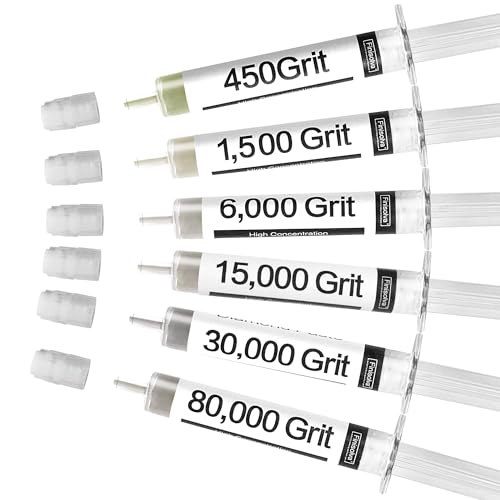
This kit is the most technical-feeling option in the group, and that is the point. Six compounds spanning 450 to 80,000 grit let you move from rougher correction toward a much finer finish, which is useful for watch crystal, metal, jewelry, marble, rock, resin, and glass projects that need staged refinement. For workshop users, that range gives you more control than a single bottle ever could.
The trade-off is setup time, because a multi-grit kit asks for more patience and a clearer process. Compared with Rolite, this is less about gentle touch and more about step-by-step finishing, so it suits careful workbench jobs better than quick car touch-ups. You may find it rewarding, just not especially casual.
What We Like
- Six-grit spread covers rough and fine stages
- Diamond powder concentration suits detailed polishing work
- Works across glass, metal, jewelry, marble, and resin
- Lets you chase a mirror-like finish with control
Points To Note
- More involved than a single-step polish
- Best results depend on patient, careful application
- Feels better suited to bench use than quick fixes
Core Details
Who Should Grab It
You will like this most when your workbench includes watch parts, craft materials, or mixed hard surfaces that need staged polishing.
Look Elsewhere When
Rolite Ultra Fine Scratch Remover 4oz is the easier choice for light plastic or acrylic cleanup without a multi-step process.
menzerna gives you a classic three-stage approach, which is why it stands apart from the single-product entries above. HCC1000, MCC2500, and 3800 create a progression for scratch reduction, swirl correction, and a higher-gloss finish, so the set fits paint work where each step has a job to do. That structure suits detail-minded owners who want a more deliberate correction path.
The downside is obvious enough, it asks more of your time and process. Compared with the Nu Finish kit, this is less about simple windshield maintenance and more about coordinated polishing work across a surface. For DIY paint care, that extra structure is a strength, not a nuisance.
Highlights
- Three-step lineup keeps the polishing path clear
- Useful for scratch work and swirl refinement
- Finishing step helps move toward a glossy surface
- Good match for careful, process-driven detailing
Room For Improvement
- Requires more patience than a one-bottle polish
- Feels aimed more at paint care than glass-only repair
- Process can be more involved for casual users
Details At A Glance
Made For
You get the best fit here when you already think in stages and prefer a polishing routine you can repeat with consistency.
Another Choice May Suit
polyWatch glass polishing cream is easier to live with for tiny glass blemishes or watch-face touch-ups.
polyWatch feels like the smallest tool in the group, and that makes sense for the kind of cleanup it targets. The cream format suits watches, phones, furniture accents, windows, and other small glass areas where a huge kit would be overkill. For apartment life or desk-drawer storage, that kind of simplicity is hard to ignore.
The honest caveat is that you are dealing with a focused product, not a broad correction system. Compared with menzerna’s three-step approach, polyWatch is much easier to pull out for a small blemish, but it is less suited to larger restoration work. That narrower role is exactly why it fits so neatly into a household toolkit.
Best Bits
- Small cream format is easy to store
- Well suited to tiny glass marks
- Useful across personal items and household surfaces
- Simple enough for quick spot care
Softer Spots
- Not built for broad restoration tasks
- Smaller-scale use limits its reach
- Works best as a spot solution, not a system
Quick Facts
The Right Fit
You will appreciate this most for small repairs on personal items or household glass where tidy application matters.
Swap It Out When
SPTA 5 Pcs 6” Car Glass Polishing Discs make more sense for larger automotive glass areas that need machine-assisted polishing.
This set is built around the tool side of the job, not just the liquid or powder side. The 6-inch pads and microfiber construction make sense for car glass work that leans on a machine, especially where water spots and tired-looking windows need a more even pass. That makes it a better fit for garages and detail bays than casual shelf storage.
Compared with polyWatch, this is far less about tiny hand-applied touch-ups and far more about coverage and consistency. The trade-off is that you need the right equipment to get value from it, so it is not the simplest path for beginners. Still, for owners who already use a polisher, the format is practical and tidy.
Positives
- Pad format supports machine-based polishing
- 6-inch size gives decent coverage on glass
- Microfiber build suits controlled buffing work
- Useful for water spots and damaged windows
Small Caveats
- Depends on having compatible polishing equipment
- Less convenient for quick hand use
- Storage matters so the pads keep their shape
Feature Rundown
Built With In Mind
You will get the most value here as a car owner who already uses a polisher for glass maintenance.
Reach For A Different Pick When
Rolite Ultra Fine Scratch Remover 4oz fits better for delicate plastic or acrylic panels that need a softer formula.
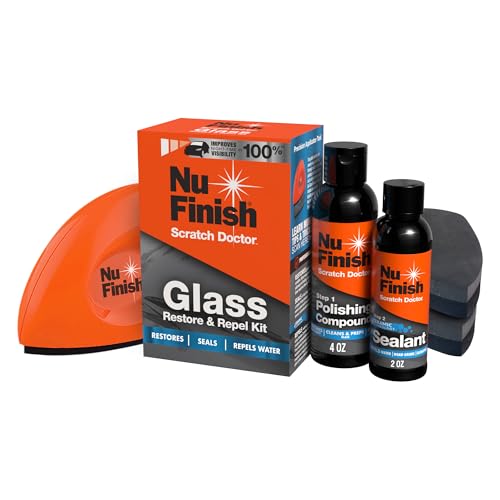
Nu Finish takes a two-step route, and that makes it feel more complete than a simple polish. You get a 4 fl oz glass polishing compound, a 2 fl oz ceramic sealant, a precision applicator tool, and two reusable sponges, so the kit is aimed at windshield care with a finishing layer built in. For commuters or frequent highway drivers, that full setup makes ownership feel more organized.
The trade-off is that the process is more involved than a one-bottle cream, and the sealant step asks for patience while it cures. Compared with SPTA’s pad set, this is much more self-contained and less dependent on separate tools, which helps a lot in a normal driveway. One thing worth noting, the hazy look during drying is part of the process, not a sign that something went wrong.
Reasons To Buy
- Compound and sealant arrive in one kit
- Designed for exterior glass on vehicles
- Includes applicator tool and reusable sponges
- Gives you a cleaner sequence from polishing to sealing
Worth Noting
- Two-step routine takes more time
- Sealant needs patience during cure
- More of a car-glass solution than a general glass remover
Feature Card
Whose Shelf It Belongs On
You will appreciate this most if your main job is windshield maintenance and you want a kit that covers both correction and sealing.
Where A Sibling Pick Shines
menzerna Polishing Set 8oz HCC1000 MCC2500 3800 makes more sense for multi-stage paint correction on body panels.
This one is for people who want a kit rather than a single compound. The 34-piece setup points to a more hands-on repair routine, and the included cerium oxide powder plus polishing pads and wheel make it better suited to windscreen and glass work where the tools matter as much as the abrasive. In a home garage, that kind of bundle can save a few separate purchases.
The catch is that more pieces also means more organization, and that can feel busy for first-time users. Compared with Nu Finish, this set offers less of a guided system and more of a parts-based approach, so you need to be comfortable choosing the right accessory for the job. For practical tinkerers, that flexibility is the appeal.
Upsides
- Large 34-piece bundle supports varied jobs
- Includes cerium oxide for glass polishing
- Gives you pads and wheel support in one set
- Handy for users who like assembling their own workflow
Areas To Watch
- Many parts can feel busy to sort
- Works best for hands-on users with some setup patience
- Requires storage space for keeping pieces organized
Spec Overview
Perfect Match For
You will like this most if you enjoy a kit with parts to sort and choose from rather than a single ready-made bottle.
Skip It When
polyWatch glass polishing cream is the easier route for tiny glass touch-ups that do not need a full accessory kit.
striplus keeps this one tightly focused on the glass itself, which is why it stands at the serious end of the list. The 14 oz size, 99% cerium oxide makeup, and 7 to 9 um particle range point to a powder made for removing oil films, water spots, swirl marks, wiper streaks, fine scratches, and deep-cleaning glass surfaces. For larger restoration jobs, that directness is a real advantage.
The trade-off is that powder format asks you to bring your own method and patience. Compared with Rolite or polyWatch, this is less convenient for casual touch-ups but more purpose-built for users who already know how they want to polish. In a workshop or garage, that focus tends to pay off.
Standout Traits
- High cerium oxide concentration keeps the formula focused
- Useful for several common glass blemishes
- Solid size for repeated polishing sessions
- Well suited to serious glass restoration routines
Minor Gripes
- Powder format needs mixing and application discipline
- Less convenient than a ready-to-use cream
- Works best when paired with an established process
Technical Sheet
Who Will Love This
You will get the most from this powder if you already handle glass correction with a steady, methodical approach.
Where Shoppers Go Wrong
SPTA 5 Pcs 6” Car Glass Polishing Discs suit users who need pads and machine support more than loose polishing powder.
How To Choose The Right Glass Scratch Removers
Match The Formula To The Surface
Glass, acrylic, and coated automotive surfaces do not all respond the same way. A plastic-safe cream like Rolite makes sense for Strataglass, headlights, or aquarium panels, while cerium oxide products are better aligned with true glass work. That material match matters because the wrong abrasive can be too mild to help, or more aggressive than the surface needs.
Decide Between Spot Care And Full Restoration
Small blemishes on a watch face or phone window call for a compact cream, not a full kit. Larger windshield haze or repeated water spotting usually points you toward a compound, powder, or a staged kit with pads and applicators. The bigger the area, the more valuable it becomes to have a product that spreads evenly and keeps your process controlled.
Think About Your Workflow
Some options are ready to use in a simple pass, while others ask for multiple stages or separate tools. The menzerna set rewards patience, the Nu Finish kit packages the tools for a cleaner routine, and the SPTA or Tookie-style sets make more sense once you already own a polisher. In plain terms, your comfort level with setup should steer the purchase as much as the abrasive itself.
Look For Practical Ownership Fit
Storage, cleanup, and repeat use matter more than many listings make them sound. A small cream is easy to tuck into a cabinet, a powder needs careful measuring, and a multi-piece kit takes organization so parts do not wander off. You usually end up happiest with the option that fits the way you already maintain your car, boat, or household glass.
A Quick Reality Check Before You Choose
Common Shopping Slip Ups
A frequent mistake is buying a glass product for a plastic panel, or the other way around. Another is assuming a one-step cream will handle deeper marks that really need a staged polish or a dedicated powder. Shortlist the surface first, then match the method to the level of wear.
What The Higher Tier Buys
More expensive options usually pay for better control, more stages, or a fuller accessory set. That can mean a sealant step like Nu Finish, a wider grit spread like Finisolva, or a more complete work kit such as Tookie. The upgrade makes sense when you deal with larger areas, repeat jobs, or a surface that deserves a slower, more careful finish.
Closing Thoughts
The right glass scratch remover depends less on the label and more on the surface, the size of the job, and how much effort you want to spend. Rolite and polyWatch keep things simple for smaller tasks, while striplus, Finisolva, and menzerna give you more serious correction paths. For windshield care, the Nu Finish kit feels especially practical, and the pad or accessory sets suit owners who already keep a polishing tool around. Choose the pick that fits your routine, and the job becomes a lot less frustrating.