You need a hammer that matches the job, not one that just looks serious in a tool bag. This lineup covers demolition, masonry, framing, setting work, and finish carpentry, so you can match head weight, handle material, and face style to the task in front of you.
That matters in a busy garage, on a remodel site, or during weekend repairs, because the wrong hammer slows you down fast. You’ll see where a 4 lb sledge makes sense, where titanium helps with recoil, and where brass or dead-blow construction is the smarter fit for the work.
The Shortlist At A Glance

Wilton B.A.S.H 12″ Sledge Hammer 4 Lb Head (20412)

REAL STEEL Drop Forged Solid Brass Hammer 20 Oz 0421
ESTWING Bricklayers/Mason’s Hammer 22 oz E6-22BLC

Malco Setting Hammer 18 Oz SH3

ESTWING Dead Blow Hammer 45 oz CCD45

ESTWING Ultra Series Hammer 15 oz EB-15SM

Stiletto FH10C Claw Hammer
That 4 lb head gives you real striking mass without forcing you into a huge tool. The 12-inch handle keeps it compact, which helps in tight demolition spots or around a vehicle bay where a longer sledge gets awkward.
Compared with the lighter brass and masonry picks later in this list, this one is built for blunt force first. You may find it especially useful for general teardown, stake work, and other jobs where control matters as much as impact.
Strong Points
- 4 lb head gives you serious driving force.
- 12-inch handle keeps the tool easier to control in tight spaces.
- Good fit for demolition tasks that call for compact reach.
- Feels more task-focused than a general shop hammer.
Points To Note
- Shorter reach can feel limiting on larger demolition jobs.
- Not the right shape for delicate assembly or finish work.
Feature Snapshot
Who It Suits Best
You’ll get the most from this one in demolition, garage work, and heavy site tasks where a compact sledge makes sense.
A Better Fit Elsewhere
Estwing Ultra Series Hammer EB-15SM suits carpenters and framing crews better, because it’s built for nail driving rather than blunt-force jobs.
Brass gives this hammer a different personality from the Wilton above, because it’s meant for careful work rather than brute force. The hickory handle adds a familiar wood feel, and the drop-forged head is a good sign for people who want a dense, solid tool in hand.
Machine turning and hand polishing also point to a cleaner finish, which matters more than it first sounds when you’re using the tool around finished surfaces or in a service kit. In most workshop setups, this makes sense for the person who wants a hammer that feels controlled and deliberate.
What We Like
- Solid brass head suits careful striking tasks.
- Hickory handle gives you a traditional, comfortable feel.
- Drop-forged construction suggests a sturdy build.
- Polished head finish looks neat in a tool roll or box.
Areas To Watch
- Brass is a softer material than steel, so the face will show use sooner.
- Best suited to task work, not broad demolition.
- Wood handles can call for a little more care over time.
Core Details
Built With In Mind
This suits tradespeople and careful DIYers who want a brass hammer for controlled tasks, especially around finished material.
Another Choice May Suit
Wilton B.A.S.H 12″ Sledge Hammer 4 Lb Head (20412) fits rough demolition better, since it brings far more mass to forceful work.
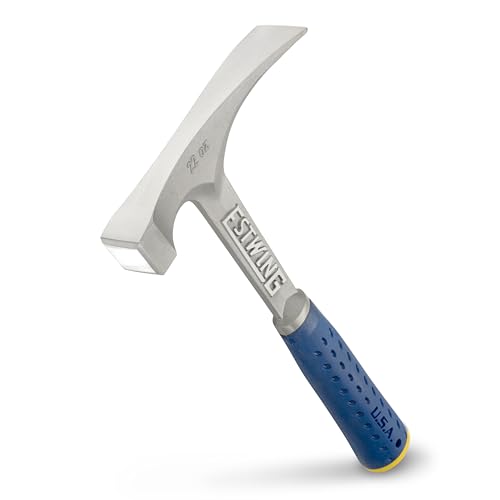
Masonry hammers have a clear job, and this Estwing leans into that with a 22 oz head and forged steel construction. The shock-reduction grip matters in real use because masonry work often means repeated strikes, and a grip that softens the feel can make a long session less punishing.
Compared with the brass REAL STEEL pick, this one is for tougher surface work and shaping material rather than delicate contact. You may find it especially useful on brick, block, and other masonry tasks where a standard claw hammer just feels off-target.
Upsides
- 22 oz head gives you meaningful striking weight for masonry work.
- Forged steel body is built for hard jobsite use.
- Shock reduction grip helps soften repeated impact through the handle.
- USA-made build will appeal to shoppers who value domestic manufacture.
Worth Noting
- Purpose-built masonry shape makes it less versatile than a general claw hammer.
- Forged steel will feel more rigid than a wood-handled option.
- Finish may vary, so the cosmetic look can differ from one tool to another.
Details At A Glance
Perfect Match For
This belongs with masons, bricklayers, and renovation crews who spend time on block, brick, and stone surfaces.
Where A Sibling Pick Shines
Malco Setting Hammer SH3 works better for metal setting tasks, because its shape and steel body are aimed at sheet-metal handling instead of masonry.
Setting hammers are niche tools, and that’s exactly why this Malco stands apart from the broader masonry and demolition picks above. The 18 oz steel body gives it a serious feel, while the leather grip adds a more traditional touch that many tradespeople still prefer in hand.
In sheet-metal work, that mix can make the hammer feel purposeful without becoming fussy. One thing worth noting, though, is that a specialty setting hammer only earns its keep when your job really calls for that shape and weight.
Highlights
- Setting-hammer form is tailored to sheet-metal tasks.
- 18 oz head brings enough weight for controlled striking.
- Steel construction gives the tool a straightforward, job-ready feel.
- Leather grip adds a classic hand feel that some users prefer.
Small Caveats
- Specialized shape limits its use outside setting work.
- Leather grip may need a little more care than synthetic wraps.
Feature Rundown
Right Fit For
You’ll appreciate this most in sheet-metal and setting work, especially in a shop where specialty tools earn their space.
Skip It When
Estwing Dead Blow Hammer CCD45 is the smarter swap for assembly work, since it’s designed to soften contact and reduce bounce.
The dead-blow format changes how the hammer feels in use, because the internal shot-filled body is meant to reduce rebound after impact. That makes this Estwing a sensible choice for assembly work, parts alignment, and other jobs where you want contact without the hammer bouncing back at you.
The no-mar polyurethane face also matters around finished parts, since it helps you avoid obvious surface marks. Compared with the steel-heavy picks earlier in the list, this one is the calmer tool in the box, and that’s the point.
Reasons To Buy
- Dead-blow design helps limit bounce during contact.
- No-mar polyurethane face suits work around finished surfaces.
- Cushion grip gives you a softer hand feel during longer use.
- 45 oz weight brings enough authority for assembly and fitting.
Room For Improvement
- Bulkier shape takes up more space than a standard claw hammer.
- Not the right choice for nail pulling or framing.
- Polyurethane faces can still show wear with hard use.
Quick Facts
Whose Shelf It Belongs On
This belongs with mechanics, assemblers, and shop users who want controlled impact without a lot of rebound.
Look Elsewhere When
Stiletto FH10C Claw Hammer suits finish carpentry better, because it’s lighter, quicker, and easier to swing overhead.
This framing hammer brings more jobsite utility than the specialty tools above. The magnetic nail starter helps with one-handed nail placement, and the rip claw adds nail pulling, prying, and teardown ability, so you’re not locked into a single task.
The milled face gives the head some bite on nails, while the shock-reduction grip is the detail that many carpenters will notice after a long day of overhead work. In most framing setups, that mix is hard to ignore.
Best Bits
- Magnetic nail starter supports one-handed placement.
- Rip claw adds pulling and light demolition utility.
- Milled face helps the hammer bite onto fasteners.
- Shock reduction grip is useful during repeated swings.
- Forged-in-one-piece construction points to a strong, simple build.
Minor Gripes
- 15 oz head is lighter than some framers prefer for heavy lumber work.
- Milled face can feel aggressive on delicate finishing tasks.
- Built for carpentry, so it’s less suitable for masonry or broad striking.
Feature Card
The Right Fit
You’ll get the most from this hammer in framing, carpentry, and remodel work where nail driving and prying both matter.
Swap It Out When
Wilton B.A.S.H 12″ Sledge Hammer 4 Lb Head (20412) makes more sense for demolition, because this Estwing is built around carpentry tasks instead.
This Stiletto stands apart from the rest of the list because of its titanium head and lower recoil feel. For finish carpentry, that matters a lot, since you’re often working overhead or doing repeated nail work where every bit of shock adds up.
The 10 oz head, 14-1/2 inch overall length, milled face, and curved hickory handle make it sound purpose-built rather than generic. The honest read is that it’s not the hammer for rough demolition, but for trim and detail work, it looks very well matched.
Positives
- Titanium head helps keep the hammer lighter in hand.
- Less recoil than steel is useful during repetitive trim work.
- Milled face adds bite when you’re setting nails.
- Curved claw helps with nail pulling and light prying.
- Hickory handle gives the tool a classic feel.
Honest Caveats
- 10 oz head is geared toward finesse, not heavy striking.
- Overall length may feel short for some framing tasks.
- Finish carpentry focus means it’s less versatile than the Estwing framing hammer.
Technical Sheet
Made For
Finish carpenters and trim installers will get the most out of this hammer, especially in detailed work where control matters more than force.
A Better Fit Elsewhere
ESTWING Ultra Series Hammer EB-15SM is the better all-round carpentry choice for remodel work, because it brings more framing utility to the table.
How To Choose The Right High End Hammers
Match Head Weight To The Job
Head weight changes the feel more than most first-time hammer shoppers expect. A 4 lb sledge like the Wilton B.A.S.H makes sense for demolition, while 10 to 18 oz models suit finish work, setting tasks, and general carpentry. Heavier heads drive force with fewer swings, but they also ask more from your arm and shoulder.
For long framing sessions, a lighter hammer can keep you moving cleanly. For masonry or teardown, more mass does the real work. The right answer depends on whether you need impact, speed, or control.
Choose The Face And Grip For The Surface
Face style tells you a lot about intended use. A milled face grips nails better, a no-mar polyurethane face protects finished parts, and a polished brass head is better suited to careful contact. Those choices matter because the wrong face can mark a surface or make placement harder.
Grip material matters too, especially on long days. Shock-reduction grips, leather wraps, and hickory handles all change how vibration travels into your hand. That difference can feel subtle at first, then very obvious after a few dozen swings.
Think In Terms Of Task Families
High end hammers usually make sense when the tool is built for a narrow job family. Masonry work calls for different geometry than framing, and a dead-blow mallet has a different goal than a claw hammer. Matching the tool to the task keeps your kit lean and your work cleaner.
You do not need every style at once. A demolition sledge, one carpentry hammer, and one specialty option cover a lot of real-world use without crowding the toolbox.
Pay Attention To Handle Construction
Handle material changes comfort, durability, and maintenance. Steel and titanium builds often feel more rigid, while wood can feel warmer in hand and sometimes needs a little more care. That trade-off is worth considering if your hammer lives in a truck bed, a garage, or a jobsite bag.
Length matters just as much. Short handles help in tight quarters, and longer handles give you more leverage for driving force. The best choice is the one that fits your space and swing style, not just your wish list.
Things Worth Knowing First
Wrong Turns To Avoid
One common mistake is buying a hammer for the label instead of the task. A framing hammer won’t replace a dead-blow mallet in assembly work, and a masonry hammer won’t feel right for trim carpentry. Another trap is overlooking handle length, which can make a tool feel cramped or unwieldy in the space you actually work in.
Surface finish matters too. A steel face can leave marks where polyurethane or brass would be gentler, so matching the tool to the material saves frustration later.
When Paying More Pays Off
Higher-tier hammers usually cost more because of the materials and build methods behind them. Forged steel, titanium, one-piece construction, magnetic nail starters, and specialty grips all add complexity and, often, better day-to-day feel. Those details matter most when you use the hammer often enough to notice balance and vibration.
The upgrade is worth it when the hammer is part of your daily kit. For occasional household work, a simpler model can be enough, but frequent carpentry, masonry, or shop use makes a more refined tool easier to appreciate.
Closing Thoughts
You’ll get the best result by matching the hammer to the kind of work you do most often, not by chasing the heaviest or flashiest tool. Wilton and ESTWING cover the hard-use end well, REAL STEEL and Malco handle specialty tasks, and Stiletto brings a clear advantage for finish carpentry. Pick the one that fits your job list, and the rest of the kit starts to feel easier to manage.