Working on brakes, axle nuts, or mixed home repairs gets easier when your socket sizes line up with the job instead of fighting it. This roundup focuses on 11/16 inch sockets and close-match set options that make sense for daily garage use, bench repairs, and the odd project that shows up on a Saturday afternoon. You’ll also find a few metric and mixed-drive picks for cases where a full kit matters more than a single socket.
Quick Look At The Shortlist

EGOFIX 90PCS 1/4″ Drive Impact Socket Set Metric 4-15mm and SAE

Capri Tools 16 mm Shallow Socket, 3/8-Inch Drive, 6-Point, Metric

TEKTON 1/2 Inch Drive x 11 mm Deep 12-Point Impact Socket SID23311

TEKTON 1/2 Inch Drive x 11/16 Inch Impact Socket SID22217
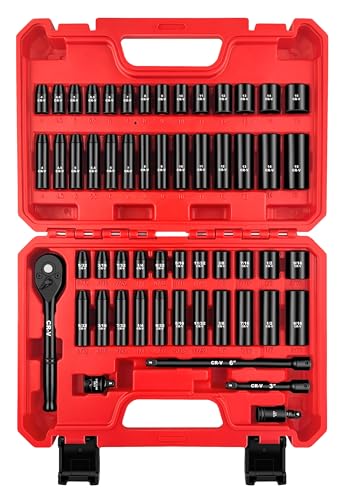
WETT 55-Piece 1/4″ Drive Impact Socket Set SAE/Metric Deep/Shallow Cr-V Steel

TEKTON 3/8 Inch Drive x 11 mm Deep 12-Point Impact Socket SID13311

ELEAD 1/2 Inch Drive Deep Impact Socket 1-11/16 inch SAE

Capri Tools 11/16-Inch Deep Impact Socket, 3/8-Inch Drive, 6-Point, SAE

TONYNOL 1/2 Inch Shallow Drive Impact Socket Set SAE 14 Pcs Cr-Mo Steel

toolant 3/8-Inch Impact Hex Bit Socket Set SAE/Metric 27-Piece S2 Steel
More Details On Our Top Picks
This kit makes sense for small garages that need a spread of socket sizes without jumping straight into a heavy tool chest setup. The 1/4-inch drive keeps the pieces light and handy, and the included 72-tooth ratchet usually gives you finer swing control in cramped spots, which matters around dash panels or trim-heavy jobs.
The trade-off is straightforward, it’s built around lighter-duty work rather than big stubborn fasteners. You get useful range in metric and SAE sizes, plus screwdriver bits, so the set leans more toward household repair and light automotive jobs than axle service.
Strong Points
- Metric and SAE coverage in one compact kit helps you stay ready for mixed fasteners.
- The 72-tooth ratchet supports smaller hand swings, useful around tight engine covers and interior panels.
- Screwdriver bits add everyday usefulness for furniture, appliances, and quick fixes.
- The lighter 1/4-inch drive format is easy to store in a crowded drawer.
Things To Consider
- This is a better fit for lighter repair work than for high-torque jobs.
- The large piece count can feel busy until you sort the tray the way you like it.
Feature Snapshot
Who It Suits Best
You get the most out of this set as a home tinkerer, a weekend mechanic, or anyone who wants one compact box for mixed small-fasten jobs.
Where A Sibling Pick Shines
Capri Tools 11/16-Inch Deep Impact Socket, 3/8-Inch Drive, 6-Point, SAE suits you better for a single, more focused SAE size that sees repeat use on one vehicle or machine.
A single-size socket can be the right answer when one machine keeps asking for the same fastener size. The shallow body matters because it stays shorter than a deep socket, so you have more room near exposed bolts, brake hardware, and bracket work where extra length gets in the way.
Compared with the mixed EGOFIX set, this is far more focused and far less flexible. That focus helps you reach for it quickly, though it also means the rest of the sizing support has to come from your broader kit.
Highlights
- Six-point shape grips flat sides well and keeps stress off corners.
- Shallow depth helps in tighter clearances where long sockets feel awkward.
- 3/8-inch drive fits a very common mid-size ratchet setup.
- The narrow purpose makes it easy to keep close to the job.
Room For Improvement
- Single-size tools only help once you already know the exact fastener you need.
- Shallow sockets can fall short on recessed nuts or longer studs.
Core Details
Whose Shelf It Belongs On
This fits you best as a mechanic, hobbyist, or maintenance-minded homeowner who keeps meeting the same 16 mm fastener on repeat jobs.
Look Elsewhere When
WETT 55-Piece 1/4″ Drive Impact Socket Set SAE/Metric Deep/Shallow Cr-V Steel suits you better when you want a broader mixed-size kit rather than a single-size socket.
Deep sockets matter most where threaded studs stick out past the nut, and that’s the main reason this one earns attention. The 1/2-inch drive gives you a sturdier platform than the smaller TEKTON sockets in this list, so it fits heavier hand tools and more demanding garage work.
The 12-point design gives you more angle options for getting on the fastener, although six-point sockets usually hold a little tighter on stubborn hardware. For most repair bays, this sits in a useful middle ground between reach and strength.
Upsides
- Deep shape reaches recessed nuts and protruding studs with less fuss.
- 1/2-inch drive suits stronger ratchets and impact tools.
- 12-point geometry can make alignment easier in awkward positions.
- Single-socket design keeps storage simple and tidy.
Minor Gripes
- Deep sockets add length, which can feel cramped in tighter bays.
- 12-point sockets are less ideal than six-point styles for some stubborn fasteners.
Quick Facts
Best Suited To
You’re in the sweet spot with this socket if you service brakes, suspension parts, or equipment that leaves hardware sticking out beyond the nut face.
Another Choice May Suit
TEKTON 3/8 Inch Drive x 11 mm Deep 12-Point Impact Socket SID13311 is the better match for lighter tools and tighter access where 1/2-inch gear feels oversized.
11/16 inch shows up often enough on trucks, trailers, and old-school SAE hardware that a dedicated socket earns its place fast. The 1/2-inch drive gives it the muscle to match that job class, and the impact build suits repeated use with power tools or stronger manual torque.
Compared with the 11 mm TEKTON piece, this one shifts from metric to SAE, so you’re buying for a different side of the garage drawer. The honest read is that it makes the most sense once you know your vehicle or equipment still leans on inch-based fasteners.
Best Bits
- Common SAE size for many truck and equipment tasks.
- 1/2-inch drive supports tougher service work.
- Impact construction fits repetitive use in a working garage.
- Single-socket format keeps the tool easy to grab.
Points To Note
- It helps most once you already work in SAE hardware.
- Single-size ownership depends on how often this exact size appears in your jobs.
Technical Sheet
Right Fit For
You’ll like this most if your work leans toward trucks, yard equipment, or older machinery that still uses common SAE hardware.
Reach For A Different Pick When
Capri Tools 16 mm Shallow Socket, 3/8-Inch Drive, 6-Point, Metric is a cleaner fit for metric service work where you want a shallow, single-size socket in the opposite measurement system.
Some kits cover sizes, others cover scenarios, and this one leans hard into both. You get deep and shallow sockets, metric and SAE coverage, plus a ratchet handle, extension bar, adapter, and universal joint, so the set is built for the kind of mixed repairs that spread across a whole weekend.
Compared with the smaller EGOFIX assortment, this set gives you more attachment variety and a more organized route through awkward fasteners. The trade-off is the usual one for a larger kit, it takes more sorting, and you’ll want a clear storage spot to keep pieces from drifting.
Reasons To Buy
- Deep and shallow sockets cover more clearance situations.
- Metric and SAE ranges reduce the need to switch kits mid-job.
- Included extension, adapter, and universal joint help with awkward access.
- Cr-V steel gives the set a durable shop-friendly profile.
- The broad mix suits one box kept near the garage bench.
Areas To Watch
- More pieces mean more sorting and more chance of misplacing a single socket.
- The 1/4-inch drive format stays best for smaller fasteners, not heavy torque jobs.
- Large kits can take a little longer to organize after use.
Details At A Glance
The Right Fit
This suits you best as a home garage staple, especially for mixed maintenance where one tool tray needs to cover plenty of small and mid-size hardware.
Skip It When
TEKTON 1/2 Inch Drive x 11/16 Inch Impact Socket SID22217 makes more sense for a focused SAE job where a single heavy-duty socket gets used over and over again.
This socket sits in a very usable middle ground, smaller than a 1/2-inch drive tool but sturdier than a tiny 1/4-inch setup. The deep profile helps you get onto longer studs, which is useful on engine accessories, brackets, and other places where the fastener doesn’t sit flush.
The 12-point head gives you more starting positions, though you still want a clean fit before leaning on it hard. For most garages, that mix of reach and drive size is exactly why a 3/8-inch deep socket stays close at hand.
Bright Spots
- 3/8-inch drive balances reach and handling nicely.
- Deep socket shape helps with protruding hardware.
- 12-point design gives extra angle options during placement.
- Single-size format is easy to locate in a drawer or tray.
Softer Spots
- The deep body can feel long in very tight engine bays.
- For stubborn fasteners, a six-point socket can feel more secure.
Spec Overview
Built With In Mind
This is a smart fit for you if you want one metric socket that can live in a daily-use repair tray without feeling oversized.
Swap It Out When
Capri Tools 11/16-Inch Deep Impact Socket, 3/8-Inch Drive, 6-Point, SAE suits you better when the job calls for an SAE deep socket rather than a metric one.
Big SAE axle hardware asks for more reach and more torque tolerance, and this socket is aimed squarely at that kind of work. The deep body and CR-MO, or chrome molybdenum, steel construction make sense in a heavy-service setting where the socket has to live near impact tools and stubborn fasteners.
Compared with the Capri Tools SAE socket in this list, this one moves up to a much larger size and a more specialized axle-nut role. The downside is obvious too, it’s not the socket you grab for casual household repairs, and storage only makes sense alongside other larger-drive tools.
Standout Traits
- Deep body helps with axle nuts and other recessed SAE hardware.
- 1-11/16 inch size targets a clearly defined shop task.
- CR-MO steel is a familiar choice for impact-duty tools.
- 1/2-inch drive pairs with stronger breaker bars and impact gear.
Small Caveats
- This is purpose-built gear, so it won’t see use as often as general sockets.
- The larger size takes more room in a case or drawer.
Feature Rundown
Perfect Match For
You’re the right fit for this socket if you service trucks, trailers, or larger machinery with axle nuts and similar oversized SAE hardware.
Where Shoppers Go Wrong
Capri Tools 16 mm Shallow Socket, 3/8-Inch Drive, 6-Point, Metric is the easier choice for lighter metric work where a smaller, shallower socket makes more sense.
For a very common SAE size, this socket lands in a useful middle zone, neither tiny nor oversized. The deep shape gives you room for longer threads, and the 3/8-inch drive keeps it compatible with the kind of ratchet many home garages already own.
Against the TEKTON 11/16-inch option, this one plays the same size card but from a different socket line, so the real choice often comes down to what already matches the rest of your set. The honest read is that it suits general mechanical repair better than niche axle work.
Positives
- Deep format reaches over longer studs more comfortably.
- 6-point grip helps the socket sit square on the fastener.
- 3/8-inch drive is easy to pair with common tools.
- 11/16 inch is a frequent SAE size in garage use.
Worth Noting
- Deep sockets can be a little tall in crowded work areas.
- Single-size ownership only pays off when this dimension keeps reappearing.
Feature Card
Who Should Grab It
This fits you best as an SAE-focused home mechanic or maintenance hand who reaches for 11/16 inch more than once in a while.
Where A Sibling Pick Shines
ELEAD 1/2 Inch Drive Deep Impact Socket 1-11/16 inch SAE is the better route for larger axle-nut work that needs a bigger socket and a stronger drive size.
A shallow SAE set like this helps when you want a compact impact kit for fastener access that doesn’t need extra socket length. The size spread runs from 3/8 inch to 1-1/4 inch, so you get a broad handoff between light and heavier jobs without filling a drawer with loose singles.
The storage case is a practical touch, especially for garage shelves where sockets tend to wander. Compared with the ELEAD axle-nut socket, this set is much more general-purpose, though it still makes the most sense for SAE work rather than metric jobs.
What We Like
- Wide SAE range supports many common tasks in one set.
- Shallow format helps in spots where extra length gets awkward.
- Cr-Mo steel is a familiar impact-tool material for hard-use setups.
- The case helps keep pieces grouped instead of scattered.
Areas To Watch
- Shallow sockets are less helpful on long studs and recessed nuts.
- The set is SAE only, so metric work still needs another kit.
- Loose organization matters because many pieces can blend together fast.
Core Details
Built With In Mind
You’re the right fit for this set if your garage work leans hard toward SAE hardware and you want a compact impact lineup with a tidy case.
Another Choice May Suit
WETT 55-Piece 1/4″ Drive Impact Socket Set SAE/Metric Deep/Shallow Cr-V Steel is better when you want mixed sizing and accessory pieces instead of an SAE-only spread.
This set is built for hex-fastener work, not the usual six-point or twelve-point nut duty, so it fills a different lane from the TEKTON and Capri Tools sockets above. The one-piece socket design, anti-roll flats, pin holes, and laser-etched size marks all help when you’re moving quickly across a bench or staying organized in a busy garage.
That makes it especially handy for machinery, brackets, and repair jobs that call for hex bit sockets across both SAE and metric fasteners. The trade-off is that you’re choosing a specialty format, so it belongs beside a general socket set rather than replacing one.
Positives
- SAE and metric coverage supports mixed fastener work.
- S2 steel is a common choice for hard-working bit tools.
- Anti-roll flats help keep pieces from wandering across the bench.
- Pin holes add compatibility with common retention setups.
- Laser-etched sizing makes selection quicker in low light.
Honest Caveats
- Hex bit sockets serve a narrower role than standard nut sockets.
- The set works best as a companion kit, not your only socket lineup.
Technical Sheet
Who Will Love This
You’ll get the best fit from this set if your repair work often involves hex fasteners and you want a tidy, well-marked bit-socket lineup.
Where Shoppers Go Wrong
TEKTON 1/2 Inch Drive x 11/16 Inch Impact Socket SID22217 is the better choice for plain SAE nut work that needs a standard impact socket instead of a hex bit tool.
How To Choose The Right 11 16 Inch Sockets
Match The Drive Size To Your Tools
Drive size tells you which ratchets, breaker bars, or impact tools the socket will fit. A 1/4-inch drive keeps things light for small hardware, 3/8-inch lands in the general-purpose range, and 1/2-inch suits larger, tougher work.
The right drive matters more than many first-time shoppers expect. A socket can be the correct size on paper and still feel wrong in your hand if the drive is too small for the torque you plan to apply.
Decide Between Deep, Shallow, And Standard Reach
Deep sockets help when studs stick out past the nut, while shallow sockets make more sense where clearance is tight. A standard profile can sit somewhere in between, but the source data here leans mostly deep or shallow, so the use case is usually clear.
That choice changes how often you reach for the tool. In a crowded engine bay, a shallow socket can save space, while a deep one can save time on recessed hardware that would otherwise need extra extensions.
Choose Six-Point Or Twelve-Point With Purpose
Six-point sockets grip the flat sides of the fastener and are usually the safer bet for stubborn hardware. Twelve-point sockets give you more starting angles, which helps when access is awkward or the socket needs to settle onto the nut with less repositioning.
The trade-off is simple: more alignment ease versus a tighter hold. For hard-used axle work, six-point is often the cleaner fit, while 12-point can feel friendlier in lighter, less stubborn jobs.
Think About Set Size And Storage
A compact single socket is easy to keep near one repair task, but it only helps when that exact size keeps coming up. Larger sets cut down on searching and let you handle mixed jobs, though they also ask for better storage and a little more sorting discipline.
That matters in real garages, not just on paper. A tidy case or labeled tray can save time every week, especially when your tools live in a drawer shared with other repair gear.
Things Worth Knowing First
Common Shopping Slip Ups
Many people grab the wrong measurement system first, then notice too late that their hardware is metric or SAE only. Size, drive, and depth all need to line up with the job, not just the number printed on the socket.
Another common miss is buying a single socket for a one-off repair and expecting it to replace a full kit. That works only when you keep seeing the same fastener again and again.
Where The Extra Money Goes
Higher-tier sockets usually cost more because of material choice, drive design, and better fit across hard-use jobs. CR-MO steel and stronger impact designs matter when the tool sees repeated torque or harsh service conditions.
You also tend to pay for more thoughtful details, like laser-etched sizing, anti-roll shapes, or tighter storage systems. Those touches matter most in a busy garage where speed and organization save real frustration.
Frequently Asked Questions
What does 11/16 inch cover?
It covers a common SAE fastener size used on many vehicles, tools, and outdoor equipment. That makes it useful in garages that still see inch-based hardware.
Do you need deep sockets for every job?
No, shallow sockets work well where clearance is tight and the fastener sits close to the surface. Deep sockets matter more when the nut sits on a longer stud.
Is 12-point better than 6-point?
Neither is universally better, because each serves a different need. Six-point usually grips more securely, while 12-point gives you more easy starting positions.
Can one socket size replace a full set?
Only for a repeat task that keeps using the same fastener. A full set makes more sense for mixed repair work and changing hardware.
What drive size should you choose first?
Choose the drive that matches the tools already in your box and the torque level of the job. 3/8-inch fits many general repairs, while 1/2-inch is better for heavier work.
Final Thoughts
You get the best results from 11/16 inch sockets when you match the socket style to the job instead of chasing a one-tool answer. A shallow 3/8-inch pick suits lighter SAE work, while a deep 1/2-inch socket makes more sense for heavier axle or suspension tasks. Mixed kits help when your garage sees both metric and SAE hardware, and specialty bit sockets shine only in the right kind of repair. Pick the shape that matches your routine, and the rest gets easier.