Depth finders help you spend less time guessing and more time paying attention to the water, which matters whether you’re in a kayak, on a small boat, or packing light for ice fishing. The eight options below lean toward compact screens, castable sonar, and handheld layouts that make sense for budget-minded anglers who still want usable detail. Some are better for simple depth checks, while others add GPS, mapping, or phone-based viewing for a little more control.
You’ll also see clear trade-offs, since inexpensive usually means choosing between simplicity, screen size, and extra sonar features. That makes the right pick less about spec chasing and more about matching the unit to how you fish most often.
The Shortlist At A Glance
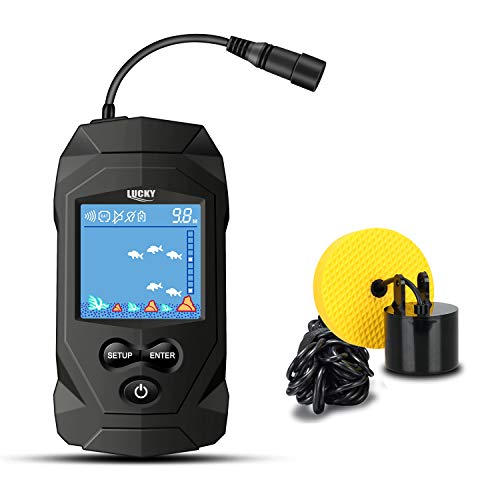
LUCKY Wired Transducer Kayak Fish Finder Kit

Humminbird 410190-1 Helix 5 Sonar G2

Garmin Striker Vivid 7cv with GT20-TM Transducer
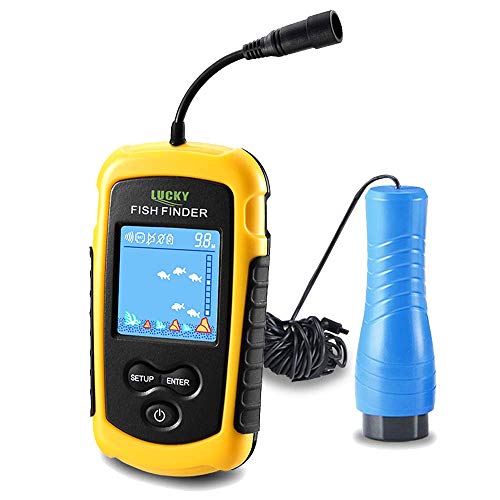
LUCKY Small Portable Fish Finder Kayak Sonar

Garmin Striker Cast Castable Sonar

Hawkeye DT1H Handheld Depth Finder

Handheld Fish Finder with Sonar Transducer

Lowrance HOOK Reveal 5 SplitShot
More Details On Our Top Picks
The wired layout keeps things straightforward, which suits kayak anglers and ice setups where you want a direct connection to the transducer. The LCD display gives you a simple readout instead of a complicated dashboard, so it feels approachable for a first depth finder.
You may find the cable-based setup a little less convenient than a castable unit, but that trade-off also means fewer phone dependencies and fewer moving parts in daily use. For small boats and portable rigs, that kind of simplicity can be the whole point.
Strong Points
- Wired transducer support keeps the signal path direct.
- LCD display is easy to read at a glance.
- Works well for kayak, boat, and ice fishing setups.
- Simpler layout makes setup feel less fussy.
Points To Note
- Wired gear brings more cable management than castable units.
- The screen approach is plain, so detailed mapping is not the focus.
- Storage and transport take a little more care because of the transducer lead.
Feature Rundown
Who It Suits Best
You get the most from this pick in a kayak, on a small boat, or on the ice, especially when you want a simple unit that does depth duties without much fuss.
A Better Fit Elsewhere
Garmin Striker Cast makes more sense for shore anglers who want sonar on a phone or tablet and prefer a castable layout over a wired one.
The Helix 5 format suits you when you want a compact screen that still feels substantial enough for regular use on a small boat. It sits in the middle of the group, more anchored than the tiniest handheld options, but less space-hungry than larger glass-cockpit style units.
That makes it a sensible fit for anglers who want a dedicated sonar display without turning the console into a crowded dashboard. The honest read is that it works best as a steady, no-drama tool rather than a feature showpiece.
What We Like
- 5-inch class screen keeps the footprint manageable.
- Dedicated sonar layout suits frequent on-water use.
- Feels more fixed and permanent than handheld picks.
- Good middle ground between portable and full-size units.
Minor Gripes
- Less portable than the handheld and castable options.
- It asks for a bit more space on the dash or console.
- Anglers wanting phone integration may prefer a different style.
Core Details
Who Will Love This
You fit this model best in a small boat or modest console setup where a dedicated screen matters more than portability.
Where A Sibling Pick Shines
Lowrance HOOK Reveal 5 SplitShot is a stronger match for inland anglers who want mapping alongside sonar in the same compact footprint.
This Garmin lands near the upper end of the budget-minded group because it bundles a 7-inch color display, CHIRP sonar, ClearVü scanning sonar, built-in GPS, Wi-Fi, and ActiveCaptain support. CHIRP stands for compressed high-intensity radar pulse, which in sonar terms means a more refined signal sweep than basic ping-only systems.
That mix suits you on larger kayaks, console boats, or familiar inland waters where mapping and screen space matter as much as raw depth reading. It does ask a little more from your setup, but the trade-off is a more complete view of what’s under and around the boat.
Highlights
- 7-inch color display gives you more room to read.
- CHIRP and ClearVü sonar broaden the water view.
- Built-in GPS helps with route awareness and spot tracking.
- Wi-Fi and ActiveCaptain add a connected feel.
- Color palettes make the screen easier to parse in changing light.
Areas To Watch
- The richer feature set can feel like more than a casual weekend setup needs.
- A 7-inch display takes more space than smaller portables.
- More features mean a little more learning at the start.
Spec Overview
Built With In Mind
You’ll appreciate this pick most on inland water, larger kayaks, or boats where you want sonar detail and GPS in one display.
Reach For A Different Pick When
Humminbird 410190-1 Helix 5 Sonar G2 suits you better when you want a simpler dedicated screen and do not need the extra connected features.
This handheld design makes sense for quick outings, especially when you want a depth finder that packs easily and does not ask for a fixed mount. The form factor sits closer to a tool than a dashboard device, which helps when you split time between kayak fishing and carrying gear on foot.
It’s a plainspoken style of unit, so the appeal comes from portability rather than screen drama. You may find that ideal for short trips, though anglers who want more screen space or mapping will probably want to look higher up the list.
Reasons To Buy
- Handheld format keeps packing simple.
- Useful for kayak, ice, and bank fishing.
- Easy to move between different setups.
- Smaller size helps in tight storage spaces.
Softer Spots
- Portable convenience usually means a smaller interface.
- It does not feel as expansive as a fixed-screen unit.
- Loose gear can be easier to misplace in a crowded tackle bag.
Feature Card
Whose Shelf It Belongs On
You suit this pick best when you want a compact tool for frequent short trips and light packing.
Another Choice May Suit
Garmin Striker Vivid 7cv with GT20-TM Transducer makes more sense for you if your setup has room for a larger screen and extra sonar features.
This one leans into phone-based fishing, so it fits bank anglers and dock regulars who already keep a mobile device close at hand. Castable sonar means the sensor goes out on a line, then comes back in after it sends the water readout to your screen, which is about as portable as sonar gets.
The trade-off is obvious, though: you’re depending on a connected device, so this feels less self-contained than the handheld units above it. For a carry-light kit, that’s still a smart exchange, and it’s a neat fit for fishing spots where a fixed display would be awkward.
Upsides
- Works with a smartphone or tablet.
- Castable format suits shore and dock use.
- Small kit size makes travel easy.
- Good match for anglers who already rely on a mobile device.
Worth Noting
- It depends on your phone or tablet for the display.
- Castable gear takes a little care during storage and line handling.
Details At A Glance
Made For
You get the most from this model at the bank, from a dock, or on a small trip where a phone-based display feels natural.
Look Elsewhere When
Hawkeye DT1H Handheld Depth Finder suits you better when you want a dedicated handheld depth readout without depending on a mobile device.
For anglers who want a simple depth read without extra clutter, the Hawkeye DT1H keeps things focused. The included temperature reading adds a useful second data point, since water conditions can matter just as much as depth during a long day on the water.
The 300-foot rating gives you a useful sense of range for common fishing situations, and the handheld format keeps it easy to carry. It feels especially sensible for someone who wants a direct tool rather than a screen packed with extras.
Best Bits
- Depth and temperature in one handheld unit.
- Simple layout is easy to live with.
- 300-foot rating covers many common fishing spots.
- Compact shape makes it easy to store.
Small Caveats
- The feature set stays focused, so it will not suit mapping-heavy use.
- Handheld gear is easy to carry, but it still needs a dry storage spot.
Core Details
Right Fit For
You fit this model best when you want a no-frills handheld for quick checks from a boat, dock, or shore spot.
Where Shoppers Go Wrong
Garmin Striker Vivid 7cv with GT20-TM Transducer is the better call for you if you want a larger screen, sonar detail, and GPS in the same package.
This handheld pick keeps the formula basic, which can be a real plus for casual anglers who want sonar without a lot of setup drama. The LCD display and sonar transducer pairing give it the familiar shape of a traditional portable finder, so it should feel easy to understand.
You may prefer this over the Garmin Striker Cast when you want a self-contained unit instead of a phone-based system. It’s not the flashiest path, but for regular weekend use, that plainness can be exactly right.
Plus Points
- Handheld layout keeps it portable.
- LCD screen offers a straightforward readout.
- Sonar transducer provides the core depth-finding function.
- Works well for laid-back fishing routines.
Room For Improvement
- The simple format leaves less room for advanced extras.
- Handheld gear benefits from careful packing so the display stays protected.
Feature Snapshot
Who Should Grab It
You suit this pick best when you want a straightforward portable finder for occasional trips and light gear loads.
Where A Sibling Pick Shines
LUCKY Wired Transducer Kayak Fish Finder Kit fits you better if you fish from a kayak or ice setup and want a wired connection instead of a handheld-only approach.
This Lowrance model stands out because it adds preloaded C-MAP US inland mapping to a 5-inch fish finder, so you get chart support without jumping to a bigger display class. The SplitShot transducer also points it toward anglers who want sonar detail and mapping in a compact package.
That combination makes sense for inland water, where shoreline structure and navigation often matter just as much as depth. The trade-off is cost and complexity relative to the simpler handheld picks, but the added context can be worth it for more serious regular use.
Standout Traits
- Preloaded inland maps add useful location context.
- 5-inch screen keeps the unit compact.
- SplitShot transducer supports a more layered sonar setup.
- Good middle ground for anglers who want more than basic depth reading.
Honest Caveats
- Mapping adds value, but it also adds a little more learning.
- A 5-inch display is smaller than the Garmin 7-inch model above.
- Best suited to regular use, not just the occasional outing.
Quick Facts
The Right Fit
You suit this pick best when you fish inland waters often and want mapping plus sonar in one compact unit.
Swap It Out When
Humminbird 410190-1 Helix 5 Sonar G2 makes more sense if you want a simpler sonar display and do not need preloaded mapping.
How To Choose The Right Inexpensive Depth Finders
Start With Your Fishing Setup
The first decision is how you fish, because a kayak, jon boat, dock, or shoreline setup all reward different shapes. Wired units suit fixed mounts and icy conditions, while castable sonar gives you more freedom from the bank or pier. Handheld models sit in the middle, which works well for short trips and light packing.
Screen style matters too. A dedicated display is easier to use in bright sun and rough weather, while a phone-based system depends on your mobile device and its battery habits.
Match The Screen To The Job
Smaller screens are easier to mount and carry, but they can feel crowded once sonar, menus, and maps share the same space. A 5-inch display is a solid middle ground for portable boats, while a 7-inch screen gives you more room to read detail without squinting.
For casual depth checks, basic LCD units are enough. Anglers who spend more time on the water often appreciate color palettes, clearer sonar layers, and built-in GPS because they reduce guesswork during a long day.
Think About Sonar And Mapping
Sonar is the signal that reads underwater conditions, and different flavors matter. CHIRP sweeps a wider range than a simple ping, while scanning sonar and ClearVü-style views help you interpret structure and bottom detail more easily.
Mapping is a separate benefit. Inland maps help you follow shoreline shape and channels, which is especially useful on unfamiliar lakes or reservoirs, but the extra detail usually raises the learning curve a bit.
Portable Convenience Versus Fixed Comfort
Portable units are easier to move between trips, yet they usually trade away screen size or feature depth. Fixed or semi-fixed systems feel steadier once installed, and they often make more sense for anglers who fish the same boat week after week.
That trade-off is the heart of the category. Choose portability for flexibility, or choose a more established setup for clearer viewing and less tinkering once you’re on the water.
What To Weigh Before You Click Through
Wrong Turns To Avoid
It’s easy to chase features you won’t use. A bank angler who only wants to check depth can skip a mapping-heavy unit, and a kayak fisherman usually gets more value from portability than from a bigger screen that crowds the deck.
Another common miss is forgetting about storage and cables. Wired transducers, handheld bodies, and castable sensors all need a place to sit when the trip ends, and rough packing tends to shorten the life of any small electronics kit.
Where The Extra Money Goes
Higher-tier models usually spend their extra cost on screen size, better sonar detail, GPS, mapping, and easier connectivity. That matters because each of those pieces cuts down on guesswork, which can be worth a lot on unfamiliar water or during longer trips.
The upgrade makes sense when you fish often enough to use those extras every week. For occasional use, a plain handheld finder often covers the job without making the setup feel heavier than it needs to be.
Closing Thoughts
The best inexpensive depth finder for you depends on how you fish more than how many features the box can list. A kayak angler may be happiest with the LUCKY wired kit, while someone fishing inland lakes more seriously may prefer the Lowrance or Garmin models for their added screen depth and mapping. For quick depth checks and light packing, the Hawkeye DT1H keeps things refreshingly simple. Pick the one that fits your water, your storage space, and how much screen time you actually want on a fishing day.