Your deck sander needs to handle wide boards, awkward edges, and long stretches without turning the job into a chore. That means the right pick depends on more than motor size, since dust control, grip shape, pad size, and power source all change how the tool feels in real use.
This roundup keeps the focus on practical deck work, from corded sanders that suit garage setups to air-powered options for shop compressors and a cordless choice for portable jobs. You’ll also see a replacement backing pad in the mix, because worn pads can turn an otherwise solid sander into a frustrating one.
The Shortlist For Deck Sanding
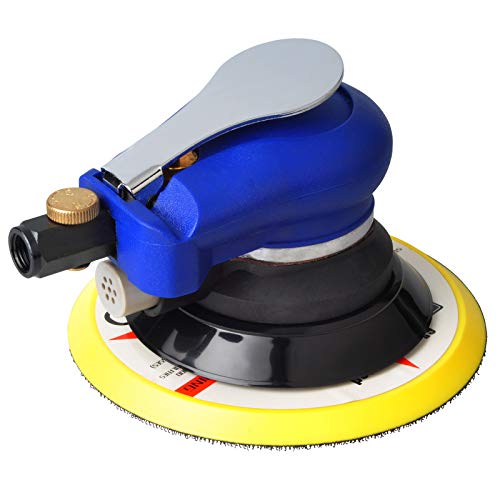
PROSHI 6“ Random Orbit Air Sanders

Professional Air Random Orbital Palm Sander

ONEAND 18V Cordless 5 in. Random Orbit Sander Tool Only

WORKPRO 5-Inch Random Orbit Sander, 6 Variable Speeds

Autolock Air Random Orbital Sander with Extra 5 and 6 Backing Plate
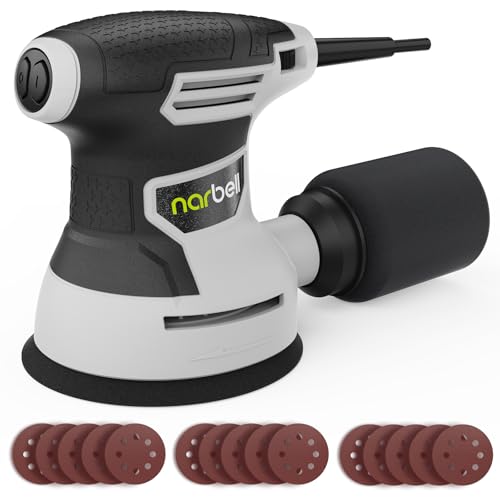
NARBELL Orbital Sander 3.0AMP 360W 14000RPM Random Orbit Sander Tool

Mudder 2 Pcs 5 Inch 8 Hole Hook and Loop Orbital Sander Replacement Pad

Metabo HPT 5-Inch Random Orbit Finishing Sander SV13YST
More Details On Our Top Picks
A 6-inch air sander makes sense for broad deck boards, since each pass covers more surface than a 5-inch palm unit. The hook-and-loop face is the practical part here, because disc changes stay quick during longer sanding runs, though you do need a compressor setup for it to earn its keep.
Compared with the WORKPRO electric model, this one leans harder toward shop-style workflow and less toward casual plug-in convenience. You may find it best for heavier prep work, especially on larger outdoor surfaces where speed matters more than a tiny footprint.
Strong Points
- 6-inch pad helps cover boards faster.
- Hook-and-loop fastening keeps disc swaps simple.
- Air power suits steady workshop use.
- Useful for broad, repeated sanding passes.
Things To Consider
- Needs compressor support, so it is less portable.
- The larger pad can feel bulky on tight rail details.
Feature Snapshot
Who It Suits Best
You benefit most here when your deck work happens near a compressor-equipped garage or shop and you want wider sanding coverage.
Where A Sibling Pick Shines
WORKPRO 5-Inch Random Orbit Sander, 6 Variable Speeds suits you better for smaller home projects where corded simplicity matters more than air-tool setup.
This pneumatic palm sander is built around dual-action movement, which means the pad spins and orbits at the same time for a smoother finish than a simple spinning pad. The low-vibration design should feel easier on your hand during longer board runs, though the air line still keeps it tied to a compressor.
Against the PROSHI 6-inch model, this one gives up some coverage but asks less of your wrists during detail work. It suits deck refinishing where control matters as much as speed, especially around rail edges and trim transitions.
What We Like
- Dual-action motion helps leave a finer surface.
- Lower vibration should feel calmer in hand.
- Palm size gives you good control near edges.
- Solid match for finish-focused sanding passes.
Minor Gripes
- Air-powered setup limits everyday portability.
- Smaller pad covers less area per pass than 6-inch options.
Core Details
Made For
You get the most from this pick when your deck project includes finish-quality work and you already run air tools in your setup.
A Better Fit Elsewhere
Metabo HPT 5-Inch Random Orbit Finishing Sander SV13YST fits you better for corded work around the house, especially where compressor hoses would just get in the way.
Cordless makes a real difference on deck jobs that move from one corner of the yard to another, because you are not dragging a cord over fresh boards. The 5-inch size keeps it nimble, and the tool-only setup works well for anyone already inside the brand’s 18V line, though you still need a battery and charger to get started.
Compared with the air-powered picks above, this one is about mobility rather than sustained shop output. That trade-off makes sense for quick touch-ups, steps, and railing areas where setting up hoses or a long extension lead feels clumsy.
Upsides
- Cordless format keeps movement easy around decks.
- Compact 5-inch pad suits tighter areas.
- Tool-only format works for existing 18V owners.
- Handy for spot sanding and quick maintenance work.
Room For Improvement
- Battery and charger are separate purchases.
- Smaller pad takes longer on broad planks.
Details At A Glance
Built With In Mind
You fit this best when deck repairs happen in places where mobility matters more than nonstop sanding time.
Swap It Out When
PROSHI 6“ Random Orbit Air Sanders makes more sense for large deck sections where you want wider coverage and already have air power on hand.
The WORKPRO leans practical, starting with six speed settings that run from 7000 to 14000 RPM, so you can slow down for finishing and speed up for more aggressive prep. The dust collector and included 15 sanding sheets make it feel ready for real deck work, although a 5-inch pad still means you will spend more time on large boards than with the 6-inch PROSHI.
For a garage or backyard project, that balance is useful. You get a corded electric tool that stays simple to power, and the speed range helps you adapt as the surface changes from rougher patches to smoother sections.
Best Bits
- Six speed settings add useful control.
- Dust collector helps keep sanding mess contained.
- Included paper assortment gets you moving sooner.
- Good all-around fit for home deck prep.
Softer Spots
- Five-inch coverage is slower on big spans.
- Dust bag style cleanup can still be a chore.
Quick Facts
Right Fit For
You suit this pick best when you want a corded sander that keeps the controls straightforward and the setup light.
Look Elsewhere When
Metabo HPT 5-Inch Random Orbit Finishing Sander SV13YST is the smarter move for longer sessions where grip comfort matters more than included accessories.
This air sander stands out for giving you both 5-inch and 6-inch backing plate support, which adds real flexibility when your deck project swings between tighter details and wider boards. The pneumatic palm-sander format also keeps the tool compact in hand, though you still need compressor access and a place to manage the hose.
Compared with the PROSHI 6-inch pick, this one gives you more setup flexibility rather than simply leaning on one larger pad. That makes it appealing for mixed materials too, especially when you move between wood, composites, and metal railing parts.
Reasons To Buy
- Extra backing plate support increases flexibility.
- Palm size keeps handling manageable.
- Works across wood, composites, and metal.
- Good fit for mixed-surface deck projects.
Areas To Watch
- Air setup still limits portability.
- Hose management can feel awkward on crowded jobs.
Feature Rundown
Whose Shelf It Belongs On
You fit this best when you want one air sander that can shift between broader deck faces and more detailed surface work.
Reach For A Different Pick When
ONEAND 18V Cordless 5 in. Random Orbit Sander Tool Only suits you better for outdoor work far from a compressor or extension lead.
The NARBELL package makes sense for a home workshop because it folds in a 5-inch electric sander, dust bag, and 15 sanding sheets, so you’re not scrambling for the basics on day one. Six variable speeds and a 14000 RPM top end give you room to adjust the cut, though the 3.0 amp, 360W motor still places it in the everyday corded category rather than the heavy industrial one.
Compared with the WORKPRO, this one reads a little more like a starter kit with useful range built in. That matters for deck owners who want a straightforward electric option without piecing together accessories separately.
Bright Spots
- Includes dust bag and sanding sheets.
- Six speeds help match different surfaces.
- 5-inch pad suits common deck tasks.
- Good starter setup for a home bench.
Points To Note
- Corded format keeps you near power.
- Dust bag cleanup needs regular attention.
At A Glance
Perfect Match For
You suit this pick best when you want a corded sander kit with enough included parts to get moving on weekend deck refresh jobs.
Another Choice May Suit
WORKPRO 5-Inch Random Orbit Sander, 6 Variable Speeds works better for you if a simpler accessory set matters more than the extra kit pieces.
A worn backing pad can make sanding feel sloppy fast, so this two-pack belongs on the list for maintenance-minded deck owners. The 5-inch, 8-hole layout is aimed at compatible random-orbit sanders, and the hook-and-loop surface keeps abrasive discs anchored in the usual quick-change style.
Compared with the full sanders here, this is the quiet utility piece, not the headline act. It makes the most sense when your current tool still has life in it but the pad has softened, torn, or stopped holding discs cleanly.
Highlights
- Two pads help keep a backup ready.
- 8-hole pattern supports dust routing on matching tools.
- Hook-and-loop surface keeps disc changes simple.
- Useful for extending the life of a compatible sander.
Small Caveats
- Only helps if your sander matches the size and hole pattern.
- It is a parts item, not a full tool.
Technical Sheet
Who Should Grab It
You fit this best when your deck sander already works well, but the backing pad has reached the point where replacement makes sense.
Skip It When
Metabo HPT 5-Inch Random Orbit Finishing Sander SV13YST is the better route if you want a full new tool instead of a parts-only refresh.
The Metabo HPT stands out through its palm-style comfort grip, which matters more than it sounds when a deck project stretches across an afternoon. Variable speed control, a 230W 2.8 amp motor, and a 9000 to 13000 RPM range give it a practical spread for finishing work, while the dust collection hose connector helps it fit cleaner shop setups.
Compared with the WORKPRO and NARBELL picks, this one feels more focused on comfort and control than on bundled extras. You may find that trade-off worth it if your sanding jobs run long and your hands tend to notice every vibration.
Reasons To Buy
- Comfort grip helps during longer sanding sessions.
- Variable speed adds useful control.
- Dust hose connector supports cleaner setups.
- Compact build suits detailed finishing work.
Worth Noting
- Five-inch pad is slower on wide boards.
- Finish-focused design leans less toward heavy removal.
Spec Overview
Who Will Love This
You fit this best when deck sanding is only one part of a broader finishing routine and hand comfort matters a lot to you.
Not Your Match When
PROSHI 6“ Random Orbit Air Sanders is the stronger fit if your priority is faster coverage on larger deck sections and you already own compressor gear.
How To Choose The Right Orbital Sander For Decks
Pad Size And Surface Coverage
A 6-inch pad moves faster across broad boards, so it suits larger decks and long straight passes. A 5-inch pad gives you more control around steps, corners, and rail posts, which can matter just as much on a real project.
The trade-off is simple: bigger pads cover more ground, while smaller pads handle detail better. For most homeowners, that means a 5-inch sander is easier to live with, but a 6-inch option saves time on big flat sections.
Power Source And Work Setup
Corded electric models fit garages and backyard outlets, and they avoid battery charging downtime. Air sanders make sense when you already run a compressor, but the hose adds setup and movement to every pass.
Cordless sanders help most on decks far from power, such as detached sheds, side yards, or quick touch-up work. The catch is battery planning, because the tool-only format in particular only works smoothly once your power system is already in place.
Speed, Control, And Finish Quality
Variable speed matters because rougher deck boards and lighter finish work do not need the same pace. Higher RPM can help move material faster, while slower settings give you more control near trim and edges.
Dual-action motion, meaning spin plus orbit together, usually leaves a calmer finish path than a simple spin-only tool. That feels especially useful on visible deck surfaces where you want less swirl and more consistency.
Dust Handling And Comfort
Dust collection is worth paying attention to, since deck sanding produces a lot of fine residue. A dust bag helps with basic cleanup, and a hose connector works better if your shop already has a collection setup.
Grip shape also matters during longer jobs, because a palm-style body can feel less tiring than a bulkier frame. If you plan to sand more than a few boards at a time, that comfort starts to matter quickly.
Things Worth Knowing First
Mistakes Worth Dodging
Many people start with the wrong pad size and end up wishing they had more control or more coverage. Another common miss is forgetting that air tools need compressor support, which turns a simple tool choice into a system choice.
Dust collection gets overlooked too, and that usually shows up as more cleanup work later. A compatible replacement pad can also be the smarter fix than replacing an entire sander that still runs well.
The Upgrade Payoff
Higher-tier sanders usually cost more because of smoother vibration control, better grip shaping, stronger dust routing, or more flexible speed ranges. Those details matter most on long sanding sessions, especially when you are working over large deck areas.
Paying up makes sense when you want less fatigue and cleaner control, not just raw speed. For occasional touch-ups, a simpler tool often does enough without adding complexity.
Frequently Asked Questions
What size sander works best for deck boards?
A 5-inch sander is easier to steer around edges and posts. A 6-inch model covers wider boards faster.
Does a cordless sander work for deck sanding?
Yes, especially for small repairs and areas away from outlets. Battery planning matters more on bigger jobs.
Are air sanders a good fit for decks?
They make sense when you already have a compressor and like steady power. The hose and setup add a little friction to the job.
Why does variable speed matter?
It lets you slow the tool down for finish work and speed it up for tougher surface prep. That flexibility helps on mixed-condition deck boards.
Do I need a dust collection setup?
You can sand without one, but cleanup gets messier very quickly. A bag or hose connector makes the job easier to manage.
Closing Thoughts
The right orbital sander for decks comes down to how your space works, not just how much power the tool advertises. A 6-inch air model suits bigger, compressor-backed jobs, while a 5-inch corded or cordless pick feels easier in smaller spaces and tighter corners. Comfort, dust handling, and speed control matter more than flashy wording on the box. Choose the tool that fits your deck, your setup, and how much sanding you actually plan to do.