You want a stone that fits your routine, not one that sits in a drawer. Pocket-size sharpeners make sense for trail kits, tool bags, tackle boxes, and kitchen drawers, especially when your knife needs a quick touch-up before the next task. The right grit, material, and shape change how fast you restore an edge and how much finishing work you still need afterward.
Quick Look At The Shortlist

Dan’s Genuine Arkansas Soft (Medium) Pocket Stone MAP-13A-L

Work Sharp Benchtop Whetstone Knife Sharpener

Honoson 2 Pack Folding Pocket Diamond Sharpener 400/600 Grit

S SATC 4-Side Grit Whetstone Set

Dan’s Genuine Arkansas Hard (Fine) Pocket Stone FAP-13A-L

DMT Dia-Fold Portable Pocket Sharpener FWEF

ALI Industries 6050 Pocket Sharpening Stone 3-Inch x 7/8-Inch
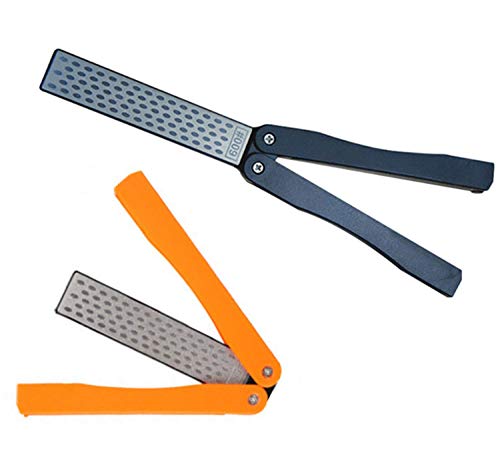
XILEWHZF 2-Piece 400/600 Grit Pocket Diamond Sharpener

SHARPAL 114N Credit Card-Sized Diamond Stone 600 Grit
More Details On Our Top Picks
This Arkansas novaculite stone leans classic, which suits you well for regular edge touch-ups rather than aggressive reshaping. At 3 inches long, 1 inch wide, and 1/4 inch thick, it slips easily into a pocket pouch, so it makes sense for field kits and day packs. The soft, medium cut sits between coarse repair work and final polishing, so the trade-off is slower material removal in exchange for finer control.
You may find it especially comfortable for pocket knives that only need steady maintenance after daily carry. Compared with the diamond picks later in this list, it asks for a little more patience but gives a calmer, more traditional sharpening feel.
Strong Points
- Natural novaculite gives you a controlled, even sharpening feel.
- The compact 3-inch shape fits pocket kits with ease.
- Medium softness works well for routine edge renewal.
- The leather pouch helps with storage and transport.
Points To Note
- It removes metal more slowly than diamond-coated options.
- You may want a separate coarse tool for damaged edges.
- The stone asks for a little care during storage so grit does not pick up debris.
Feature Snapshot
Who It Suits Best
You will like this most for routine knife maintenance, especially in a camping setup or a small workshop where compact gear matters.
A Better Fit Elsewhere
DMT Dia-Fold Portable Pocket Sharpener FWEF suits you better for faster field touch-ups on duller blades.
Angle guides change the feel of sharpening right away, and this Work Sharp setup builds that into the bench experience. The guides can sit at 15 degrees or 17 degrees, or you can remove them and sharpen freehand, which gives you a useful mix of control and flexibility. That makes it a strong fit for kitchen users and hobbyists who want repeatable edge work without giving up manual technique.
The trade-off is size and setup, since this is a benchtop tool rather than a pocket stone. Compared with Dan’s Genuine Arkansas Soft stone, it gives you more structure and less carry convenience, so it suits a home station better than a trail pack.
What We Like
- Guide settings at 15 degrees and 17 degrees help you stay consistent.
- You can remove the guides for freehand sharpening.
- It suits knives and other edged tools, not only pocket blades.
- The bench format works well in a steady home setup.
Room For Improvement
- It takes up more space than portable stones.
- You will want a fixed spot for storage and use.
- Less travel friendly than the pocket-size picks in this roundup.
Core Details
Right Fit For
You should look here for a home sharpening station, especially when you want more control than a simple pocket stone can give you.
Another Choice May Suit
SHARPAL 114N Credit Card-Sized Diamond Stone 600 Grit is a better fit for compact carry and quick on-the-go touch-ups.
This two-piece set is built around outdoor jobs, so it makes sense for garden sheds, camp boxes, and mixed tool kits. The folding design keeps the diamond surface protected during carry, and the 400/600 grit pairing gives you both a more aggressive side and a finer side for follow-up work. For pruning tools, scissors, and pocket blades, that mix covers a lot of routine sharpening without much bulk.
Compared with the Arkansas stones earlier in the list, this one works faster on rougher edges but feels less traditional in use. The honest read is that you are getting utility first, not a polished bench-tool experience.
Highlights
- Two sharpeners in one pack stretch the value for shared tool sets.
- 400 and 600 grit give you coarse and finer passes in the same format.
- Folding shape protects the surface during storage.
- Works across scissors, pruners, loppers, and kitchen knives.
- Useful for outdoor kits that need a compact sharpening backup.
Minor Gripes
- Smaller format means less hand room than a bench stone.
- You may prefer a steadier base for longer sharpening sessions.
- The focused tool shape is less suited to broad sharpening chores.
Details At A Glance
Built With In Mind
You will get the most from this set in a garden shed, camp kit, or mixed-use toolbox where several tools need upkeep.
Where A Sibling Pick Shines
ALI Industries 6050 Pocket Sharpening Stone 3-Inch x 7/8-Inch makes more sense for a simpler single-stone carry.
This set is the most complete-feeling option in the group because it bundles multiple stones and setup pieces around one sharpening workflow. You get two stones, two rubber bases, a wood holder, an angle guide, a flattening stone, a leather strop, and a manual, so the package covers shaping, refining, and finishing in one box. That makes it especially useful in a kitchen or garage where you want a more guided routine than a pocket stone can offer.
The trade-off is that you are buying a system, not a grab-and-go tool. Compared with the simpler Dan’s Arkansas stones, this one asks for more storage space and a little more patience, but it also covers a much wider range of edge work.
Best Bits
- Two stone grits give you both repair and refining stages.
- The angle guide helps new sharpeners keep a steadier stroke.
- The flattening stone helps maintain even stone surfaces over time.
- The leather strop supports a cleaner finishing pass.
- Rubber bases and a wood holder add stability at the bench.
Areas To Watch
- This is a larger setup than a pocket stone, so storage matters.
- More pieces means more to clean and keep organized.
- The system approach may feel like overkill for occasional touch-ups.
Spec Overview
Whose Shelf It Belongs On
You will appreciate this most in a home sharpening station where you want a guided, multi-step process.
Swap It Out When
Dan’s Genuine Arkansas Hard (Fine) Pocket Stone suits you better for simple carry and smaller maintenance tasks.
This hard Arkansas stone is the finishing partner to the softer Dan’s pick earlier in the list. At 3 inches by 1 inch by 1/4 inch, it keeps the same pocket-friendly shape, but the fine cut is better suited to edge refinement after the rough work is done. For pocket knives that already hold an edge and just need a cleaner feel, that is exactly the sort of stone you want.
The trade-off is that fine stones are not the fastest route for damaged blades. You may prefer this more for maintenance than for rescue work, and that makes it a smart match for people who already stay on top of their edges.
Reasons To Buy
- Fine Arkansas material helps you refine an already workable edge.
- The slim pocket size travels easily with outdoor gear.
- It pairs well with a coarser stone for a complete kit.
- The pouch supports tidy carry and storage.
Honest Caveats
- It is not the fastest choice for badly dulled blades.
- You will get better results after a coarse sharpening step.
- The small format leaves little room for broad strokes.
Core Details
Perfect Match For
You will like this best for careful maintenance work, especially when your knife only needs a fine edge refresh.
Look Elsewhere When
Honoson 2 Pack Folding Pocket Diamond Sharpener 400/600 Grit suits you better for faster material removal and rougher edges.
Diamond sharpening brings speed into the picture, and this DMT folder is built for that kind of quick work. The extra fine and fine sides give you a simple two-step path for polishing and light correction, while the folding form keeps the abrasive faces protected in a pack or tool roll. That combination works especially well for travel, fishing kits, and any daily carry setup where you need a compact, no-fuss sharpener.
Compared with the Arkansas stones, this one usually feels more immediate on dull edges. The trade-off is a less traditional sharpening feel, but for busy users, that quicker bite often matters more than finesse.
Upsides
- Diamond surfaces tend to cut faster than natural stone.
- Extra fine and fine sides cover light correction and finishing.
- The folding format protects the working faces during storage.
- Compact size suits travel bags and pocket kits.
Small Caveats
- It gives a different feel than a natural Arkansas stone.
- You may want a coarser tool for more damaged edges.
- The folding design adds a bit of mechanism complexity.
Feature Card
Who Should Grab It
You will get the most from this one in a travel kit or field bag where fast edge touch-ups matter.
Reach For A Different Pick When
Work Sharp Benchtop Whetstone Knife Sharpener suits you better for a fixed home station with guided angle control.
Some sharpeners do a lot, and some just stay out of the way and work. This ALI Industries stone sits in the second camp, with a straightforward 3-inch by 7/8-inch shape that suits pocket carry and no-nonsense edge upkeep. The source data gives you a compact carry format and a country of origin note, so the appeal here is mainly simplicity and size rather than a long feature list.
That makes it a sensible pick for people who want a basic stone for a glove box, toolbox, or small kit. Compared with the more feature-heavy S SATC set, this one is much easier to store and manage, but it also leaves you with far fewer sharpening stages.
Bright Spots
- Small size keeps it easy to stash in a kit.
- Simple single-stone format avoids extra setup.
- Good fit for basic maintenance work.
Worth Noting
- You do not get multiple grits or accessories here.
- The lean feature set may feel too basic for more involved sharpening jobs.
- Storage organization is on you since there is no bundled pouch in the source details.
Quick Facts
Made For
You should look at this for straightforward pocket carry and occasional edge upkeep without extra parts.
Skip It When
XILEWHZF 2-Piece 400/600 Grit Portable Handheld Sharpener suits you better when you want dual-grit flexibility in one purchase.
Diamond abrasive and an ABS handle give this pair a more modern, easy-grip feel than the simpler stone picks in the list. The honeycomb surface is meant to speed up sharpening on garden tools, and the 400/600 grit split gives you both a stronger cutting face and a finer follow-up side. For kitchens, gardens, and camp gear, that blend makes it a handy shared-use option.
You may find the handle shape especially useful for longer sessions, because it gives your hand a steadier place to settle. The trade-off is that it feels more tool-like than a classic stone, so it will not suit every sharpening habit.
Standout Traits
- Diamond whetstone surface supports durable everyday use.
- ABS handle adds comfort during repeated passes.
- Honeycomb surface is aimed at quicker sharpening on garden implements.
- Dual grits make it more flexible than single-side stones.
Softer Spots
- The grip style may feel different if you prefer a plain stone.
- It is still a handheld tool, so very long sessions can feel small in hand.
- Surface texture may call for a bit more cleaning after outdoor use.
At A Glance
The Right Fit
You will appreciate this most if your knife sharpener also needs to handle garden tools and outdoor gear.
Where Another Pick Fits Better
Dan’s Genuine Arkansas Soft (Medium) Pocket Stone MAP-13A-L suits you better for a more traditional stone feel in a compact pouch.
The credit-card shape is the whole story here, and that is exactly why it earns a spot in a pocket-friendly roundup. Fine 600 grit gives you a finishing-level abrasive for light edge refinement, while the thin format makes it easy to stash in a wallet pouch, glove box, or everyday carry kit. That kind of portability helps most when you want a backup sharpener that barely takes up space.
Compared with the DMT folder, this SHARPAL option is even flatter and easier to tuck away. The honest trade-off is that the tiny format suits touch-ups far better than heavy repair work, so it belongs in a maintenance role.
Positives
- Credit-card size makes storage extremely easy.
- Fine 600 grit works well for light edge finishing.
- Portable form fits travel kits and glove boxes.
- Thin profile keeps bulk to a minimum.
Trade Offs
- Small surface area means less room for broad strokes.
- It is better for touch-ups than major edge repair.
- You may want a coarser tool alongside it.
Feature Rundown
Who Will Love This
You will get the most out of this in a compact EDC kit, travel pouch, or emergency backup slot.
Another Choice May Suit
S SATC 4-Side Grit Whetstone Set suits you better for a full sharpening station with more stages and accessories.
How To Choose The Right Pocket Knife Sharpening Stones
Start With The Edge You Actually Need
Stone grit tells you how the abrasive feels. Lower grit removes material faster, which helps with dull pocket knives or small chips, while higher grit is better for refining and smoothing a working edge. The sweet spot for many daily-carry knives sits in the middle, where you get control without making the process painfully slow.
That matters because a camp knife, a kitchen paring knife, and a folding utility blade rarely need the same finish. Pair the grit to the job, not the label on the package.
Match The Material To Your Routine
Arkansas novaculite gives a slower, more deliberate sharpening feel, and that suits you well for maintenance and polishing. Diamond surfaces bite faster and stay useful in travel kits, garage drawers, and outdoor bags where speed matters more than a traditional feel.
There’s a trade-off either way. Natural stone often feels calmer in hand, while diamond abrasives usually feel more immediate and less fussy about quick touch-ups.
Think About Size, Shape, And Carry Style
Pocket stones only help when they’re actually with you. Slim 3-inch stones, folding diamond tools, and credit-card shapes each solve that problem in a different way, and the right one depends on whether you carry gear in a pocket, pouch, or tackle box.
A wider stone gives more room for the blade, but a flatter format disappears into a kit more easily. You’re balancing working comfort against portability, and that balance changes with how often you sharpen away from home.
Do Not Ignore Stability And Setup
Bench-style sharpeners bring guides, holders, and strops into the process, which can make learning easier and results more repeatable. A simple handheld stone asks more from your hand control, but it also keeps the whole routine lighter and quicker.
For home use, extra parts can be worth it. For travel, simple usually wins.
What To Weigh Before You Click
Mistakes Worth Dodging
One common slip-up is picking a stone that is too fine for a truly dull blade. Another is buying a tiny pocket stone and expecting it to handle major edge damage without help from a coarser tool.
Storage gets overlooked too. Diamond surfaces and natural stones both stay happier when they’re kept clean and protected, especially in tool bags where grit and moisture love to linger.
The Case For Spending Up
Higher-tier options usually add more control, more surfaces, or a more complete sharpening system. That can mean angle guides, multiple grits, flattening tools, or a tougher abrasive face that handles repeated use more gracefully.
You tend to feel the upgrade most in a home station or a shared tool setup. For a glove box or emergency pouch, a simpler stone often makes more sense.
Frequently Asked Questions
What grit works best for a pocket knife?
Medium grits are a strong starting point for routine edge upkeep. Finer grits are better for finishing, while coarser grits help when the edge needs real repair.
Is diamond better than Arkansas stone?
Diamond usually cuts faster and suits quick touch-ups. Arkansas stone gives a slower, more traditional sharpening feel that many people like for maintenance.
Can one stone handle every sharpening task?
A single stone can manage light upkeep, but it rarely covers every stage well. A coarse, medium, and fine approach gives you more flexibility.
Why do some pocket stones come with pouches or folding cases?
Those covers help protect the sharpening surface during carry. They also make pocket storage less awkward.
Do pocket stones work for garden tools too?
Some do, especially diamond models with enough grit range for pruners, scissors, and small blades. The shape and surface size need to fit the tool you’re sharpening.
Closing Thoughts
You do not need a huge sharpening setup to keep a pocket knife ready for daily use. The right stone depends on how you carry, how dull your blade gets, and whether you want speed, finesse, or a bit of both. Dan’s Arkansas stones make sense for traditional maintenance, the DMT and SHARPAL picks lean into portability, and the S SATC set gives you a fuller bench setup. Choose the one that matches your routine, and the rest gets easier.