Woodworking gets frustrating fast when marks drift, centers are guessed, or a square doesn’t sit where your hand needs it. You need rulers and layout tools that fit the job, not just the toolbox, whether you’re trimming boards in a garage shop, marking repeat cuts at a bench, or doing quick checks on a jobsite. These nine picks cover everything from pocket-friendly marking tools to longer rules and center finders, so you can match the tool to the task instead of forcing one ruler to do everything.
The Shortlist At A Glance

IRWIN Combination Square 12-Inch Stainless Steel (1794469)
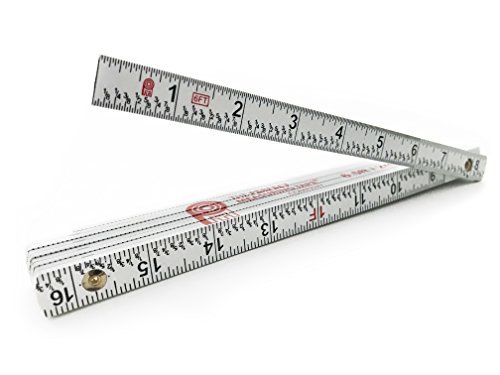
Perfect Measuring Tape Co. FR-72 Carpenter’s Folding Rule 6.5ft / 2m

Violetfox Woodworking Ruler 3-Piece Pocket Metal Slide Rule Set

ViewReal Carpenter Square Hole Scribing Ruler 22.5-90 Degree

ZZTX 3 Pack Wooden Ruler 12 Inch

ARTYMASTER 3.8-Inch Mini 3D Multi-Angle Measuring Square Ruler WT102A

Peachtree Woodworking Supply 24-Inch Stainless Steel Center Finding Ruler

Beslands Aluminum 12-Inch Speed Square Rafter Square
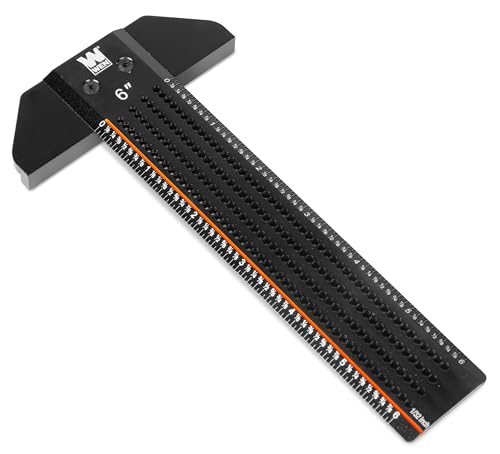
WEN 6-Inch T-Shaped Marking Ruler (ME806R)
More Details On Our Top Picks
For shop work that leans on repeatable right angles, this IRWIN square feels like the steady kind of tool you keep close. The stainless steel blade and cast zinc body point to a layout tool built for everyday handling, not delicate drawer duty.
The black etched scales should stay easy to read in dim sheds or crowded benches, and the 45-degree and 90-degree marking setup fits common woodworking checks. The trade-off is simple, it’s a compact square rather than a long-rule replacement, so it serves joinery and marking better than full board measuring.
Strong Points
- Stainless steel and cast zinc give it a firmer feel than lighter shop rulers.
- Black etched markings are easier to follow than bright, low-contrast printing.
- 45-degree and 90-degree layout support common cut and corner checks.
- Good for bench use, cabinet work, and quick squareness checks.
Things To Consider
- It fills a square role, not a long measuring role.
- The compact format is less useful for larger sheet goods.
- Metal edges can pick up scuffs, so storage in a tool tray helps.
Feature Snapshot
Whose Shelf It Belongs On
Weekend woodworkers and home-shop users who want a straightforward square with clear markings will get the most from it.
Swap It Out When
Peachtree Woodworking Supply’s 24-Inch Stainless Steel Center Finding Ruler suits you better when center marks matter more than square layout.
A folding rule like this fits the rhythm of bench work, trim checks, and fast note-taking better than a floppy tape measure. The 6.5-foot, or 2-meter, reach gives you more room than a short square without pushing you into bulky framing-tool territory.
Its easy-read inch fractions matter most on jobs where you keep glancing down for 1/8, 1/4, or 1/2 marks, especially in brighter daylight or a cramped garage. The trade-off is the usual one for folding rules, you gain reach and readability, but you still need a tool that opens and closes with a little care.
What We Like
- Longer measuring reach helps with boards, stock checks, and quick room-to-bench tasks.
- Fraction markings reduce mental math during rough layout work.
- Folding format stores neatly in a drawer or apron pocket.
- Good middle ground between a short square and a full tape.
Minor Gripes
- Folding sections add moving joints, so the tool needs a little more handling care.
- It suits linear measuring more than angle-focused marking.
- The composite build keeps weight down, but it won’t feel as solid as metal.
Core Details
Built With In Mind
Trim carpenters, hobby woodworkers, and DIY helpers who want a readable folding rule will appreciate the simple layout.
Reach For A Different Pick When
Beslands Aluminum 12-Inch Speed Square Rafter Square suits you better for framing angles and roof cuts than this straight measuring rule.
This three-piece set is built for pocket carry, especially for marking jobs that move from bench to saw to assembly table. The inch-and-metric layout is handy in mixed-tool shops, and the T-style, meaning a crossbar shape that helps with guided marking, gives you more control than a plain straightedge.
Compared with the IRWIN square, this set leans harder into portability and variety instead of one heavy-duty body. That makes it appealing for small-shop use, though the trade-off is that you’re handling several pieces rather than one all-purpose square.
Upsides
- Three tools in one set give you more layout options in a small pouch.
- Inch and metric scales help in mixed-shop or imported-plan work.
- Metal construction feels better suited to bench carry than soft plastic tools.
- The compact form slips into an apron pocket without much fuss.
- Good for scribing, square marking, and quick reference marks on the fly.
Room For Improvement
- Small tools can be easy to misplace, so storage discipline matters.
- Multiple pieces mean more chances to grab the wrong one in a rush.
- The shorter sizes are less useful for larger stock or long panels.
Details At A Glance
Perfect Match For
Compact-shop woodworkers and makers who want several small rulers in one set will get the most value here.
Where A Sibling Pick Shines
IRWIN Combination Square 12-Inch Stainless Steel (1794469) makes more sense for one-piece sturdiness and more universal bench work.
Angle-heavy work is where this square starts to earn its keep. The preset 22.5, 30, 45, 60, 67.5, and 75 degree marks cover common layout needs, and the angle-pin holes add a repeatable way to hold those positions during marking.
That matters in woodworking, engineering, and construction jobs where you don’t want to keep resetting the same angle by eye. The trade-off is that the tool has a more specialized feel than a general square like the IRWIN, so it makes the most sense in a shop that regularly handles angled cuts.
Reasons To Buy
- Preset angles speed up repetitive layout work.
- Angle-pin holes support more controlled marking.
- Useful across woodworking, engineering, and construction tasks.
- Helps reduce second-guessing on common angled cuts.
- Good fit for projects that repeat the same geometry often.
Points To Note
- It focuses on angled work, so it’s less general than a standard combination square.
- More functions can mean a slight learning curve at first.
- Slot and hole features deserve a little cleanup after dusty projects.
Technical Sheet
Who Should Grab It
Woodworkers and layout-heavy tradespeople who keep returning to the same angles will feel right at home with this one.
Skip It When
WEN 6-Inch T-Shaped Marking Ruler (ME806R) fits better for quick, compact marking jobs where a smaller footprint matters more.
Wood rulers still have a place in a shop, especially for straightforward measuring where a calm, familiar tool is enough. This three-pack gives you a simple 12-inch format, and the two-in-one scale design helps keep measurements easy to read during school projects, drafting practice, or light workshop marking.
Compared with the metal tools earlier in the list, these wooden rulers feel more casual and less industrial. That’s not a flaw for everyone, but it does mean they suit classrooms, craft rooms, and basic measuring better than rougher jobsite use.
Bright Spots
- Three rulers in one set support shared use at home or in class.
- Simple 12-inch length fits desks, craft tables, and small workspaces.
- Two-scale layout helps with everyday measuring and drafting tasks.
- Light, familiar format is easy to keep in a pencil cup or drawer.
Small Caveats
- Wood surfaces can scuff more readily than metal rulers.
- The set leans basic, so it’s not aimed at precision layout specialists.
- School-style use fits best, while rough workshop handling may shorten the neat finish.
Feature Card
The Right Fit
Students, teachers, and casual makers who want a simple ruler set will appreciate the straightforward format.
A Better Fit Elsewhere
Beslands Aluminum 12-Inch Speed Square Rafter Square makes more sense for framing, roofing, and tougher layout work.
Small-scale marking tools can be a relief in tight spots, and this mini square is built around that idea. The 0 to 90 degree aluminum alloy design, plus the high-precision hole-scribing setup, makes it handy for fine layout work where a full-size square feels clumsy.
It also comes with carpenter pencils and six refills, so the kit side of it matters as much as the square itself. For most benchtop projects, that extra convenience is helpful, though the compact 3.8-inch size naturally limits how much reach you get on larger stock.
Best Bits
- Very compact size works well in tight corners and small jigs.
- Aluminum alloy body keeps the tool light in hand.
- Hole-scribing design helps with more controlled marking.
- Included pencils and refills add immediate shop readiness.
- Good for detail work where a larger square gets in the way.
Areas To Watch
- Its mini size is a plus for storage, but a limit for longer layout lines.
- Accessory packs are handy, though pencils will need resupplying over time.
- Fine tools benefit from a dedicated slot or pouch so they do not vanish in clutter.
Feature Rundown
Whose Shelf It Belongs On
Detail-focused woodworkers, small-space crafters, and anyone working in a compact bench area will get the most use from it.
Look Elsewhere When
IRWIN Combination Square 12-Inch Stainless Steel (1794469) suits broader shop use better when you need a more standard all-purpose square.
Center finding is one of those small shop tasks that eats time when you have to split measurements by hand. This 24-inch stainless steel ruler solves that with a marked center point, a circular marker, and a pointed arrow, so you can line up equal distances on both sides and mark the middle quickly.
The 1 mm thick steel gives it enough flex to sit well on a range of projects without feeling floppy, and the 32nd scale suits detailed layout work. The trade-off is focus, because this tool shines on center marks more than broad measuring or angle work.
Positives
- Center mark is built into the ruler, so there’s less arithmetic on the bench.
- 24-inch length helps on wider panels, boards, and shaped stock.
- Stainless steel construction feels suited to repeated shop handling.
- 32nd-inch scale supports more detailed layout than a coarse shop rule.
- Handy for round, square, and rectangular pieces alike.
Honest Caveats
- It is specialized for center finding, so it won’t replace a combination square.
- The thinner steel feel is useful, though it still asks for careful storage.
- Detailed markings are helpful, but they can take a moment to read in low light.
Core Details
Who Will Love This
Cabinet builders, turners, and anyone marking center lines on mixed shapes will appreciate the time it saves.
Another Choice May Suit
WEN 6-Inch T-Shaped Marking Ruler (ME806R) is the better fit for tiny bench jobs where a shorter tool is easier to handle.
Framing work asks for a square that can handle angle checks without feeling flimsy in the hand. This Beslands aluminum triangle gives you a 12-inch format with protractor-style layout support, which makes it useful for rafters, roofing lines, and general construction marking.
Compared with the ViewReal angle ruler, this one reads more like a classic speed square, so it should feel more familiar to carpenters who already know that shape. The trade-off is less specialty angle-pin complexity and more straightforward utility, which is often the better fit on a busy framing bench.
Highlights
- Aluminum construction suits jobsite handling and frequent carry.
- Speed-square shape supports common framing and rafter layout tasks.
- 12-inch size gives more working room than pocket squares.
- Protractor-style layout help adds angle-reading flexibility.
- Good for roofing, carpentry, and construction layouts.
Worth Noting
- It is better suited to framing than fine furniture layout.
- The larger footprint takes more space in a tool bag than mini squares.
- Metal layout tools benefit from wiping down after dusty roof or lumber work.
Spec Overview
Best Suited To
Carpenters, framers, and roofing helpers who rely on a familiar speed-square profile will make the most of it.
Where Shoppers Go Wrong
Violetfox Woodworking Ruler 3-Piece Pocket Metal Slide Rule Set is the better choice for tiny tool rolls and lighter carry needs.
Small marking jobs often benefit from a tool that stays out of the way, and this 6-inch T-shaped ruler fits that role neatly. The T format gives you a broader head for guided marking, which is useful on narrow boards, light craft work, and quick bench checks.
It sits closer to the ARTYMASTER mini square than to the larger framing tools, but the simpler profile makes it easier to keep close at hand. The obvious trade-off is reach, because a 6-inch rule is great for compact work and less useful once your layout lines stretch farther across stock.
Plus Points
- T-shaped body helps with controlled marking on small surfaces.
- 6-inch size keeps it easy to store and grab quickly.
- Good companion for bench tasks, templates, and short measurements.
- Simple format suits casual use without much learning time.
Areas To Watch
- Short reach limits its usefulness on larger lumber or panels.
- It is a niche layout tool, not a stand-in for a full square.
- Small metal tools are easy to misplace, so a fixed storage spot helps.
Quick Facts
Built For In Mind
Hobby woodworkers, craft makers, and anyone doing small bench marking will get the most mileage from it.
Hidden Buying Traps
Beslands Aluminum 12-Inch Speed Square Rafter Square suits you better once framing lines, rafters, or larger stock enter the picture.
How To Choose The Right Ruler For Woodworkings
Match The Tool To The Job
A ruler for layout work should fit the kind of marks you make most often. A combination square such as the IRWIN handles right angles and quick checks, while a folding rule like the Perfect Measuring Tape Co. FR-72 gives you more measuring reach for boards and trim. The difference matters because a tool that feels natural in your hand gets used more often, and that usually means fewer awkward workarounds.
Think About Scale And Readability
Clear markings save more time than flashy extras. Black etched scales, inch fractions, metric markings, and 32nd-inch divisions all help in different ways, but the real question is how quickly you can read the line without leaning in or second-guessing the mark. In a dim shop, high-contrast engraving tends to help more than printed labels that fade into the material.
Choose Shape With Your Workspace In Mind
Pocket tools, speed squares, T-rulers, and center finders solve different space problems. ARTYMASTER’s mini square works well on small benches, Beslands favors framing work, and Peachtree’s center-finding ruler saves time on round or square stock. A larger tool can feel like a clean slice through a layout problem, but only when the bench, project size, and storage space all line up.
Weight, Material, And Handling
Metal rulers often feel more stable, while wood and composite options can be lighter or easier to carry. Stainless steel and aluminum usually suit tougher shop use, though they can collect scuffs and fingerprints and deserve a dry wipe after dusty jobs. Composite and wooden pieces can be gentler in a classroom or craft room, yet they tend to ask for a little more care over time.
What To Weigh Before You Click
Wrong Turns To Avoid
A common mistake is choosing by length alone and ignoring the shape of the tool. A 24-inch center finder, a 12-inch speed square, and a 6-inch T-ruler solve very different problems, so the right choice depends on your layout habits more than the biggest number on the package. Another slip-up is grabbing a precision tool for rough carpentry or a framing square for tiny cabinet tweaks.
The Upgrade Payoff
Higher-tier layout tools usually spend the extra money on better materials, more exact markings, and more useful geometry. That can mean stainless steel blades, aluminum bodies, preset angle stops, or added features like scribing holes and center marks, all of which make repetitive shop tasks smoother. The upgrade is worth it for frequent use, jobsite carry, or any work where a small error turns into extra sanding, recutting, or refitting.
Frequently Asked Questions
What makes a ruler useful for woodworking?
A good woodworking ruler stays readable, stable, and suited to the kind of mark you make most often. Squares, folding rules, center finders, and T-rulers each solve a different layout problem.
Do you need metric and inch markings?
Mixed markings help when you use imported plans, follow online builds, or share tools across different projects. Inch-only tools still work fine for many shops, but dual-scale options add flexibility.
Is stainless steel better than wood?
Stainless steel usually feels more durable and better for repeated bench use. Wood can still work well for casual measuring, school use, and light craft projects.
Which tool helps most with center marks?
A center-finding ruler is the most direct choice for that task. Peachtree’s 24-inch stainless steel model is built around that exact job.
What size is easiest to keep nearby?
Short tools like the WEN 6-Inch T-Shaped Marking Ruler are easy to store in a drawer, pouch, or apron pocket. Longer rulers make sense only when your projects regularly need the extra reach.
Closing Thoughts
The right ruler for woodworking depends on the marks you make most, not on collecting every shape in the shop. A square like the IRWIN works well for everyday layout, the Peachtree center finder saves time on middle marks, and the Beslands speed square suits framing work with more room to breathe. Smaller tools such as the WEN T-ruler and ARTYMASTER mini square are easier to keep close, which matters more than people expect during busy bench work. Choose the one that matches your project flow, and your layout work gets cleaner with far less fuss.