You want a sander that fits the job, not just the label. For rough shaping, fine finishing, tight detail work, and ceiling cleanup, the right tool saves time and helps you stay in control of the surface.
This roundup focuses on varied sanding needs, from corded belt power to compact detail work and simple hand-finishing blocks. You’ll see which options suit garage projects, furniture touch-ups, drywall work, and travel-friendly tool kits without overcomplicating the choice.
Quick Look At The Shortlist

Jellas 7Amp Handheld Belt Sander 3 21 Inch with Dust Bag

BOSCH GSS20-40 Orbital Finishing Sander 1/4-Sheet 2 Amp

90PCS Premium Micro Detail Sander Kit Updated 3-in-1 Mini Hand Sanding Block

Drywall Sander 1000W Popcorn Ceiling Removal Tool

ONEAND 18V Cordless 5 in. Random Orbit Sander Tool ONLY

WORKPRO 5-Inch Random Orbit Sander 6 Variable Speeds 7000 to 14000 RPM
NARBELL Orbital Sander 3.0AMP 360W 14000RPM Random Orbit Sander Tool

Sanding Sponge 60 80 120 220 Grit 4-Pack with Protective Gloves by Afruxy
More Details On Our Top Picks
The 3 by 21 inch belt format gives you a wide sanding path, so this pick makes more sense for flattening boards, edging lumber, and knocking down rough surfaces than for delicate finish work. The variable speed control helps you slow things down for more control, and the 10-foot cord gives you decent reach in a garage or workshop.
The dust bag and 2-in-1 vacuum adapter matter most during longer sessions, because belt sanders throw a lot of debris. That trade-off still stands, though, the aggressive format is louder and less forgiving than an orbital model like the BOSCH GSS20-40.
Strong Points
- Wide belt coverage speeds up rough sanding on boards and panels.
- Variable speed adds some control for different wood surfaces.
- The 10-foot cord helps in a larger work area.
- Dust handling is built in, which keeps cleanup lighter.
Things To Consider
- Belt sanders remove material quickly, so they demand a steadier hand.
- The dust bag helps, but belt sanding still creates plenty of mess.
- It suits shaping work better than fine finishing.
Feature Snapshot
Whose Shelf It Belongs On
It fits home woodworkers who need faster shaping on furniture parts, boards, or fence pieces.
Where A Sibling Pick Shines
WORKPRO 5-Inch Random Orbit Sander suits you better for general sanding where a lighter touch matters more.
This one leans toward finish work, not heavy stock removal, and that makes it a natural step down from the Jellas belt sander. The 1/4-sheet format is useful for furniture panels, cabinet faces, and trim where you want a flatter, calmer sanding motion.
The 2 amp motor and 12,000 OPM rating point to a finishing-focused tool, and OPM means oscillations per minute, or how fast the pad moves in its orbiting pattern. You may find that speed helpful on smooth surfaces, while the dust collector keeps the bench cleaner during longer indoor sessions.
What We Like
- Finishing-oriented motion suits careful surface prep.
- 1/4-sheet format works well on panels and edges.
- Dust collection helps during indoor sanding.
- Compact power setup fits a home shop easily.
Worth Noting
- It is better for smoothing than for aggressive material removal.
- The smaller sheet format may feel slower on larger boards.
Core Details
Made For
You’ll get the most from it in a small workshop, especially around cabinet refreshes and furniture prep.
Another Choice May Suit
Jellas 7Amp Handheld Belt Sander 3 21 Inch with Dust Bag makes more sense for rougher lumber work and faster material removal.
This kit is built for the spots larger sanders miss, like trim corners, small craft pieces, and the inside edges of detailed woodworking. The 3-in-1 idea points to a hand sanding block that handles several tasks, and the 60 to 400 grit spread gives you room to move from rougher prep to finer smoothing.
Compared with the BOSCH and Jellas tools, this one is far more about touch than speed. For hobby projects, model work, or repairs around narrow cutouts, that’s the whole point, though it won’t replace a powered sander for broad surfaces.
Bright Spots
- Small format fits corners and narrow spaces.
- Wide grit range supports rough and finer hand work.
- Useful for craft projects and touch-up sanding.
- Hand control helps around delicate edges.
- Kit format gives you multiple abrasive options.
Small Caveats
- Hand sanding takes more time than powered tools.
- It is better for detail work than large panels.
- Storage matters, since small accessories are easier to misplace.
Details At A Glance
Who Will Love This
It suits hobbyists and detail-focused DIYers who spend more time on corners than on big boards.
Swap It Out When
WORKPRO 5-Inch Random Orbit Sander fits better for broad wood panels where powered coverage matters.
This is the biggest job-specific tool in the lineup, and the ceiling-removal focus makes that clear right away. The foldable, extendable handle helps reach overhead surfaces, while the LED light is useful in dim rooms, hallways, or corners where shadows hide uneven patches.
The vacuum dust collection matters even more here than on smaller sanders, because drywall work can throw debris everywhere. Six variable speeds from 800 to 2200 RPM, with RPM meaning revolutions per minute, give you room to adjust aggressiveness, though the tool is plainly overbuilt for simple furniture sanding.
Upsides
- Built for ceilings and broad drywall surfaces.
- Extendable handle reduces strain on overhead work.
- LED lighting helps in dark work areas.
- Variable speeds give you more control over the cut.
- Dust collection supports cleaner indoor projects.
Areas To Watch
- It is specialized, so it is not the right all-purpose wood sander.
- Larger size means more storage space.
- Cleanup and disc replacement matter on a tool this active.
Technical Sheet
Perfect Match For
You’ll appreciate it for renovation work, especially ceilings, walls, and larger room prep.
Look Elsewhere When
BOSCH GSS20-40 Orbital Finishing Sander 1/4-Sheet 2 Amp suits lighter wood finishing much better.
Cordless sanding makes a lot more sense on job sites, in driveways, or anywhere a cord turns into clutter. This ONEAND model is sold as tool only, so it fits shoppers who already own a compatible 18V battery setup and want a mobile 5-inch random orbit option.
Compared with the WORKPRO and NARBELL corded models, the payoff here is freedom of movement, not wall power. That trade-off is easy to accept for trim work, outdoor furniture, and quick repairs, though battery ownership becomes part of the equation.
Reasons To Buy
- Cordless design keeps your movement flexible.
- 5-inch orbit format suits common woodworking tasks.
- Tool-only packaging can make sense for battery owners.
- Easy to carry between spaces and work areas.
Points To Note
- You need a separate battery and charger.
- Cordless convenience depends on your existing 18V setup.
- Runtime will matter more than on corded sanders.
Feature Rundown
Best Suited To
It suits mobile woodworkers and home improvers who already live inside a matching 18V system.
Reach For A Different Pick When
NARBELL Orbital Sander 3.0AMP 360W 14000RPM Random Orbit Sander Tool works better if you want a corded setup with steady power.
The WORKPRO lands in the middle of the pack in a useful way, because it combines a 5-inch pad with six speed settings and a 2.5 amp motor. For everyday sanding on tabletops, shelving, or cabinet parts, that mix gives you a sensible balance between control and coverage.
The 7,000 to 14,000 RPM range helps you match the pace to the wood in front of you, and the dust collector makes indoor work easier to live with. It feels less specialized than the belt sander or drywall tool, which is exactly why many general-purpose shops lean on this type.
Best Bits
- Speed range gives you room to adjust pressure and finish.
- 5-inch format works for common woodworking tasks.
- Dust collector supports tidier bench work.
- Good fit for general sanding without feeling overcomplicated.
Honest Caveats
- It does not have the same reach as a belt sander.
- Large surfaces take more passes than with a wider tool.
Spec Overview
The Right Fit
This suits casual woodworkers and apartment garage setups that need one dependable orbital sander.
A Better Fit Elsewhere
Jellas 7Amp Handheld Belt Sander 3 21 Inch with Dust Bag is the stronger choice for rapid shaping and heavier stock removal.
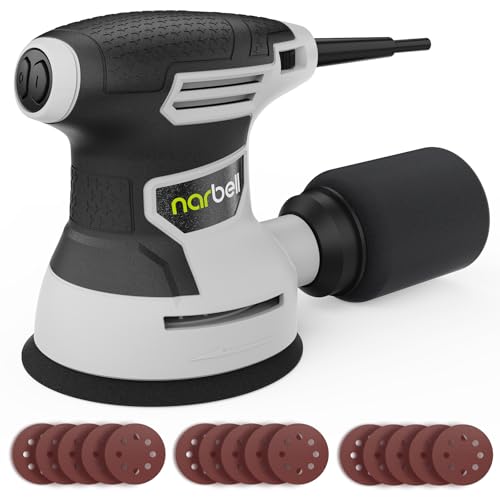
NARBELL pushes a little harder on power and adjustability than the WORKPRO, and you can feel that in the 3.0 amp, 360W setup with six variable speeds. For woodworking, sanding furniture, or touching up painted surfaces, that extra flexibility can make the tool easier to match to the job.
The 5-inch pad, dust bag, and 15 included sanding sheets round it out as a practical starter kit. The light gray finish is a minor detail, but it can make the tool feel easier to spot on a crowded bench, which matters more than it sounds.
Positives
- Variable speed range helps you tune the sanding pass.
- 3.0 amp and 360W give it a confident work pace.
- Dust bag helps reduce cleanup during indoor use.
- Included sheets help you get started sooner.
- 5-inch pad keeps it versatile for many tasks.
Softer Spots
- It still works best as a general orbital sander, not a heavy shaper.
- Dust bags need regular emptying to stay useful.
- Like most corded sanders, cord management takes a little attention.
Feature Card
Who Should Grab It
It suits home woodworkers who want a corded orbital tool with a little more setup value in the box.
Where Shoppers Go Wrong
ONEAND 18V Cordless 5 in. Random Orbit Sander Tool ONLY fits you better if mobility matters more than corded consistency.
Manual sanding still has a place, especially for small repairs, rounded edges, drywall touch-ups, and the spots a power tool can overdo. This Afruxy sponge set gives you four grit levels, plus protective gloves, so you can work more carefully on wood, drywall, and metal surfaces without dragging out a machine.
Compared with the powered options above, this is the quiet, simple route, and that can be a relief on little jobs. The reusable dry and wet format adds flexibility, though hand work is naturally slower and depends more on your own pressure and patience.
Highlights
- Four grit levels cover common hand-finishing steps.
- Works for wood, drywall, and metal touch-ups.
- Reusable sponge format suits small maintenance jobs.
- Protective gloves are included in the package.
Room For Improvement
- Hand sanding is slower than using a powered tool.
- Small jobs suit it best, not large flat panels.
- Reusable blocks still need rinsing and drying after use.
Core Details
Who Will Love This
It fits DIYers who want simple hand control for finishing, patching, and edge cleanup.
Consider Something Else When
For broad wood panels, WORKPRO 5-Inch Random Orbit Sander 6 Variable Speeds 7000 to 14000 RPM will save you a lot of time.
How To Choose The Right Sander For Woods
Start With The Surface You’re Sanding
Surface size tells you almost everything. A belt sander like the Jellas is built for fast shaping, a random orbit model works well for general prep, and a hand sponge fits corners, trim, and small repairs.
That matters because the wrong tool often creates more work. Rough lumber asks for coverage and power, while cabinet faces and furniture edges benefit from slower, cleaner control.
Match The Tool To Your Work Pace
Speed settings are useful because sanding pressure changes from task to task. A variable-speed orbital sander helps you ease into delicate finishing, while higher output makes sense for more aggressive removal.
For a home shop, that balance usually matters more than raw numbers alone. You want a tool that feels calm enough to control, not just fast on paper.
Think About Dust And Cleanup
Dust collection is not a side note, especially indoors. A dust bag or collector keeps the bench cleaner, reduces sweeping, and makes it easier to see the surface you’re refining.
That becomes more important in small garages, apartments, or shared workspaces. The trade-off is simple, dust systems help, but they still need emptying and occasional checking so airflow stays useful.
Choose Corded Or Cordless With Purpose
Corded sanders suit long sessions and uninterrupted power. Cordless models help you move around a yard, driveway, or jobsite without hunting for outlets.
Battery tools also shift the cost picture because the battery and charger may already live in your toolkit, or may need to be part of the plan. For mobile work, that freedom can be worth it, while shop users often prefer the steady feel of a cord.
Things Worth Knowing First
Traps First Timers Fall Into
One common mistake is choosing a sanding style that’s too aggressive for the job. A belt sander can be useful, but it can also remove more wood than you wanted in a hurry.
Another slip-up is ignoring the grit range. Coarse paper handles shaping, while finer grits matter for smoothing and final prep, so the kit or sander should match the surface you expect to finish.
What The Higher Tier Buys
Higher-end models usually cost more because they bring steadier motors, better speed control, cleaner dust handling, and more comfortable handling over longer sessions. That combination matters most in regular shop use, not in occasional touch-up work.
You also tend to pay for better fit and finish in the tool body itself. For frequent furniture work, ceiling sanding, or long renovation runs, that extra build attention can make the task less tiring.
Frequently Asked Questions
What kind of sander works best for rough wood?
A belt sander is the better fit for fast shaping and heavy material removal. The Jellas 7Amp Handheld Belt Sander 3 21 Inch with Dust Bag is built for that kind of work.
Which option is better for finish sanding?
A random orbit or finishing sander is usually the safer choice for smoother surfaces. The BOSCH GSS20-40 Orbital Finishing Sander 1/4-Sheet 2 Amp is aimed at that kind of job.
Do cordless sanders make sense for wood projects?
Cordless sanders help when movement matters more than constant plug-in power. The ONEAND 18V Cordless 5 in. Random Orbit Sander Tool ONLY fits that setup well.
Why does dust collection matter so much?
Dust collection keeps the work area cleaner and makes it easier to judge the surface as you go. That matters most in indoor shops and smaller work spaces.
Can hand sanding still be worth it?
Yes, especially for corners, edges, and small repairs where a machine feels clumsy. The Sanding Sponge 60 80 120 220 Grit 4-Pack with Protective Gloves by Afruxy is built for that kind of detail work.
Closing Thoughts
Your best sander for woods depends on the kind of work sitting in front of you. Rough boards point toward the Jellas belt sander, clean finishing points toward the BOSCH, and detail work is where the Afruxy sponge set earns its place. For mobile jobs, the ONEAND cordless model makes more sense, while the WORKPRO and NARBELL stay strong as everyday orbiting options. Choose the one that matches your actual projects, and the rest gets easier.