

Voltmeters make more sense once you match the tool to the job. A dash panel in a boat, a spare meter in a garage, or a handheld unit for electrical troubleshooting all ask for different things, and the wrong style gets old fast.
You’ll see compact panel displays, classic analog meters, and full multimeters here. That spread helps you choose based on how you work, not just on a spec sheet.
The Shortlist At A Glance

DaierTek Battery Voltage Meter Waterproof DC 12V 24V LED Voltmeter Panel

Frienda 2 Pieces DC 4 to 28V Car Digital Voltmeter, Green Light

Frienda 2 Pieces DC 4 to 28V Car Digital Voltmeter, Blue Light

Fluke 15B+ Digital Multimeter

Gardner Bender GMT-318 Analog Multimeter

bayite Pack of 5 DC 0-30V Digital Voltmeter, Blue LED
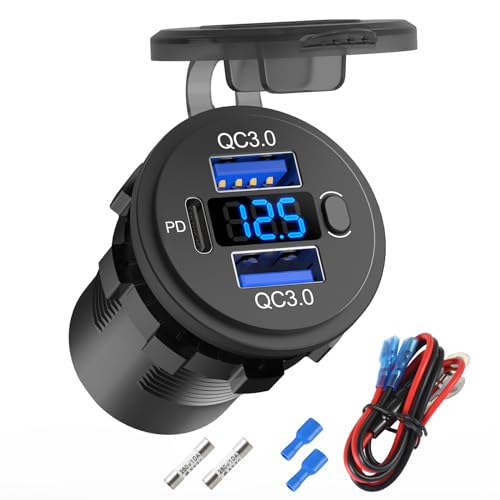
Hapytrip 12 Volt USB Outlet with Voltmeter and Switch

DaierTek Voltage Meter 12V Red Voltage Gauge Waterproof

AstroAI DM200M Digital Multimeter Voltage Tester

FNIRSI DMC-100 Clamp Meter 10000 Counts TRMS
More Details On Our Top Picks
A compact panel meter like this fits neatly into a boat dash, motorcycle fairing, or car project where you want a constant voltage readout without carrying a handheld tool. The included panel and nylon nut give you two mounting paths, and that flexibility matters in tight spaces where hole size and surface access rarely line up cleanly.
The blue LED readout is easy to spot in dim cabins or at night, and the DC 12V to 24V range covers common vehicle systems with room to spare. The trade-off is straightforward: you get a focused display rather than a full diagnostic meter, so this suits daily voltage monitoring better than deep troubleshooting.
Strong Points
- Panel and nut mounting give you more install options.
- Blue lighting stays readable in low-light cabins.
- Useful for keeping an eye on battery status during daily use.
- The round format works cleanly in small dashboards.
Things To Consider
- It focuses on voltage display, so you do not get broader meter functions.
- Mounted gauges usually need a tidy cutout and a stable spot, which matters in older vehicles.
Feature Card
Who It Suits Best
You’ll like this most if you want a tidy, fixed voltage display for a vehicle, boat, or motorcycle and you prefer simple readouts over a handheld tool.
Where A Sibling Pick Shines
FNIRSI DMC-100 Clamp Meter 10000 Counts TRMS suits electricians and advanced hobby work better, especially when you need clamp-style current checks along with a broader feature set.
Two meters in one pack makes this a practical choice for someone wiring a car audio setup, fitting a backup gauge in a motorcycle, or keeping a spare in the toolbox. The green display has a clear, familiar dashboard look, and the DC 4V to 28V range gives it broader reach than a strict 12V panel meter.
That broader range helps in mixed vehicle work, and the pair format is handy for small fleets or projects that need matching gauges. The trade-off is that you are still buying a compact display, so you get monitoring convenience rather than the deeper detail of a handheld diagnostic meter.
What We Like
- Two-piece pack gives you a spare or a second install right away.
- Works across many vehicle types, from cars to boats.
- Green display is easy to pair with common dash lighting.
- Broad voltage range supports more than one setup.
Points To Note
- The small display works best in places where you can see it straight on.
- Like most panel-style units, clean placement and secure wiring matter for long-term reliability.
Core Details
Made For
This fits best for DIY vehicle work, especially for someone who wants a simple visible readout in more than one spot.
Another Choice May Suit
Gardner Bender GMT-318 Analog Multimeter suits people who want a needle-style tool for broader bench use and quick signal checks.
This blue-light version follows the same practical formula as the green Frienda set, but the cooler display tone may fit better in darker interiors or blue-lit dash layouts. You get two meters again, which makes it a nice fit for a main install plus a spare.
The real appeal is convenience: you can standardize voltage monitoring across a few projects without buying separate pieces one at a time. The trade-off stays the same as the other compact panel units, meaning you are choosing a visual check tool, not a full diagnostic bench meter.
Bright Spots
- Two-pack format helps you cover more than one project.
- Blue display works well in low-light setups.
- Broad DC range supports many vehicle and equipment uses.
- Simple format makes it easy to place in a dashboard or panel.
Small Caveats
- The style suits visible mounting spots better than hidden installs.
- Routine wire management matters, since loose leads can turn a small install messy fast.
Details At A Glance
The Right Fit
You’ll get the most from this in a car, boat, or RV where you want a straightforward dash readout with a blue display.
Look Elsewhere When
AstroAI DM200M Digital Multimeter Voltage Tester is a stronger match for someone who needs a hand-held tool with more measurement modes.
A handheld meter like this belongs in the toolkit for electrical work where you need more than a dashboard voltage readout. AC and DC voltage, current up to 1000V and 10A, resistance, continuity, diode, and capacitance coverage give you a broad diagnostic range without moving to a clamp meter.
The honest read is that this suits serious troubleshooting better than casual battery watching. For workshop use, appliance checks, and circuit work, the extra measurement breadth matters, but you will not get the instant fixed-panel convenience of the DaierTek meters earlier in the list.
Highlights
- Wide measurement set covers many electrical tasks.
- AC and DC support makes it useful in mixed environments.
- Current measurement reaches up to 10A.
- Good fit for bench work, repair jobs, and circuit checks.
Areas To Watch
- It asks for a more hands-on workflow than a fixed voltmeter panel.
- Advanced capability can be more than you need for simple battery monitoring.
Spec Overview
Built With In Mind
This fits technicians, serious DIYers, and anyone who wants a fuller electrical tool instead of a simple battery display.
Swap It Out When
DaierTek Battery Voltage Meter Waterproof DC 12V 24V LED Voltmeter Panel suits you better if you want a fixed dashboard gauge for daily voltage monitoring.
Needle-style meters still have a place, especially for quick visual swings where the movement of the pointer tells you more at a glance than a flickering number can. The GMT-318 keeps things straightforward with six functions, fourteen ranges, and manual range selection, which appeals to anyone who likes a little control.
The color-coded analog display helps with fast reading, but the trade-off is that you give up the crisp digital precision and backlit convenience of newer models. For bench habits, older gear, and educational use, that can still be a smart fit.
Best Bits
- Manual range selection gives you direct control.
- Analog needle movement makes changing readings easy to spot.
- Color-coded display keeps the scale readable.
- Good choice for classic meter handling and quick checks.
Room For Improvement
- Analog format is less exact than a digital readout for some tasks.
- The learning curve can feel steeper for anyone used to screen-based meters.
Technical Sheet
Who Should Grab It
This suits hands-on tinkerers, trade students, and anyone who prefers an analog dial feel over a digital interface.
Reach For A Different Pick When
Fluke 15B+ Digital Multimeter is the better fit for broader electrical work that calls for digital precision and more measurement functions.
This five-pack stands out because it works well for projects that need several matching panel meters, not just one. The three-wire design is the important part here, since that setup allows readings from 0.00V to 30V and can measure below 3V, which two-wire meters usually miss.
The calibratable screw on the back gives you a way to fine-tune the reading, and that matters in hobby builds, battery projects, and custom panels where consistency counts. The trade-off is simple: you are getting small installable modules, so neat wiring and a clean mount matter more than ever.
Upsides
- Five units make this useful for multi-project setups.
- Three-wire design can read below 3V.
- Calibration screw helps you fine-tune the reading.
- Blue LED display suits low-light panels and enclosures.
Minor Gripes
- Small modules need careful placement and tidy wiring.
- It serves a focused role, so it is not a full diagnostic tool.
Core Details
Whose Shelf It Belongs On
This belongs with hobbyists, electronics tinkerers, and anyone building more than one low-voltage panel.
Another Choice May Suit
DaierTek Battery Voltage Meter Waterproof DC 12V 24V LED Voltmeter Panel is the easier fit for a single dashboard-style install in a car or boat.
This is more than a voltmeter, and that matters for people rebuilding a boat console or replacing a cigarette-lighter style outlet in a vehicle. Two QC 3.0 USB ports plus one USB-C port with PD 3.0 support give you charging flexibility, while the voltmeter keeps an eye on supply voltage in the same footprint.
It can suit a busy cabin where you want fewer separate gadgets crowding the panel. The trade-off is that the combination layout asks you to care about fit, wiring, and space planning a little more than a plain panel gauge would.
Reasons To Buy
- Combines charging outlets and voltage monitoring in one unit.
- Three device ports give you practical everyday flexibility.
- Useful for boats, cars, and other 12V installs.
- Switch control can make a console feel more organized.
Things To Consider
- The combined design needs more attention during installation.
- Because it does several jobs, space planning matters more than with a single-purpose gauge.
Feature Rundown
Best Suited To
This fits DIY boat and vehicle owners who want charging ports and a voltage readout in the same dashboard opening.
Skip It When
Frienda 2 Pieces DC 4 to 28V Car Digital Voltmeter makes more sense for someone who only wants a simple meter without the charging hardware.
Compared with the blue DaierTek panel meter earlier in the list, this red version gives you a different visual profile while keeping the same straightforward installation style. The included panel and nylon nut let you mount it on its own 29mm hole or fix it to the matching panel, which helps in trucks, RVs, ATVs, boats, and marine spaces.
The red LED display is easy to spot in dim conditions, and support for DC 12V and 24V systems makes it a sensible fit for mixed vehicle ownership. The trade-off is that you still get a focused voltage readout, so it works best as an always-visible monitor rather than a full troubleshooting meter.
Standout Traits
- Two mounting paths give you installation flexibility.
- Red LED output is clear in low light.
- Works across several vehicle and marine settings.
- Good match for drivers who want a fixed dashboard reading.
Worth Noting
- It is still a single-purpose display, so troubleshooting depth stays limited.
- Like most fixed gauges, you will get the cleanest result with careful panel planning.
Quick Facts
Right Fit For
This fits drivers, boat owners, and RV setups that want a red-lit monitor with easy placement options.
Consider Something Else When
bayite Pack of 5 DC 0-30V Digital Voltmeter, Blue LED makes more sense for hobby projects that need several matched meters.
This DM200M feels like the practical middle ground for someone who wants a handheld meter with a cleaner feature set than the analog Gardner Bender and a less intimidating layout than a heavy-duty clamp model. TRMS, or true root mean square, helps the meter handle varying AC signals more faithfully, and the 2000-count display gives you a usable level of detail for troubleshooting.
Data hold, max value recording, auto power off, a low battery indicator, a silicone protective case, and a kickstand all point toward daily convenience. The built-in backlight is handy in dim basements or under a dashboard, though the form factor still suits handheld checks more than permanent installs.
Reasons To Buy
- TRMS support helps with more dependable AC readings.
- Data hold and max recording make quick checks easier.
- Kickstand and silicone case support everyday handling.
- Backlit screen helps in darker work areas.
Room For Improvement
- It still asks you to do manual probing, so it is less convenient than a fixed display.
- The feature set is broad, which can feel like more than casual voltage checking needs.
Feature Card
Made For
This suits home repair work, electronics checks, and anyone who wants a dependable handheld meter for regular troubleshooting.
A Better Fit Elsewhere
FNIRSI DMC-100 Clamp Meter 10000 Counts TRMS is the stronger upgrade for advanced users who want clamp access and more measurement headroom.
Clamp meters earn their place by letting you measure current without breaking the circuit, which is a huge practical difference for HVAC work, automotive diagnosis, and busy service calls. The DMC-100 also brings 10000 counts, TRMS support, curve recording, and a 2-inch TFT screen, so it sits closer to a portable diagnostic station than a plain voltmeter.
The rechargeable design makes sense for anyone who keeps a meter in frequent rotation, and the NCV function adds another layer of quick checking. The trade-off is size and complexity, so this is better for advanced hands-on work than for someone who only wants a simple battery gauge.
Plus Points
- Clamp format makes current checks easier in live circuits.
- 10000-count display gives you finer reading detail.
- Curve recording and TFT screen suit deeper diagnostics.
- Rechargeable design fits regular shop or service use.
Areas To Watch
- The feature set is advanced, so casual users may not need everything here.
- Clamp meters are usually bulkier than panel voltmeters, which affects storage and pocket carry.
Feature Rundown
Perfect Match For
This suits HVAC techs, auto work, and advanced hobbyists who want a clamp meter with more depth than a basic voltmeter.
Where The Extra Money Goes
AstroAI DM200M Digital Multimeter Voltage Tester is the better step down for straightforward handheld voltage and resistance work without clamp-meter complexity.
How To Choose The Right Voltmeters
Match The Format To The Job
Panel meters make sense in cars, boats, RVs, and motorbikes where you want voltage visible at a glance. Handheld multimeters work better for repair benches, wiring diagnostics, and any job that moves from one circuit to another.
Clamp meters sit in a different lane, because they can read current without opening the circuit. That matters for HVAC work, service calls, and situations where stopping the system would be a hassle.
Read The Display For Your Space
Blue, green, and red LED displays all work, but they do not feel the same in a dark cabin or a sunlit garage. A backlit handheld screen helps in dim spaces, while a fixed panel gauge needs strong contrast and a mounting spot you can see easily.
Needle meters still have value when you want to watch movement, not just a number. They feel a bit like a compass needle in motion, which helps some people spot change faster than a digital screen does.
Look Past Voltage Alone
Simple voltmeters do one job well, and that can be enough for battery monitoring. Once you need current, resistance, continuity, diode checks, or capacitance, a multimeter becomes the smarter purchase.
TRMS support matters for more accurate AC readings with variable signals. If your work includes modern equipment, that detail is worth paying attention to.
Plan The Install And Ownership Side
Panel meters demand clean mounting, measured cutouts, and tidy wiring. That sounds basic, but it saves a lot of annoyance later, especially in a crowded dash or control panel.
Also think about storage, spare parts, and how often you will move the tool. A pack of five makes sense for project work, while a single rugged handheld meter is usually better for one core toolbox slot.
Things Worth Knowing Before You Choose
Traps First Timers Fall Into
Many shoppers focus on display color and forget the voltage range or mounting size. That can lead to a gauge that looks right but does not fit the opening or the system you actually use.
Another common miss is buying a simple panel display for a job that really needs broader diagnostics. Voltage only is fine for monitoring, but it gets cramped fast once troubleshooting begins.
The Case For Spending Up
Higher-tier meters usually spend the extra money on better measurement breadth, stronger display features, or more flexible current handling. That is why a clamp meter or a TRMS handheld model costs more than a basic dashboard gauge.
The upgrade pays off for shop work, mixed electrical tasks, and frequent use. For a single dashboard battery check, a simpler meter often gives you exactly enough.
Frequently Asked Questions
What does a voltmeter actually measure?
A voltmeter measures electrical potential, which is the pressure that pushes current through a circuit. In everyday use, that tells you whether a battery or supply is sitting in a healthy range for the job.
Should you choose a panel meter or a handheld meter?
Choose a panel meter for constant visibility in a vehicle, boat, or console. Choose a handheld meter for troubleshooting, repairs, and checks across different circuits.
Why do some meters show blue, green, or red displays?
The color mainly changes how the readout looks in your space. A good match depends on the lighting in your dash, cabin, garage, or workbench.
What does TRMS mean on a multimeter?
TRMS stands for true root mean square, a method that handles varying AC signals more faithfully. That matters for certain electronics and equipment with less steady waveforms.
Why would you want a clamp meter instead of a standard meter?
A clamp meter lets you measure current without disconnecting the circuit. That is useful in HVAC, auto, and service work where speed and convenience matter.
Closing Thoughts
You have a clear split here: simple panel voltmeters for constant visibility, handheld multimeters for broader troubleshooting, and clamp meters for more advanced current work. The best match depends less on brand names and more on how you use the tool on a normal day. A clean dash gauge can be all you need, while a feature-rich handheld or clamp meter makes sense for deeper electrical work. Pick the shape that fits your routine, and the rest gets much easier.



