Tile needs a steadier plan than plain drywall. The wrong anchor can spin in the hole, crack the finish, or loosen after a few months of normal use, especially in bathrooms, kitchens, and laundry rooms where fixtures get bumped often.
These ten picks cover hollow-wall anchors, self-drilling styles, concrete-ready kits, and heavier-duty options for shelves, brackets, picture frames, and mounted accessories. You can match the anchor to the wall, the screw, and the load instead of guessing and hoping it holds.
Quick Look At The Strongest Options
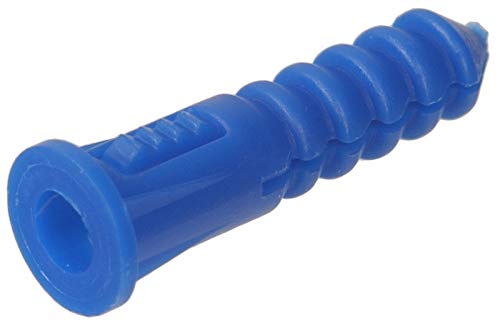
Hillman Ribbed Plastic Wall Anchors 100-Piece Set

KURUI Drywall Anchors Assortment Kit

VGBUY Concrete Anchors and Screws Kit

Wensilon Plastic Drywall Wall Anchors Kit

JEGONFRI 208-Piece Drywall Anchors and Screws Kit

KURUI 140-Piece Self Drilling Drywall Anchors Kit

Hillman Borefast Drywall Anchors, 1-1/2in Pan Head
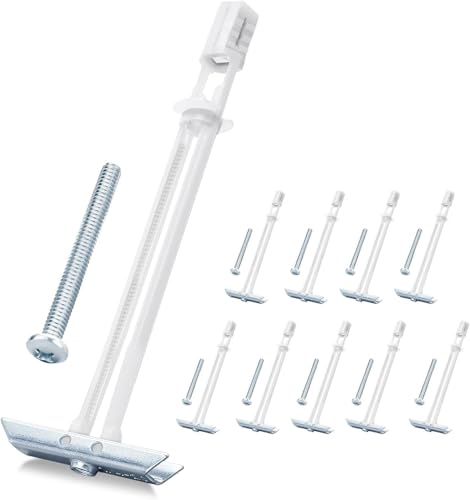
TeikBuce Heavy Duty Hollow Drywall Anchors

Hillman DuoPower Nylon Anchors 18-Piece Set

Lineshading Expanding Plastic Concrete Anchors 100-Piece Set
More Details On Our Top Picks
Ribbed plastic anchors like this are the steady, no-drama option for light mounting in drywall, plaster, brick, or concrete. The ribbing helps the anchor bite into the hole, and that matters most in hard surfaces where there’s no stud behind the finish.
You may find this style especially handy for towel bars, light brackets, and small wall fixtures in a bathroom or utility room. The trade-off is simple, it’s a light-duty choice, so heavier shelves or high-stress mounts deserve a stronger anchor type.
Strong Points
- Works across several common wall materials, which cuts down on guesswork.
- The ribbed body helps the anchor stay seated more securely.
- Good for smaller household fixtures that don’t need a bulky fastener.
- Plastic construction keeps the kit straightforward and easy to sort.
Things To Consider
- Light loads are the sensible match here, not heavy brackets.
- Pre-drilling still matters, so a sloppy hole can weaken the hold.
- Plastic anchors can wear out faster than metal hardware in repeated removals.
Feature Snapshot
Who It Suits Best
Homeowners handling light fixtures, framed prints, or small bathroom hardware will get the most from this set. It suits straightforward jobs where you want a familiar anchor that installs without much fuss.
Where A Sibling Pick Shines
Hillman DuoPower Nylon Anchors 18-Piece Set is a smarter fit for tile, concrete, and brick mounts that need more grip from a dual-material anchor.
That mix of self-drilling anchors and toggle bolts gives this kit a wider job range than Hillman’s simpler plastic set. A toggle bolt, for context, uses a spring-loaded wing that opens behind a hollow wall, so it spreads the load more than a basic sleeve anchor.
For hanging art, ceiling accents, or mixed fixtures in a home workshop, the assortment makes life easier because you can choose hardware instead of forcing one size to do everything. The honest read is that the variety helps most when you already know how different wall types behave.
Highlights
- Self-drilling options cut down on prep for some drywall jobs.
- Toggle bolts add reach for hollow-wall mounting.
- Useful for picture art, ceiling pieces, and assorted household installs.
- Different anchor styles in one kit reduce extra store runs.
Softer Spots
- The mixed parts can feel busy for a first-time organizer.
- Toggle-style hardware takes more care during installation than simple sleeves.
- Project success depends on matching the right anchor to the wall cavity.
Technical Sheet
Who Should Grab It
DIYers who rotate between artwork, small shelves, and ceiling hardware will appreciate the range in this kit. It also fits a garage or utility bench where mixed anchor types are useful more often than a single-size box.
Look Elsewhere When
KURUI 140-Piece Self Drilling Drywall Anchors Kit suits you better when you want a narrower, quicker-to-sort kit for plain drywall work.
This kit shifts the focus toward masonry, stucco, brick, cement, cinder block, and tile, so it’s a better match for harder surfaces than the first two picks. The included drill bits matter because anchor size and hole size need to work together, otherwise the anchor can loosen before the screw even goes in.
For tile walls in a laundry area or garage, that kind of matched kit saves time and confusion. One thing worth considering is the material split, since the anchor and screw counts are different by size and you’ll want to check the project before opening every pouch.
Best Bits
- Built around concrete and masonry use, not just general drywall.
- Includes drill bits, which helps you start with the right opening.
- Galvanized screws are a practical match for damp spaces.
- Bulk quantities suit repeated repairs or multi-room projects.
- PE anchor material is meant to expand without splitting too easily.
Room For Improvement
- The mixed counts per size call for a little planning.
- Best results depend on careful hole prep and wall material matching.
- Boxed assortments can take extra storage sorting after the project.
Core Details
Best Suited To
Home improvers working on brick, tile, or cement surfaces will get the most from this assortment. It’s a strong match for the person who wants one kit for several hard-surface mounting jobs.
Swap It Out When
Hillman Borefast Drywall Anchors, 1-1/2in Pan Head works better for mixed drywall, wood, and metal-stud installs where you need a reusable screw anchor instead of a masonry-focused kit.
Wensilon feels like the broad household kit in the middle of the lineup, with enough anchors and screws to cover many quick repairs. It lists use across wood, hollow wall, drywall, iron sheet, and cement wall, so you get a wider surface spread than Hillman’s lighter plastic set.
That sort of range helps in a home where wall types change from room to room. The trade-off is that broad-kitchen-sink kits can be less tidy to sort, so this suits you best when you value coverage over a single specialized anchor style.
Reasons To Buy
- Large count supports repeated projects around the house.
- Works across several wall materials, which adds flexibility.
- Good fit for general maintenance and light hanging work.
- Useful in homes where one room may have drywall and another may have cement.
Worth Noting
- The assortment format can take more drawer space than a single-style pack.
- Mixed-surface use still depends on selecting the right anchor for the wall.
- General-purpose kits rarely feel as focused as a dedicated masonry or hollow-wall set.
Details At A Glance
The Right Fit
Budget-conscious homeowners who want a broad repair kit will appreciate this one most. It suits everyday hanging tasks and small fixes where mixed wall types make a larger assortment useful.
Another Choice May Suit
VGBUY Concrete Anchors and Screws Kit is a cleaner match for masonry-heavy work, especially around tile, brick, and cement where the hardware is more purpose-built.
Four anchor sizes give this kit a useful middle ground between the simpler Hillman packs and the more specialized masonry sets. The listed screw sizes cover common home tasks, so you’re less likely to get stalled by a missing length during a hanging job.
For an apartment, starter home, or rental tool drawer, that mix is easy to live with. The honest read is that it favors variety over deep specialization, which is exactly why it suits everyday hanging and light decoration work so well.
Plus Points
- Four anchor sizes make the kit useful for several fixture sizes.
- Matched screws are included, which keeps setup straightforward.
- Plastic anchors offer anti-aging toughness for routine indoor use.
- Works in lightweight concrete, hollow brick, perforated brick, limesand brick, and natural stone.
- Good choice for hanging objects and common home décor.
Small Caveats
- The set is broad, so sorting parts before a project helps.
- Plastic anchor styles still ask for accurate drilling and placement.
- High-load jobs belong to a heavier-duty anchor than a general kit.
Spec Overview
Whose Shelf It Belongs On
People who want one organized kit for many small hanging jobs will get strong value from this set. It also makes sense for landlords or weekend fix-it work where keeping a mix of anchor sizes close at hand saves time.
Reach For A Different Pick When
Hillman Borefast Drywall Anchors, 1-1/2in Pan Head is the better fit for repeated drywall, wood, or metal-stud work where a reusable self-drilling screw anchor makes more sense.
Self-drilling anchors earn their keep in plain drywall because you can often skip pre-drilling and move faster. Here, the pointed tip and threaded body are aimed at a cleaner install, which matters in a busy room where you do not want extra dust or extra steps.
The 75 lb note makes this kit feel like a sensible step up from the lightest plastic anchors, especially for picture frames, curtain rods, and wall décor. Just keep the drywall setting in mind, because this is less of a mixed-surface kit and more of a focused drywall tool.
What We Like
- Direct-in drywall installation saves time on many small tasks.
- Sharp tip reduces the need for separate drilling in suitable drywall.
- Useful for frames, wall décor, and lighter curtain hardware.
- The black finish gives the kit a tidy, low-profile look.
Areas To Watch
- Drywall use is the main lane here, not broad masonry work.
- For heavier fixtures, a toggle or hollow-wall anchor may suit better.
- Self-drilling styles still depend on clean alignment and steady pressure.
Core Details
Built With In Mind
Apartment dwellers, renters, and anyone hanging lighter wall décor in plain drywall will appreciate this kit. It makes the most sense in rooms where you want a quick installation and a neat finished look.
Where A Sibling Pick Shines
KURUI Drywall Anchors Assortment Kit is the better route for mixed hanging jobs that call for toggle bolts alongside self-drilling parts.
This Borefast style sits in a useful middle zone, since it’s self-drilling yet still described for drywall, wood, metal studs, brick, plaster, masonry, and concrete. The reusable note gives it extra mileage for fixtures you may reposition later, which is a nice touch for framed art or a room that changes often.
Compared with the lighter Hillman plastic anchors, this version feels more adaptable and less like a single-purpose sleeve. The catch is that reuse only helps when the original hole and wall condition stay in good shape, so it’s not the right answer for every remount.
Bright Spots
- Multi-surface compatibility gives the kit a wider use range.
- Self-drilling design helps reduce prep on suitable walls.
- Reusable hardware is useful for repositioning fixtures.
- Pan head screws make the mounting hardware easy to identify.
- Works as part of a mixed wall-anchoring drawer.
Points To Note
- Reusable parts still depend on the condition of the original hole.
- Harder surfaces ask for more care than simple drywall installs.
- One pack of 75 may feel small for larger renovation jobs.
Feature Rundown
Who Will Love This
People who hang and move fixtures from room to room will get the most out of this one. It also suits mixed-material homes where drywall and wood are common, but brick or plaster show up too.
Where Another Pick Fits Better
Hillman DuoPower Nylon Anchors 18-Piece Set makes more sense for tile-heavy mounting or masonry work where dual-material grip matters more than reuse.
Hollow-wall anchors like this are built for mounts that need more confidence than a basic sleeve anchor can give. Stainless steel parts and included bolts make the kit feel suited to heavier wall-mounted hardware, especially in a 1/2-inch drywall setup where the anchor has to do real work.
For TV mounts and similar brackets, that extra structure matters because the load sits out from the wall and puts more stress on the fastener. The trade-off is that this is a more specific tool, so it suits targeted installs better than quick grab-bag repairs.
Standout Traits
- Heavy-duty hollow-wall design suits demanding mounts.
- Included bolts keep the hardware pairing straightforward.
- Stainless steel construction is a useful fit for sturdier jobs.
- Good match for TV mounting and similar bracket work.
Honest Caveats
- Installation calls for care, since higher-load hardware leaves less room for sloppiness.
- The set is more specialized than broad-purpose anchor kits.
- Check wall thickness before assuming fit in a different drywall setup.
Quick Facts
Perfect Match For
Homeowners mounting televisions, brackets, or other larger fixtures in hollow drywall will get the most from this kit. It suits jobs where you want a stronger anchor than the general-purpose options in the list.
Skip It When
Hillman Ribbed Plastic Wall Anchors 100-Piece Set is the easier choice for light household tasks that do not call for this much hardware.
Dual-material nylon anchors are a smart answer for mixed surfaces because the two parts expand differently depending on the wall behind them. That matters in tile, plaster, concrete, brick, and block, where a single expansion pattern can be a little too blunt.
Compared with the simpler plastic anchors earlier in the list, this set is more about controlled grip and less about casual, light-duty hanging. You may find it especially reassuring for brackets or shelving where the wall material changes the whole job.
Positives
- Two-material nylon design adapts to different wall structures.
- Works across drywall, plaster, tile, concrete, brick, and block.
- Included screws reduce matching headaches at install time.
- Good fit for shelving and bracket mounting.
- The 1/4-inch drill bit note gives useful setup guidance.
Areas To Watch
- The set is small, so it fits focused projects more than large batches.
- Tile and masonry work still rewards careful drilling and placement.
- The dual-material design is more specialized than a plain plastic anchor.
Feature Card
Made For
Tile installers, home renovators, and anyone hanging brackets on mixed wall materials will appreciate this set. It makes sense when you want a more technical anchor without jumping to a bulky specialty kit.
A Better Fit Elsewhere
VGBUY Concrete Anchors and Screws Kit is the stronger match for larger masonry-focused jobs where drill bits and higher quantities matter more than a compact anchor set.
This expanding plastic style is aimed at hollow walls, tile, cement, and similar surfaces where the anchor needs to flare out and grab. The green 1/4-inch by 1-1/4-inch format is sized for #10, #11, or #12 screws, so the hardware pairing matters more here than in a loose universal kit.
For bulk household mounting, it gives you a practical supply without a lot of extra complexity. The trade-off is that it’s still a general expanding anchor, so very heavy fixtures belong in the sturdier hollow-wall or dual-material options higher up the list.
Reasons To Buy
- Bulk count works well for repeated small mounting tasks.
- Useful across hollow walls, tile, and cement surfaces.
- Expansion design gives the anchor its holding action.
- Fits common screw sizes in the #10 to #12 range.
Minor Gripes
- General expanding anchors can feel less precise than specialty kits.
- Matching the screw size matters for a proper fit.
- Bulk sets may need sorting and labeling after opening.
Core Details
Who Should Grab It
People who want a stock of basic anchors for routine indoor jobs will find this set useful. It suits light-to-medium hanging tasks where you want quantity and familiar expanding action.
Not Your Match When
TeikBuce Heavy Duty Hollow Drywall Anchors is the better route for larger mounts and higher-load hollow-wall installs.
How To Choose The Right Wall Anchors For Tiles
Match The Anchor To The Wall Behind The Tile
Tile is only the face of the job, and the wall behind it decides how the anchor behaves. Hollow drywall, cement backer board, brick, and concrete all ask for different hardware because they support force in different ways.
That’s why a hollow-wall anchor works for one bathroom wall while a masonry anchor suits another. Once you know the base material, you can rule out half the shelf and focus on fit instead of shape alone.
Think About Load, Reach, And Repositioning
Light décor and small fixtures can usually ride on basic plastic or self-drilling anchors. Shelves, towel bars, and brackets need more attention because leverage pulls harder on the wall than the item’s weight suggests.
Longer anchors and toggle-style hardware are worth a look for higher stress mounts, especially where the screw sits farther from the tile face. Reusable hardware helps for fixtures that get moved, but the hole condition still has to stay sound.
Choose The Drill And Screw Match Carefully
Anchor size only matters when the drill bit and screw match it closely. A hole that’s too wide weakens the grip, while an undersized screw can distort the anchor and make installation harder.
Many of the kits here include matching screws or drill-bit guidance, and that saves time in real rooms where you do not want to guess twice. The better the pairing, the more stable the finished mount usually feels.
Sort By How Often You Hang Things
Frequent hanger? A larger assortment makes sense because you can keep different sizes ready for shelves, art, and repairs. Occasional hanger? A focused pack often feels easier to store and less cluttered.
In a busy kitchen, bathroom, or rental hallway, convenience matters almost as much as load rating. A tidy kit that covers the jobs you actually do is usually the smarter move than a giant box full of parts you never touch.
Things Worth Knowing First
Mistakes Worth Dodging
Many tile projects go sideways because the anchor gets matched to the visible surface instead of the wall behind it. Another common miss is using the wrong screw size, which can leave the anchor loose or force the hole larger than it should be.
Rushing the drill step is another easy way to create trouble. A clean, properly sized opening helps the anchor seat evenly, which matters more on tile than on plain drywall.
What The Higher Tier Buys
More specialized kits usually cost more because they use stronger materials, include more hardware types, or solve a narrower wall problem better. Dual-material anchors, heavy-duty hollow-wall systems, and kits with drill bits all add convenience and control.
That upgrade makes sense for larger fixtures, mixed wall surfaces, or anyone who wants fewer surprises during installation. For light décor, basic anchors are often enough, so the extra spend only pays off when the job really asks for it.
Frequently Asked Questions
Can you use drywall anchors on tile?
You can use some anchors near tile only when the anchor and the wall behind it are both appropriate for the job. Plain drywall anchors are not the right answer for every tiled surface.
What matters most for tile mounting?
The wall material behind the tile matters most, followed by screw fit and anchor style. A well-matched anchor usually does more than a bigger one that does not fit the wall.
Are self-drilling anchors good for tile walls?
Self-drilling anchors are mainly for drywall, so they suit tile walls only when the underlying structure calls for that style. Masonry and hollow-wall anchors are often a more natural match.
Why do some kits include drill bits?
Included drill bits help you make the right opening for the anchor size. That keeps the anchor from sitting too loose or forcing the wall surface.
What’s the safest choice for heavier fixtures?
Heavier fixtures usually need hollow-wall, toggle, or dual-material anchors rather than a basic plastic sleeve. The best fit depends on the wall behind the tile and the load the fixture creates.
Final Thoughts
Tile mounting gets easier once you stop treating every wall like drywall. The right anchor depends on the wall behind the tile, the screw that goes with it, and how much stress the fixture creates over time. A small anchor can be enough for light décor, but heavier brackets and shelves need a more deliberate choice. Pick the match that suits your wall, and the finished install will feel far more settled.