You’re probably here because tile work gets messy fast, and the wrong setup turns a straightforward job into a slow grind. A good wet saw setup keeps porcelain, ceramic, and stone cuts more controlled, while the right blade, pump, or stand changes how smooth the day feels in a garage, remodel, or weekend bathroom project.
This roundup focuses on complete saws, matching accessories, and the parts that matter most when you want steadier cuts and less fuss on the workbench. You’ll see which options suit first-time DIY work, which ones make more sense for heavier renovation jobs, and which add-ons help keep a familiar saw running the way you want.
The Shortlist At A Glance
DEWALT Wet Tile Saw D24000S

QEP Black Widow 10-Inch Diamond Blade

Superior Electric WP700 Water Pump

RYOBI TC401 4-Inch Wet Tile Saw

Casaverde 4-Inch Thin Diamond Blade

WORKEASE 18-Piece Diamond Hole Saw Kit

FACHLICH 10-Inch Diamond Wet Saw Blade

DEWALT Wet Tile Saw Stand D24001
More Details On Our Top Picks
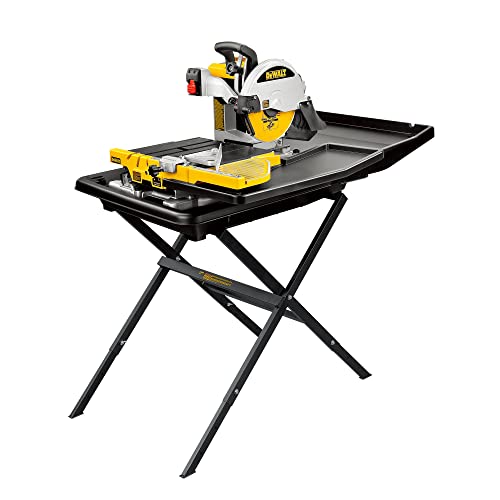
The D24000S fits the kind of tile work that takes over a garage floor for a weekend, because the included stand helps keep the saw at a more workable height. A 10-inch corded setup gives you the familiar reach many DIY remodels call for, and the DEWALT format tends to suit people who want a stable, jobsite-style layout rather than a tiny bench tool.
Compared with the smaller RYOBI TC401 later in this list, this pick feels better aligned with larger room projects and more repetitive cuts. The trade-off is plain enough, it asks for more space and setup time, so you’ll appreciate it most in a dedicated work area or a driveway corner with room to move.
Strong Points
- Included stand keeps the saw easier to position during longer tile sessions.
- 10-inch format suits common renovation cuts without feeling cramped.
- Corded power supports steady use in a fixed work zone.
- Useful for full-room flooring, shower surrounds, and backsplash runs.
Things To Consider
- The larger footprint takes more storage room than compact saws.
- Set up and cleanup feel more involved than with smaller bench tools.
- The stand adds convenience, but it also adds bulk for transport.
Core Details
Who It Suits Best
You’ll like this most for remodels that need a more fixed, workshop-style setup and enough room to park a full-size saw.
Where A Sibling Pick Shines
DEWALT Wet Tile Saw D36000S suits you better for heavier renovation work that calls for a more powerful 10-inch platform.
This thin-rim blade leans toward cleaner, more controlled cuts on porcelain, ceramic, granite, and marble. That matters in a kitchen backsplash or bathroom refresh, where a heavy cut line can stand out fast, and the slimmer rim usually helps the blade feel less aggressive through finished material.
Compared with the DEWALT DW4764 below, the QEP Black Widow reads like the pick for someone who wants a broad material range in a single blade. You may still want a steady feed rate and a proper wet setup, because thin-rim blades reward patience more than force.
What We Like
- Thin rim design helps support cleaner tile edges.
- Works across several hard surface materials.
- Useful as a general blade for mixed remodel tasks.
- Well suited to detail-heavy backsplash or flooring work.
Room For Improvement
- Thin-rim blades usually ask for a careful, steady feed.
- Best results depend on a proper wet cutting setup.
- Blade choice still needs to match the saw and material.
Feature Rundown
Right Fit For
You’ll get the most from this blade in a mixed-material project where you want one cutting wheel for several common tile types.
Swap It Out When
DEWALT DW4764 makes more sense for someone who wants a simpler, more brand-matched blade option for a 10-inch wet saw.
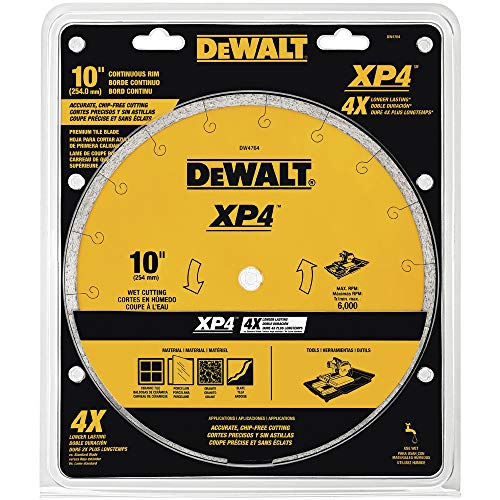
The DW4764 keeps things straightforward, and that’s useful in tile work where you’d rather not overthink the blade. Its .060-inch thickness gives you a slimmer cutting feel than chunkier wheels, so it suits routine wet cuts where control matters more than brute force.
Compared with the QEP Black Widow, this one feels a little more stripped-down and brand-agnostic in the way it fits everyday use. The honest read is that it makes the most sense for standard tile jobs, not for someone hoping for a specialty blade with extra bells and whistles.
Highlights
- Thin .060-inch blade body helps keep cuts feeling precise.
- 10-inch size works with many wet saw setups.
- Good match for regular tile installation work.
- Simple format is easy to understand and store.
Small Caveats
- Thin blades still benefit from a gentle feed pace.
- Routine cleaning matters so slurry does not build up on the wheel.
- Best suited to tile work, not broad specialty use.
Details At A Glance
Best Suited To
You’re a good match for this blade if your work is mostly standard tile installation and you want a simple, familiar 10-inch option.
Look Elsewhere When
QEP Black Widow suits you better for a broader material mix, especially porcelain, granite, and marble in the same project.
Some tile saw setups only need one small replacement part to get back into useful shape, and this submersible pump fills that role for compatible MK-370 and MK-470 units. The listed 150 gallons per hour flow gives you a sense of its job, which is keeping water moving through the saw rather than acting like a general garden pump.
Compared with the full saws in this list, this is the maintenance-minded pick for someone keeping an existing machine in service. You may find it most helpful in a busy shop where a failed pump can stall work faster than the blade itself.
Reasons To Buy
- Designed for specific MK tile saw models.
- Submersible format suits wet saw water circulation.
- 150 gallons per hour flow is clearly stated.
- Helpful as a replacement part instead of a full tool swap.
Points To Note
- Only useful for compatible saw models.
- Replacement pumps still need routine cleaning from slurry buildup.
- Its job is narrow, so it won’t help outside that setup.
Technical Sheet
Whose Shelf It Belongs On
You’ll want this most if you already use a compatible MK saw and need a replacement pump rather than a new cutting machine.
A Better Fit Elsewhere
DEWALT Wet Tile Saw D24000S suits someone starting fresh with a complete saw and stand instead of repairing a current setup.
The D36000S sits higher in the range because it pairs a 10-inch corded saw with a 15-amp, 1,220 MWO motor rating, and that matters during longer, denser tile sessions. For a larger renovation or repeated layout cuts, that extra output can make the tool feel better suited to sustained work than the D24000S.
It’s still a full-size saw with a stand, so the same space and setup trade-off applies, only more so when you move it around a jobsite. In most remodels, this is the pick that makes sense once the project stops feeling like a one-room update and starts feeling like a real build-out.
Positives
- 15-amp, 1,220 MWO motor rating signals more muscle for demanding cuts.
- Stand included, so the setup is ready for work at a practical height.
- 10-inch format keeps it in the familiar full-size category.
- Well suited to larger remodels and longer tile sessions.
Softer Spots
- Bulky enough to need real storage room.
- Setup is less casual than smaller saws or blade-only purchases.
- Heavier output usually means more tool to move and maintain.
Feature Card
Built With In Mind
You’ll get the most from this saw in larger renovations, especially where a stronger motor and a stand make daily handling easier.
Consider Something Else When
DEWALT Wet Tile Saw D24000S is the simpler match for a home project that does not need the extra output of this model.
The TC401 is the small-format option in this group, and that compact 4-inch blade setup makes sense for quick cuts and lighter home jobs. In a tighter laundry room, a small backsplash area, or a hobby bench, the smaller footprint is easier to live with than the larger DEWALT saws.
The trade-off shows up in range and capacity, so you would not expect this to replace a full-size saw for a whole-floor project. Still, for compact jobs and lighter tile work, it keeps the setup simple and the storage burden modest.
Bright Spots
- 4-inch blade format keeps the tool compact.
- Good for lighter tile tasks and quick trim work.
- Easier to store than a full-size saw and stand setup.
- Useful in smaller work areas with limited bench space.
Areas To Watch
- Small size limits the kind of projects it can cover.
- Not the right pick for full-room flooring work.
- Compact saws still need regular cleaning after slurry-heavy use.
Core Details
Who Should Grab It
You’re the best match for this saw when your tile jobs are small, your storage space is tight, and you want a simple corded tool.
Look Elsewhere When
DEWALT Wet Tile Saw D24000S makes more sense for larger remodels where a 10-inch saw and stand help you work faster.
This blade is built for small-format wet cutting, and the super-thin design helps it feel tuned for porcelain, tile, granite, and marble. The included arbor and 5/8-inch to 11 flange mention matter because they tell you the mounting setup, which is the sort of detail that saves time before a job starts.
Compared with the QEP Black Widow, this one reads more like a niche blade for compact tools or specific fitting needs. You may find it especially handy in detail work, though the exact saw compatibility still deserves a quick check before you start.
Standout Traits
- Super-thin profile suits detailed cutting work.
- Fits a range of hard materials.
- Arbor and flange details are clearly stated.
- Compact blade size is useful for smaller tools.
Worth Noting
- Compatibility needs checking against your specific saw.
- Small blades usually fit more specialized jobs than broad projects.
- Thin blades benefit from patient feed pressure and steady handling.
Spec Overview
The Right Fit
You’ll appreciate this blade most for compact tile work that needs a thin cutting profile and a specific mounting setup.
Another Choice May Suit
QEP Black Widow fits better for a broader all-around blade choice when you want one option for more common tile materials.
Hole cutting sits in a different lane from the wet saws above, and this kit addresses that exact need for sinks, valves, and fixture openings. The 6 to 50 mm range gives you a useful span, while the double suction cup guide is the kind of detail that helps keep the bit centered on slick surfaces like porcelain or glass.
Compared with the blade-only picks, this set is the better match when your job calls for round openings instead of long cuts. For kitchen and bath installs, that makes it a practical add-on, though the range of bits means you’ll still want to sort the right size before drilling starts.
Best Bits
- 18-piece kit covers a wide range of hole sizes.
- Double suction cup guide helps steady the setup on smooth tile.
- Works wet or dry, which adds job flexibility.
- Useful for fixture openings in kitchens and baths.
Minor Gripes
- Kit format means you need to sort the right bit before each hole.
- Guide hardware adds setup steps.
- Storage matters here, since small bits can disappear in cluttered tool boxes.
Feature Snapshot
Made For
You’re the best fit for this kit if your project includes sink holes, shower valves, or other fixture openings in hard tile.
Where A Sibling Pick Shines
FACHLICH 10-Inch Diamond Wet Saw Blade suits straight cutting work more naturally than a hole saw kit like this one.
The FACHLICH blade keeps the format simple, with a standard 10-inch diamond wet blade profile that fits straight into general tile work. That makes it a straightforward backup or replacement choice for a saw that already takes 10-inch wheels, especially in a workshop where you want one blade to handle ordinary jobs without much fuss.
Compared with the more material-specific QEP Black Widow, this one reads as a calmer, more general-purpose option. The trade-off is that it does not lean into a specialized use case, so it suits broad tile work more than demanding edge cases.
Upsides
- 10-inch diamond format fits common wet saws.
- Simple blade choice for routine cutting tasks.
- Works well as a replacement or backup wheel.
- Easy to store alongside other saw accessories.
Areas To Watch
- General-purpose blades do not always shine in specialty materials.
- Routine cleanup still matters after wet cutting.
- Compatibility should still be checked against your saw.
Feature Card
Who Will Love This
You’ll like this blade most if you want a plain 10-inch replacement for everyday tile work and nothing more specialized.
Skip It When
QEP Black Widow makes more sense for harder material mixes and a more material-focused cutting approach.
The D24001 is a support piece, but it changes the whole feel of a saw setup because it gives the D24000 and D36000 a dedicated base. For anyone who keeps a wet saw in active use, a purpose-built stand can make mobility and working height much easier to manage, especially on a jobsite with uneven ground.
Compared with the D24000S and D36000S kits that already include a stand, this is the add-on for someone who owns the saw first and wants a better platform later. The practical upside is clear, though you do need the matching saw family for it to make sense at all.
Strong Points
- Built for DEWALT D24000 and D36000 saws.
- Helps create a more stable work base.
- Makes transport and repositioning easier for jobsite use.
- Useful for owners who want a dedicated support frame.
Small Caveats
- Only useful with the matching DEWALT saw family.
- Stand storage still takes space in a garage or trailer.
- Support accessories need the same care and fastener checks as any work stand.
Core Details
Perfect Match For
You’re the right fit for this stand if you already own a compatible DEWALT saw and want a more stable setup.
A Better Fit Elsewhere
DEWALT Wet Tile Saw D24000S suits you better if you want the saw and stand together in one purchase.
How To Choose The Right Wet Tile Saws
Blade Size And Project Scope
Blade diameter shapes the kind of work you can do without fighting the tool. A 10-inch saw, like the DEWALT D24000S and D36000S, fits bigger cuts and more room-oriented projects, while a 4-inch saw such as the RYOBI TC401 keeps the footprint smaller.
That difference matters in real spaces, not just on a spec sheet. Smaller tools are easier to stash and move, but they usually fit lighter work, while larger saws make more sense for flooring, wall tile, and repeated cuts across a bigger install.
Motor Strength And Material Load
Motor output matters most once you start pushing through dense material or long stretches of tile. The D36000S lists a 15-amp, 1,220 MWO setup, which points to a more capable class than a basic compact saw.
For porcelain and harder stone, that extra headroom can feel worth it. The catch is that stronger saws usually bring more weight, more space use, and more setup effort, so the upgrade only pays off when the workload justifies it.
Blade Type And Cut Quality
Blade shape changes the cut finish, and thin-rim diamond blades are the ones that usually lean toward a cleaner edge. The QEP Black Widow and DEWALT DW4764 both sit in that lane, which makes them useful for porcelain and other harder surfaces.
That cleaner feel comes with a trade-off, though, because thin blades prefer patient, steady feeding instead of pushing hard. For backsplash work or visible trim pieces, that gentler cut style is often worth the slower pace.
Support Gear And Workflow
Accessories matter more than most people expect, especially on longer projects. A stand like the one bundled with the D24000S and D36000S helps with working height, while the D24001 stand can support an existing DEWALT setup later on.
Likewise, a part like the WP700 pump keeps a compatible saw usable instead of forcing a full replacement. That’s the real pattern here, the right support gear can save time, reduce clutter, and make the whole cutting station feel more settled.
What To Weigh Before You Shop
Common Shopping Slip Ups
Many tile projects go sideways because the saw size does not match the job. A 4-inch model works for smaller cuts, but it feels undersized for full-room flooring, and that mismatch shows up quickly once you start laying out real pieces.
Another common miss is buying the wrong accessory family. A pump like the WP700 only helps certain MK saws, and a stand like the D24001 only makes sense with the matching DEWALT units.
What The Higher Tier Buys
More expensive wet saw setups usually pay for stronger motors, sturdier stands, and more comfortable day-to-day handling. You’re not just paying for a bigger number on the label, you’re paying for a tool that can stay useful through longer sessions and denser material.
The upgrade makes sense for larger remodels, frequent use, or hard tile that asks more from the saw. For a one-room refresh, a simpler setup often feels easier to own and store.
Frequently Asked Questions
What Size Wet Tile Saw Works For Most Home Projects?
A 10-inch saw covers a wide range of home tile work, including flooring and backsplash cuts. Smaller 4-inch tools fit compact jobs better and are easier to store.
Do Diamond Blades Matter That Much?
Yes, blade style changes how the cut feels and how clean the edge can look. Thin-rim diamond blades usually suit porcelain and other hard tile surfaces well.
Is A Stand Worth Having?
A stand helps with height, steadiness, and moving the saw around a jobsite. It makes more sense once the project becomes longer or more physically demanding.
Can You Use One Blade For Every Material?
Some blades cover several hard materials, but the best match still depends on the tile and the saw. A broader blade like the QEP Black Widow gives you more flexibility than a very narrow specialty option.
What Should You Look At First, Power Or Blade Size?
Start with blade size, because that sets the scale of the work you can handle. Then look at motor output and accessory support for the kind of tile and workspace you have.
Final Thoughts
You have a clear choice point here: complete saws for larger installs, blades for cleaner cutting, and support gear for keeping an existing setup useful. The best match depends on how much space you have, how often you work with tile, and whether you need a tool, a part, or a full station. For most home projects, the DEWALT D24000S or a good 10-inch blade covers a lot without feeling overcomplicated. Choose the setup that fits your project size, and the job gets a lot more manageable.