Getting layout right saves time, scrap, and a lot of second-guessing at the bench. You’ll find a mix of squares, marking rulers, center finders, and scribing tools here, so you can match the tool to the job instead of forcing one shape to do everything. Some picks suit tight trim work, others fit framing, angle marking, or pocket carry. That range matters more than flash.
Quick Look At The Shortlist

IRWIN Combination Square 12-inch Stainless Steel (1794469)

Saker Multi-function Scribing Tool 5.5-Inch Black

Violetfox Woodworking Ruler 3-Piece Metal Slide Rule Set (6/8/12 Inch)

ViewReal Carpenter Square Hole Scribing Ruler

ARTYMASTER WT102A Mini 3D Multi-Angle Measuring Square Ruler

Peachtree Woodworking Supply 24-inch Stainless Steel Center Finding Ruler
Crescent Lufkin 5/8-Inch x 6-Foot Red End Engineer’s Scale Wood Rule 1066DN White

Beslands Aluminum 12-Inch Speed Square

WEN 10-Inch T-Shaped Marking Ruler ME810R
WEN 6-Inch T-Shaped Marking Ruler ME806R
More Details On Our Top Picks
The 12-inch layout size gives you enough reach for common bench tasks without feeling bulky in a toolbox. The cast zinc body adds a solid, workhorse feel, and the black etched scales are easier to read than lightly printed markings in a dim garage.
For general woodworking, that mix makes this a steady all-rounder for checking 45-degree and 90-degree marks, setting depth lines, and confirming squareness. The honest trade-off is weight compared with slimmer aluminum tools, so you may prefer it more at the bench than in a pocket apron.
Strong Points
- Cast zinc construction lends a firm, durable feel.
- Black etched markings are easy to pick out quickly.
- 12-inch length covers many everyday shop jobs.
- Useful for square checks and angle marking.
Things To Consider
- It feels less airy than slimmer aluminum layouts.
- Storage is easier in a drawer than a pocket.
Feature Snapshot
Who It Suits Best
Shop users who want a dependable square for general layout, angle checks, and everyday measuring will get the most from it.
Look Elsewhere When
Choose the WEN 6-Inch T-Shaped Marking Ruler ME806R for compact bench work that stays close to the cutting line.
Small layout tools earn their keep fast, and this Saker piece is built around that idea. The aluminum alloy body should feel lighter than the IRWIN square, while the deep-hole pencil setup helps you reach spots that standard pencils struggle with on brackets, joints, and cramped cut lines.
For trim work, furniture touch-ups, and quick scribing on a busy bench, that extra reach can save frustration. You’ll still want a steadier square for broader framing tasks, but for detail marking it keeps things compact and handy.
What We Like
- Light aluminum alloy body keeps pocket carry easier.
- Deep-hole pencil access helps in tight spots.
- Works well for marking, scribing, and quick layout.
- Compact form suits detail-focused shop work.
Room For Improvement
- It is more specialized than a full-size square.
- Small parts call for careful storage after use.
Core Details
Who Should Grab It
Detail-oriented woodworkers who mark tight spaces often will appreciate the reach and compact shape.
Another Choice May Suit
IRWIN Combination Square 12-inch Stainless Steel (1794469) fits better for broader bench measuring and squareness checks.
Three ruler lengths in one package make this set feel more adaptable than a single fixed-size tool. The inch and metric scales give you a practical bridge between shop habits and imported plans, and the T-type shape helps with repeatable marking against an edge.
That flexibility matters in a garage shop where one project calls for a short pocket rule and the next wants a longer reach across board stock. The trade-off is simple, more pieces mean more things to keep organized, so a dedicated drawer or pouch helps.
Highlights
- Three lengths cover different bench and project needs.
- Dual-unit markings help with mixed measurement plans.
- T-style shape is useful for guided marking.
- Good fit for hobby shops with varied work.
Points To Note
- Multiple pieces take more storage discipline.
- Best value shows up only when you use all three.
Details At A Glance
Whose Shelf It Belongs On
Hobby woodworkers who bounce between small detail work and longer layout runs will get strong use from the set.
Swap It Out When
Peachtree Woodworking Supply 24-inch Stainless Steel Center Finding Ruler suits center marks on wider panels and round stock more directly.
Angle work gets easier when the ruler already speaks the language of common cuts, and this one is built around that idea. Its preset stops at 22.5, 30, 45, 60, 67.5, and 75 degrees help you mark familiar angles without repeating a full layout routine each time.
That makes it a strong fit for joinery, framing, and construction tasks where the same angles come up again and again. The trade-off is that it is more purpose-built than a plain square, so it makes the most sense in a kit that already has basic measuring tools covered.
Reasons To Buy
- Preset angle stops speed up common layout work.
- Angle-pin holes add useful marking flexibility.
- Good match for woodworking and job-site use.
- Helps reduce repeated setup on familiar cuts.
Minor Gripes
- Less essential for very simple measuring jobs.
- Angle-focused design may sit unused in basic kits.
Spec Overview
Built With In Mind
You’ll get the most from it in a workshop or on a build site where angle marking comes up often.
A Better Fit Elsewhere
Beslands Aluminum 12-inch Speed Square suits framing and roofing work that leans more on fast right-angle layout.
This tiny aluminum alloy square is aimed at work where storage space is tight but layout still has to be precise. At 3.8 inches, it sits closer to a pocket reference tool than a full bench square, which makes it easy to keep with pencils and knife blades.
The included pencil refills are a nice practical touch, especially for shop bags and small job pouches that get emptied often. The honest read is that its size will feel limited on larger boards, yet it makes a lot of sense for small parts, hardware installs, and quick angle checks.
Upsides
- Very small footprint is easy to carry.
- Aluminum alloy body keeps it light.
- Good for quick angle and hole marking.
- Refills add day-to-day convenience.
- Handy for kit bags and small workstations.
Softer Spots
- Short reach limits use on larger panels.
- It leans more toward detail work than broad layout.
Technical Sheet
Right Fit For
Small-shop woodworkers, mobile fixers, and anyone who values pocket storage will find this format appealing.
Where A Sibling Pick Shines
WEN 10-Inch T-Shaped Marking Ruler ME810R suits larger bench work that needs a longer guiding edge.
Center-finding tools save time because they remove the small arithmetic step that tends to slow down a layout session. This 24-inch stainless steel rule marks the midpoint clearly, and that becomes handy on rectangular stock, square blanks, and round pieces that need a quick center reference.
The 1mm thickness gives it enough flex to sit on a work surface without feeling flimsy, which matters on larger boards or curved parts. You may find it especially useful in a cabinet shop, though the 32nds scale makes it feel more specialized than a general measuring ruler.
Bright Spots
- Center marking is fast and straightforward.
- Works across square, rectangular, and round shapes.
- Stainless steel build suits regular shop handling.
- 24-inch span gives useful reach on bigger stock.
Areas To Watch
- Its center-finding focus narrows everyday versatility.
- The 32nds scale feels more technical than casual.
Feature Rundown
Made For
Woodworkers who often center drill, mark round stock, or split panels evenly will get strong use from it.
Skip It When
IRWIN Combination Square 12-inch Stainless Steel (1794469) fits better for more general square-and-angle tasks.
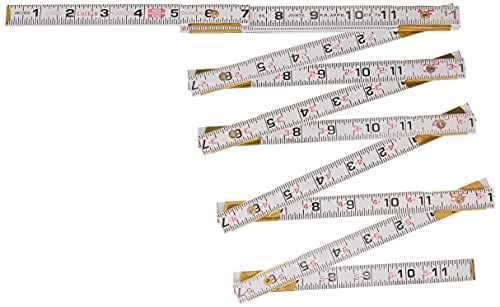
Wood rules like this have a very different feel from metal squares, and that’s part of the appeal. The brass-plated joints and brass end caps point to a more traditional drafting-style tool, while the 6-foot length makes sense for longer runs where a compact ruler starts feeling cramped.
It is a niche pick, though, so the fit is strongest for layout-minded users who like a classic wooden rule in hand. Compared with the more modern IRWIN and WEN tools, this one leans more toward old-school measuring habits than quick all-purpose marking.
Best Bits
- Long reach supports extended measuring work.
- Brass-plated joints add a durable touch.
- End caps help protect the rule ends.
- Feels right for traditional drafting setups.
Small Caveats
- It is less versatile than a combination square.
- Wooden construction needs a bit more care in storage.
Core Details
Who Will Love This
Drafting-minded woodworkers and anyone who likes a classic wood rule will appreciate the format.
Reach For A Different Pick When
Beslands Aluminum 12-inch Speed Square suits framing and roofing work that needs faster right-angle layout.
Speed squares are the fast-moving part of this category, and this aluminum model is aimed at that kind of use. The 12-inch size gives you a larger layout surface than smaller pocket squares, which matters on rafters, roof cuts, and framing stock where you want a broad, quick reference.
It is a practical shop-and-site tool, though the shape is more specialized than a general-purpose square. You’ll likely appreciate it most in work that repeats right-angle checks, angle scribing, and quick marking across rough lumber.
Positives
- Large 12-inch format supports framing work.
- Aluminum build keeps it easy to carry.
- Good for roof, rafter, and layout tasks.
- Triangle shape gives a fast visual reference.
Worth Noting
- Not as compact as smaller layout squares.
- Specialized shape makes it less universal.
Feature Card
The Right Fit
Framers, roofers, and woodworkers who want a fast angle reference will find the format useful.
Where Shoppers Go Wrong
WEN 10-Inch T-Shaped Marking Ruler ME810R is a better match for bench-based marking that needs a straight guide edge.
A 10-inch T-ruler sits in a nice middle ground for many shop jobs. It is long enough to guide repeated marks across panels, yet short enough to stay manageable on a crowded bench, which makes it a sensible fit for everyday woodworking tasks.
The T-shape gives you a more controlled edge reference than a basic straight ruler, and that helps when you’re laying out cut lines or marking from the side of a board. Compared with the smaller WEN 6-inch version, this one gives you more room to work without moving the tool as often.
Highlights
- 10-inch length balances reach and portability.
- T-shape helps keep marks guided along an edge.
- Works well on bench and panel projects.
- Simple format is easy to store.
Hidden Buying Traps
- Single-purpose layout tools feel plain beside feature-heavy models.
- Longer boards may still call for a larger square.
At A Glance
Best Suited To
Woodworkers who want a straightforward bench ruler for panels, trim, and repeat marking will get steady use here.
Where A Sibling Pick Shines
WEN 6-Inch T-Shaped Marking Ruler ME806R is the better fit for tighter work areas and smaller bags.
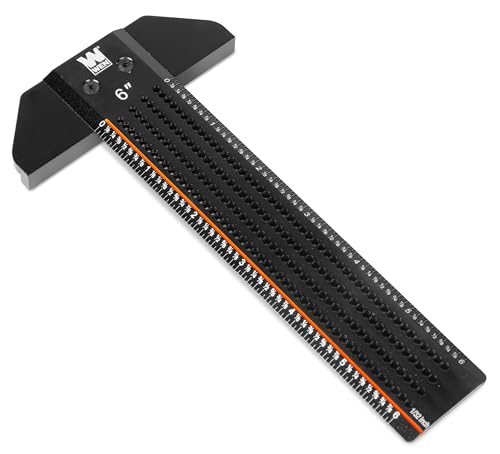
The 6-inch version keeps the same basic T-ruler idea, just in a smaller body that’s easier to park in a pouch or compact drawer. That smaller reach makes it a neat fit for detail marking, quick checks, and work in tight benches where a 10-inch tool feels like too much.
It pairs naturally with the larger WEN 10-inch ruler, especially for woodworkers who like one compact tool for close-in work. The trade-off is obvious, the shorter span means you’ll reach for another square sooner on larger panels.
Plus Points
- Small size is easy to store and carry.
- Good for tight benches and pocket kits.
- T-shape supports guided edge marking.
- Handy backup for detail-focused work.
Areas To Watch
- Short reach limits broader layout tasks.
- It makes the most sense beside a longer ruler.
Feature Rundown
Perfect Match For
Compact shops, travel tool kits, and fine-detail marking tasks are the strongest fit for this ruler.
Not Your Match When
Beslands Aluminum 12-inch Speed Square fits better for larger framing and roofing layout.
How To Choose The Right Woodworking Rulers
Match The Shape To The Job
A combination square handles square checks, 45-degree marks, and depth-style layout with little fuss. A T-ruler feels better for edge-guided marking, while a speed square suits framing, rafters, and quick angle references. Center-finding rulers and scribing tools solve narrower problems, so they shine when your projects keep repeating the same pattern.
Pay Attention To Length And Portability
Short tools are easier to stash in a pouch, which matters for trim work, repair jobs, and small benches. Longer rulers give you more reach on panels, doors, and board stock, but they take up more room and can feel awkward in a tight layout area. The sweet spot depends on whether your work lives at the bench or moves around the shop.
Materials Matter More Than People Think
Steel and brass parts usually feel steadier and hold up well in regular shop use, while aluminum keeps carry weight down. A cast or thicker body can help a ruler sit flatter during marking, though that usually means a bit more bulk. For daily use, readability counts too, so etched or high-contrast scales are worth a close look.
Pick For Your Real Projects
Detail woodworkers often get more value from a compact scribing tool or a 6-inch T-ruler than from a long framing square. Framers and roofers usually lean the other way, because broader stock and repeated angles call for a larger layout surface. Your best match is the one that saves steps on the tasks you repeat most.
A Quick Reality Check Before You Choose
Common Shopping Slip Ups
A lot of layout frustration starts with buying a tool that is too specialized for the work at hand. A center finder, for example, is excellent for midpoints, but it won’t replace a square for ordinary shop checks. Another common miss is ignoring storage, because a long rule can feel awkward in a kit built for compact tools.
The Upgrade Payoff
Higher-tier rulers often cost more because they use sturdier materials, tighter angle references, and clearer scale markings. That extra spend tends to matter most in active shops, job sites, or any workspace where the ruler gets handled all day. For occasional projects, a simpler tool usually makes more sense, while frequent layout work can justify the step up.
Frequently Asked Questions
What kind of woodworking ruler works best for beginners?
A combination square usually makes the easiest starting point because it handles squareness, angle marking, and basic measuring. It gives you more room to learn without buying several tools at once.
Are center-finding rulers useful for regular shop work?
They are useful any time you need to split a board, dowel, or round piece evenly. They are less useful for broad general measuring, so they work best as a second tool.
Do I need both a speed square and a combination square?
You do not need both right away, but many shops end up keeping both. The speed square is quicker for framing-style layout, while the combination square handles more general bench work.
Why choose a T-shaped marking ruler?
A T-ruler helps guide marks along an edge, which makes it handy for panels and repeat layout lines. It feels simpler than a full framing square and more controlled than a plain ruler.
Is metal better than wood for a woodworking ruler?
Metal usually gives you a firmer feel and better resistance to daily wear. Wood still has a place for traditional drafting habits, especially when you like a classic rule with a lighter touch.
Closing Thoughts
The right woodworking ruler depends on how you build, not just how long the tool looks on a listing page. A combination square covers broad shop needs, a speed square helps framing move faster, and smaller marking tools make detail work less fussy. That’s why the best choice is usually the one that matches your most common projects, your storage space, and your comfort with the tool in hand. Choose for the work you actually do, and the ruler will earn its place.