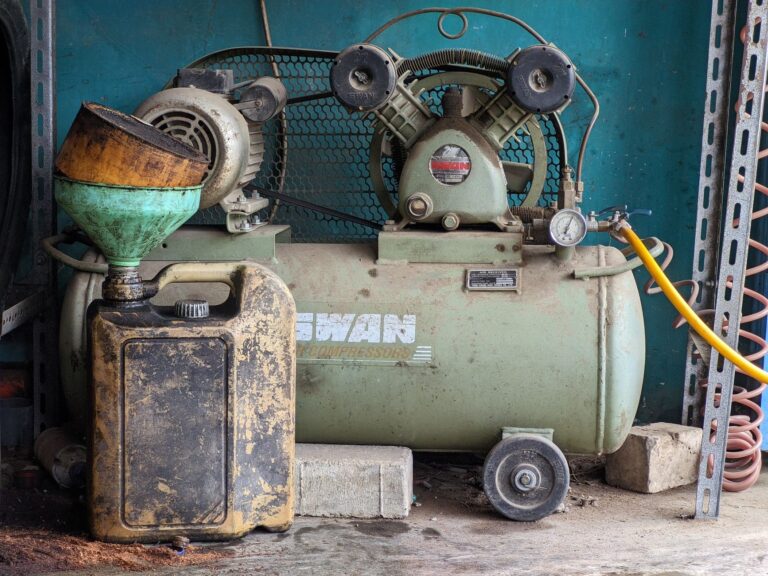
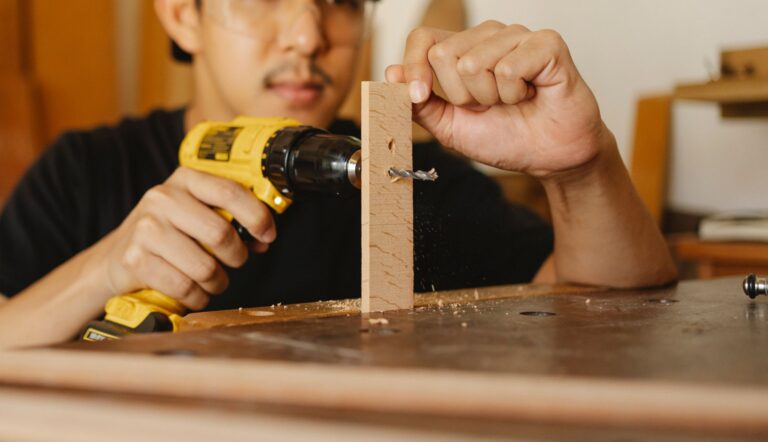
Extension cord size for power tools is the match between wire gauge, amp rating, and extension cord length. To keep a saw, compressor, or drill running correctly, you need enough conductor thickness to limit voltage drop before the motor starts to strain.
This guide covers the practical choices that matter when running saws, compressors, and drills from a cord, including gauge markings, distance limits, and extra capacity for hard-starting tools.
Gauge Numbers Carry More Weight Than Cord Packaging
Lower AWG numbers mean thicker wire, and thicker wire moves current with less resistance. That resistance becomes heat, and heat steals voltage before the tool gets it. A cord that looks rugged on the shelf can still sag under load when the motor starts hard.
For power tools, the practical split is easy to see. A 16-gauge cord fits light-duty loads and short runs. A 14-gauge cord handles moderate tool use better. A 12-gauge cord gives more headroom, which is why it works well for many shop tools near 15 amps.
Why Thickness Changes Performance
Electric current meets resistance inside the conductor. As resistance rises, voltage at the tool drops, and the motor has to work harder to do the same job. That is why a long, thin cord can make a circular saw sound strained before the cut even begins.
A thicker conductor lowers that resistance, so less energy turns into heat in the cord. The result is cooler operation, better startup, and steadier speed under load. That physics is simple, but the payoff shows up fast on a jobsite.
What 16, 14, and 12 Gauge Feel Like In Use
Sixteen gauge suits short, light-duty work such as a small drill, a radio, or a trim tool. Fourteen gauge is the middle lane for many handheld tools and shorter runs where the draw stays modest. Twelve gauge is the heavier option you reach for when the tool load climbs or the cord gets longer.
That difference shows up fastest on startup. A small fan may run fine on 16-gauge cord, but a miter saw or compressor needs more wire behind it so the motor gets a clean push instead of a weak one. That is the point where extension cord size for power tools stops being a guess and starts being a load choice.
That’s where the math begins to matter more than the packaging ever did.
A Simple Amp-And-Length Rule Guides Real Jobs
Start with the tool amperage, then move to cord length. A cord that works at 25 feet can run too thin at 100 feet because the wire has more distance to lose voltage across. The safest habit is to size up as the run gets longer, not after the tool starts acting tired.
For many power tools, 12-gauge cord is the safer general choice, especially near 15 amps. Ten gauge steps in for long runs and high-draw tools where voltage drop becomes a serious concern. That simple ladder gets you close fast, and the table below fills in the practical middle ground.
| Tool load | 25 feet | 50 feet | 100 feet |
|---|---|---|---|
| Up to 7 amps | 16 gauge | 14 gauge | 12 gauge |
| 8 to 12 amps | 14 gauge | 12 gauge | 10 gauge |
| 13 to 15 amps | 12 gauge | 12 gauge | 10 gauge |
| Heavy startup load | 12 gauge | 10 gauge | 10 gauge |
The same tool can land in different rows once the cord stretches out. A 10 amp grinder on 25 feet may work well on 14 gauge, but a 10 amp compressor on 100 feet needs heavier wire because startup surge pushes harder than the running number suggests. That is why a short cord beats a long one every time the job allows it.
A Quick Load Rule That Works On The Job
Use the tool label as the starting point, then move one gauge heavier for longer runs or motor load. A 14-gauge cord can work for many moderate tools at short distance, but 12-gauge cord is the better default once the amperage rises or the cord approaches 50 feet. That one step up often keeps performance steadier than a bargain cord ever will.
A small increase in wire size often makes the difference between usable and frustrating.
- Short light tools: 16 gauge works for low-draw tools over short distances.
- General shop use: 14 gauge suits mid-range handheld tools and modest loads.
- Heavier tools: 12 gauge gives safer headroom near 15 amps.
- Long runs: 10 gauge helps hold voltage over 100 feet or more.
- Motor surge: Size up for compressors, saws, and other hard-start tools.
Markings Like 16/3, 14/3, and 12/3 Show the Real Build
Those markings tell you two things at once: wire gauge and conductor count. A 14/3 extension cord has 14-gauge wire and three conductors, which usually means hot, neutral, and ground. The same logic applies to 16/3 and 12/3, and the third wire is there for grounding on tools that need it.
That label matters because the jacket can look similar while the wire inside changes a lot. A 12/3 cord is thicker, stiffer, and better suited for heavier loads. A 16/3 cord is lighter and easier to handle, but it belongs in gentler duty. Once you read the marking, the cord stops being a mystery and starts being a load tool.
| Marking | Best fit | Typical use |
|---|---|---|
| 16/3 | Light-duty | Small drills, lamps, short indoor runs |
| 14/3 | Moderate loads | Sanders, trim tools, shorter saw runs |
| 12/3 | Heavier tools | Table saws, compressors, long shop runs |
12 Gauge Versus 14 Gauge In Real Use
A 14-gauge cord is fine for a drill at short range, but a 12-gauge cord is the cleaner choice for a 15 amp saw or a shop vac that stays on for long stretches. The extra conductor thickness gives your tool more voltage at the plug and less heat in the jacket.
That tradeoff shows up clearly in a garage or basement workshop. The 14-gauge cord is lighter and easier to coil, yet the 12-gauge cord holds up better once the cut gets deep or the blade load rises. For extension cord size for power tools, that is the split that matters most.
Three Common Setup Examples
A finish nailer and a cordless charger can share a 16/3 cord on short runs without strain. A random orbit sander does better on 14/3, especially when the cord reaches across a room. A table saw or compressor belongs on 12/3, because the motor wants a firmer supply the moment it starts.
The physical feel of the cord tells part of the story too. Twelve gauge has more conductor thickness, so it bends less easily and carries more copper. That stiffness is a clue, not a flaw, because the heavier jacket usually reflects the heavier job it was made for.
Thicker conductors usually travel with a purpose, especially when distance starts climbing.
Longer Runs Demand Heavier Wire
A 25-foot cord and a 100-foot cord are not the same tool in disguise. The longer run adds resistance, and that extra resistance can pull voltage down enough to make a saw labor or a compressor stall at startup. The shorter the cord, the better the efficiency and the lower the heat load.
That is the physical reason many jobsite cords come in 25, 50, and 100 foot lengths with different gauges. Short distance helps the motor see more of the supply voltage. Long distance asks the wire to do more work, so the cord has to get thicker to keep up.
A cord that reaches the work area is not always the right cord. Trim the run to the shortest practical length, and you cut voltage drop before it shows up in tool speed or cord warmth.
| Length | What changes | Safer gauge move |
|---|---|---|
| 25 feet | Low resistance, lower heat | Match the tool label closely |
| 50 feet | More voltage drop starts to show | Move up one gauge for most tools |
| 100 feet | Performance loss grows fast | Move to 10 gauge for many loads |
A 15 amp saw on 25 feet can work on 12 gauge, but the same saw on 100 feet belongs on 10 gauge when the run is part of a real workday. That is also why a long light cord can make a motor hum without developing full speed. The problem is not magic, just voltage drop acting like a narrowing pipe.
Why Heat Builds Faster On Thin Long Cords
Current moving through resistance creates heat, and heat rises faster when the conductor is small. Over distance, the wire has more surface and more resistance to shed energy into, so the jacket can warm even before the tool feels weak. That extra heat is one of the clearest signs the cord is undersized.
Electrical engineers describe this with simple resistance math, but the field result is easy to see. A cord that feels warm near the reel after 20 minutes is signaling load stress. You want the cord to stay cool enough that warmth never becomes the thing you notice first.
Heat is the first warning that the wire is carrying more than it should.
High-Startup Tools Need Extra Headroom
Motors pull harder at startup than they do once they are spinning. That startup surge, also called inrush current, can spike well above the running amperage on the nameplate. Saw blades, air compressors, drills, and dust collectors all care about that surge, because the first second asks more from the cord than steady cutting does.
A 15 amp tool often needs a sturdier cord than the number alone suggests. The motor may be rated at 15 amps running, yet the first kick can trip a breaker or overheat an undersized cord when the wire is too thin or too long. That is why cord size for a tool is never just about the label on the housing.
Startup surge is the moment that exposes a weak cord. A motor can seem fine for minutes, then stumble hard at the first load change or cold start.
Saws, Compressors, And Other Motor Loads
A circular saw can pull hard as the blade enters dense stock, and a miter saw can surge every time it starts a cut. Compressors are even harsher, because the motor must overcome tank pressure before air flow settles. Dust collectors, shop vacs, and tile saws add similar strain in different ways.
Those loads reward thicker wire. A 12-gauge cord gives more room for startup demand than a 14-gauge cord, and 10 gauge gives more still for long runs. That extra room can be the difference between a smooth start and a breaker trip in the middle of a cut.
What Breaker Trips Are Telling You
A breaker trip is not always a wiring fault. In many shop setups, it means the tool, the circuit, and the cord are all working near the same limit at once. An undersized extension cord can push the combination over the edge by adding resistance right where the tool needs current most.
That is why a cord that seems fine with a hand drill may fail with a compressor. The drill’s load is easy, but the compressor asks for a strong surge and a steady supply. The cord has to be sized for the hardest part of the job, not the easy part.
Startup surges expose weak cords long before steady running ever would.
Read The Label Before You Plug In
The jacket print tells you more than the packaging ever will. You want the gauge, conductor count, current rating, and indoor or outdoor construction spelled out before the first plug goes in. A cord can look heavy-duty and still be under-rated for the tool or the setting.
Look for clear jacket markings such as 16/3, 14/3, or 12/3, plus the current rating printed on the cord. Check the plug shape too, since some tools use a grounded plug and some jobsite cords have a locking style that resists pullout. That check takes seconds and avoids a bad match.
Indoor And Outdoor Construction
Indoor cords use lighter jackets and belong in dry, protected spaces. Outdoor-rated cords use tougher insulation and jackets that handle abrasion, moisture, and sun better. A jobsite cord is the right choice where the floor is rough, the weather shifts, or the cord drags through dust and debris.
That outside rating does not change the gauge by itself, but it changes where the cord belongs. A 12-gauge outdoor-rated cord is the better pick for a saw on a driveway than a light indoor cord with the same plug ends. Environment and current rating need to match together.
A Short Safety Check Before Powering Up
Check the jacket for cuts, flattening, scorch marks, or cracked ends. A nicked cord can expose conductor strands and turn a routine job into a hot spot. Also confirm the cord carries a recognized safety listing such as UL or ETL, since that marking signals the cord was built to an accepted standard.
- Match amperage: The cord rating must cover the tool’s current draw.
- Check length: Longer runs need thicker wire to hold voltage up.
- Inspect the jacket: Cuts, scorch marks, and loose ends are stop signs.
- Confirm the setting: Outdoor work calls for outdoor-rated construction.
- Read the marking: 12/3, 14/3, and 16/3 tell you the actual wire size.
That last check matters more than brand names or cord color. A gray cord, an orange cord, and a yellow cord can all hide very different ratings. For extension cord size for power tools, the print on the jacket beats the look of the jacket every time.
Those markings tell the truth about capacity far better than the outside ever can.
What To Pick For Common Power Tool Setups
A framing saw on a short run wants a different cord than a trim router on a workbench. Match the tool class, then let the amp draw and distance make the final call. That keeps the choice grounded in actual load instead of guesswork from the shelf tag.
For a 15 amp saw, 12 gauge is the sensible starting point, and 10 gauge becomes the move for long runs. For a drill or sander in the 6 to 10 amp range, 14 gauge works well at moderate length, while 16 gauge stays limited to short, light-duty use. The goal is not to overspend wire, but to avoid a cord that works against the tool.
Shop Tools That Reward Heavier Cord
Table saws, miter saws, compressors, dust collectors, and portable planers deserve the thicker cord first. Those tools either pull harder at startup or stay under load long enough for voltage drop to matter. A 12/3 extension cord is the common sweet spot for that group, and 10 gauge steps in when the run gets long.
Hand drills and sanders sit in the middle. They can run on 14-gauge cord in short to medium lengths, but the same tool on a long reel wants more conductor thickness. That is why a single tool can need two different cord sizes in the same shop.
What Happens When The Cord Is Too Small
The cord heats up, the tool slows, and the motor draws harder to compensate. That extra draw raises heat again, which can push the breaker toward a trip and shorten the cord’s service life. The result is not subtle once the load is real: weaker cuts, slower spin-up, and a jacket that runs warmer than it should.
Think of the cord like a narrow hallway during a rush. The current still moves, but the squeeze creates friction and delay. That is why a too-small cord can be both a performance problem and a safety problem at the same time.
Real-world setups make that limitation obvious in both output and everyday safety.
Bottom Line
The right cord is the one that matches the tool’s amperage, length, and startup load without heating up or starving the motor. For many power tools, that means 12 gauge, 14 gauge for lighter work, and 10 gauge for long runs or hard-start equipment. Read the label, stay as short as the job allows, and size up before the tool asks for more than the cord can give.
FAQ
What gauge extension cord do I need for power tools?
Start with the tool amperage, then move heavier as the cord gets longer. For many power tools, 12 gauge is the safer general choice, 14 gauge fits lighter short runs, and 10 gauge belongs on long runs or high-draw motors.
Do I need a 12 gauge or 14 gauge extension cord?
Choose 12 gauge for 15 amp tools, saws, compressors, and any longer run that crosses a room or garage. Choose 14 gauge for moderate loads on shorter cords, such as a drill, sander, or light shop tool.
What gauge extension cord should I use for a 15 amp tool?
A 15 amp tool usually calls for 12 gauge, and 10 gauge is the safer move once the cord gets long. The running number on the tool is only part of the story, because startup surge can push demand higher for a short burst.
Is a 16/3 cord better than a 12/3 cord?
No. A 12/3 cord is thicker and better for heavier power tools, while a 16/3 cord suits light-duty use and short runs. The right choice depends on the load, the distance, and how hard the motor starts.
What happens if the extension cord is too small for the tool?
The cord can warm up, voltage can drop, and the tool can lose speed or trip a breaker. In a motor-driven tool, that also raises stress at startup, which is why undersized cord choice causes problems long before the jacket looks damaged.