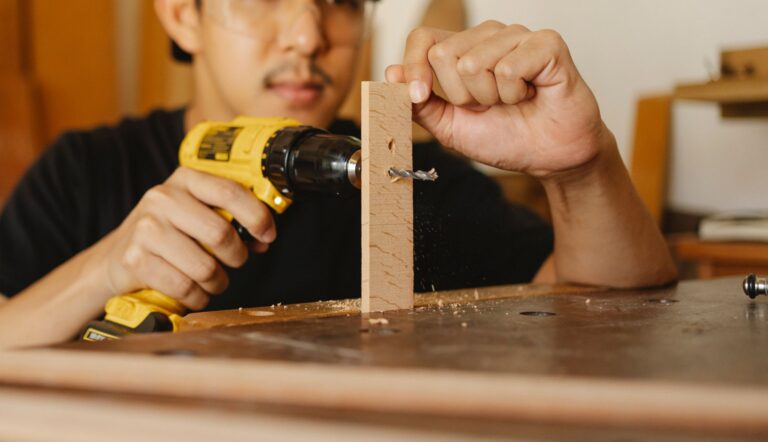
A straight bit can be lowered into the cut before the motor reaches full depth, which changes how you approach first-buy routing jobs. A plunge router drops into the cut while the motor is running, which suits interior work; a fixed-base router is set before the cut starts and feels steadier along edges. That difference shapes safety, depth control, and setup.
You are comparing the right tool for trimming, joinery, router tables, and your first serious purchase. The details below help you match the machine to the cut instead of guessing what belongs in your shop.
The Mechanical Difference That Drives Every Decision
A plunge router moves the bit down into the work after the motor is already running, so you can start a cut in the middle of a board. That motion matters for mortises, stopped dados, and sign work where the cut does not begin at an edge, and it gives you a cleaner entry when your layout starts away from the perimeter.
A fixed-base router locks to one cutting depth before the job starts, which makes repeat work feel steady and predictable. The depth stop, the base shape, and the way your hands guide the tool affect almost every choice that follows, so your setup habits matter as much as motor size.
Vertical Entry Changes The Cut Path
The plunge mechanism works like a controlled drop, almost like lowering a drill press into wood by hand. That gives you room to start, stop, and reset the bit without dragging the cutter across finished faces, which helps protect visible surfaces.
That vertical entry also changes safety habits. Your hands stay focused on guiding the body, while the spring-loaded base handles the descent, which matters when the cut begins away from an edge and you need more control over the first contact.
Preset Depth Helps Repeat Work Stay Consistent
A fixed-base router sets depth once, then keeps that setting steady through the cut. For edge profiling, roundovers, and laminate trimming, that simplicity saves time and reduces the chance of drifting off the line, especially when you repeat the same pass several times.
Depth control on a fixed base feels like setting a fence on a saw, then trusting the setup. You get less movement under load, which is why repeatability is a strong point for this style and a major advantage when your work needs consistency.
Router Bits And Reach Shape The Choice
Router bits need room to enter the stock cleanly, and that is where the base style matters. Straight bits, pattern bits, and edge-forming bits behave differently depending on whether the cut starts on the surface or at the edge, so your bit choice and base choice work together.
The short version is simple: the plunge mechanism gives you reach into the middle, while the fixed base keeps edge work calm. That split is the core of plunge router vs fixed base router, and it points straight to the kind of projects each tool handles best.
That split matters most once project style enters the picture, because each base serves a different kind of cut.
Where Each Router Feels Most At Home
That mechanical split shows up most clearly once you start running real project lists. Trim work on cabinet edges and shelving usually feels smoother with a fixed-base router because the body stays compact and light in your hands. A smaller mass means less fatigue during long passes, which matters more than raw force on simple edge jobs and keeps your routing more controlled.
Plunge routing earns its place on interior cuts, especially dados and grooves, mortises, inlays, and sign layouts. That is where the bit needs to enter from above, not slide in from a side edge, and that entry style is exactly where you benefit from the extra travel.
Edge Profiling Favors The Fixed Base
Roundovers, chamfers, flush trimming, and laminate cleanup reward a tool that tracks the edge without feeling top-heavy. The fixed base keeps the center of gravity lower, so you can steer the cutter with less wobble and keep the pass more predictable.
Cabinet doors, tabletops, and shelf fronts are good examples. You want the bit to follow the shape, not force your wrist to fight the machine, and a lighter base helps you maintain that line.
Stopped Cuts Favor The Plunge Base
Stopped dados and grooves are classic plunge-router tasks because the cut begins and ends inside the workpiece. A plunge stop lets you land on depth, move the router, and lift out cleanly without chewing past the mark, which keeps the visible edges cleaner.
Sign making works the same way. You can start inside a panel, form letters, then leave the surrounding field untouched, which is hard to manage with a fixed base alone and much easier when you can descend exactly where the cut belongs.
Template Work And Joinery Lean Toward Plunge Control
Template routing, mortising, and inlay pockets need a router that enters cleanly and holds a set depth while you follow a guide. That extra travel gives you room to stage the cut in steps rather than forcing one shallow pass at the edge, and that staging improves control.
Once you see those task differences, the buying choice starts to feel less abstract. The next step is control, setup speed, and how each base behaves in real use, because those details decide how smoothly you work day to day.
Those tradeoffs become clearer when you watch the tool on the bench, where stability and speed affect every adjustment.
Control, Accuracy, and Setup Speed in Real Use
A lighter fixed-base router tends to feel friendlier during edge work because it has fewer moving parts and less bulk above the work. New users notice that difference fast, especially on narrow stock where balance matters more than motor size and where your hands need immediate feedback.
A plunge router adds springs, posts, and depth stops, so the adjustment system is more involved. That complexity pays off the moment you need to reset depth mid-project or step into a cut that starts away from a board edge, and you will feel that benefit whenever the work turns technical.
Why Fixed Base Feels Calmer In The Hand
The fixed base keeps the bit locked to one setting and leaves the body simpler to steer. Fewer moving parts mean less distraction while you guide the cutter along a rail, a fence, or a template, which helps you stay focused on the cut path.
That calm feel matters during long edge runs. A router that stays planted makes it easier to keep pressure even, which helps your cut line stay clean from start to finish and reduces the need for correction.
Why Plunge Depth Control Pays Off Later
Plunge mechanisms shine when depth changes need to happen in steps. A mortise might call for a shallow start, then a deeper final pass, and a plunge base handles that sequence without full reassembly, saving you time between adjustments.
One physics detail matters here: cutting forces push sideways and upward on the bit, and a heavier, guided plunge base resists that pull during interior cuts. That resistance helps the cutter stay on path while the base descends under spring tension, so you get steadier results when the cut begins in the middle.
Repeatability And Learning Curve Trade Off
Fixed-base repeatability is easier because the setting stays put once it is dialed in. For the best router for beginners, that matters more than extra travel, since you want fewer moving parts while you learn feed direction and bit behavior and build confidence through simpler setup.
Set the depth on scrap before touching your workpiece. Router bits remove material fast, and a 1/32-inch change can turn a clean edge into a visible step, so you protect your project by testing first.
| Feature | Fixed-Base Router | Plunge Router |
|---|---|---|
| Depth setup | Set once, then stay locked | Adjusted with a plunge stop and depth controls |
| Edge work | Lighter and easier to guide | Works, but feels bulkier |
| Interior cuts | Poor fit for center starts | Strong fit for stopped cuts and mortises |
| Learning curve | Straighter path for beginners | More controls, more flexibility |
| Repeatability | Very steady once set | Strong, but setup takes more steps |
That table points to a simple buying truth: accuracy is not only about precision in the cut, it is also about how much setup your hands can repeat without drift. Router table use changes that equation, which is where the next section turns and where your buying decision can shift quickly.
Repeated accuracy is only part of the story; table mounting changes how the router fits into a shop workflow.
Router Tables Change The Equation
That setup tradeoff becomes most obvious once the router lives under a table. A fixed-base router fits a router table well because the depth is set before the cut and stays there during use. Once mounted upside down, the simple adjustment pattern stays more approachable than a plunge mechanism inside a table cabinet, and your table workflow stays easier to manage.
A router lift narrows the gap because it lets you raise and lower the bit from above the table. Even then, the fixed-base setup remains the smoother path for many table jobs, especially for raised panels and consistent edge shaping, where stable height matters more than vertical travel.
Fixed Base Stays Simple In A Table
The fixed base is easier to install, adjust, and leave alone once the setup is finished. That matters for profile bits and pattern work where your main task is feeding stock, not resetting the cutter between passes, and it keeps your attention on the workpiece.
The Home Depot and Rockler both sell router-table accessories that reflect the same workflow reality. Their table setups place a premium on stable depth and easy fence adjustments, not on mid-cut plunge travel, so your purchase should match that approach if you plan to use a table often.
Router Lifts Help, Yet They Do Not Erase The Difference
A router lift changes the access point, not the nature of the motor and base beneath it. You gain fine height control from above the table, but you still need a motor and base that fit the cabinet, fence, and bit height range, and that fit affects long-term convenience.
That is why serious table users often still favor a fixed base for the simplest path. The less time spent fussing with the underside of the table, the more time spent shaping stock cleanly, and that time savings becomes obvious after repeated setups.
Table Use Should Shape The Purchase
Raised panels, edge molding, and pattern routing from a table reward stability over flexibility. Festool, for example, is known for precise woodworking systems, and that reputation shows how much setup quality matters once a router lives in a table and becomes part of your routine.
For your own shop, the question is not which router sounds more capable on paper. The real question is whether your next six months include table work often enough to justify a base that stays planted there, because your actual workflow should drive the purchase.
A planted setup makes sense when the work stays repetitive, but many beginners start with smaller, more varied projects.
Beginner Projects That Point Clearly To One Type
Simple project types tell the story faster than feature lists do. Edge trimming on plywood, shelf roundovers, and laminate cleanup all point to a fixed-base router because the setup stays light and easy to steer, and that makes early results more manageable.
Mortises, grooves, sign panels, and inlays point the other way. Those cuts need a plunge router because the bit must enter from above and stop cleanly inside the work, which is exactly the kind of motion that base was built to handle.
Choose Fixed Base For Edge-Routing Jobs
Cabinet edging, picture-frame roundovers, and flush trimming are the best starting point for a fixed-base router. Those tasks reward control, visibility, and simple depth setup more than travel range, so you can focus on clean movement instead of extra adjustment.
A small trim router can fill that same role for very light work, but a full fixed-base router gives you a sturdier grip when the stock gets wider or the bit gets larger. That extra stability can matter once your projects move beyond thin material.
Choose Plunge First For Interior Joinery
Inlays, mortising, dados, grooves, and sign making all benefit from a plunge base first. You get the ability to start in the middle of a panel, land on exact depth, and lift out without dragging the cutter across the surface, which protects the finished face.
That matters for cabinet faces and decorative panels, where a mistake is visible immediately. A plunge base gives you more room to stage the cut before the bit reaches final depth, and that extra control can save a project when your layout is tight.
A Project-By-Project View Beats A Generic Ranking
A router that looks weaker in one task may be the better tool across the whole month of work. A fixed-base router can handle ten edge jobs faster than a plunge router, while the plunge tool wins the moment a stopped cut appears in the plan, so the right choice depends on your mix of jobs.
That is the practical answer to which router should I buy. Start from your actual project list, not the spec sheet, and the choice gets a lot clearer because your own shop demands will reveal the better fit.
Those beginner choices often lead to broader buying questions, especially when cost and flexibility start pulling in different directions.
Combo Kits, Cost, and The Case For Owning Both
A router combo kit can be the smartest purchase when your work swings between edge profiles and interior cuts. You get both bases on one motor body, which cuts down on duplicate parts and keeps bit compatibility simple, so your toolset stays more flexible.
Many woodworkers end up with both styles because the tools do not compete, they divide the workload. One base handles edge routing, and the other handles stopped cuts, so the shop gains range without forcing one tool to do everything, and you benefit from less compromise.
Combo Kits Save Setups More Than Money
A combo kit matters because it reduces swapping time, not only because it bundles parts. If your day moves from trimming a cabinet door to cutting a mortise, keeping both bases close by saves more friction than a single-tool purchase can, and that convenience adds up fast.
That convenience has real value in hobby shops and pro shops alike. A second base later may cost less than replacing a tool that never fit your work mix in the first place, and your future projects may justify the broader kit sooner than you expect.
Total Ownership Cost Goes Beyond The Box
Total cost of ownership includes setup time, router-table use, and how many jobs force a second purchase later. A fixed-base router alone is cheaper to start, but a plunge router plus a table setup may leave you wanting the other base within months, especially if your projects shift often.
A second motor body is not the only extra cost. Bits, fences, templates, and lift hardware all interact with the base style, so a purchase that saves ten minutes on every project can matter more than a small difference at checkout, and that time savings may shape your real budget.
Many Shops Grow Into Both Types
BobVila.com and Festool both reflect the same shop logic in different ways: tools earn their place by task, not by status. A combo kit gives you that flexibility from the start, especially for mixed work that includes trim, joinery, and table use, and that flexibility can reduce future frustration.
That is why many shops keep both on hand. The point is not owning more tools, it is avoiding the wrong setup for the cut in front of you, so you can match the base to the job instead of forcing a compromise.
That flexibility matters because the wrong base can make simple cuts awkward, even when the bit and material are right.
A Practical Buying Framework For Different Woodworkers
Beginners who want one calm, easy-to-learn tool usually do better with a fixed-base router first. The lighter body, simpler depth setup, and strong edge control make the learning curve less steep, and your first sessions feel more predictable.
Hobbyists who want inlays, mortises, and deeper interior cuts usually benefit from a plunge router first or a combo kit. Those projects call for vertical entry, and that is where the plunge base earns its keep, especially when your work includes detailed layouts.
Beginners Can Start With Simpler Control
Pick the fixed-base router when your work list leans toward trimming, roundovers, and shelf or cabinet edges. You get fewer moving parts, easier setup, and less chance of losing depth during a pass, which makes your first learning curve less frustrating.
The learning payoff is real. A stable base lets you focus on feed direction, bit speed, and grain behavior without also juggling plunge stops, so you can build skill with fewer distractions.
Hobbyists May Benefit From Interior-Cut Flexibility
Choose the plunge router first for signs, joinery, and template work. Those cuts need precise entry points, and the plunge action keeps the bit from scraping across the face before the cut begins, which protects the project and the layout.
That extra range also helps with deeper cuts in stages. You can sneak up on final depth instead of asking the bit to remove too much at once, and that staged approach gives you more confidence on detailed work.
Serious Shops Should Match The Tool To The Workflow
Professionals and serious weekend woodworkers should weigh project mix, router table use, and how often depth changes come up. A single router can cover a lot, but it cannot outdo the wrong base for the wrong task, so your workflow should lead the decision.
Warning: Do not buy only for motor power. A strong motor with the wrong base still slows you down, and that mismatch shows up every time you set up for a cut, especially when your jobs alternate between edges and interiors.
When those jobs keep changing, the mismatch becomes obvious, which is why a final checklist helps lock the choice in.
What To Remember
The best choice depends on the cut, not the label on the box. A fixed-base router suits edge work, repeatable depth, and table use, while a plunge router fits stopped cuts, mortises, grooves, and inlays. Pick the tool that matches your real projects, and the rest of the decision gets easier because your needs become the guide.
FAQ
Should I buy a plunge router or a fixed base router?
Choose a fixed-base router for edge trimming, roundovers, and your easiest first setup. Choose a plunge router for mortises, dados, grooves, inlays, and any cut that starts inside the workpiece, especially when your layout begins away from an edge.
Can a plunge router do everything a fixed base can?
With a depth stop and a heavier body, one plunge router can handle many fixed-base tasks, though it feels bulkier on long edge runs. For clean edge profiling and table work, a fixed-base router still feels easier to control, so you may prefer it for repetitive trim work.
What are fixed base routers good for?
Trim work along cabinet edges, rounded corners, and laminate sheets is where fixed-base routers usually earn their keep. Their lighter feel and preset depth make them a strong match for steady, guided passes, which helps you keep the cut consistent.
Can you use a plunge router like a regular router?
On a simple template or edge trim, the tool often behaves much like a standard router and handles the cut without drama. The tradeoff is extra bulk and more setup steps, which can slow simple jobs and make quick edge passes less convenient.
Is a combo kit worth it for woodworking?
A combo kit makes sense when your projects swing between edge routing and interior cuts. You get both base styles on one motor body, which gives you more range without forcing one router to handle every job, and that flexibility can simplify your shop choices.
Which router is better for inlays and mortising?
Clean inlay pockets and precise mortises usually come from a vertically lowered bit that stops exactly at the set depth. That control keeps the cut inside the layout lines and away from the surrounding surface, which is exactly what your detailed work needs.