A good kit pairs eye, ear, hand, foot, and respiratory protection with the right guards and controls for chips, noise, dust, impact, and crush hazards. To stay protected, you match the gear to the tool, the material, and the hazard that can reach you first.
This guide covers tool-specific PPE, OSHA hand and power tools expectations, and the pre-use checks that help drills, saws, grinders, and sanders stay under control for your crew or jobsite.
The Hazards Power Tools Bring To A Jobsite
A saw blade can throw chips fast enough to cut skin, and a grinder can send sparks and grit straight at your face. That is why power tool safety starts with the hazard, not the gear rack.
Eye injuries sit near the top of the risk list because dust and fragments travel in a straight line. Hearing loss matters too, since a 15-minute grinding burst can add up with repeated exposure across a 10-hour shift.
Eye, Face, And Air Hazards
Drywall dust, metal shavings, and wood chips all move differently, but they share one trait: they travel where your face is pointed. Safety glasses help with chips and dust, while a respirator may be needed for sanding, cutting, or grinding that creates fine particles.
Face shields add splash and impact coverage over eye protection, yet they do not replace it. That layered setup matters with a cutoff wheel, a hole saw, or any task that can launch debris from below chin level.
Noise, Kickback, And Contact Injury
Grinding, routing, and hammer drilling can wear down hearing even in a short shift. The physics is simple: repeated high sound pressure irritates the inner ear, and that damage does not reset overnight.
Hands and feet take the blunt force of slips, dropped tools, and kickback. Steel-toe boots help with crush injuries, and task-fit gloves help with grip or cut risk, but loose gloves near rotating parts can snag in a fraction of a second.
Those hazards set the PPE choice, and the next section shows how the right setup changes by task instead of by guesswork.
A task-based matrix removes the guesswork and makes protection choices feel much more practical.
A Tool-By-Tool PPE Matrix For Common Tasks
The clearest buying plan is task based. A drill, a grinder, and a sander do not ask for the same setup, and a small stock list saves time when the crew shifts from framing to finishing.
OSHA hand and power tools rules do not hand you one universal outfit; they expect protection matched to the hazard. That means the job on the bench decides what you wear, what you keep in the trailer, and what gets pulled out before the trigger is pulled.
| Task | Core PPE | Extra Control |
|---|---|---|
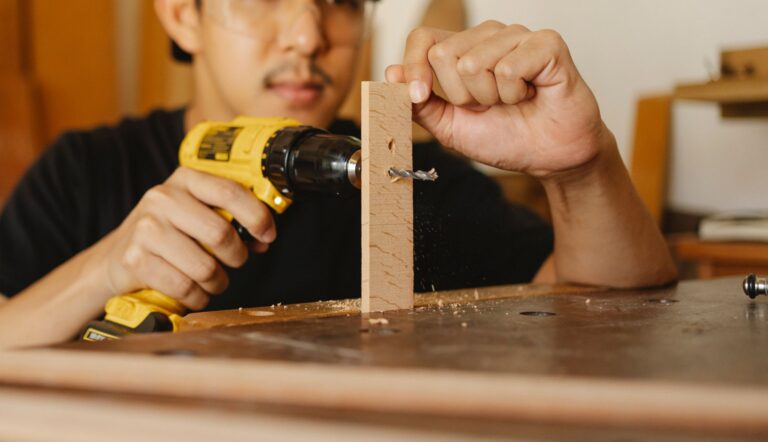
| Drilling and driving | Safety glasses, hearing protection for long runs, task-fit gloves | Clamp the workpiece, keep sleeves close to the wrist |
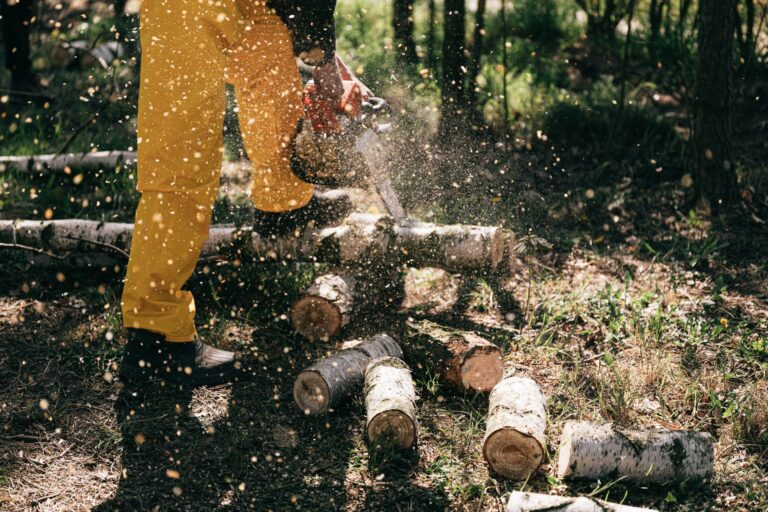
| Cutting wood or metal | Safety glasses or goggles, hearing protection, steel-toe boots | Use guarding, hold material with clamps, clear the cut line |
| Grinding | Goggles, face shield over eye protection, hearing protection, gloves suited to sparks | Check wheel condition and spark direction before start |
| Sanding | Safety glasses, respirator for fine dust, hearing protection on high-noise tools | Use dust extraction and keep the pad flat on the work |
| Demolition or chipping | Goggles, face shield, hearing protection, steel-toe boots | Secure loose material and watch for rebound fragments |
- Eye gear: Keep both safety glasses and goggles on hand for dust, chips, and splash.
- Noise gear: Stock earmuffs and plugs, since fit and comfort change by task.
- Hand gear: Carry cut-resistant gloves and lighter grip gloves for different jobs.
- Foot gear: Keep steel-toe boots part of the standard jobsite set.
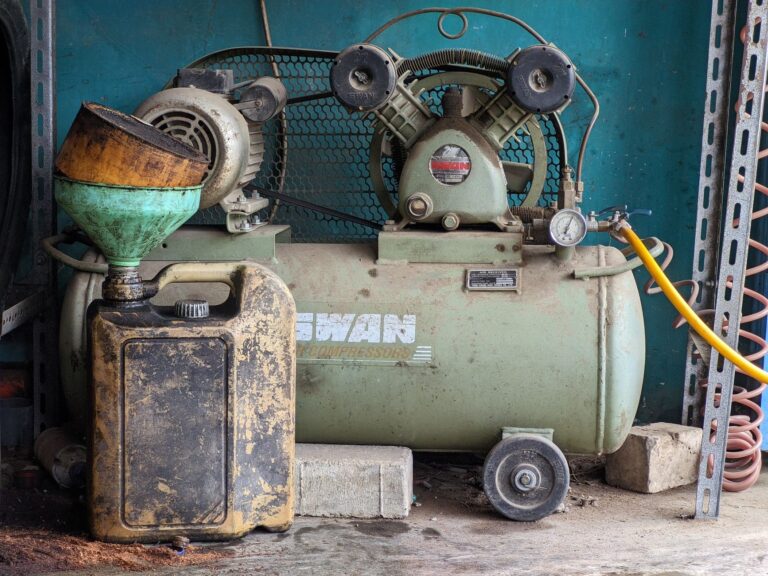
Pneumatic tools belong in the same planning bucket because compressed air tools can drive fasteners, dust, and metal shards with plenty of force. Cordless tools change the electrical hazard profile, but they still need the same eye and hand judgment at the cutting edge.
That tool-by-tool approach becomes easier once you match each body zone to the specific force it needs to stop.
Once each hazard is tied to a body area, the gear choices become far easier to compare.
Eye, Face, Hearing, Hand, And Foot Protection In Practice
A shell of plastic on its own does not solve a hazard. The right combination of eye protection, hearing protection, gloves, and boots changes with the force the tool produces, and that difference shows up fast in a real work bay.
Grinding sparks, masonry chips, and sawdust each call for a different mix. The practical question is not just what looks sturdy, but what stops the specific thing moving toward your body.
Safety Glasses And Goggles For Chips And Dust
Low-risk chip jobs and general shop tasks often call for safety glasses, while dust-heavy work usually needs goggles that seal more tightly around the eyes. A sanding disc can fill the air with particles that drift around open frames, so a tighter seal becomes the safer choice.
For a trim carpenter cutting pine casing, glasses may be enough. For a concrete cut or a grinder cleanup, goggles make more sense because the hazard rides on the air stream as much as the tool edge.
Face Shields, Gloves, And Boots For Impact
A face shield sits in front of your face like a second pane of glass, but it works only as a layer over eye protection. That matters during chipping, grinding, and demolition, where the main hit is impact rather than fine dust.
Gloves need the same sort of match. Cut-resistant gear helps with sheet metal or sharp stock, anti-vibration gloves can ease long grinder work, and steel-toe boots protect against dropped drills, saws, and blocks.
Loose gloves near a spinning chuck, blade, or bit can pull your hand in faster than you can react. Close cuffs, a snug fit, and the right material matter more than bulk.
That match between hazard and gear matters just as much when you shift from PPE to the rules that govern safe use, including OSHA and the controls that keep electric tools from turning a minor defect into a jobsite injury.
Those body-specific protections still have to fit within the standards that define safe tool use.
OSHA Expectations For Hand And Power Tools
On job sites and in shops, OSHA treats hand and power tools as part of a control system rather than just a product category. The agency expects tools to be safe to use, guards to stay in place, and damaged equipment to stay out of service.
That plain-language rule has a sharp edge: electric tool safety includes cords, plugs, grounding, and the way you store and inspect the tool before use. PPE helps, but it does not excuse a cracked housing, a missing guard, or a frayed cord.
What OSHA Expects In Daily Use
Under OSHA 29 CFR 1910 Subpart P for general industry and 29 CFR 1926 for construction, power tools must be used with guarding and safe operating practices. A guard removed for convenience is a hazard, not a shortcut.
Damaged tools need tag-out and removal from service until repaired. That rule matters because a small defect, such as a loose blade clamp or broken switch, can turn a routine cut into kickback or contact injury.
Electrical Safety For Corded Tools
GFCI protection matters on damp floors, outdoor work, and temporary power setups because it cuts current fast during a ground fault. Extension cords should match the load, stay clear of traffic, and avoid pinch points under doors or ladders.
Grounding, intact plugs, and proper strain relief belong in the same check. A cord with cracked insulation can energize metal parts, and that risk does not care how careful your grip feels.
OSHA does not treat PPE as a substitute for guards or lockout/tagout. Use both, or the weakest part of the setup becomes the failure point.
Those rules work only when you catch damage before the motor starts, which makes the pre-use check the next step and a core part of any power tool inspection checklist.
A careful check before use helps keep small defects from becoming bigger problems on the jobsite.
Inspection, Guards, Cords, And Battery Safety Before Use
A quick pre-use check catches the problems that cause most tool failures. A dull blade, a bent bit, or a sticky switch tells you more than the label on the housing ever will.
Tool maintenance starts before the motor starts. That habit matters for power tool safety because a bad accessory can fail before PPE has a chance to do its job.
Pre-Use Inspection Checklist
- Blades and bits: Look for chips, cracks, dull teeth, or wobble before spinning them up.
- Guards and shields: Confirm they move, cover the right area, and lock back in place.
- Cords and plugs: Check for cuts, loose prongs, burned marks, and crushed sections.
- Switches and triggers: Test that they start and stop cleanly without sticking.
- Accessories: Match the disc, blade, or sanding pad to the tool rating and task.
- Batteries and chargers: Pull damaged packs, swollen packs, and hot chargers from service.
Cordless tools need extra battery safety because lithium-ion packs can fail badly after impact, swelling, or charging abuse. Keep packs dry, store them where terminals cannot short, and remove any pack that smells hot, leaks, or looks deformed.
A damaged accessory on a grinder can shed fragments at high speed, and that release is mechanical, not random. The wheel stores rotational energy, so a crack or mismatch can turn stored force into flying debris in a split second.
That inspection mindset carries into the way you handle the tool, because steady work habits keep the gear from fighting your hands.
What you do with the tool matters too, because good handling keeps protective gear effective.
Jobsite Habits That Keep PPE Working As Intended
Secure material before you cut it, drill it, or sand it. A clamped workpiece resists kickback, keeps the tool line steady, and gives your hands a place to stay away from the blade path.
Good habits matter as much as gear because PPE only covers the body you leave exposed. Supervision, dust extraction, and guards shape the job around the tool, which lowers the load on everything you wear.
Grip, Posture, And Positioning
Hold the tool with both hands whenever the design allows it, and keep your stance outside the expected kickback line. A body set at an angle can absorb a lurch better than a squared stance right in front of the cut.
Keep loose sleeves, dangling cords, and drawstrings out of the rotating zone. Entanglement happens fast, and a spinning chuck does not care whether the snag came from clothing or a lanyard.
Toolbox Talk Practice And Work Area Control
A short toolbox talk for power tools should name the tool, the hazard, and the protective setup before work starts. That habit pays off on shared jobsites where one person may shift from drilling to grinding without changing pace.
Dust extraction, clear walk paths, and guarded storage round out the system. Once those controls are in place, your PPE works as a final layer instead of the only layer.
That same layered approach is the easiest way to remember what belongs on your body before the first trigger pull.
That layered mindset is the simplest way to keep protection in place before the work begins.
Wrap Up
The best protection follows the task, not a generic gear list. Match eye, face, hearing, hand, and foot protection to the tool, then back it up with guards, inspection, and solid setup habits. That is the difference between wearing PPE and actually getting its benefit.
FAQ
What PPE is needed for power tools?
You need eye protection, hearing protection for loud tools, task-fit gloves, and steel-toe boots when impact or crush risk exists. Add a respirator for fine dust, and use a face shield over eye gear for higher debris or splash exposure.
What are the 5 safety equipment items for power tool use?
A practical five-item list is safety glasses or goggles, hearing protection, gloves suited to the task, steel-toe boots, and a respirator where dust calls for it. The exact mix changes with the tool and the hazard on site.
What does OSHA require for electric tools?
Frayed cords, missing guards, and poor grounding are all reasons OSHA expects electric tools to stay out of service until they are fixed. PPE is part of the setup, but it does not replace inspection or safe operating practice.
What is the OSHA standard for hand and power tools?
In general industry, the rules for these tools appear in 29 CFR 1910 Subpart P. Construction work sits under 29 CFR 1926, and both require safe condition, guarding, and proper use of equipment.
How do you inspect a power tool before use?
Check the blade or bit, guards, cord, plug, switch, battery, and accessory fit before the tool runs. Pull damaged gear from service, because a small defect can trigger kickback, shock, or flying fragments.
How can you prevent kickback and flying debris?
Clamp the workpiece, use the right accessory, keep guards in place, and stand outside the line of fire. Eye protection and a face shield add a barrier, but the real control is stable material and correct tool handling.