A face shield, gloves, and hearing protection help you match the hazard, not just the machine. A drill can throw chips, a grinder can send sparks, and a sander can load the air with dust, so your protection changes with the task in front of you.
This guide covers the basics and the tradeoffs of toolsite protection, showing when safety glasses, hearing protection, gloves, and face shields make sense for carpenters, DIYers, and shop crews.
The Minimum PPE Most Power Tool Jobs Call For
Safety glasses that fit your face are the starting point on most jobs. A dropped drill, a loose screw, or a spinning offcut can turn a small mistake into a trip to urgent care, so closed-toe, slip-resistant footwear belongs in the base layer whenever you are near moving parts.
The rest of the gear depends on the hazard. PPE requirements for power tools shift with flying debris, noise, dust, and kickback, which means your gear should follow the risk instead of the label on the tool or the way you happen to use it.
Eye protection stays on the job
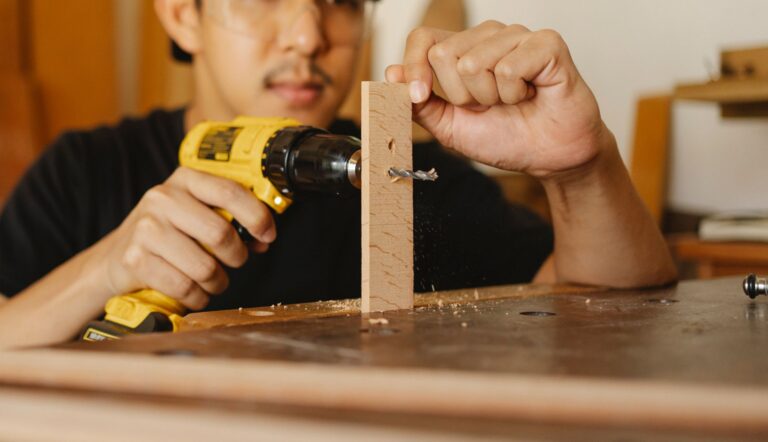
Power tools throw chips, dust, and fragments at eye level. Safety glasses handle a lot of routine work, especially drilling into wood or trimming fasteners, but scratched lenses and loose temples weaken that protection before your next cut or trim pass.
Footwear starts with traction and coverage
Closed-toe, slip-resistant shoes or boots help when screws roll underfoot, sawdust coats the floor, or a tool slips from a bench. Steel-toe or similar reinforcement matters more when heavy stock, concrete forms, or metal parts can land on your foot and create an impact you do not want to absorb.
That minimum set gets you through plain tasks, but the moment the tool starts throwing chips faster, louder, or finer, the gear has to change with it. Better protection comes from matching the equipment to the specific hazard instead of relying on a one-size-fits-all setup, and PPE for power tools only works when you make that adjustment early.
That adjustment starts with separating what can hit your face from what can shake your ears or lungs.
Matching Protection To Flying Chips, Noise, Dust, And Kickback
A quick hazard check tells you more than the tool name ever will. A drill press can be tame on pine and aggressive on steel, while a circular saw can leave a clean edge in trim but spit sharp fragments from a knot or nail that changes the whole cut.
Match the hazard to the gear
Flying chips call for eye protection, loud exposure calls for hearing protection, and fine airborne dust calls for respiratory protection. Kickback deserves special attention because it can yank material, splash fragments, and send your hands into the line of fire faster than a slow reaction can help you recover.
Look at the material, the cutting edge, and the path of the waste before you start. A board with hidden nails or resin pockets can change the risk in one pass and change what you need to wear.
Brief exposure and repeated exposure are not the same
A few cuts with a loud saw still expose your ears, but a whole shift around a grinder or router raises the stakes. Sound pressure adds up, and repeated exposure is where hearing damage tends to creep in without a dramatic warning, which is why your protection needs to fit the length of the job.
That same logic applies to dust. A short trim cut in clean lumber is different from an hour of sanding drywall compound or masonry, where fine particles hang in the air and linger on clothing, hair, and skin around you.
Check the tool, the stock, and the area
Blade guards, cracked discs, loose collets, and damaged cords belong on the inspection list before the plug goes in. The material matters just as much, because MDF, concrete, treated wood, and corroded fasteners all create different debris and dust patterns that affect your next decision.
Once that habit sticks, you stop choosing PPE by habit and start choosing it by risk. That shift matters most for your eyes and face, where the wrong setup can leave a gap big enough for a chip to land and cause a preventable injury, and it sets up the next layer of protection.
A better seal keeps small debris from sneaking past, and that same coverage sets the stage for hearing safety.
Eye And Face Protection That Holds Up On The Job
A shard from a cutoff wheel or a splinter from pine can travel fast enough to injure the eye in a split second. OSHA and ANSI standards both push protection that fits the face, stays in place, and matches the impact level, which is why scratched drugstore lenses are poor field gear when you need dependable coverage.
Safety glasses handle routine debris
Safety glasses work well for drilling, fastening, and light cutting where the main risk is chips that travel forward. Side shields matter because particles rarely arrive in a straight line, and a snug bridge prevents the lens from sliding down when you sweat during longer use.
Goggles seal better around dust and splash
Safety goggles add a closer seal for sanding, grinding, and work that throws fine dust into the air. That seal helps because small particles can ride air currents around open frames and settle under the lens during a long pass, especially when you are working close to the surface.
Face shields add coverage, not a substitute
A face shield helps with larger debris, sparks, and splash from a grinding or routing task, but it does not replace safety glasses. The shield protects the face, while the glasses protect the eyes from side entry and smaller fragments that slip around the edges and reach your eyes anyway.
| Task | Eye And Face Gear | Why It Fits |
|---|---|---|
| Drilling wood | Safety glasses | You get common chips moving forward, and the impact level stays moderate. |
| Grinding metal | Safety glasses plus face shield | You need layered face coverage for sparks, chips, and wheel fragments. |
| Sanding drywall | Safety goggles | You need a closer seal because fine dust can slip around open frames and irritate the eye. |
| Routing hardwood | Safety glasses plus face shield | You face high-speed chips and kickback that can send debris in several directions around you. |
That table gives you the simple rule set: glasses for routine chips, goggles for finer dust, and a shield only as added face coverage. Hearing protection comes next, because the noisiest tools can wear you down long before the cut looks risky, and the right fit matters just as much as the rating.
Persistent noise does more than annoy; it makes the hand tools themselves feel harsher over a long shift.
Hearing Protection For Saws, Grinders, And Routers
Some power tools sound sharp and brief, while others hammer your ears all day. Grinders, routers, circular saws, miter saws, and nailers can all create harmful noise, and the risk rises fast when you stand near the tool for repeated cuts and long setup work.
Noise adds up during repeated use
Hearing damage does not need one dramatic moment. A loud tool used for 20 minutes, then again after lunch, then again during cleanup, can stack exposure in a way that feels harmless until the ringing starts later that night and keeps you guessing about the damage.
Earplugs and earmuffs both work when they fit well. Earplugs suit tight spaces and hot weather, while earmuffs are easier to put on and take off during stop-start work, which helps on a layout-heavy job with short cuts and frequent pauses.
Fit matters as much as the rating
A high noise-reduction number means little if the seal leaks. Earplugs have to sit deep enough to block the canal, and earmuffs need full contact around the ear without glasses temples breaking the seal and reducing the protection you expected.
Keep hearing protection near the tool, not buried in a box. The fastest way to skip it is to make it hard to reach when you are already focused on the next cut.
Noise protection solves one risk, but hand protection comes with a tradeoff that catches a lot of people off guard. The wrong glove can help with grip and still create a snag near a spinning bit, so you need to think about the motion before you pull it on.
Yet added dexterity can come at the cost of a caught seam or loose cuff near moving parts.
Gloves, Hand Protection, And The Entanglement Tradeoff
Work gloves help when you handle rough lumber, sharp sheet metal, hot parts, or fasteners with burrs. They also reduce small cuts from splinters and protect knuckles when you carry material across a rough shop floor or move stock between stations.
Use gloves for handling, not every rotating tool
Loose gloves near a blade, chuck, spindle, or bit can catch in a split second. Once fabric grabs rotating parts, the hand follows the fabric, and that pull can be stronger than your grip can fight, which is why glove choice matters more than many workers realize.
That hazard is the reason many shop setups keep gloves off during drill press work, router passes, and saw cuts. Tight-fitting gloves with good dexterity work better for material handling, but the rotating motion of the tool still decides whether they belong on your hands at all during the task.
Grip and dexterity set the limit
A glove that feels bulky on a tape measure can feel dangerous on a trigger, fence, or clamp. Thin, snug work gloves help when you need control over sheet goods or hot metal, while thick gloves can dull your feel and slow a quick release when something shifts unexpectedly.
Heat, burrs, and rough edges justify hand protection in plenty of setups, but rotating parts shift the decision fast. Foot protection fills the next gap, especially where dropped stock or scattered debris can reach below the knees and threaten your balance too, and that is where the checklist starts to come together.
Once the hands are considered, the rest of the lower body needs the same practical attention.
Footwear And Lower-Body Protection Worth Wearing
Closed-toe, slip-resistant footwear is the baseline for any shop or jobsite with power tools. Sawdust, oil, offcuts, and loose screws turn the floor into a moving target, and a good tread pattern helps you stay steady while carrying material or stepping around a live work area.
Toe protection rises with impact risk
Steel-toe or similar reinforced footwear matters when heavy boards, pipe, pavers, or tool cases can fall from bench height. The point is not fashion or comfort, it is the extra barrier that keeps a dropped object from crushing the front of the foot and turning a routine job into a work stoppage.
Surface conditions change the choice
Wet concrete, metal grating, and littered lumber yards each ask for different traction. A clean shop may only need slip-resistant soles, while a rough framing site with stacked material and scattered fasteners calls for sturdier boots with more protection at the ankle and toe so you can move with confidence.
- Closed toes: Keep chips, screws, and offcuts from striking exposed skin.
- Slip-resistant soles: Help you stay steady on dusty concrete, smooth plywood, and oily patches.
- Toe reinforcement: Matters where heavy tools or materials can fall onto your foot.
- Firm ankle support: Helps you move on uneven sites with cords, hoses, and scrap underfoot.
Footwear handles impact from below, but the air around sanding, cutting, and grinding can still load up with fine particles. That is where respirators and basic electrical checks become part of the same safety decision, because dust and shock hazards often show up together, and you need both controls working at once.
Wet sites, concrete dust, and live cords often overlap, so one control rarely solves the whole problem.
Dust Control, Respiratory Protection, And Electrical Safeguards
Sanding drywall, cutting masonry, grinding concrete, and shaping wood all send fine particles into the air. Some dust is nuisance dust, but some materials create particles that irritate lungs fast, which is why respirators need to match the job instead of serving as a universal fix for every dusty task.
Respirator choice depends on dust and fit
A disposable filtering facepiece can help with light dust, while a tighter sealing respirator may suit heavier exposure or longer use. The seal matters because air always follows the easiest route, and a poor face seal sends dust around the filter instead of through it, which weakens the protection you count on.
OSHA and jobsite safety programs treat respiratory protection as part of the hazard assessment, not as a casual add-on. The dust source, the time near it, and how well the respirator seals all shape the choice, so you need to match the device to the exposure rather than the brand or the box.
Electrical checks support PPE but do not replace it
Damaged-cord checks, intact plugs, and GFCI protection lower shock risk around portable tools and damp areas. That control helps a lot, yet it does nothing for flying debris, hearing loss, or dust, so it works beside PPE rather than in place of it when the job gets messy.
| Task Type | Respiratory Gear | Electrical Check |
|---|---|---|
| Sanding drywall | Filtering facepiece or tighter sealing respirator | You should check the cord jacket and plug before sanding starts. |
| Grinding concrete | Respirator matched to fine dust load | You should use GFCI protection near damp floors or outdoor outlets. |
| Cutting masonry | Respirator with a good face seal | You should inspect the tool housing and cord for wear before plug-in. |
| Shop saw work | Light dust control gear as needed | You should keep cords clear of the blade path and chip pile. |
Dust control and electrical checks finish the hazard picture. From there, the useful step is a task-by-task checklist you can follow fast, especially on a crew where different tools show up before coffee cools and the workday gets moving.
When those hazards stack up, a simple checklist keeps the right gear from getting overlooked.
A Practical Power Tool PPE Checklist For Shops And Jobsites
A good checklist cuts guesswork at the tool cart. It helps you match power tool PPE checklist items to drills, saws, grinders, sanders, and routers without pausing every job for a long debate that slows the crew down.
Map the tool to the hazard
- Drills: You should wear safety glasses and closed-toe footwear; add gloves only for handling stock.
- Circular saws: You should use eye protection, hearing protection, and slip-resistant footwear.
- Grinders: You should add a face shield over safety glasses, plus hearing protection and sturdy footwear.
- Sanders: You should choose eye protection and respiratory protection, with hearing protection during long runs.
- Routers: You should use eye and face protection, hearing protection, and careful hand placement away from the bit.
Separate required gear from extras
Some items are baseline, like safety glasses and footwear, while others depend on the material and the cut. A face shield, earplugs, or a respirator can be the right move on one task and unnecessary on the next, so fast sorting saves time and keeps the setup clean and matched to your exposure.
Inspect, fit, and store the gear
Scratched lenses scatter glare, cracked face shields lose clarity, and stretched earplug cords invite bad habits. Replace damaged PPE before the next shift, check the seal and straps before use, and store gear where dust, heat, and sun will not warp it or shorten its useful life.
Cornell EHS and Washington L&I both stress training and fit because gear only works the way it was worn. A glove that slips, a lens that fogs, or a respirator that leaks around the nose can all erase the margin you thought you had, so your fit check matters as much as the item itself.
Keep a spare pair of safety glasses in the tool bag. The job does not get safer just because a lens scratched during the morning setup and nobody wanted to stop for a replacement.
Seen in practice, the best PPE routine is short: inspect the tool, match the hazard, wear the right gear, then check fit again after the first few minutes. That habit makes PPE for power tools workable on a busy site instead of turning it into a ritual people rush through and ignore later.
With that routine in place, the final question is how to keep it simple enough to use every time.
Bottom Line
The right PPE follows the hazard, not the brand name on the housing. Eyes, ears, hands, feet, and lungs each face different risks, so your gear should change with the cut, the material, and the amount of time you spend near the tool.
FAQ
What PPE is required for power tools?
At minimum, you usually need eye protection and closed-toe, slip-resistant footwear. The rest depends on the hazard, so hearing protection, gloves, face protection, or respiratory protection may join the setup for noisy, dusty, sharp, or high-impact tasks you take on.
What PPE should you wear when using a power drill?
Safety glasses and closed-toe footwear are the usual baseline for a drill. Add hearing protection for long drilling runs, and use gloves only for handling material, not near the rotating bit or chuck where entanglement can happen fast.
When are gloves unsafe around power tools?
Loose gloves become unsafe near rotating blades, bits, spindles, and chucks because fabric can catch and pull your hand in. Gloves work best for carrying rough stock, handling sharp edges, or moving hot parts away from the tool, where the rotation is not a factor.
Do you need a face shield or safety glasses for power tools?
Safety glasses are the baseline for eye protection, and a face shield adds coverage for larger flying debris or sparks. The shield supplements glasses rather than replacing them, so the eye still needs its own barrier when chips or fragments can travel sideways.
What does OSHA require for hand and power tools?
OSHA expects the hazard to drive the protection choice, with training, proper guards, and the right PPE in place for the task. That means you match eye, hearing, respiratory, hand, and foot protection to the tool and the job conditions, not to a generic list that ignores what you are actually doing.