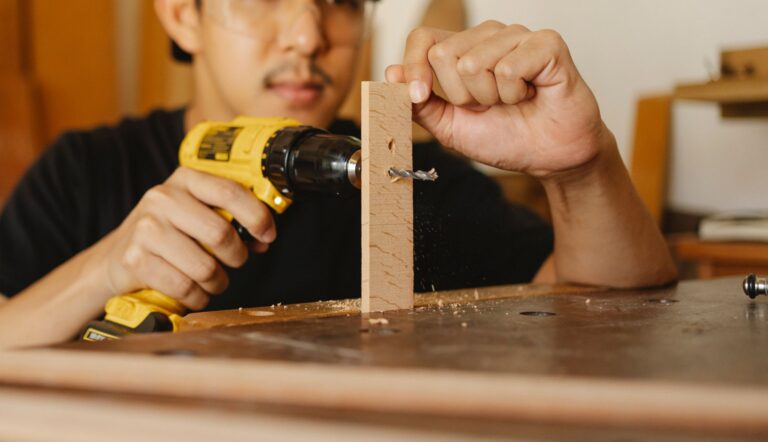
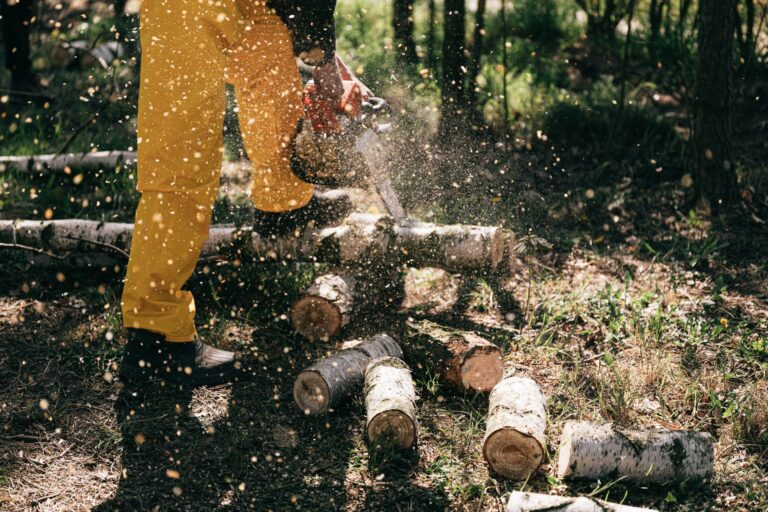
A fixed saw cabinet favors repeatable accuracy, while a handheld model wins on portability and quick setup. A table saw keeps the blade still while you feed the wood for cleaner rip cuts and repeatable sizing, while a circular saw moves to the stock for sheet goods, framing, and rough site work.
This guide covers the real-world tradeoffs that matter when a first-time buyer is choosing between these two saws, from cut quality and jobsite mobility to setup space and safer operation.
The Core Design Difference Behind Each Saw
The key difference is simple: a table saw keeps the blade fixed and moves the stock, while a circular saw puts the blade in your hands. That changes how much control comes from the machine and how much comes from your setup.
| Tool | How It Moves | Why It Matters |
|---|---|---|
| Table saw | Blade stays put, wood feeds through | Your rip fence and table surface set the line, so repeat cuts stay consistent |
| Circular saw | Tool moves across the work | Your guide line, clamps, and hand control shape the cut |
| Shared blade types | Wood, plywood, and some composites | Blade tooth count and grind matter more than the housing around it |
That design split explains why the table saw vs circular saw comparison keeps coming back to support. A fence and table surface keep stock aligned, while a handheld tool depends on a straightedge or guide rail to hold the path. ANSI Z87.1 eye protection and OSHA machine-guard guidance matter because each blade exposes your hands in a different way.
Both tools can run similar blade styles for plywood, framing lumber, and some composite sheet stock. The blade still shapes finish quality, but the machine around it decides how steady your body has to be.
That difference matters most once the cut has a purpose, because each saw shines in different kinds of work.
Cut Types Where Each Tool Earns Its Place
Each saw has a clear job: a table saw owns repeat rip cuts, and a circular saw handles mobility and large stock. That split matters fast once your projects move from a single board to sheet goods and framing lumber.
Rip Cuts And Long Straight Cuts
A table saw is the stronger choice for ripping 2×4 lumber because the rip fence keeps the board parallel to the blade. You can make ten identical strips without resetting the layout, which is hard to match by hand.
A circular saw can rip a 2×4 too, but the result depends on your line, clamp placement, and how flat the board stays. A straightedge helps, yet the cut asks more of your hand than a fixed machine does.
Sheet Goods And Framing Work
Breaking down plywood is where a circular saw becomes the practical answer. A 4×8 sheet is awkward on a cabinet saw, but a saw with a guide rail can trim it on sawhorses, a driveway, or a garage floor.
Framing work follows the same logic. Crosscuts on studs, joists, and blocking move quickly with a circular saw because the tool travels with you from cut to cut, while a miter gauge and table saw work better when the stock is short and the cut is controlled.
That difference shapes the whole workflow. One tool favors fixed accuracy, the other favors reach and speed, and the next section shows how that affects finish and repeatability.
Those priorities show up immediately when the same cut must be repeated cleanly, without drift or extra cleanup.
Accuracy, Finish, And Repeatability In Real Use
Accuracy comes from support as much as from sharp teeth. On a table saw, blade alignment and fence quality affect whether your cut stays square, because a drifting fence can leave burn marks, binding, or a board that narrows slightly over its length.
Why The Fence Changes The Result
A well-tuned table saw behaves like a ruler with a motor. The blade runs parallel to the miter slot, the rip fence stays locked, and the cut line stays true as long as the material feeds smoothly.
That geometry is why furniture parts and cabinet panels are often cut there. Repeatability matters more than raw speed, and a stable tabletop gives you support that hand guidance cannot match.
Why Hand Guidance Changes The Result
A circular saw cut quality rises or falls with setup. Clamp the board, mark a clear line, and set the base plate firmly before you start the cut, or the blade can wander and leave a rough edge.
The tool is more forgiving for one-off cuts because setup is fast and mistakes are easier to correct on the next pass. Once you need identical pieces, the fixed fence and table surface pull ahead in a way that hand-held work cannot duplicate.
| Cut Situation | Better Choice | Why |
|---|---|---|
| Ten strips at the same width | Table saw | The fence locks in the measurement for every pass |
| One plywood panel in a driveway | Circular saw | You can move to the sheet instead of wrestling the sheet to the tool |
| Short trim piece with a clean edge | Table saw | Support and blade alignment improve finish |
| Rough stud trim on site | Circular saw | Speed and portability matter more than polished finish |
The circular saw vs table saw comparison becomes easier once you look at support instead of marketing claims. Accuracy follows the setup, and support depends on whether the machine carries the work or your hands do.
When the cut depends on the setup, the real question becomes how much room and effort the tool demands.
Portability, Workspace, And Setup Time Matter More Than Buyers Expect
A garage full of bikes, bins, and a parked car leaves little room for a table saw. Even compact jobsite units need a stable base, a feed path, and space for the workpiece to travel straight through the cut.
What A Fixed Machine Demands
You need room in front of and behind the blade so stock can move cleanly. That means the saw is only part of the footprint, because the board or panel needs a clear runway too.
Storage matters as well. A table saw with a stand, rails, and outfeed support takes more setup time than a handheld saw from the tool bag, so casual shop space makes that routine harder to justify.
Why A Handheld Saw Fits Small Spaces
A circular saw is lighter, easier to move from garage to truck bed to jobsite. A compact corded model from DeWalt, Makita, or Bosch can live on a shelf and still handle plywood, trim, and framing stock.
Cleanup is faster too. Fold the saw, unclip the clamps, stack the offcuts, and the workspace clears in minutes. For apartment storage, weekend DIY projects, and shared shops, that speed often matters more than the polish of a permanent station.
Set the saw choice around your floor space before you set it around ambition. A tool that fits your room gets used more than a bigger tool that blocks the path to the workbench.
That practical reality leads straight into safety, because the tool that takes up more room is not always the one that gives you more room for error.
That tradeoff also shapes the hazards, since cramped control can turn a simple cut into a risky one.
Safety Risks That Change The Buying Decision
Kickback is the biggest table saw hazard because the spinning blade can grab stock and throw it back toward the operator. The rip fence, blade guard, riving knife, and correct stance work together to reduce that risk by keeping the kerf open and the board from twisting.
Table Saw Kickback And Blade Control
The physics is straightforward and ugly. A closing kerf pinches the blade, friction rises, and the rotating teeth can lift the board and launch it, which is why feed pressure, fence alignment, and body position matter so much.
Stand slightly to one side of the line of fire, keep your hands out of the blade path, and use push sticks for narrow rips. OSHA guidance around machine guarding exists for a reason, and the blade guard and riving knife are there to stay in place, not sit in a box.
Circular Saw Mistakes That Bite Hard
Poor support causes most trouble with a circular saw. A sagging offcut can pinch the blade, a crooked edge can pull the shoe off line, and a loose sheet can shift right as the teeth enter the cut.
Use sawhorses, foam board, or a solid sacrificial surface so the blade exits into open space. Keep both hands on the tool until the blade stops, because the saw is light enough to move before the cut finishes if your grip gets sloppy.
Use a straightedge, clamp it at both ends, and keep the cord or battery path clear. That one setup habit removes a surprising amount of hand strain and edge wandering.
A circular saw can cover some table saw jobs with careful guides, especially on sheet goods and rough sizing. It still cannot match the fixed support, fence repeatability, or safety geometry that a table saw brings to identical cuts.
A table saw blade cannot be used on a circular saw, and a circular saw blade is not meant for a table saw. Tooth geometry, arbor size, and speed ratings differ, so matching the blade to the machine stays nonnegotiable.
Those limits make the purchase less about features and more about how the tool will fit the job ahead.
A Buying Decision Built Around Budget, Space, And Project Type
The right choice starts with the cuts you will make most, not the cut you hope to make someday. A circular saw fits beginners who need mobility, lower entry cost, and one tool that can trim framing lumber, sheet goods, and closet shelves.
Buy A Circular Saw First For Flexibility
For a small budget and limited storage, this is the safer place to start. You can pair it with a clamp-on straightedge, a basic square, and a decent blade, then handle most home repair work without dedicating half the garage to one machine.
That path also suits rental spaces and shared basements. The saw leaves the room as fast as it enters, which matters more than raw precision when your projects stay occasional and spread across different locations.
Buy A Table Saw First For Repeated Milling
Cabinet parts, furniture parts, and repeated ripping lumber in one workspace point toward a table saw. The fixed fence, larger table, and steadier cut path pay off once you are making the same width over and over.
A miter gauge adds value here for crosscuts on shorter stock, but the real reason to choose the machine is control over repeated dimensions. If your shop stays in one place and your projects need matched parts, the table saw earns its footprint.
| Your Situation | Better Buy First | Why It Fits |
|---|---|---|
| Small workshop, shared storage | Circular saw | Light, compact, and easy to set up on any flat support |
| Furniture and cabinetry work | Table saw | Repeat cuts and fence support matter more than portability |
| Weekend repairs and framing | Circular saw | One tool handles rough cuts across many job types |
| Dedicated shop with steady projects | Table saw | Workspace and accuracy justify the larger footprint |
- Choose mobility when your cuts happen in different rooms or at a jobsite.
- Choose repeatability when identical widths matter more than speed.
- Choose lower setup when storage and cleanup need to stay simple.
- Choose better support when long straight cuts and sheet goods stay on your list.
That decision matrix is the cleanest way to read table saw vs circular saw cost against real use. The better tool is the one that fits your room, your budget, and the wood you actually plan to cut next week.
Once those factors line up, the choice becomes much clearer and easier to trust.
Putting It Together
The smarter purchase is the saw that matches your most common cut, not the one with the biggest shop presence. A circular saw covers mobility, sheet goods, and rough carpentry, while a table saw owns repeatable ripping, cleaner edges, and steady support for fixed-space work.
Seen together, the strengths point to a simple verdict about where each saw belongs.
Final Thoughts
Use the tool that matches your space, your budget, and your most common project. A circular saw can handle many beginner tasks, but a table saw still wins when you need repeatable accuracy, a rip fence, and better support for identical cuts.
FAQ
What is the difference between a table saw and a circular saw?
One tool feeds lumber past a spinning blade, while the other guides a moving blade through the cut. That difference changes the whole setup: the table saw favors repeatable rip cuts, while the circular saw favors portability, sheet goods, and rough site work.
Which saw is better for rip cuts and which is better for crosscuts?
That is usually better for rip cuts because the rip fence holds the board parallel to the blade. A circular saw handles crosscuts well for framing and rough sizing, especially when you use a square or guide rail.
Can you use a circular saw as a table saw?
With a straightedge and careful clamping, a handheld saw can handle sheet breakdown and a few rough ripping tasks. It still lacks the fixed support, fence repeatability, and safety geometry that a table saw brings to identical cuts.
Can a circular saw cut a 2×4 accurately and safely?
A clamped 2×4 and a clear cut line can yield a straight, safe result when the board is fully supported on both sides. The result depends on your setup, and the blade should finish in open space so the stock does not pinch.
What can a table saw do that a circular saw cannot?
A table saw can hold the work steady against a rip fence, which makes repeated strips and exact parallel cuts far easier. That fixed setup also gives you better support for long straight cuts and cleaner cabinet-grade work.
Which saw is safer for beginners?
Safety depends on the task, but a circular saw often feels less intimidating for basic cuts because the blade stays more covered and the setup is simpler. A table saw needs more respect around kickback, fence alignment, and hand position.