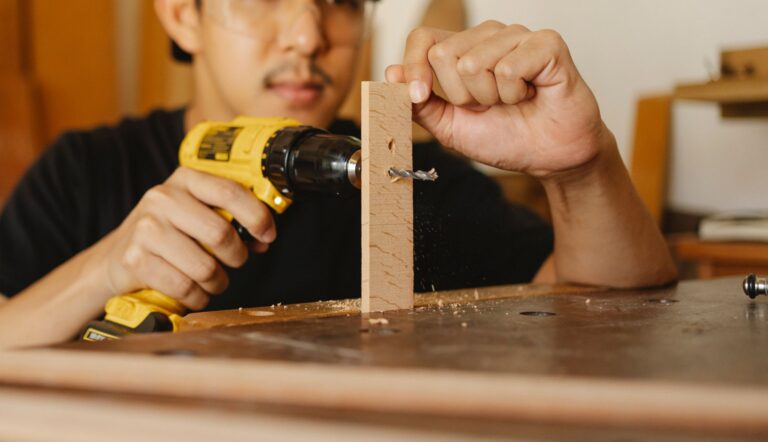
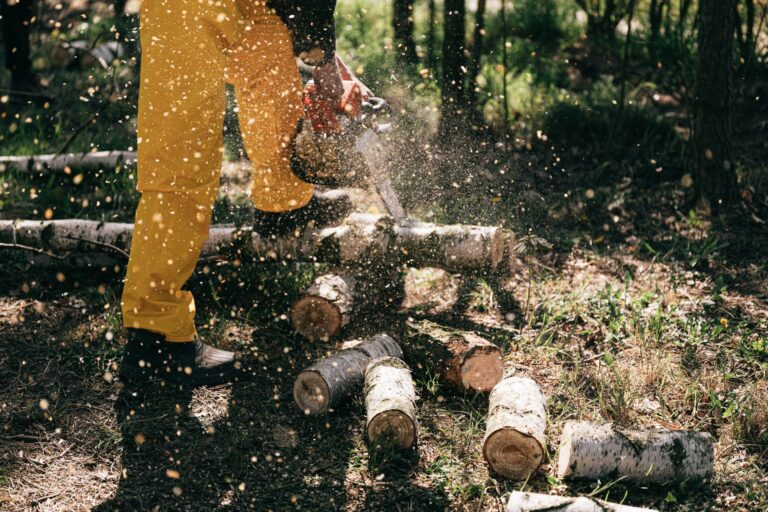
One tool slices boards to width with a fence, while the other trims stock to length quickly with angle control. A table saw also handles repeatable crosscuts with a miter gauge, while a miter saw excels at trim, framing, and bevel cuts.
You can match the right saw to your projects, shop size, and budget without guessing. This comparison covers beginner buying decisions, safety, portable vs stationary saws, and the cuts each machine handles best.
The Cutting Jobs Each Saw Handles Best
Crosscuts and rip cuts are not the same job, and that difference drives the whole decision. A table saw is built around width changes, while a miter saw is built around fast length cuts and angled work.
A table saw uses a fence to keep stock parallel to the blade. That makes it a strong choice for taking a 1×12 down to 8 inches or making 20 cabinet sides the same width. A miter saw cuts studs, casing, and deck boards quickly because the board stays still while the blade drops through the line.
The table saw handles width changes and repeatable sizing
The blade stays fixed while you move the board through it, which gives you control over exact width. That setup is ideal for shelving, cabinet parts, face frames, and furniture rails because the rip fence keeps each cut at the same setting.
Your repeat cuts stay consistent when every board has to match within 1/16 inch. A bookcase side that drifts even slightly can throw off the assembly, while a fence keeps the width locked in from board to board.
The miter saw handles length cuts and trim work faster
A sliding miter saw shines when you need to shorten stock again and again. It is quick for studs, baseboard, casing, and deck boards because the board stays on the saw table while the blade drops through the cut line.
That speed helps on finish carpentry too, where a stop block can keep several pieces at the same length. You spend less time resetting the machine, and that is why the table saw versus miter saw decision starts with the cut, not the brand.
Because capacity changes the work itself, the right tool choice starts with how the material moves through the cut.
Where Cut Capacity Changes The Answer
Length and width sound simple until an 8-foot board or a 4 x 8 sheet lands on the floor. At that point, support matters as much as blade size, and the wrong support can ruin the cut before the blade even touches wood.
A table saw carries long sheet goods better when you add infeed and outfeed support. A miter saw can handle long trim with stands or rollers, but it is awkward for wide panels and poor for ripping a long board down the middle.
| Material | Table Saw | Miter Saw |
|---|---|---|
| Long boards | Strong for rip cuts and width sizing with fence support | Quick for shortening boards, weak for ripping |
| Sheet goods | Works well with infeed, outfeed, and a large surface | Poor fit for full panels and awkward to support |
| Narrow trim | Works, but setup takes longer | Fast, clean, and easy to position |
| Angled cuts | Possible on many models with a miter gauge or bevel blade tilt | Built for miters and bevel cuts |
A 4 x 8 sheet of plywood shows the difference clearly. On a table saw, proper support keeps the panel flat so the cut stays straight and safer to manage. On a miter saw, that same sheet is clumsy and hard to hold steady, which is why portable vs stationary saws matter so much in a small shop.
Both saws can make bevel cuts on many models, but the work looks different. A table saw bevel tilts the blade for joinery, while a miter saw bevel usually supports compound cuts for trim and framing. That difference shapes the way you set up the next cut, so the next section turns to accuracy and finish.
That difference reaches beyond size, shaping precision, consistency, and the quality of the finished edge.
Accuracy, Repeatability, And The Finish You Get
A fence gives the table saw an edge for repeat work. Once it is set, you can cut ten shelving pieces to the same width with very little drift.
A miter saw brings a different kind of accuracy. It is fast for crosscuts that need to match, such as wall studs, fascia, and finish trim, and the positive detents on many saws make 0, 22.5, and 45 degree settings easy to return to.
The fence locks in repeatable work
Cabinet shops lean on fence guided cuts because the machine removes one variable from the job. The board rides against a straight reference, so the blade cuts a fixed distance from the edge every time.
That matters for furniture parts too. A set of drawer sides cut to the same width leaves less sanding and less correction at assembly, which is why a table saw often feels more versatile for woodworking tasks.
The miter saw speeds up finish carpentry
Trim work rewards a saw that starts and stops quickly. A miter saw gives you clean crosscuts on casing, baseboard, and 2x framing stock without pushing a long board across a table.
Because the cut is completed from above, it is easier to land on a marked line with thin trim. A sharp carbide blade, a firm hold, and a clean stop at the detent do more for finish quality than raw motor size.
Blade choice changes the result as much as the machine. A 40-tooth combination blade leaves a different edge than an 80-tooth crosscut blade, and resinous pine tears out faster than maple unless your support and feed are steady.
Tear-out follows the grain and the setup
Tear-out is the small chip-out that happens when fibers lift instead of sever cleanly. Crosscut blades with higher tooth counts leave a cleaner edge on trim, while general purpose blades handle mixed work better on a table saw.
Material matters too. Baltic birch plywood, MDF, poplar, and oak all respond differently because grain direction, glue lines, and fiber density change how the blade enters the work. A crisp cut on one species can look ragged on the next.
Wood behaves differently from cut to cut, which makes the tool’s setup and handling just as important as its blade.
Portable, Stationary, And Small-Shop Setup
A garage corner can hold a miter saw and stand, but a table saw wants room around it. That difference changes the purchase even before you look at cut types.
Portable vs stationary saws often decide the winner in a small garage, apartment setup, or jobsite layout. A jobsite saw can fold onto a stand and move in one trip, while a cabinet-style table saw stays put and asks for a dedicated spot plus space for long boards.
Fixed footprint versus mobile setup
In a basement or apartment shop, clearance matters as much as motor power. A table saw needs infeed room, outfeed room, and room to the side for ripping long stock without bumping walls or stored lumber.
A miter saw takes less floor depth, but the wings on each side still need support for trim and studs. Without that support, the board dips and the cut line wanders, even on a good saw.
Safe support starts before the blade spins
Large panels need a flat path across the saw, not just a place to land after the cut. Roller stands, sawhorses, and extension wings keep material level so the blade does not pinch or tip the workpiece.
Long trim needs the same treatment on a miter saw. A 16 foot board held in one hand and cut in the other invites movement at the kerf, and movement changes both accuracy and safety. Space planning comes next because the wrong tool can fit the room yet still fail the job.
A compact footprint can be misleading, since tight quarters often magnify both accuracy problems and safety risks.
Safety Limits And Common Misuse Scenarios
Each saw has a job it should not be asked to do. A miter saw is a poor rip saw, and a table saw is clumsy for fast angled trim cuts that need a lot of setup.
That mismatch causes the beginner mistakes that matter most. You may try to freehand boards on a table saw, skip clamping on a miter saw, or hold short stock too close to the blade path. The fix is simple, but it has to match the tool.
Never rip a long board on a miter saw. The blade path, workholding, and fence shape are wrong for that cut, and the board can twist or bind while the blade is down.
Workholding shapes the risk
On a table saw, push sticks, push blocks, and a riving knife help keep your hands away from the blade while the fence holds the board straight. Short pieces need extra caution because they can slip between the fence and blade more easily than full length stock.
On a miter saw, a clamp and a stop block do more than steady the cut. They hold the work against the fence so the blade does not snag the offcut and fling it back toward the operator.
Beginners run into the same three problems
- Unsupported stock: A board that sags changes angle and makes the blade bind.
- Wrong cut path: A miter saw cannot replace a rip fence for width changes.
- Short offcuts: Small pieces near the blade need clamps or push tools, not fingers.
- Awkward setup: A table saw cut across a long board is harder without proper support.
Track saws and circular saws sit between these two tools. A track saw is a better sheet goods companion than a miter saw, and a circular saw can rough cut lumber before you finish sizing on a table saw or miter saw. That comparison helps on a first purchase, which is where the final decision lands.
Once hazards enter the picture, the best first saw becomes the one that matches common projects without inviting bad habits.
The Right First Saw For Common Projects
Project mix decides the winner more cleanly than brand or motor size. Trim and framing point one way, while furniture and shelving point the other, and your shop setup should follow the work you repeat most.
The table below turns that into a decision matrix. Use it with your room size, budget, and the kind of cut you make most.
| Project type | Better first saw | Why it fits |
|---|---|---|
| Trim and molding | Miter saw | Fast crosscuts, easy angles, clean length cuts |
| Framing | Miter saw | Quick stud cuts and easy bevel work for layout changes |
| Furniture | Table saw | Repeatable width cuts and stronger control over joinery parts |
| Shelving | Table saw | Exact rip cuts for sides, stretchers, and panels |
| Sheet goods | Table saw | Better support and cleaner sizing of plywood and MDF |
| Mixed home shop work | Table saw | More versatility across rip cuts, crosscuts, and bevel cuts |
Choose a miter saw first when your work is trim, framing, or finish carpentry and your shop space is tight. Choose a table saw first when you rip lumber, break down panels, or build furniture and cabinets. That is the plain answer behind table saw vs miter saw for beginners.
Budget and skill level tighten the choice. A simple miter saw can get you working fast on house projects, while a table saw asks for a little more setup time but returns more versatility over years of shop work. If your cuts are split across both jobs, start with the tool that matches the task you repeat every week, not the one that looks more capable on paper.
Buy this first for your main work
- Boards to length: Start with a miter saw for studs, trim, and quick square cuts.
- Lumber to width: Start with a table saw for shelving, rails, and cabinet parts.
- Sheet goods: Start with a table saw, then add a track saw later for panel handling.
- Small garage shop: Choose the saw that fits your usual stock size and leaves safe walk space.
A circular saw can cover some jobs while you save space or money, but it does not replace the fence control of a table saw or the speed of a miter saw. That tradeoff is the real buying rule, and it keeps you from paying for a tool that does the wrong job well.
That tradeoff is the real buying rule, and it keeps you from paying for a tool that does the wrong job well.
Final Thoughts
The right choice is the saw that matches your most common cut. A table saw wins on rip cuts, repeatability, and furniture work, while a miter saw wins on length cuts, trim, framing, and angled work. Choose by project, not by size or features, and the tool will earn its place.
FAQ
What is the difference between a table saw and a miter saw?
A table saw cuts boards by moving them through a fixed blade, which makes it strong for rip cuts and repeatable sizing with a fence. A miter saw drops a blade through stock from above, which makes it faster for crosscuts, trim, and angled cuts.
What can a miter saw do that a table saw cannot?
A miter saw makes fast length cuts on trim and framing stock while holding the piece still against a fence, which is handy for repeated cuts at fixed angles. A table saw can make angled cuts too, but it is slower to set up for that job and less suited to quick trim work.
Can I use a table saw as a miter saw?
A crosscut sled or miter gauge lets a table saw handle small parts with solid accuracy. It does not replace the speed of a miter saw for long trim, and the setup is less convenient for repeated angled cuts.
Which saw is better for cutting boards to length?
Fast, repeatable cuts make a miter saw the stronger choice when boards need to be trimmed to length. A table saw can do the job with a crosscut sled or miter gauge, but it takes more setup and more space around the machine.
Which saw is better for ripping lumber?
For keeping board width consistent, a table saw wins because the fence guides the lumber past the blade. A miter saw is not built for that cut, and it can bind or lose control when you try to use it that way.
What should you never cut with a miter saw?
Long rip cuts down the middle put a miter saw in unsafe territory. That cut asks the blade to travel through stock in a way the fence and workhold setup were not made for, which raises the chance of binding and poor control.