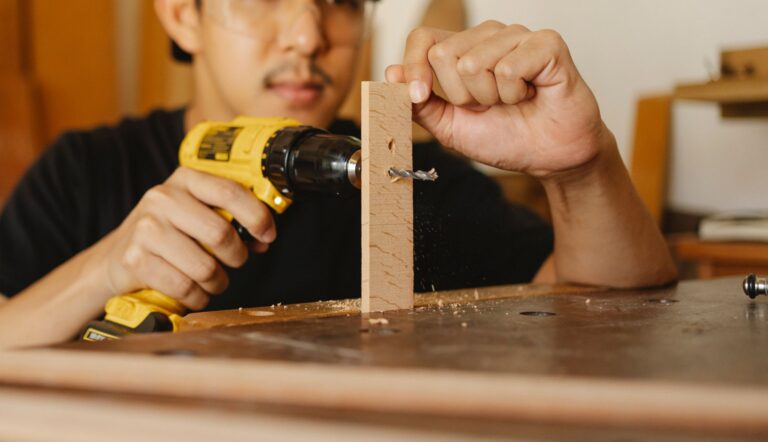
Inside masonry, the bit advances by spinning while a spring-loaded mechanism adds rapid forward taps. That hammering action helps chip brick and concrete at the tip, so holes start and advance faster than they do with plain rotation. Many models also switch to standard drill mode for wood, metal, and plastic.
You can use this guide to identify the tool, compare it with a regular drill, impact driver, and rotary hammer, and choose the right mode for common DIY and masonry jobs.
A Hammer Drill In Plain Terms
A hole in brick resists you in a different way than a hole in pine. The bit has to cut, but it also has to crack brittle mineral material a little at a time, and that is where this tool earns its place.
Rotation does the cutting. The hammer action adds a short push straight ahead, so the tip chips the face of the material instead of grinding in circles alone. That action is light compared with a rotary hammer, yet it changes the job enough to matter for anchors, shelf brackets, conduit clips, and other masonry fastening work.
How the motion feels: you hear a sharper buzz, feel a light pulse through the grip, and see powder instead of long shavings at the hole. A regular drill turns smoothly; this one adds percussion. That difference is the whole point.
That percussion cue also points to the collar, switches, and selector that make the tool recognizable.
A masonry drill bit uses a carbide tip for a reason, because carbide stays hard against stone and concrete while plain high-speed steel dulls fast.
The Parts And Mode Selector That Give It Away
The mode ring near the chuck gives the tool away faster than the label does. That ring often shows a drill icon, a hammer icon, and sometimes a clutch symbol, so you can change the internal action without changing tools.
What The Main Controls Reveal
The chuck holds the bit, the clutch limits twist force on fastening jobs, and the mode switch decides whether the mechanism pounds while it spins. On a combo drill, hammer mode and drill mode sit side by side for that reason.
Look for product names such as hammer drill, it driver, or cordless it. Tool housings from Bosch, DeWalt, Makita, Milwaukee, and Ryobi often print the mode on the body or near the trigger, which helps you identify the tool before you ever insert a bit.
Visual Cues On The Tool Body
A standard drill often has only a speed trigger, a clutch collar, and a chuck. A hammer model adds a mode selector plus markings that reference masonry or percussion, and that extra control is the clearest visual clue.
A compact example helps. A Milwaukee M18 combo drill with a hammer icon and a standard drill icon can bore wood screws in cabinet stock one minute, then switch into masonry mode for Tapcon-style anchor holes the next. That dual use is why the housing matters as much as the motor rating.
Once you know those cues, the next step is matching the mode to the material instead of forcing one setting to do every job.
Those signals matter because different materials reward different settings, and each mode has a clearer place to shine.
Where Hammer Mode Earns Its Keep
Brick, block, stone, and concrete are the main targets because those materials fracture better than they shear. The hammering action chips the surface at the bit tip, so the hole advances with less skating and less heat buildup.
Masonry And Renovation Jobs
Anchoring fasteners into poured concrete is a common use case. So is mounting handrails into brick veneer, setting wall anchors in cinder block, boring holes for pipe straps, and hanging a ledger board on a garage wall.
The tool also shows up during light demolition-adjacent tasks, such as clearing old mortar around a shallow anchor hole or opening a path for low-voltage conduit through block. Those jobs need controlled force, not brute force, which is why the smaller hammer pattern fits.
Work Beyond Hard Stone
Hammer mode can stay off for wood and metal, and that turns the same tool into a normal drill. That matters on a mixed project where you may drill a concrete patio one hour and pilot holes in pressure-treated lumber the next.
- Brick walls: Use it for light to medium anchor holes in brick veneer or solid brick.
- Concrete slabs: Use it for shallow holes for screws, anchors, and mounts.
- Block walls: Use it where hollow masonry needs clean, straight drilling.
- Stone surfaces: Use it for modest holes in softer stone with the right bit.
- Wood and metal: Turn hammer mode off and drill in plain rotation.
That flexibility matters because the tool is not a one-material machine. Once you know where the hammer action helps, the next step is separating it from the other drills in the rack.
A quick side-by-side makes the distinctions easier to see, especially when drilling, driving, and concrete work overlap.
Regular Drills, Impact Drivers, And Rotary Hammers Compared
A regular drill handles wood, plastic, and thin metal without drama. It spins the bit and applies torque, which is enough for clean holes in softer material and for most screw-driving tasks around the house.
| Tool | Main job | Best material | Typical strength |
|---|---|---|---|
| Regular drill | Rotary drilling and light fastening | Wood, plastic, thin metal | Clean, smooth boring |
| Hammer drill | Rotary drilling with light percussion | Brick, block, light concrete | Moderate masonry work |
| Impact driver | Fastening with short rotational impacts | Screws, lag fasteners, deck work | High torque, not masonry drilling |
| Rotary hammer | Heavy percussion drilling | Concrete, rebar-adjacent masonry, deep anchor work | Much stronger hammering force |
Regular Drill Versus Hammer Drill
For wood and metal, the standard drill usually wins because the hole walls stay cleaner and the bit lasts longer. Hammer mode adds vibration that only gets in the way on soft stock, and that is why you switch it off for anything delicate.
For small masonry jobs, the hammer version does better. A coat hook into brick or a 1/4-inch anchor into block can stall a plain drill, while the hammer action keeps the bit chewing forward.
Impact Driver Versus Hammer Drill
An impact driver delivers twisting impacts, not forward pounding for masonry. It drives long screws and lag bolts with a burst of rotational force, so it shines in framing, decking, and cabinet work.
That difference matters because a hex-shank driver bit belongs in the impact driver, while a round or SDS-style masonry bit belongs in the drilling tool. Mixing the two roles leads to poor hole quality and unnecessary wear on the bit shank.
Rotary Hammer Versus Hammer Drill
Built around a piston system, the rotary hammer sends much stronger blows into the bit. SDS-Plus and SDS-Max systems transfer that force efficiently, which is why this tool family handles heavy concrete drilling far better.
For a few shelf brackets in cinder block, the lighter tool is enough. For repeated 1/2-inch anchors in cured concrete or a run of holes through an old foundation wall, the rotary hammer saves time and fatigue. That boundary is the main buying decision.
A simple rule helps here: use the light tool for lighter masonry, the impact driver for fastening, and the rotary hammer for serious concrete work. Once that map is clear, technique starts to matter more than the name on the box.
That lineup only works when the bit, speed, and pressure stay matched to the task.
Bits, Speed, And Technique That Protect The Tool
A carbide-tipped masonry bit is the correct match for this kind of drilling, not a wood auger or a standard twist bit. The bit geometry is different because masonry needs to be crushed and chipped at the tip, not shaved into curls.
Choose The Right Bit And Shank
Round-shank bits fit many combo drills, while SDS bits lock into rotary hammers with a slotted shaft that lets the bit move slightly as it pounds. That shank design matters because force transfer changes with the tool type.
A mismatched bit can wobble, wander at the start, and heat up fast. Wobble usually means the tip is skating on the surface or the shank is not seated firmly in the chuck, and both problems slow the cut.
Use Pressure And Speed With Care
Light, steady pressure works better than a hard shove. The bit needs room to chip the material, and too much force can glaze the tip, burn the motor, or jam dust in the flutes.
For dense concrete, slower speed with firm control beats frantic trigger work. For softer brick, moderate speed keeps the hole cleaner. Clearing dust by backing the bit out every few seconds helps the flutes stay open, which keeps progress steady.
Watch the temperature of the bit and the smell of the motor. Hot steel and a sharp burnt odor usually mean the feed pressure, speed, or bit type is wrong.
Common Trouble Spots
- Stalled drilling: Usually comes from a dull bit, too much pressure, or the wrong mode.
- Bit wobble: Often starts with a wandering pilot point or a loose chuck.
- Slow progress: Dust packed in the flutes keeps the bit from cutting cleanly.
- Burned tip: Too much force or speed can overheat the carbide edge.
Mark the spot, start with a shallow dimple, and keep the tool square to the surface. That simple setup improves the hole far more than extra force does. The physics behind the cut is simple, and that leads into the bigger choice of which drill belongs in your project.
With those limits in mind, choosing the right tool becomes less about muscle and more about fit.
Choosing The Right Drill For The Project Ahead
Wood, plastic, and thin metal belong in drill mode, not hammer mode. The extra pounding only roughs up the edge and can crack brittle stock, so turning the function off is the cleaner move.
Match The Tool To The Material
A regular drill fits shelf assembly, cabinet hardware, and pilot holes in lumber. A hammer drill earns its place for brick, block, and light concrete where a plain drill starts to bog down. A rotary hammer steps in once the concrete work gets dense or repetitive.
That sorting helps you avoid overbuying. Many home projects need only one combo drill and a set of good bits, while a contractor-facing concrete job may justify a dedicated rotary hammer and dust management setup.
Corded Or Cordless Fits The Job
Corded models keep steady power on long drilling runs and suit garage work, basement work, and jobs close to an outlet. Cordless models give you better mobility on ladders, outside walls, and punch-list repairs across a jobsite.
Battery platform matters too. An 18V-class cordless tool from DeWalt, Makita, Bosch, Milwaukee, or Ryobi can handle many homeowner tasks, but battery size and amp-hour rating shape run time far more than the label does. A small pack may feel fine on a few holes, then sag under repeated masonry work.
- Turn hammer mode off: Use drill mode for wood, plastic, and finish carpentry.
- Stay with masonry: Use the pounding action for brick, block, and moderate concrete holes.
- Choose the shank correctly: Match the bit to the chuck or SDS holder.
- Check the project depth: Deep, repeated concrete holes call for a rotary hammer.
- Match the power source: Corded suits long runs, cordless suits mobility.
The right choice comes down to material, hole size, and how many holes you need. A hammer drill sits in the middle ground, not the heaviest tool and not the lightest, and that middle ground is exactly why it shows up so often in home shops.
That balance is the main takeaway, along with the reasons it remains such a versatile shop staple.
What To Remember
The tool earns its name because rotation and light pounding work together, not because it hammers like a demolition tool. Once you match that action to masonry, keep it out of wood and metal, and choose the right bit, you get cleaner holes and less strain on your wrist.
FAQ
What is the difference between a hammer drill and a regular drill?
In basic drilling, one tool only spins the bit, while the other combines rotation with short forward impacts. The impact action helps chip brick and concrete, so the hole advances more easily in hard masonry.
Can a regular drill be used as a hammer drill?
No. A regular drill cannot create the forward pounding that masonry drilling needs. It can make shallow holes in soft brick with the right bit, but it will struggle on concrete and wear bits faster.
How do I know if my drill is a hammer drill?
Look for a hammer icon, a mode ring, or a switch labeled drill and hammer. Product names that include it, it driver, or percussion drill also point to the same tool type.
Is impact driver the same as a hammer drill?
No. An impact driver sends twisting impacts for screws and lag fasteners, while a it sends forward impacts for drilling holes. The bits, shanks, and best jobs are different.
What materials can you drill with a hammer drill?
Brick, block, stone, and light to moderate concrete are the main targets. With hammer mode off, it can also drill wood, plastic, and thin metal like a standard drill.
When should you not use hammer mode?
Leave it off for wood, plastic, drywall, and finish materials that can split or tear. Hammering also adds unnecessary vibration on soft metal and can make the hole rougher than you want.